3D print Occator crater on Ceres
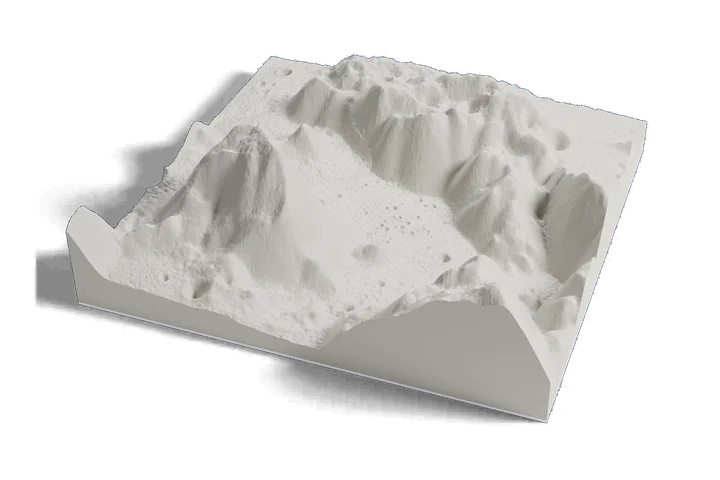
The crater with Ceres' bright spots on one print: the 92 km rim, the crater floor and the plains around it, from elevation data measured by NASA's Dawn spacecraft.
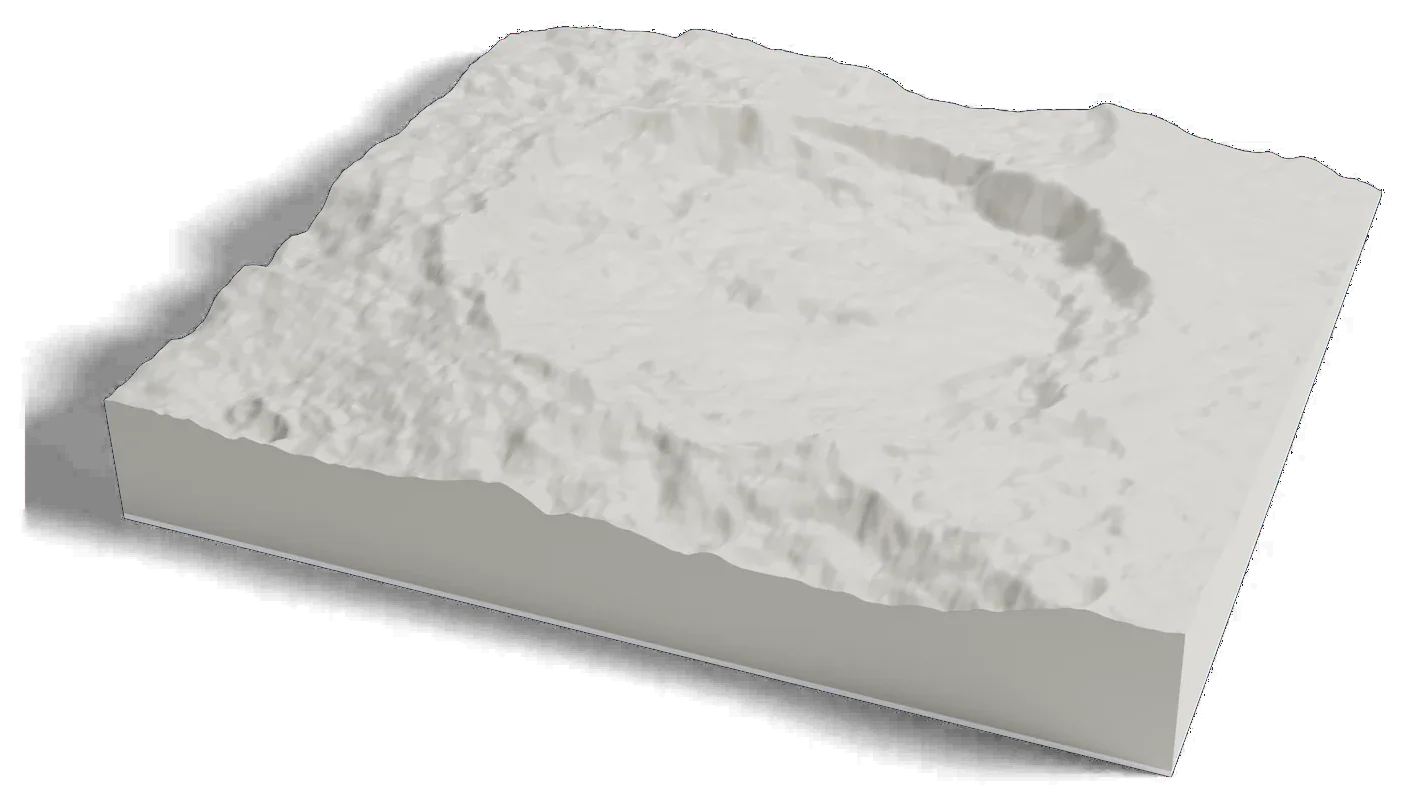
Ceres terrain: NASA Dawn; DLR; USGS Astrogeology. Surface imagery: Dawn Framing Camera mosaic, NASA/JPL-Caltech/UCLA/MPS/DLR/IDA.
Where it is 19.82°N 239.33°E Ceres
- Diameter
- 92 km (57 mi)
- Bright spots
- Cerealia Facula and Vinalia Faculae
- Made of
- Mostly sodium carbonate
- Named for
- Occator, Roman god of harrowing
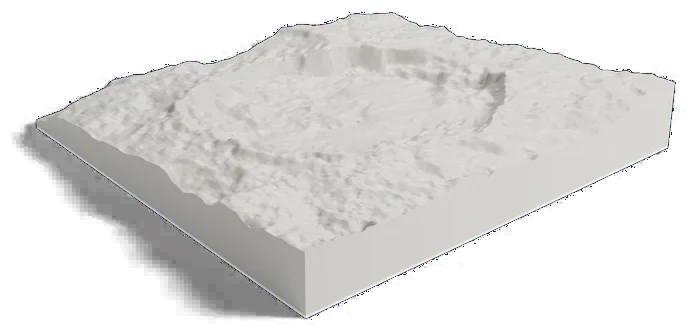
Ceres terrain: NASA Dawn; DLR; USGS Astrogeology. Surface imagery: Dawn Framing Camera mosaic, NASA/JPL-Caltech/UCLA/MPS/DLR/IDA.
135 by 130 km of Ceres, 160 mm across
About Occator crater
Occator is an impact crater 92 km (57 mi) across on the dwarf planet Ceres. Its floor holds the brightest areas on Ceres: Cerealia Facula in the center and Vinalia Faculae to the east.
The bright areas are mostly sodium carbonate, a salt, left where brine from a reservoir about 40 km (25 mi) below the surface rose up and dried out. Some of the deposits are less than 2 million years old. NASA's Dawn spacecraft dipped below 35 km above the surface to photograph them in its final orbits. The crater is named for a Roman god of agriculture.
Sources: IAU Gazetteer of Planetary Nomenclature: Occator, IAU Gazetteer of Planetary Nomenclature: Ceres faculae, NASA JPL: Bright areas on Ceres come from salty water below, USGS: Occator bright spots study
Elsewhere on Ceres
All worlds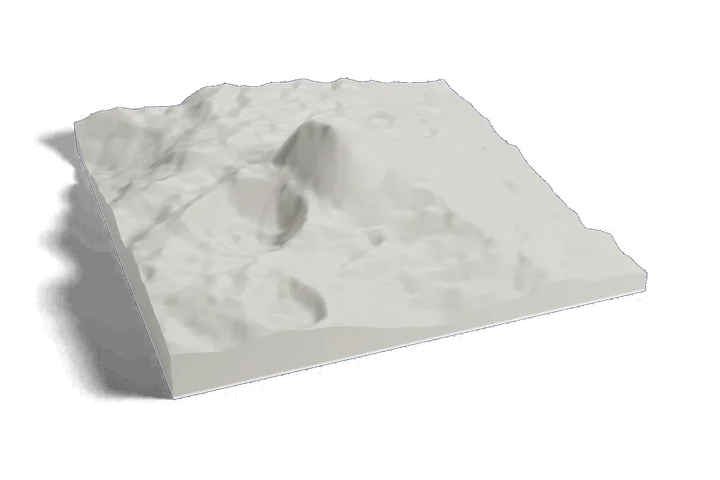
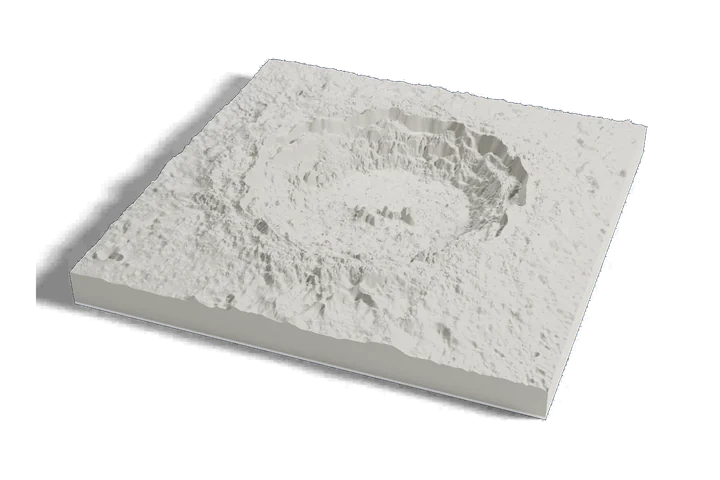
Ceres terrain: NASA Dawn; DLR; USGS Astrogeology. Surface imagery: Dawn Framing Camera mosaic, NASA/JPL-Caltech/UCLA/MPS/DLR/IDA.
Moon terrain: USGS Astrogeology; NASA LRO LOLA; JAXA SELENE/Kaguya. Surface imagery: LRO LROC WAC mosaic, NASA/GSFC/Arizona State University.