3D print the Apollo 17 landing site at Taurus-Littrow
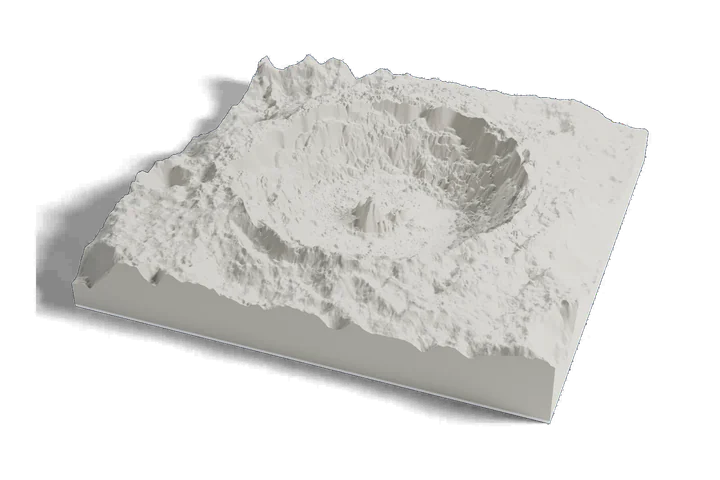
The valley where the last Apollo crew landed, on one print: the North and South Massifs, the Sculptured Hills and the valley floor between them, from elevation data measured by lunar orbiters.
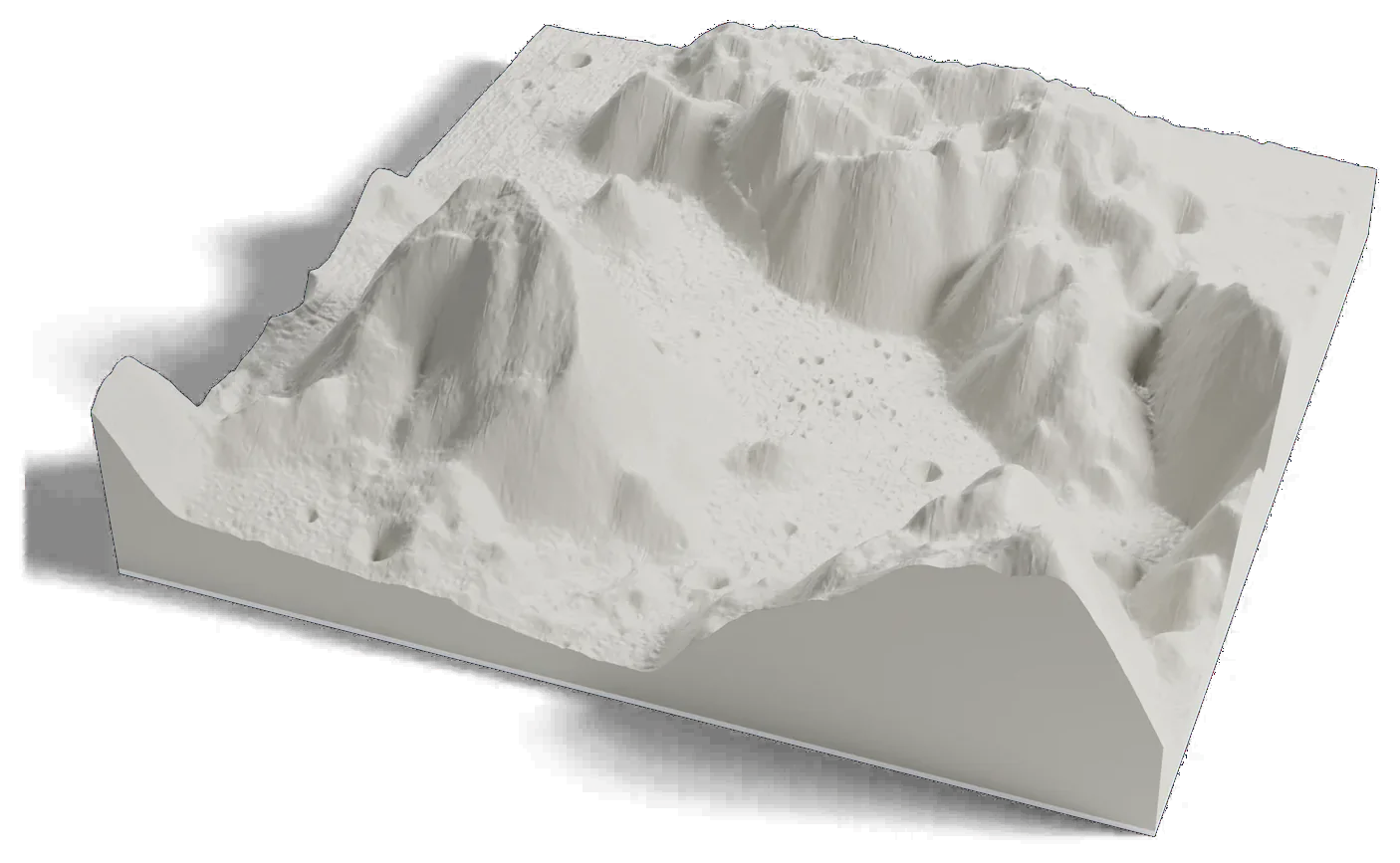
Moon terrain: USGS Astrogeology; NASA LRO LOLA; JAXA SELENE/Kaguya. Surface imagery: LRO LROC WAC mosaic, NASA/GSFC/Arizona State University.
Where it is 20.19°N 30.77°E The Moon · near side
- Landing
- December 11, 1972
- Crew
- Eugene Cernan, Harrison Schmitt, Ronald Evans
- Massifs
- About 2 km (6,600 ft) above the valley floor
- Name
- After the Taurus mountains and Littrow crater
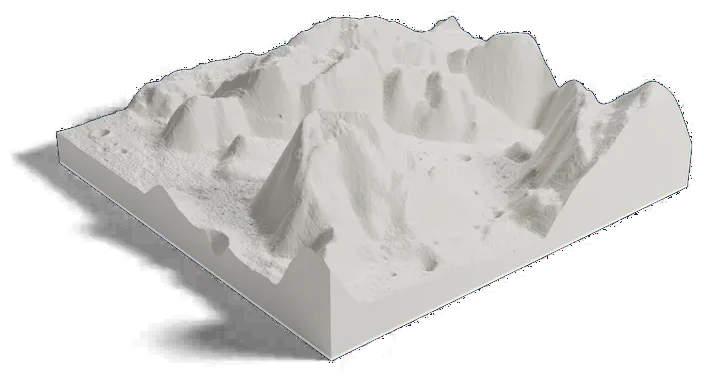
Moon terrain: USGS Astrogeology; NASA LRO LOLA; JAXA SELENE/Kaguya. Surface imagery: LRO LROC WAC mosaic, NASA/GSFC/Arizona State University.
40 by 39 km of the Moon, 160 mm across
About Taurus-Littrow valley
Apollo 17 landed in the Taurus-Littrow valley on December 11, 1972. Eugene Cernan and Harrison Schmitt explored the valley floor while Ronald Evans orbited overhead. Schmitt, a geologist, was the first scientist to walk on the Moon, and Cernan was the last person to leave footprints there.
The valley cuts into the mountains around the Serenitatis basin, and the massifs on either side rise about 2 km (6,600 ft) above its floor. A landslide off the South Massif spread a pale apron across the floor, and at Shorty crater Schmitt found orange soil that turned out to be volcanic glass.
Sources: IAU Gazetteer of Planetary Nomenclature: Taurus-Littrow Valley, NASA NSSDC: Apollo 17, NASA: Apollo 17, LROC: South Massif, LROC: Shorty crater, Lucchitta, NASA Technical Reports Server
Elsewhere on the Moon
All worlds
Moon terrain: USGS Astrogeology; NASA LRO LOLA; JAXA SELENE/Kaguya. Surface imagery: LRO LROC WAC mosaic, NASA/GSFC/Arizona State University.