3D print the Oxford University Museum of Natural History
A free, printable model of Oxford University Museum of Natural History, with the lawns, streets and buildings around it, generated from real map data in your browser.
-
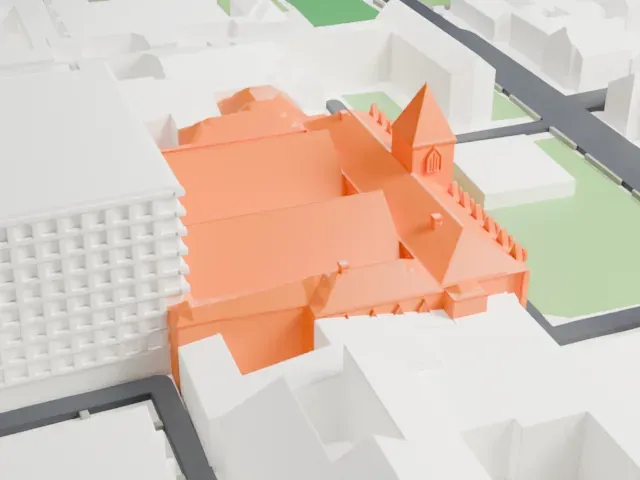 North
-
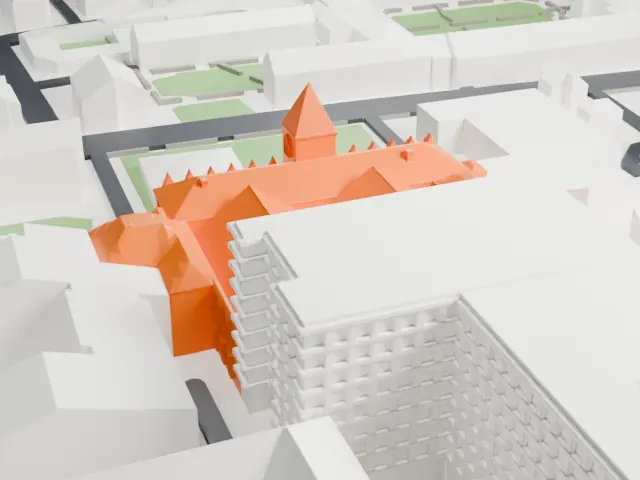 East
-
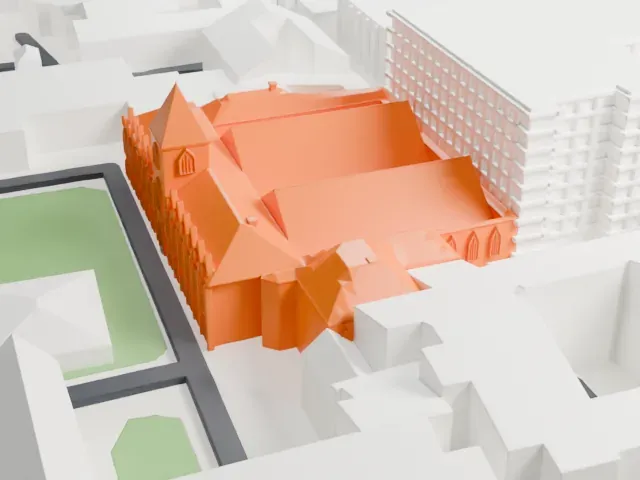 South
-
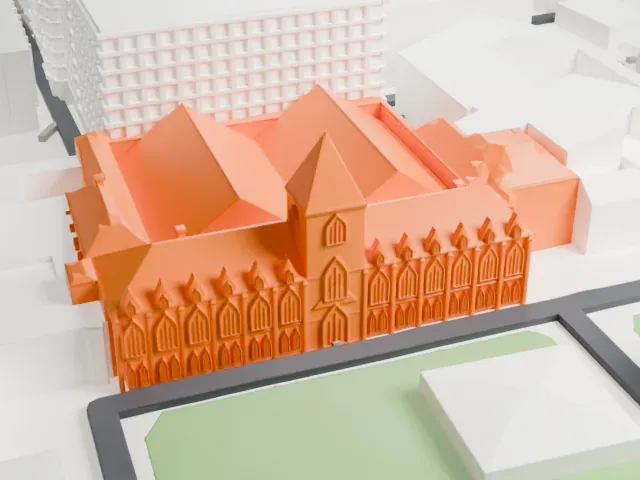 West
- On a 160 mm print
- 9 mm
- Scale
- 1:3,750
9 mm tall on a 160 mm print
Make this print opens the generator on a 600 m square around the landmark. Buildings print at close to true scale, so the landmark grows with the print size.
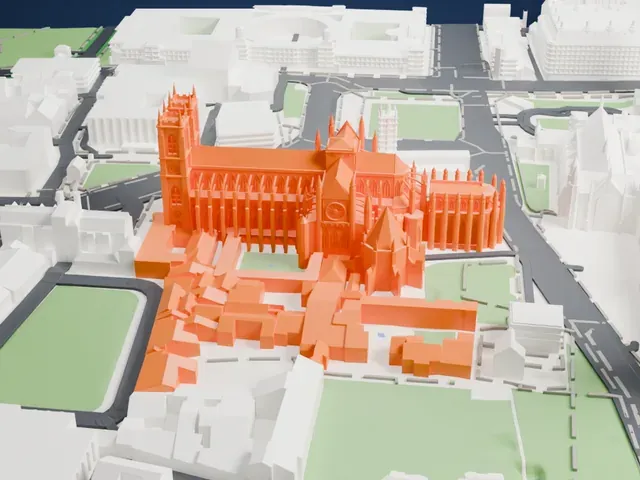
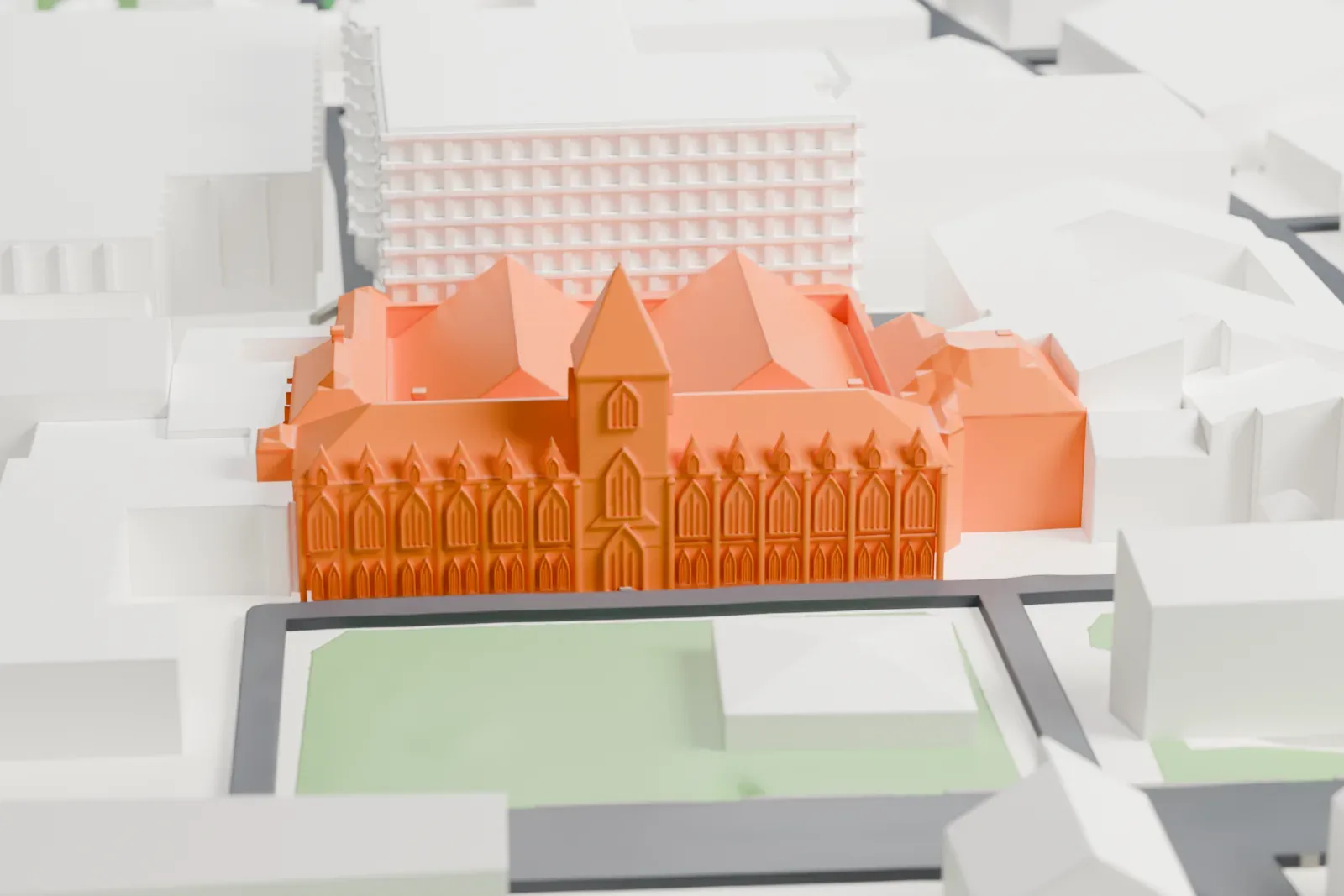
- Pointed windows and gables
Rows of narrow pointed windows and small gable details run along the walls. Print friendly adapts them to the print scale; Full detail keeps them on a larger print or with a fine nozzle.
- Steep roofs and a small tower
The steep roofs meet in a small pointed tower. Layers of 0.12–0.16 mm keep the ridges crisp, and printing slowly helps the tip.
- One piece with the ground
The Oxford University Museum of Natural History is joined to the ground in the exported file, and the four-side check found no floating parts, so nothing needs gluing.
- Pick the detail for your nozzle
In the Buildings settings, set Landmark detail to Print friendly to adapt thin parts and small details to the print scale. Full detail keeps every modeled feature, for larger prints or a finer nozzle.
- Colors
Buildings, roads, water and ground arrive as separate filament slots in the 3MF. The Oxford University Museum of Natural History takes the building color.
- File format
You get a 3MF for Bambu Studio, OrcaSlicer or PrusaSlicer. Any of them can save it as STL if you need one.
About the Oxford University Museum of Natural History
Oxford University Museum of Natural History, abbreviated OUMNH, exhibits many natural history specimens belonging to the University of Oxford. Its address is Parks Road, Oxford, England. Inside is a lecture theater that the chemistry, zoology and mathematics departments of the university use. The museum is also the only way for the public to enter the adjoining Pitt Rivers Museum.
Sir Henry Acland, the Regius Professor of Medicine, initiated construction between 1855 and 1860, to bring all aspects of science together around a central area for display. The building opened officially in 1860, though some departments had moved into their premises as early as 1858. Thomas Newenham Deane and Benjamin Woodward, both Irish architects, designed the neo-Gothic building, with Woodward doing most of the work, and the writings of John Ruskin directly influenced the design. Lucas Brothers began construction in 1855, and the sale of Bibles brought in the money that paid for it.
At the heart is a big square court roofed in glass; cast iron pillars hold up the roof and divide it into three aisles. Cloistered arcades circle the ground and first floors, and their stone columns are each made of a different British stone, chosen by the geologist John Phillips. Statues of eminent men of science line the ground floor of the court. Both the museum and the adjoining Pitt Rivers Museum were Grade I listed on January 12, 1954.
About this model
The Oxford University Museum of Natural History is one of more than 4,300 landmark models in Mini Skyline. They are made with AI, and each one is checked from four sides in its real surroundings before release. Everything around it is built from OpenStreetMap and Overture map data. If you would rather print the shape from map data, turn off Landmark models in the Buildings settings.
Keep exploring