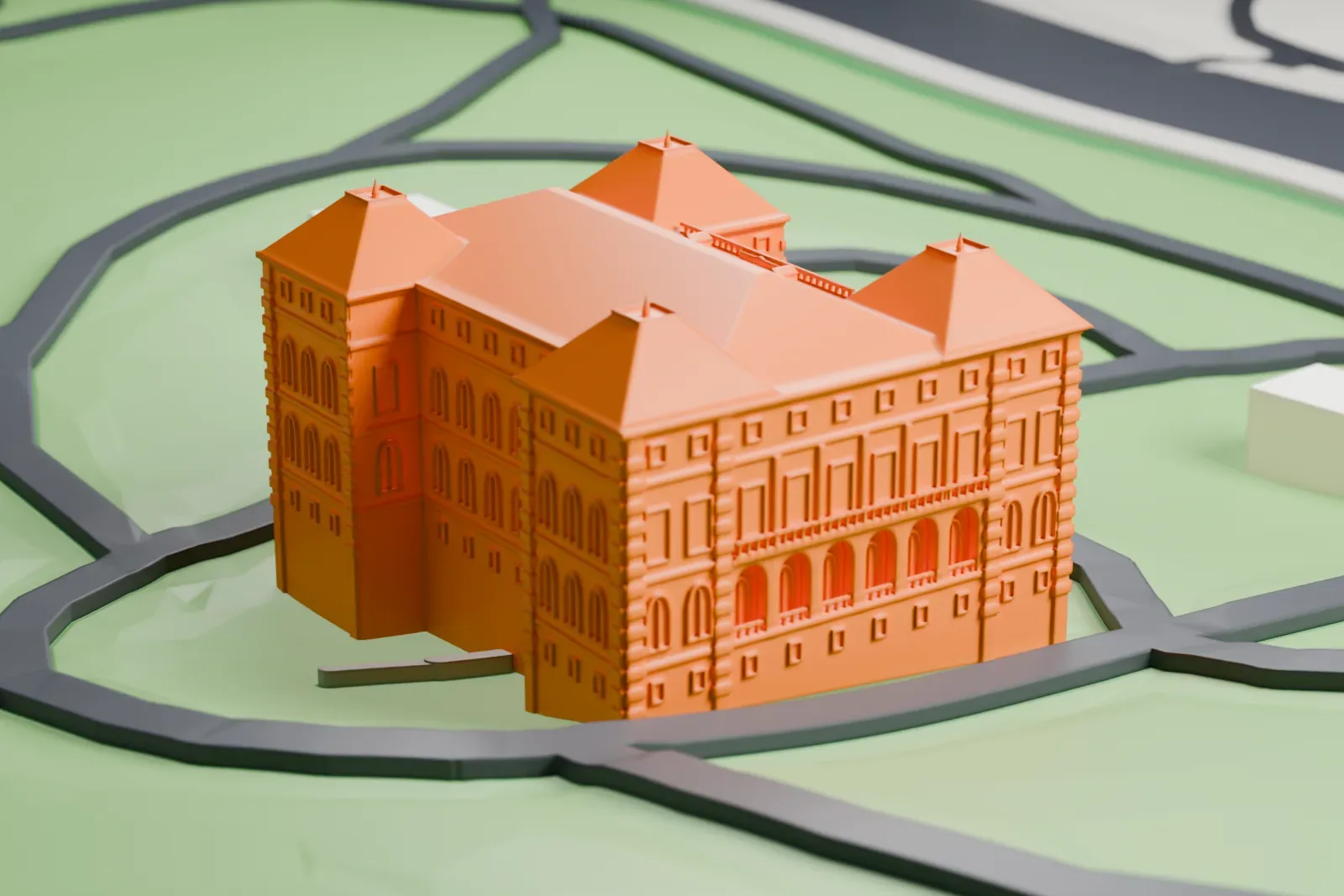
Presidential Palace, Hanoi in 3D
The Presidential Palace, Hanoi appears in city models you make here; its design may still be protected, so it isn't offered as a separate download.
-
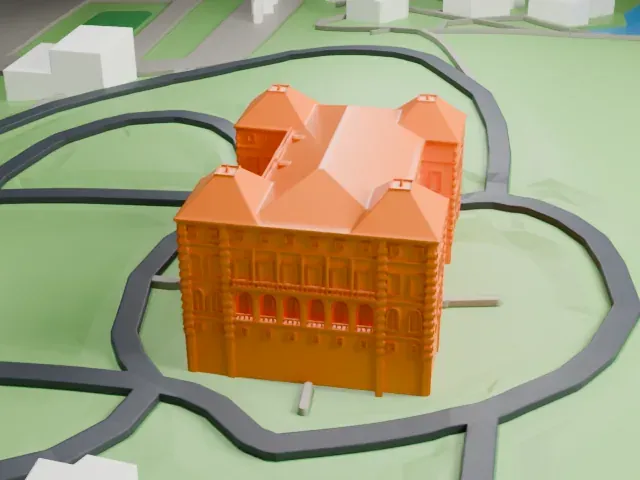 North
-
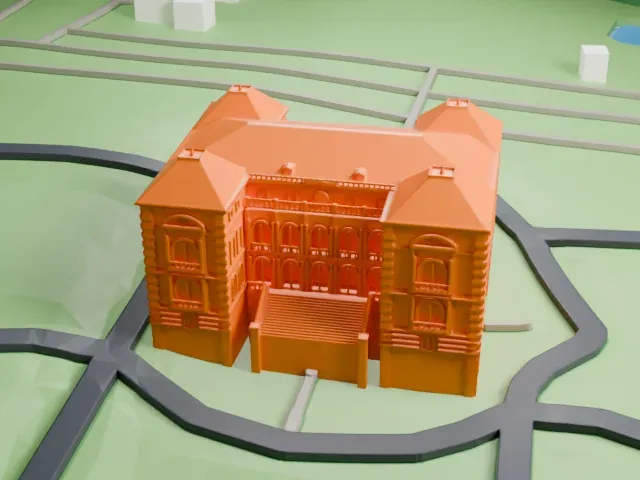 East
-
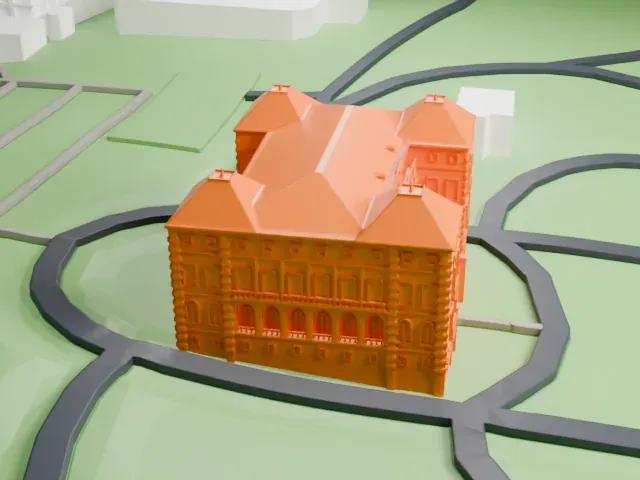 South
-
 West
Copyright notice
The design of Presidential Palace, Hanoi may still be protected by copyright. It appears in the city models you make here, but it is not offered as a separate model.
- On a 160 mm print
- 8 mm
- Scale
- 1:3,750
8 mm tall on a 160 mm print
Make this print opens the generator on a 600 m square around the landmark. Buildings print at close to true scale, so the landmark grows with the print size.
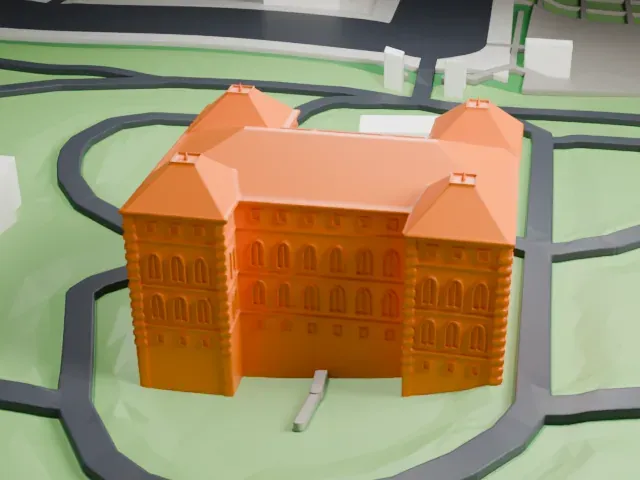
- Rows of small arched windows
The facades carry many small arched windows and trim. Print friendly simplifies the finest detail for the print scale; Full detail keeps it, which suits a larger print and a layer height of 0.12 to 0.16 mm.
- Pointed roofs at the corners
The four corner roofs end in small points. Printing slowly with good cooling helps those tips come out clean, and a bigger print size keeps them from shrinking to nothing.
- One piece with the ground
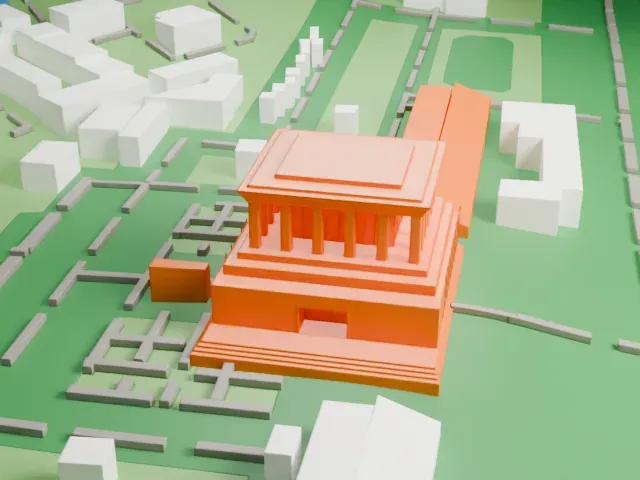
The Presidential Palace, Hanoi is joined to the ground in the exported file, and the four-side check found no floating parts, so nothing needs gluing.
- Pick the detail for your nozzle
In the Buildings settings, set Landmark detail to Print friendly to adapt thin parts and small details to the print scale. Full detail keeps every modeled feature, for larger prints or a finer nozzle.
- Colors
Buildings, roads, water and ground arrive as separate filament slots in the 3MF. The Presidential Palace, Hanoi takes the building color.
- File format
You get a 3MF for Bambu Studio, OrcaSlicer or PrusaSlicer. Any of them can save it as STL if you need one.
About the Presidential Palace, Hanoi
Hanoi's Presidential Palace is used for state ceremonies. Until 1954 it was called the Governor-General of Indochina's palace. The architect Charles Lichtenfelder built it between 1900 and 1906 as a residence for the French governor-general. Credit for the design often goes, wrongly, to Auguste Henri Vildieu, who served as French Indochina's official architect.
A yellow facade stands behind wrought iron gates with sentry boxes on either side. The design borrows from Italian Renaissance architecture, including aedicules, broken pediments, classical columns and quoins, along with a piano nobile approached by a grand staircase. As in most French colonial buildings, the look is pointedly European; mango trees on the grounds are the only visual sign that it stands in Vietnam.
After independence in 1954, Vietnam's Ho Chi Minh is claimed to have declined to live in the grand building, for symbolic reasons, although state guests still met him there. He instead built a traditional stilt house and a carp pond on the grounds. In 1975 his house and the grounds became the Presidential Palace Historical Site. The palace itself is closed to the public, though visitors may stroll the grounds for a fee.
About this model
The Presidential Palace, Hanoi is one of more than 6,500 landmark models in Mini Skyline. They are made with AI, and each one is checked in its real surroundings before release. Each model is written as code from public descriptions, plans, photographs and aerial views used only as references; no image or third-party model is copied into it. Everything around it is built from OpenStreetMap and Overture map data. Rights in the building itself, its name and any brands on it are not granted by Mini Skyline; clear them separately before you sell prints. If you would rather print the shape from map data, turn off Landmark models in the Buildings settings.
Mini Skyline is not affiliated with, or endorsed by, the owners of this building or its names and marks.
Same skyline