3D print the Pyramid of the Sun
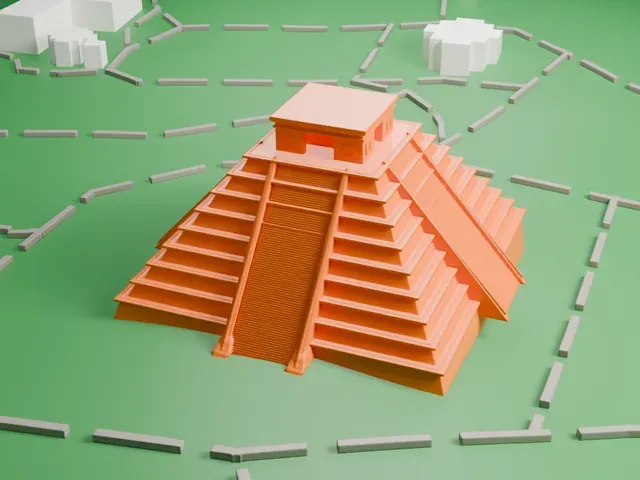
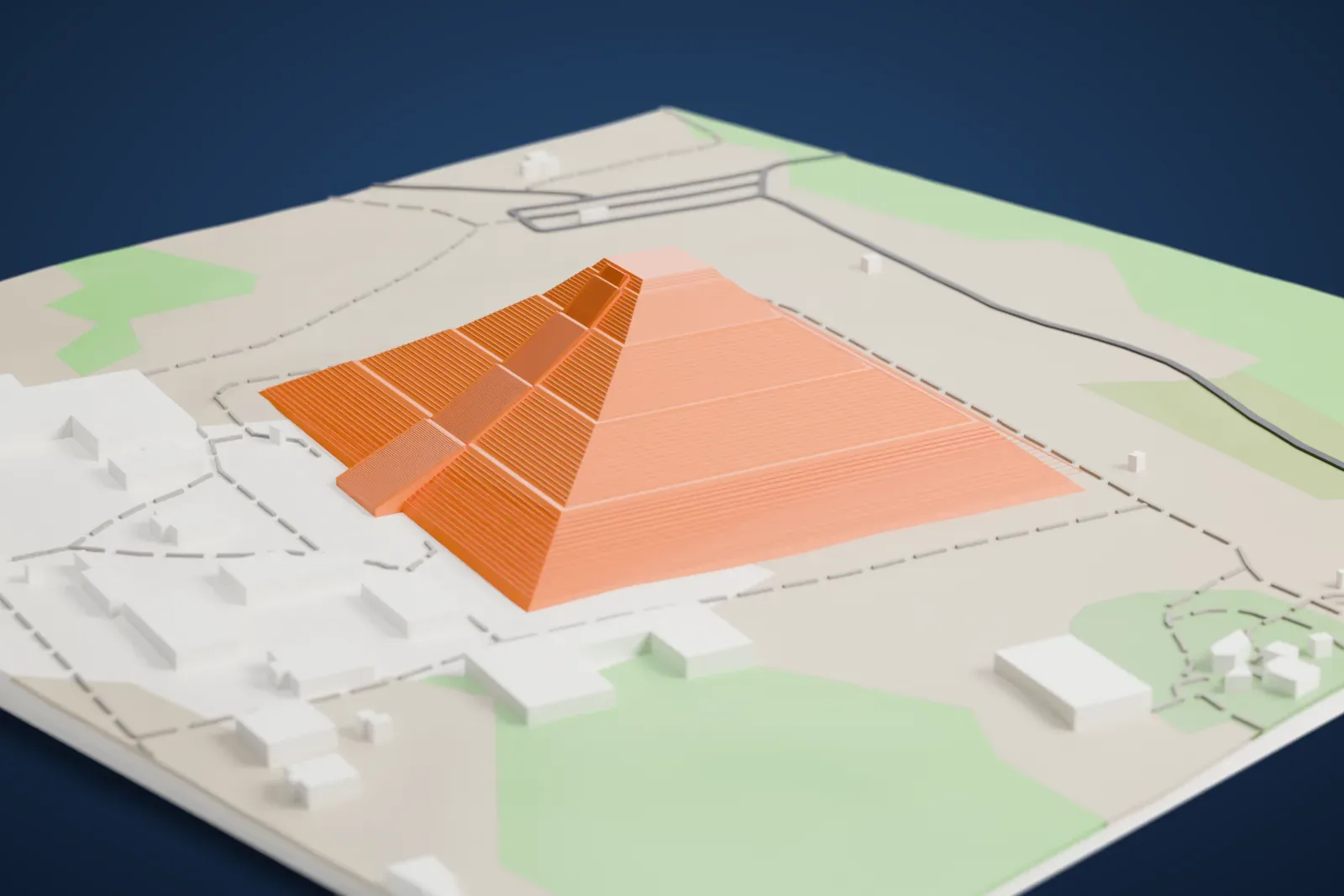
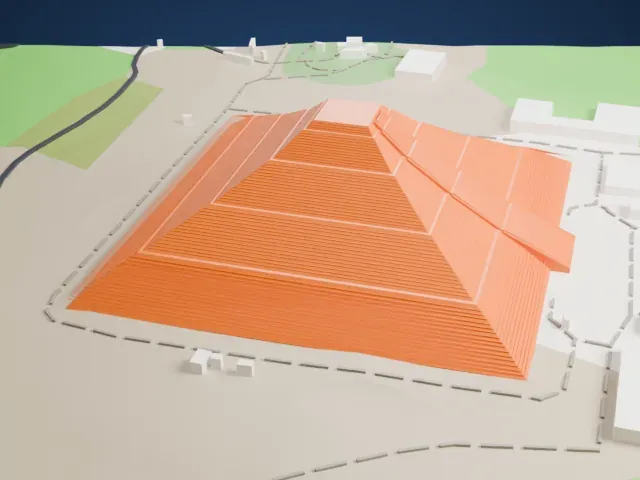
A free, printable model of the stepped pyramid with its staircase, set on open ground with paths, roads, green patches and a few low buildings around it, generated from real map data in your browser.
-
 North
-
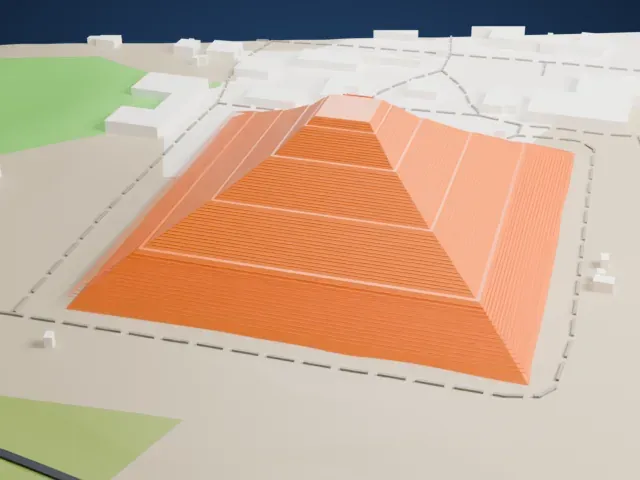 East
-
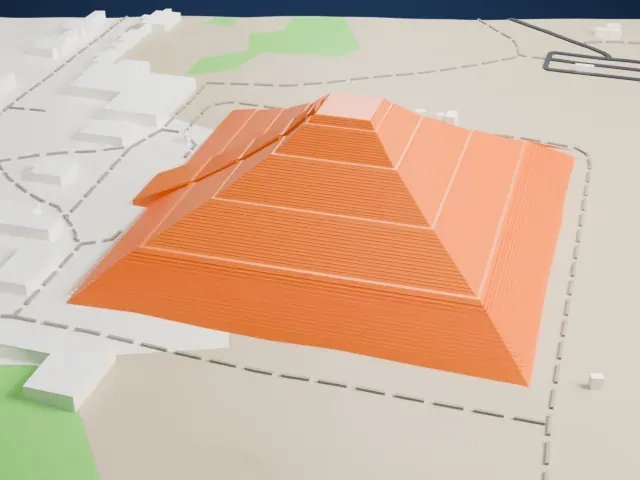 South
-
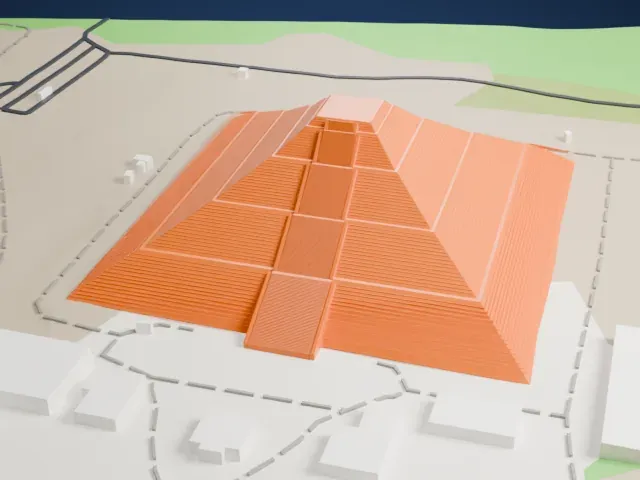 West
- Real height
- 75 m
- On a 160 mm print
- 19 mm
- Scale
- 1:3,750
75 m of the Pyramid of the Sun, 19 mm on your shelf
Make this print opens the generator on a 600 m square around the landmark. Buildings print at close to true scale, so the landmark grows with the print size.
- Many narrow steps
The sloping sides are cut into many narrow terraces. Print friendly adapts the finest steps to your print scale; Full detail keeps every terrace. Layers of 0.12 to 0.16 mm keep the step edges crisp.
- A staircase on one face
A staircase with fine ridges climbs one face of the pyramid. A larger print keeps those ridges readable.
- One piece with the ground
The Pyramid of the Sun is joined to the ground in the exported file, and the four-side check found no floating parts, so nothing needs gluing.
- Pick the detail for your nozzle
In the Buildings settings, set Landmark detail to Print friendly to adapt thin parts and small details to the print scale. Full detail keeps every modeled feature, for larger prints or a finer nozzle.
- Colors
Buildings, roads, water and ground arrive as separate filament slots in the 3MF. The Pyramid of the Sun takes the building color.
- File format
You get a 3MF for Bambu Studio, OrcaSlicer or PrusaSlicer. Any of them can save it as STL if you need one.
About the Pyramid of the Sun
The Pyramid of the Sun is Teotihuacan's largest building and ranks among the largest in all of Mesoamerica. It is believed to date from about 200 AD. It lies along the Avenue of the Dead, between the Ciudadela and the Pyramid of the Moon, in Cerro Gordo's shadow, as part of a large complex at the heart of the city. Its name comes from the Aztecs, who visited Teotihuacan centuries after the city was abandoned; the name the Teotihuacanos gave it is unknown.
Work on the pyramid took place in two phases. The first, around 200 AD, brought it close to its present size. The second round gave it its completed size of 225 m (738 ft) across and 75 m (246 ft) high, which places it among the biggest pyramids in the world, yet it stands only just over half as tall as the Great Pyramid of Giza (146 m). The Teotihuacanos covered the pyramid in lime plaster imported from surrounding areas and painted brilliantly colored murals on it; the paint and plaster have not endured.
The builders chose a spot that let them line the pyramid up with Cerro Gordo in the north and, at right angles to that line, with sunrises and sunsets on specific dates. The central part of Teotihuacan's urban grid, including the Avenue of the Dead, repeats the pyramid's orientation. Archaeologists who investigated the caves and tunnels beneath the pyramid concluded that the caves were sacred to the people of Teotihuacan. Archaeologist Ernesto Taboada found, in 1971, the entrance to a pit seven meters deep at the base of the pyramid's main staircase.
About this model
The Pyramid of the Sun is one of more than 4,300 landmark models in Mini Skyline. They are made with AI, and each one is checked from four sides in its real surroundings before release. Everything around it is built from OpenStreetMap and Overture map data. If you would rather print the shape from map data, turn off Landmark models in the Buildings settings.
Keep exploring