3D print Rod Laver Arena
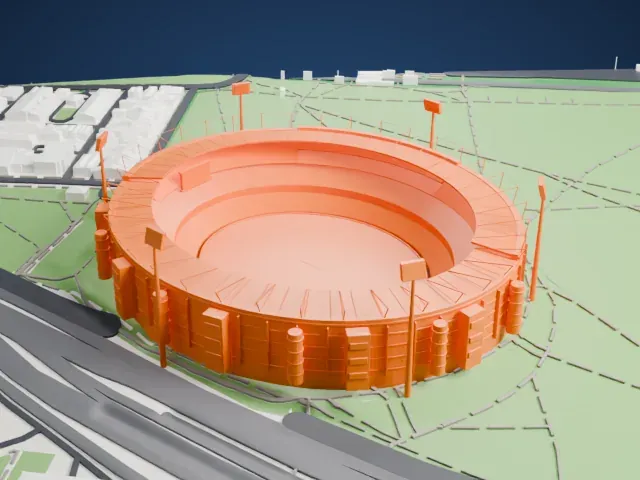
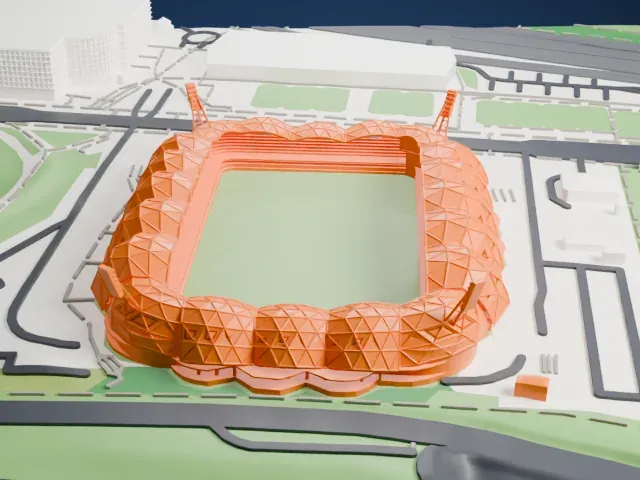
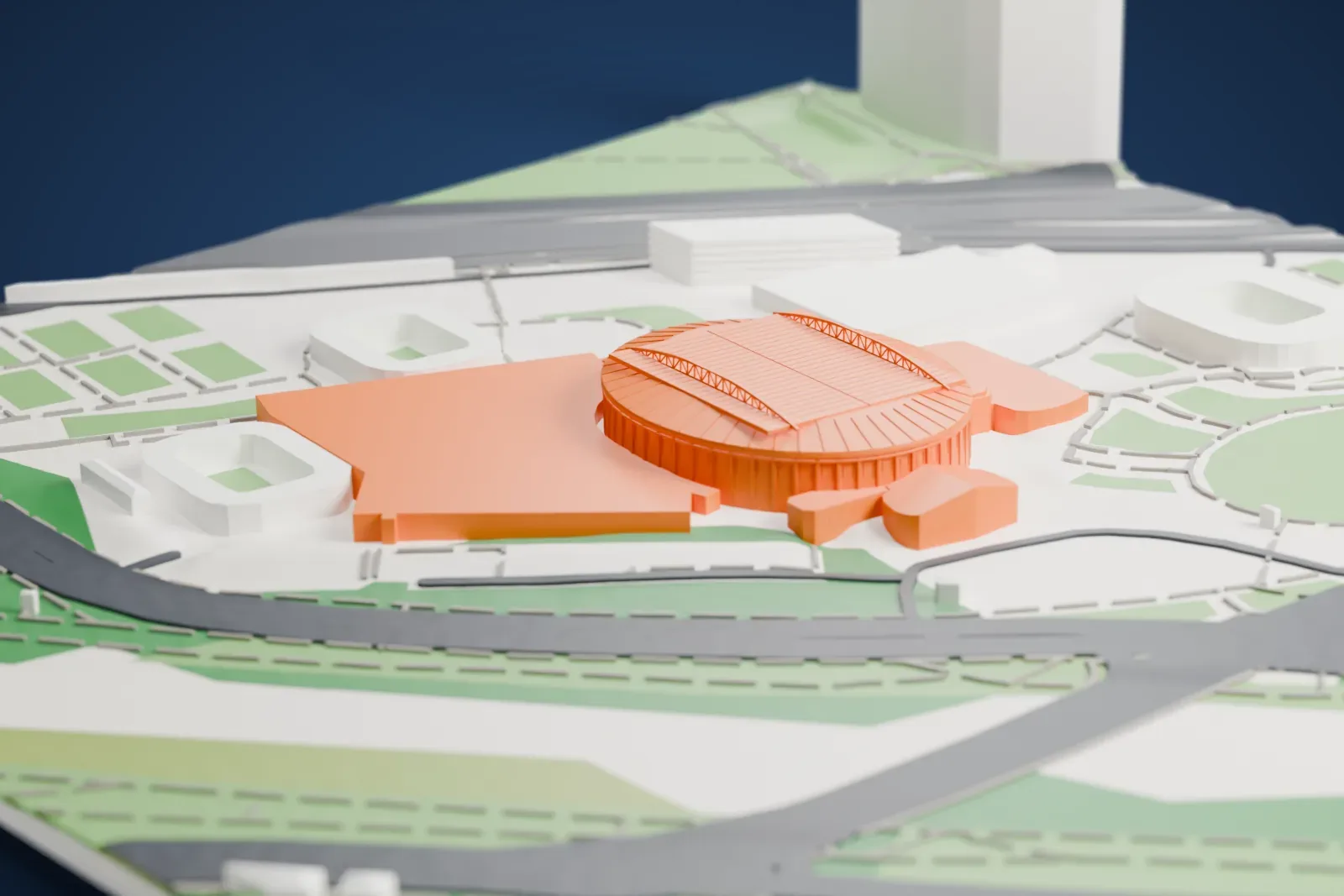
A free, printable model of Rod Laver Arena, its ribbed round bowl and arched roof trusses, with the neighboring buildings, paths and lawns around it, generated from real map data in your browser.
Free, in your browser. Exports a slicer-ready 3MF.
About Rod Laver Arena
In Melbourne Park, in Melbourne, Victoria, Australia, stands Rod Laver Arena, a multipurpose venue. The Australian Open, the year's first Grand Slam tennis tournament, has the arena as its main venue. It replaced the aging Kooyong Stadium. Construction began in 1985 and finished in 1987 for AU$94 million, and the arena opened on January 11, 1988, for that year's Australian Open.
Two renamings followed its original 1988 name, National Tennis Centre at Flinders Park: Centre Court in 1996, and then, on January 16, 2000, Rod Laver Arena, after Rod Laver, who won the Australian Open three times. It seats 14,820. Capacity rises to 15,400 for basketball and similar sports, with extra seats added around the court, and for concerts with floor seating it is up to 14,200.
It was the first tennis venue worldwide, and the first arena of any sort in Australia, with a retractable roof. Premier of Victoria John Cain suggested the roof around 1980, as a compromise after Tennis Australia asked for an open-air tennis facility beside a government project for a closed-roof entertainment center. The roof lets play continue in rain or extreme heat. Other uses have included basketball, motorbike super-crosses, concerts, conferences, wrestling and ballet.
How it prints
Make this print opens the generator on a 600 m square around the landmark. Buildings print at close to true scale, so the landmark grows with the print size.
| Print size | Landmark height | Scale |
|---|---|---|
| 160 mm default | 9 mm | 1:3,750 |
| 200 mm | 11 mm | 1:3,000 |
| 256 mm | 14 mm | 1:2,344 |
-
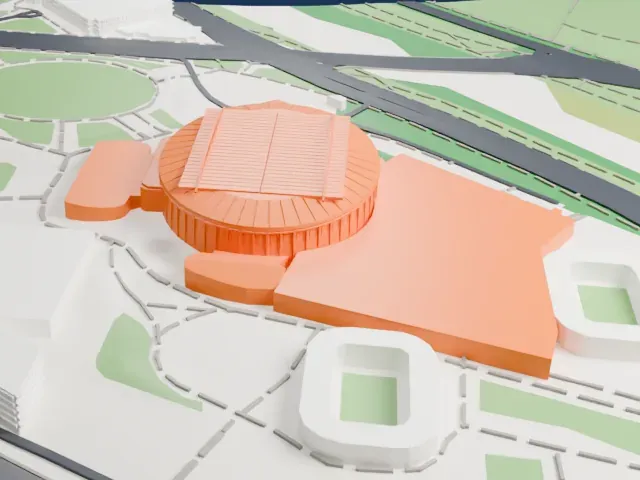 North
North
-
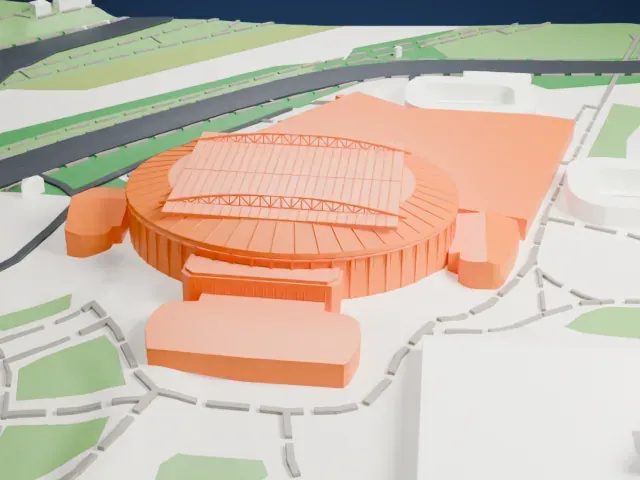 East
East
-
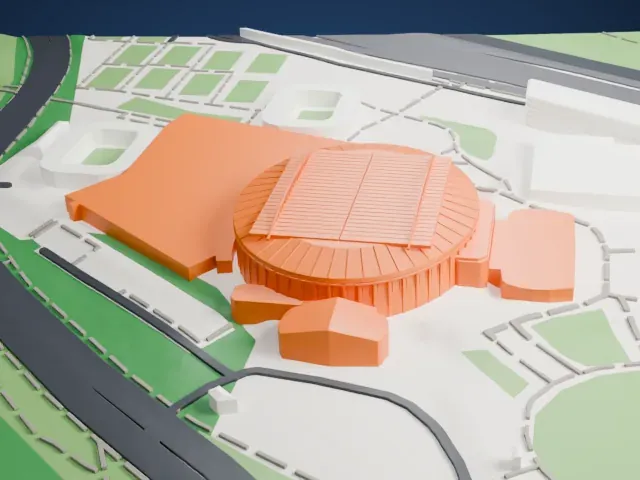 South
South
-
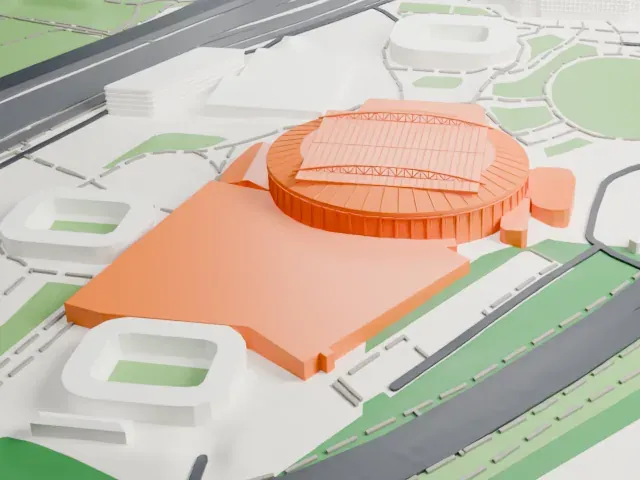 West
West
- Ribbed round wall
- The round wall is lined with many thin vertical ribs. Print friendly adapts these to the print scale; Full detail keeps them, which suits a larger print or a fine nozzle. Layers of 0.12 to 0.16 mm keep them crisp.
- Roof panels on thin arches
- The roof is a set of flat panels carried by two thin arched trusses. A bigger print size keeps the trusses, and printing slowly helps the slim arches form cleanly.
- One piece with the ground
- Rod Laver Arena is joined to the ground in the exported file, and the four-side check found no floating parts, so nothing needs gluing.
- Pick the detail for your nozzle
- In the Buildings settings, set Landmark detail to Print friendly to adapt thin parts and small details to the print scale. Full detail keeps every modeled feature, for larger prints or a finer nozzle.
- Colors
- Buildings, roads, water and ground arrive as separate filament slots in the 3MF. Rod Laver Arena takes the building color.
- File format
- You get a 3MF for Bambu Studio, OrcaSlicer or PrusaSlicer. Any of them can save it as STL if you need one.
About this model
Rod Laver Arena is one of more than 2,300 landmark models in Mini Skyline. They are made with AI, and each one is checked from four sides in its real surroundings before release. Everything around it is built from OpenStreetMap and Overture map data. If you would rather print the shape from map data, turn off Landmark models in the Buildings settings.
Common questions
Is there a Rod Laver Arena STL I can download?
Mini Skyline builds the file for you in your browser and exports 3MF, which every major slicer opens. If you need an STL, open the 3MF in your slicer and export it from there.
How big can I print it?
Any print size from 40 mm across. Rod Laver Arena grows with the print: about 9 mm tall on the default 160 mm print. For a model larger than your printer bed, Project Mode splits the area into tiles.
Is it free?
Yes. Generation runs in your browser, with no account and nothing behind a paywall.