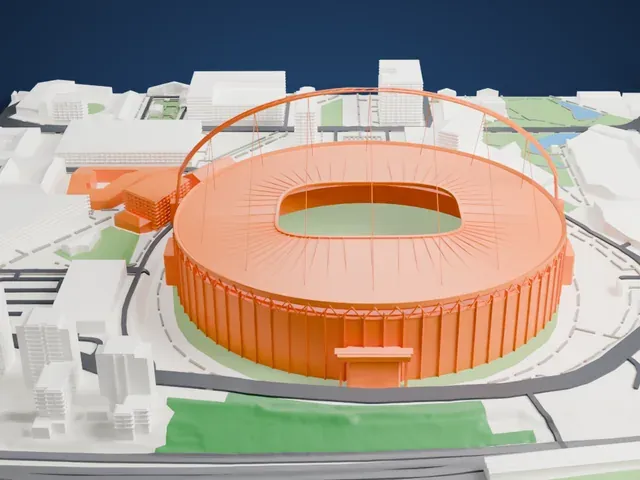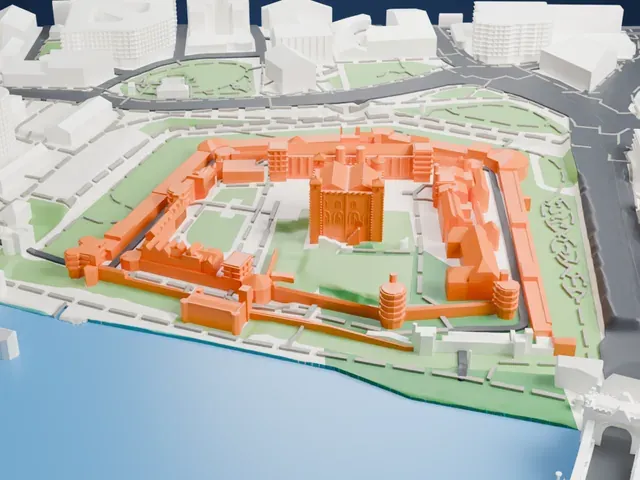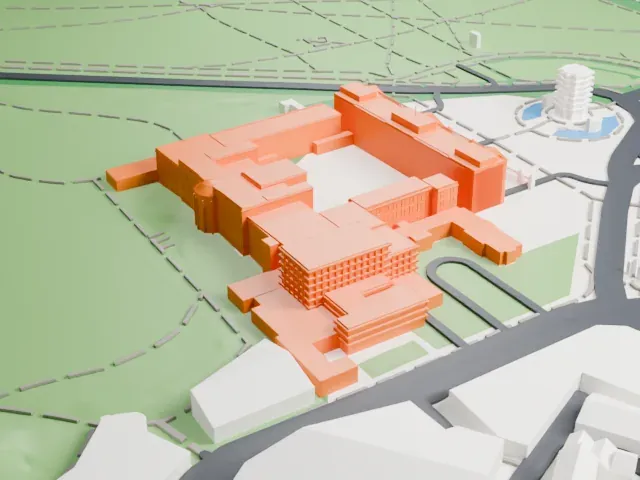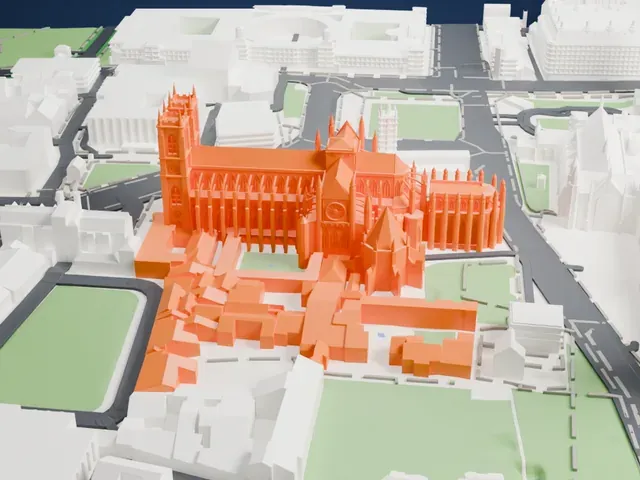
3D print the Roman Baths Bath
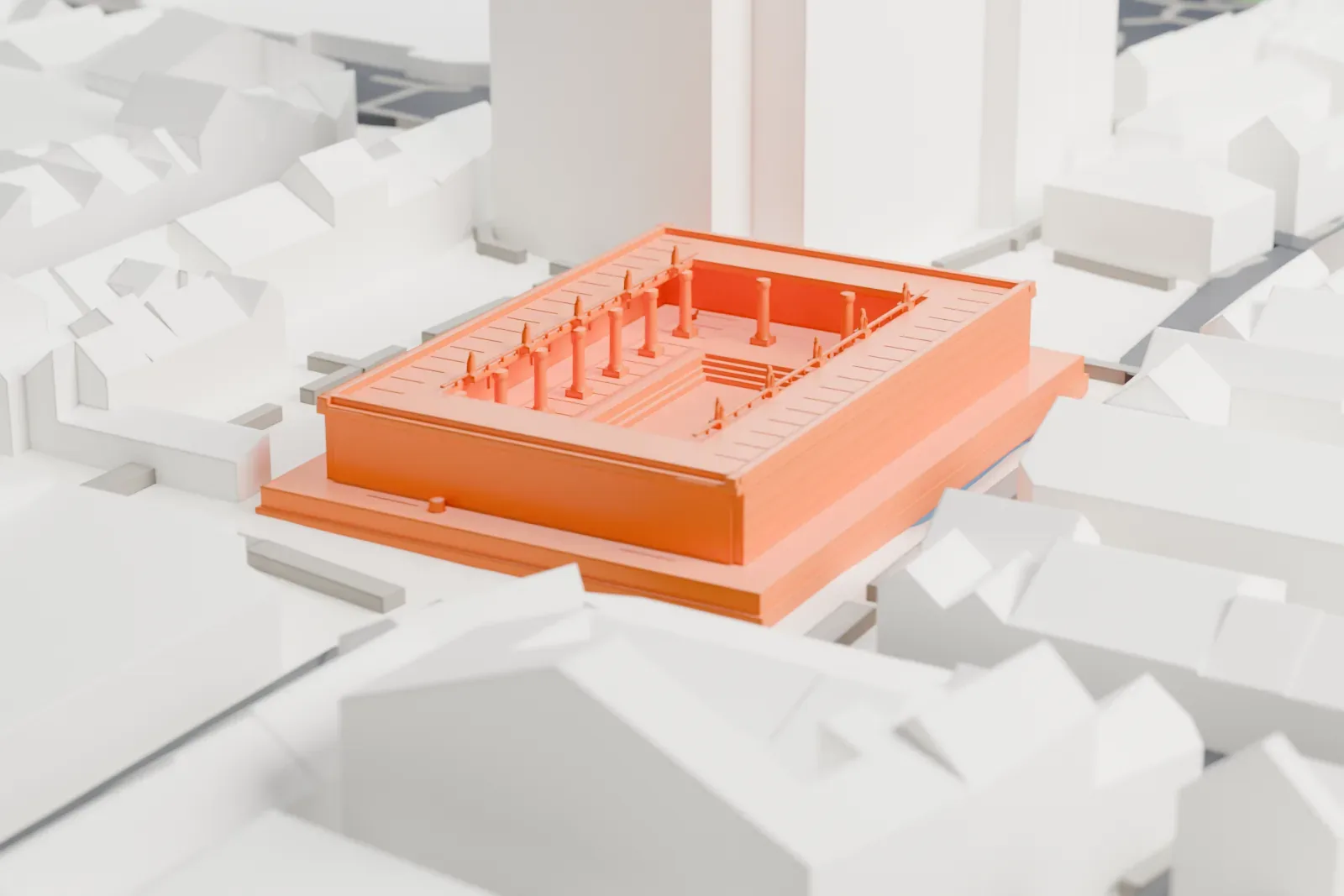
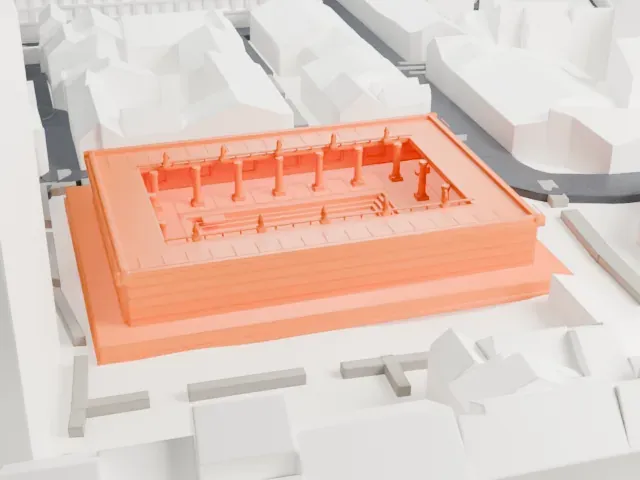
A free, printable model of the Roman Baths, a low terrace of columns around a sunken pool, and the closely packed buildings around it, generated from real map data in your browser.
-
 North
-
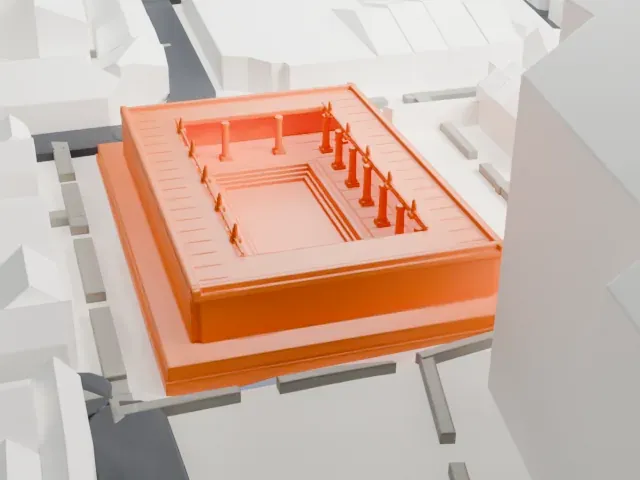 East
-
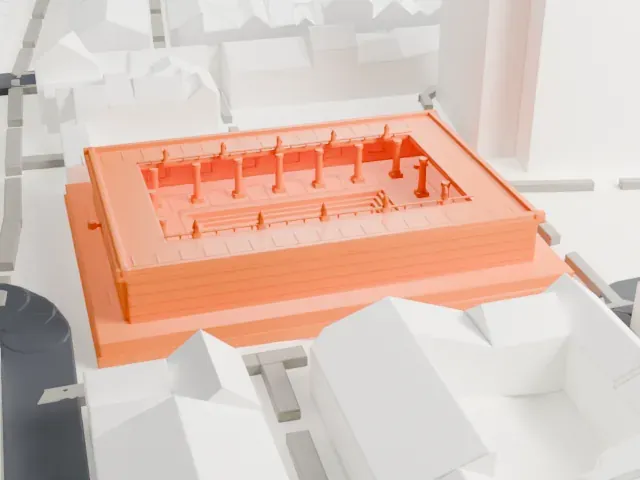 South
-
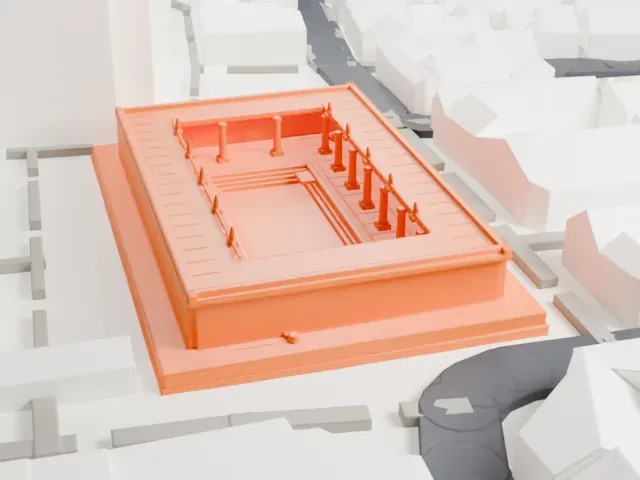 West
- On a 160 mm print
- 4 mm
- Scale
- 1:3,750
4 mm tall on a 160 mm print
Make this print opens the generator on a 600 m square around the landmark. Buildings print at close to true scale, so the landmark grows with the print size.
- Slender columns around the pool
Rows of thin columns and a fine railing surround the sunken pool. Print friendly adapts them to the print scale; Full detail keeps every column on a larger print.
- A low, flat terrace
The model is a low block, so its detail sits close to the base. Layers of 0.12–0.16 mm keep the steps and the sunken pool outline crisp, and a larger print size helps.
- Pick the detail for your nozzle
In the Buildings settings, set Landmark detail to Print friendly to adapt thin parts and small details to the print scale. Full detail keeps every modeled feature, for larger prints or a finer nozzle.
- Colors
Buildings, roads, water and ground arrive as separate filament slots in the 3MF. The Roman Baths Bath takes the building color.
- File format
You get a 3MF for Bambu Studio, OrcaSlicer or PrusaSlicer. Any of them can save it as STL if you need one.
About the Roman Baths Bath
The Roman Baths, preserved as thermae in Bath, a city in Somerset, England, trace back to a temple raised there between 60 and 70 AD, early in the period of Roman Britain. A small Roman settlement named Aquae Sulis developed there. Designed for public bathing, the baths stayed in use until Roman rule ended in Britain during the 5th century AD. The complex was added to bit by bit over the following 300 years. The springs were dedicated to Sulis, a goddess whom locals identified with Minerva.
Rain falling on the nearby Mendip Hills sinks through limestone at depths from 2,700 to 4,300 meters (8,900 to 14,100 ft). Geothermal energy heats it, and it climbs along fissures and faults until it bubbles up into the baths. Hot water at 46 °C (114.8 °F) emerges at a rate of 1,170,000 liters (257,000 imp gal) a day. The remains are organized around four main parts: Sacred Spring, Roman Temple, Roman Bath House and a museum.
The museum holds objects from the Roman period, including more than 12,000 denarii coins tossed into the spring, thought to be offerings to the goddess. No larger collective votive deposit is known from Britain. In 1979/80, 130 curse tablets were found in the sacred spring, and many of the curses relate to clothes stolen while the victim was bathing.
About this model
The Roman Baths Bath is one of more than 4,300 landmark models in Mini Skyline. They are made with AI, and each one is checked from four sides in its real surroundings before release. Everything around it is built from OpenStreetMap and Overture map data. If you would rather print the shape from map data, turn off Landmark models in the Buildings settings.
Keep exploring