3D print the Ziggurat of Ur
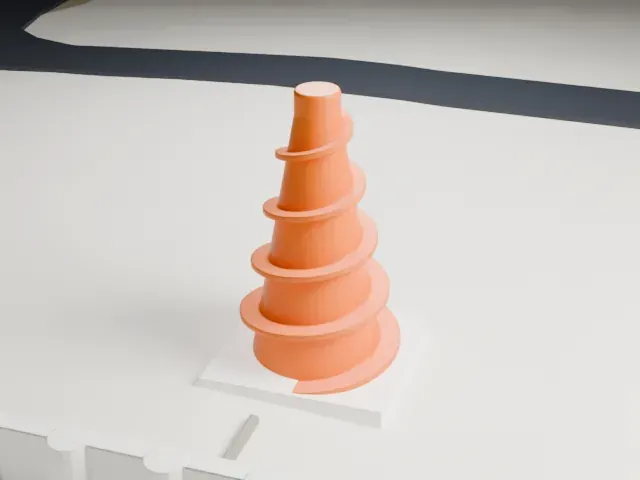
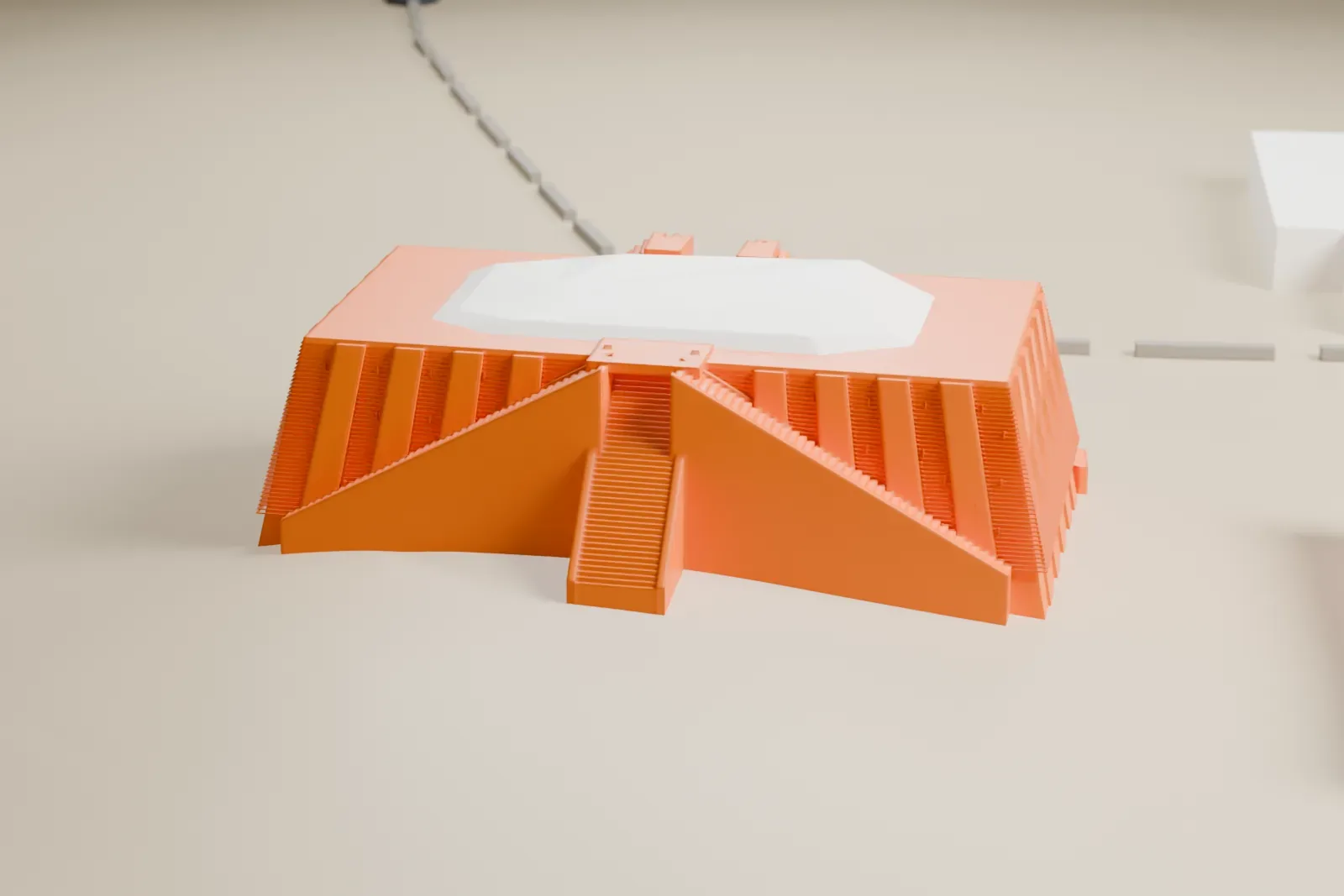
A free, printable model of the Ziggurat of Ur, a terraced platform with long staircases, on bare ground with a few plain buildings and roads nearby, generated from real map data in your browser.
Free, in your browser. Exports a slicer-ready 3MF.
About the Ziggurat of Ur
The Great Ziggurat of Ur is a Neo-Sumerian step pyramid in the ancient city of Ur, near Nasiriyah in Dhi Qar Province, Iraq. Its Sumerian name, Etemenniguru, means house whose foundation creates terror. Ur-Nammu, a king of Ur's Third Dynasty, built it in the Early Bronze Age, in the 21st century BC, and dedicated it in honor of Nanna/Sîn. At 64 m (210 ft) long and 45 m (148 ft) wide, the huge step pyramid had a speculative height of over 30 m (98 ft), because only the foundations of the original Sumerian ziggurat survive.
The ziggurat was part of a temple complex that functioned as the city's administrative center. It was also a shrine to Nanna, the moon god and patron deity of Ur. King Shulgi finished the construction in the 21st century BC, and during his 48-year reign Ur grew into the capital of a state that controlled much of Mesopotamia. By the 6th century BC it had crumbled to ruins. Nabonidus, the final king of the Neo-Babylonian Empire, ordered a restoration in seven stages instead of three, after he found little left but the last stage.
William Loftus rediscovered the remains in 1850. Sir Leonard Woolley later excavated the site extensively, between 1922 and 1934, for the University of Pennsylvania's University Museum and the British Museum. Mud brick makes up the solid core, in three layers, faced with burned bricks laid in bitumen. The lowest layer dates to Ur-Nammu's original build, while the two upper ones are from Neo-Babylonian restoration work. It is the best preserved of the ziggurats known from Mesopotamia, besides the one at Dur Untash (Chogha Zanbil).
How it prints
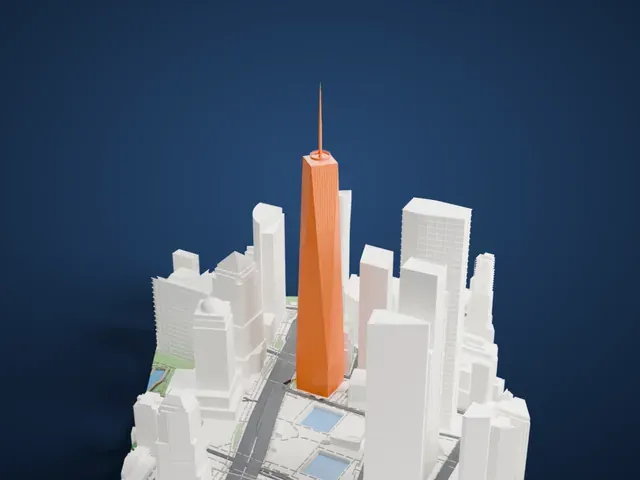
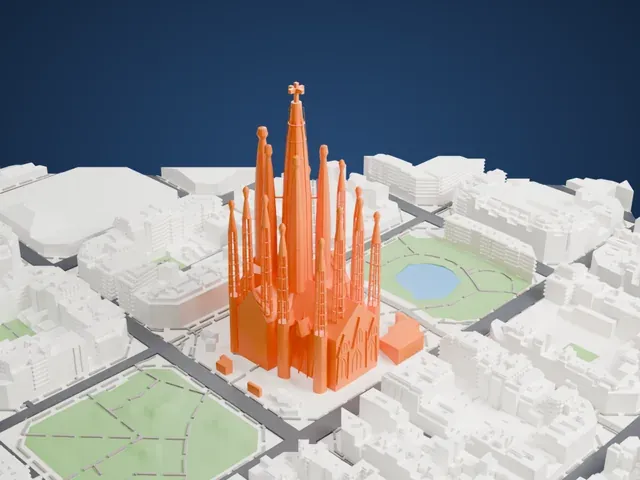
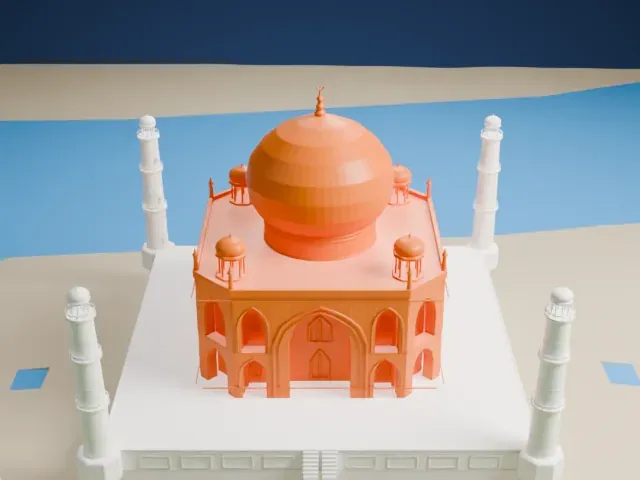
Make this print opens the generator on a 600 m square around the landmark. Buildings print at close to true scale, so the landmark grows with the print size.
| Print size | Landmark height | Scale |
|---|---|---|
| 160 mm default | 6 mm | 1:3,750 |
| 200 mm | 7 mm | 1:3,000 |
| 256 mm | 9 mm | 1:2,344 |
-
 North
North
-
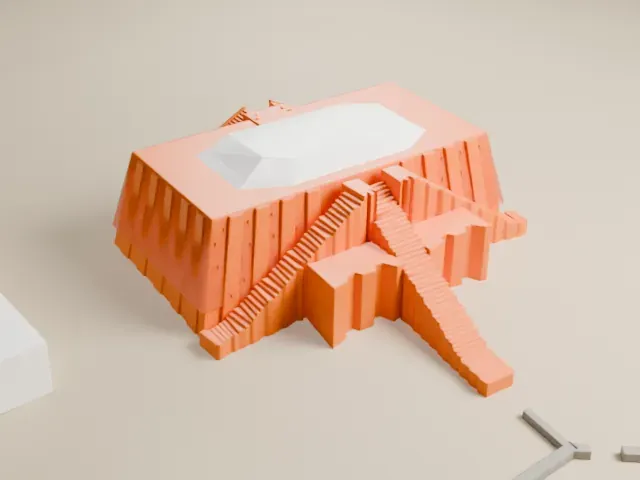 East
East
-
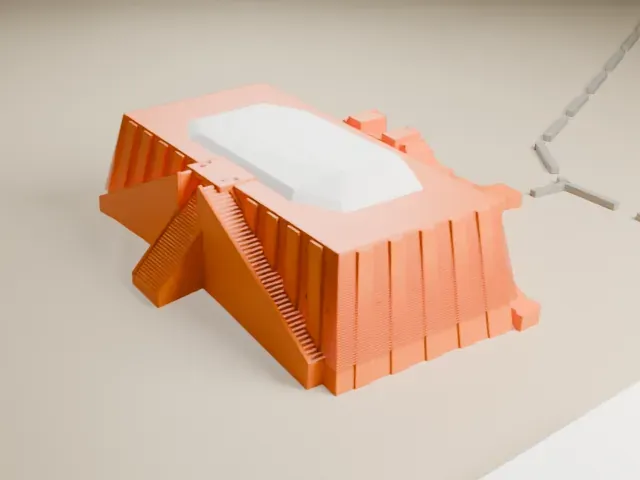 South
South
-
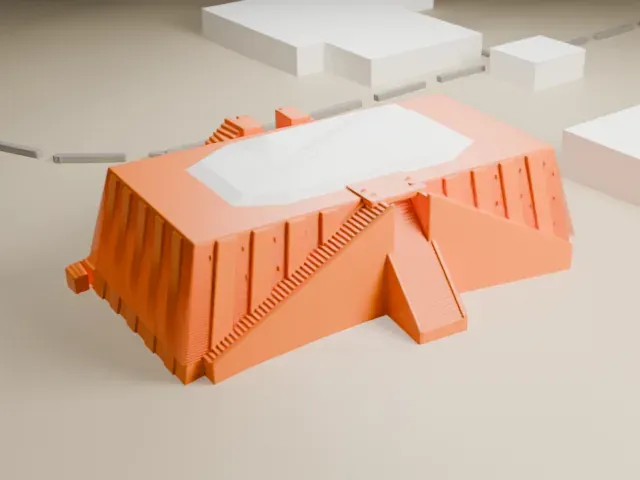 West
West
- Long staircases and fine ribs
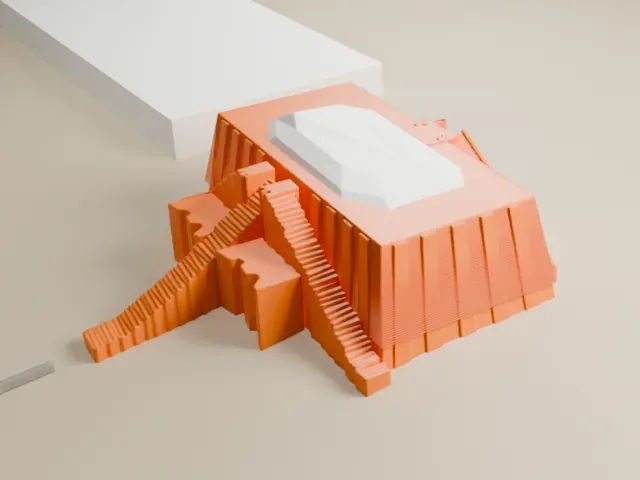
- Narrow staircases climb the sides, and the walls carry fine vertical ribs. Print friendly adapts these small details to your print scale; Full detail keeps them, best on a larger print with 0.12 to 0.16 mm layers.
- Wide, low shape
- The ziggurat is wide and low, so a larger print shows its staircases and terraces more clearly.
- One piece with the ground
- The Ziggurat of Ur is joined to the ground in the exported file, and the four-side check found no floating parts, so nothing needs gluing.
- Pick the detail for your nozzle
- In the Buildings settings, set Landmark detail to Print friendly to adapt thin parts and small details to the print scale. Full detail keeps every modeled feature, for larger prints or a finer nozzle.
- Colors
- Buildings, roads, water and ground arrive as separate filament slots in the 3MF. The Ziggurat of Ur takes the building color.
- File format
- You get a 3MF for Bambu Studio, OrcaSlicer or PrusaSlicer. Any of them can save it as STL if you need one.
About this model
The Ziggurat of Ur is one of more than 2,300 landmark models in Mini Skyline. They are made with AI, and each one is checked from four sides in its real surroundings before release. Everything around it is built from OpenStreetMap and Overture map data. If you would rather print the shape from map data, turn off Landmark models in the Buildings settings.
Common questions
Is there a Ziggurat of Ur STL I can download?
Mini Skyline builds the file for you in your browser and exports 3MF, which every major slicer opens. If you need an STL, open the 3MF in your slicer and export it from there.
How big can I print it?
Any print size from 40 mm across. The Ziggurat of Ur grows with the print: about 6 mm tall on the default 160 mm print. For a model larger than your printer bed, Project Mode splits the area into tiles.
Is it free?
Yes. Generation runs in your browser, with no account and nothing behind a paywall.