3D print the Apollo 14 landing site at Fra Mauro
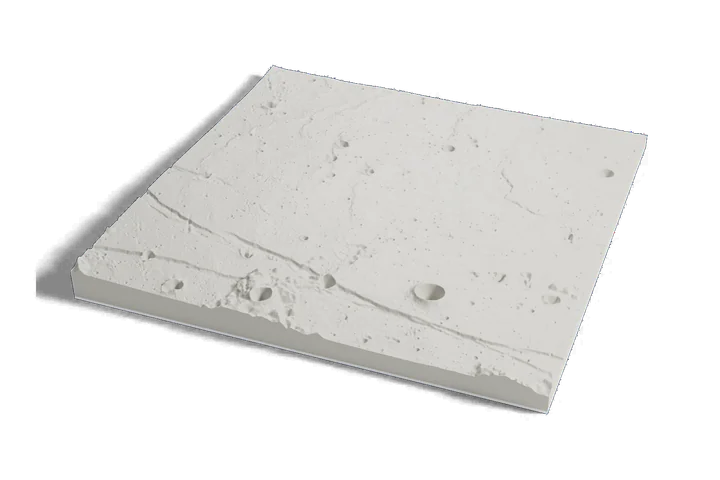
The highlands where Apollo 14 landed on one print: the ridge the crew climbed toward Cone crater and the old rim of Fra Mauro crater, from elevation data measured by lunar orbiters.
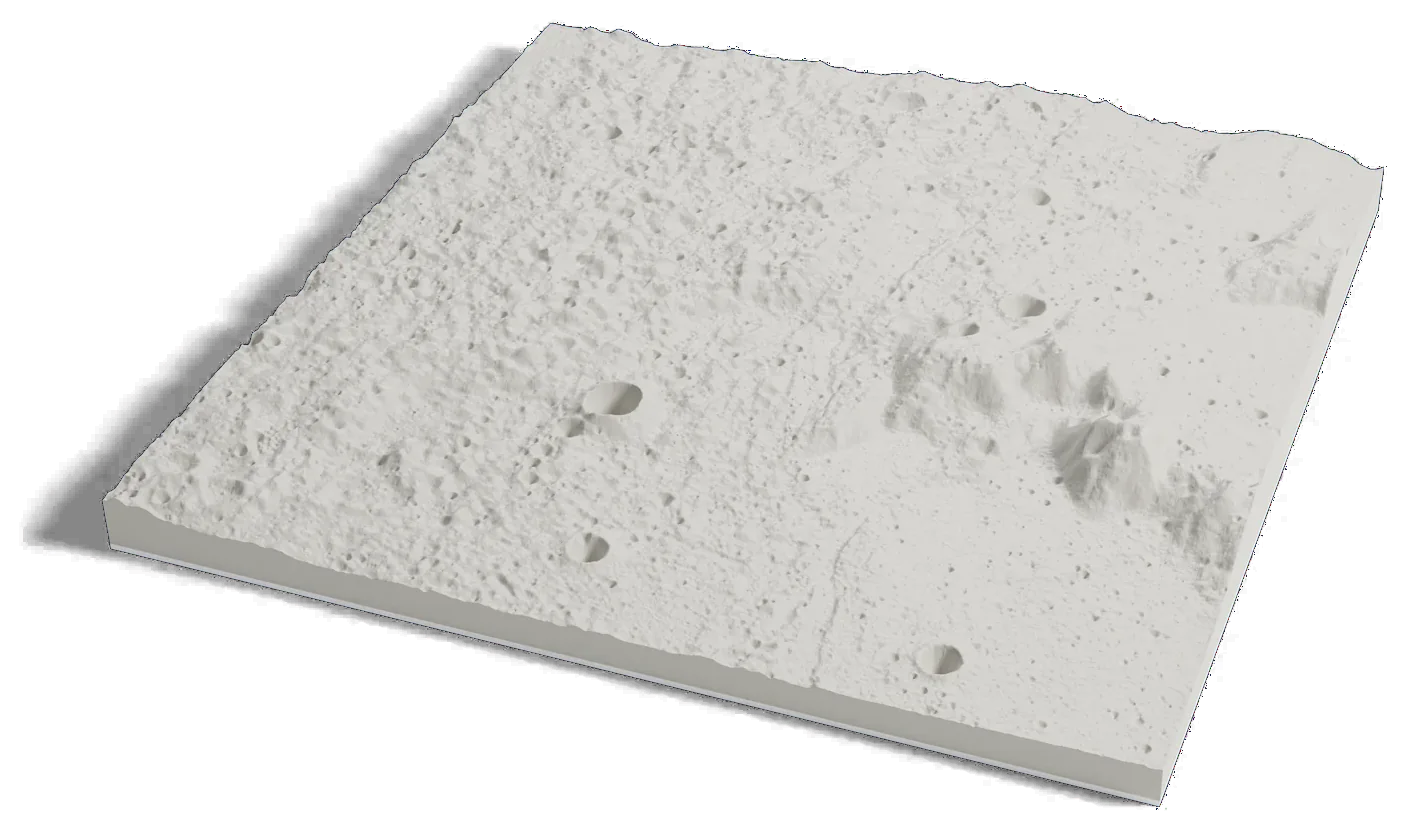
Moon terrain: USGS Astrogeology; NASA LRO LOLA; JAXA SELENE/Kaguya. Surface imagery: LRO LROC WAC mosaic, NASA/GSFC/Arizona State University.
Where it is 3.65°S 17.47°W The Moon · near side
- Landing
- February 5, 1971
- Crew
- Alan Shepard, Edgar Mitchell, Stuart Roosa
- Moonwalks
- Two, 9 hours 23 minutes in all
- Samples
- 42 kg (93 lb)
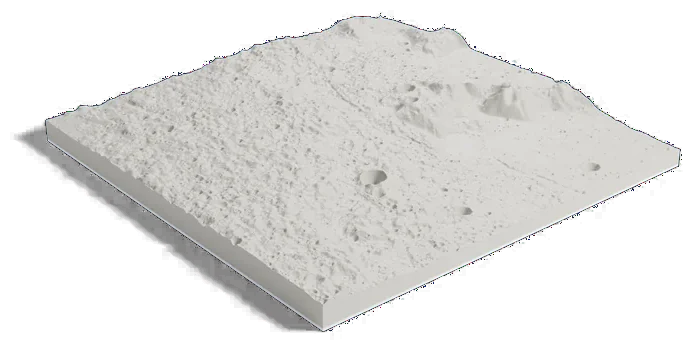
Moon terrain: USGS Astrogeology; NASA LRO LOLA; JAXA SELENE/Kaguya. Surface imagery: LRO LROC WAC mosaic, NASA/GSFC/Arizona State University.
80 by 80 km of the Moon, 160 mm across
About Apollo 14 landing site
Apollo 14 landed in the Fra Mauro highlands on February 5, 1971. Alan Shepard and Edgar Mitchell spent 9 hours 23 minutes outside on two moonwalks and collected 42 kg (93 lb) of samples, while Stuart Roosa orbited overhead.
With no rover, the crew pulled their tools on a two-wheeled handcart. On the second moonwalk they climbed the ridge toward Cone crater, 340 m (1,100 ft) across, and got almost to its rim. The area is named for Fra Mauro crater, which honors the 15th-century Italian geographer Fra Mauro.
Sources: NASA NSSDC: Apollo landing sites, NASA NSSDC: Apollo 14, NASA NSSDC: Apollo 14 lunar module, IAU Gazetteer of Planetary Nomenclature: Cone, IAU Gazetteer of Planetary Nomenclature: Fra Mauro, NASA NTRS: Apollo 14 geology
Elsewhere on the Moon
All worlds-
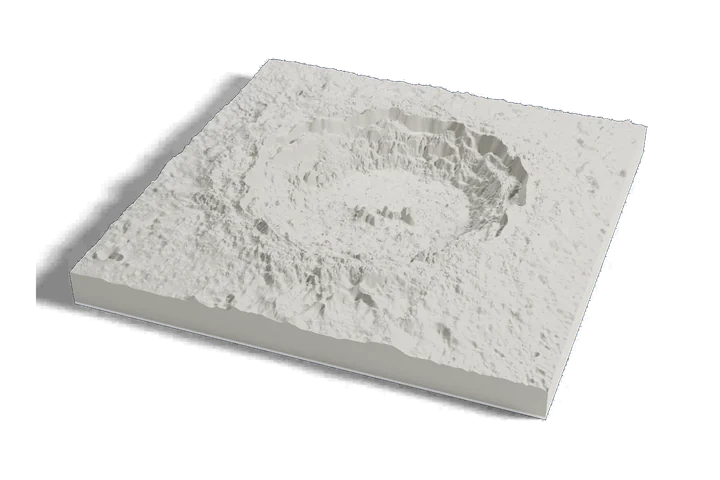 Crater
Copernicus crater
-
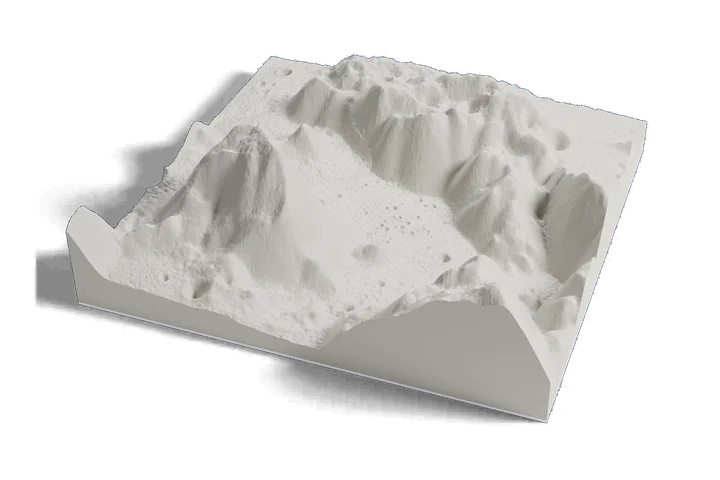 Landing site · Apollo 17, 1972
Taurus-Littrow valley
-
 Landing site · Apollo 11, 1969
Tranquility Base
Moon terrain: USGS Astrogeology; NASA LRO LOLA; JAXA SELENE/Kaguya. Surface imagery: LRO LROC WAC mosaic, NASA/GSFC/Arizona State University.