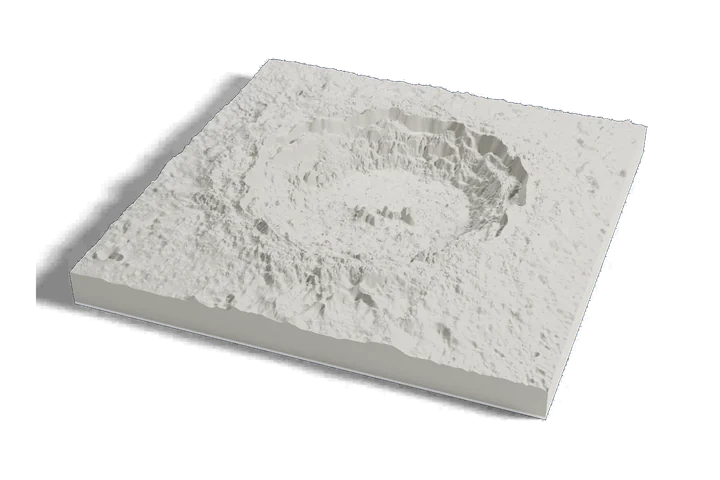
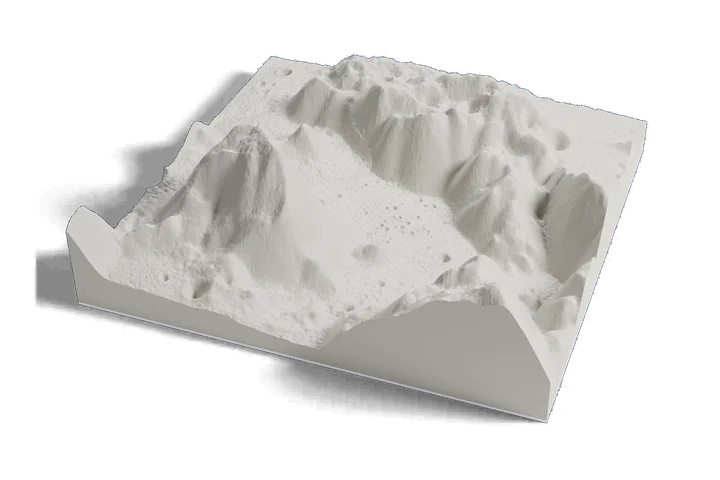
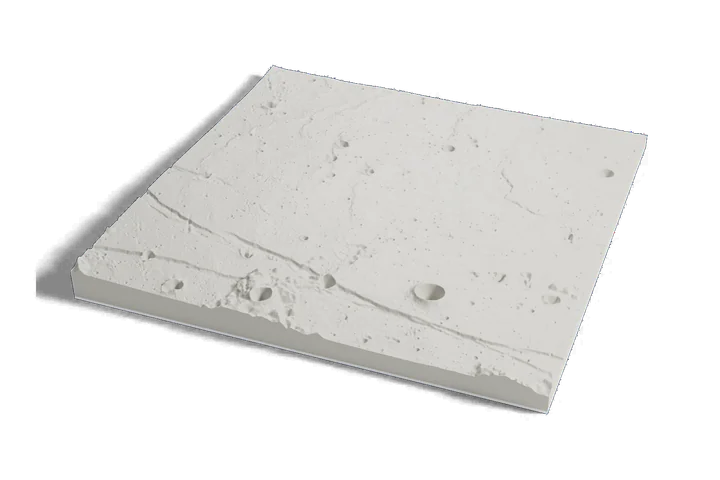
3D print Aristarchus crater and Vallis Schröteri
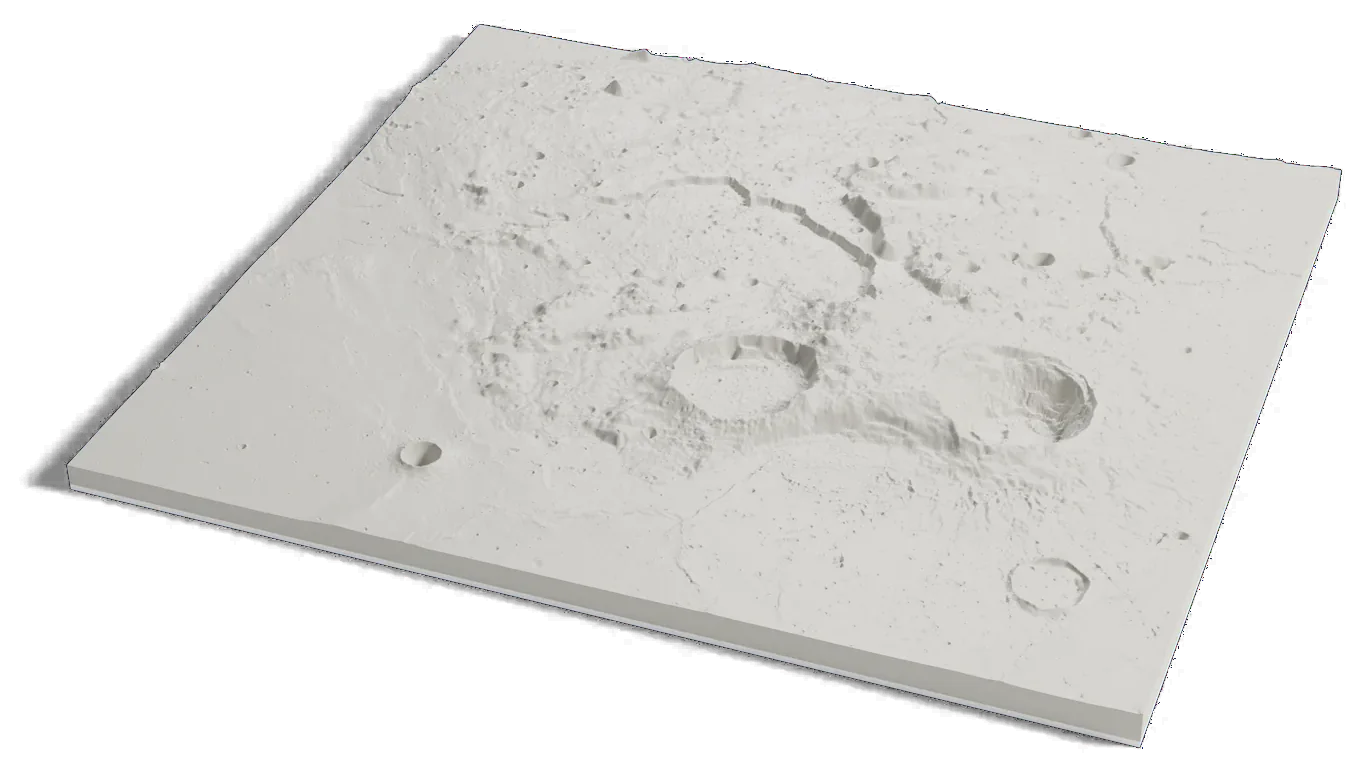
One of the most reflective places on the Moon on one print: Aristarchus crater, the winding Vallis Schröteri and the high plateau they sit on, from elevation data measured by lunar orbiters.
Where it is 23.73°N 47.49°W The Moon · near side
- Crater diameter
- 40 km (25 mi)
- Depth
- 2.7 to 3.5 km (8,900 to 11,500 ft), by source
- Vallis Schröteri
- 185 km (115 mi) long
- Named for
- Aristarchus, Greek astronomer (c. 310-230 BC)
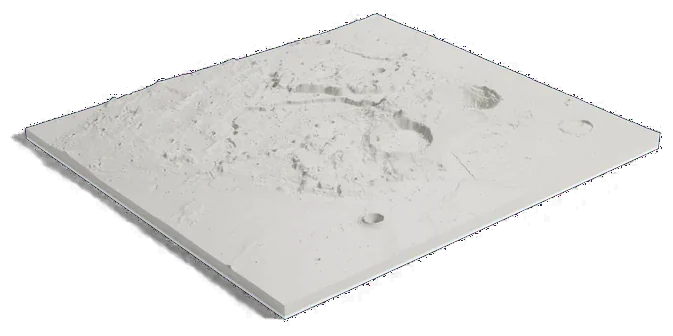
270 by 243 km of the Moon, 160 mm across
About Aristarchus crater
Aristarchus is an impact crater about 40 km (25 mi) across on the Moon's near side. LROC calls it one of the most reflective areas on the Moon, because the impact dug up bright rock from deep in the crust. Its floor lies about 2.7 to 3.5 km (8,900 to 11,500 ft) below the rim, depending on the measurement.
Beside it runs Vallis Schröteri, which LROC calls the largest rille on the Moon: a winding valley 185 km (115 mi) long that starts at a feature nicknamed the Cobra Head. LROC calls the plateau they sit on one of the most geologically varied places on the Moon, and it was proposed as an Apollo landing site before the program ended. The crater is named for the Greek astronomer Aristarchus.
Sources: IAU Gazetteer of Planetary Nomenclature: Aristarchus, IAU Gazetteer of Planetary Nomenclature: Vallis Schröteri, LROC: Aristarchus, LROC: Aristarchus central peak, LROC: Vallis Schröteri