3D print Theophilus, Cyrillus and Catharina on the Moon
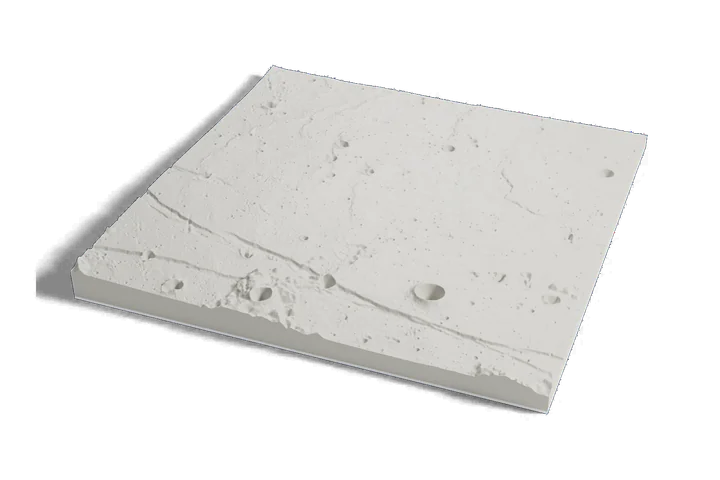
Three large craters in a row on one print: Theophilus with its central peaks, Cyrillus beside it and Catharina to the south, at the edge of Mare Nectaris, from elevation data measured by lunar orbiters.
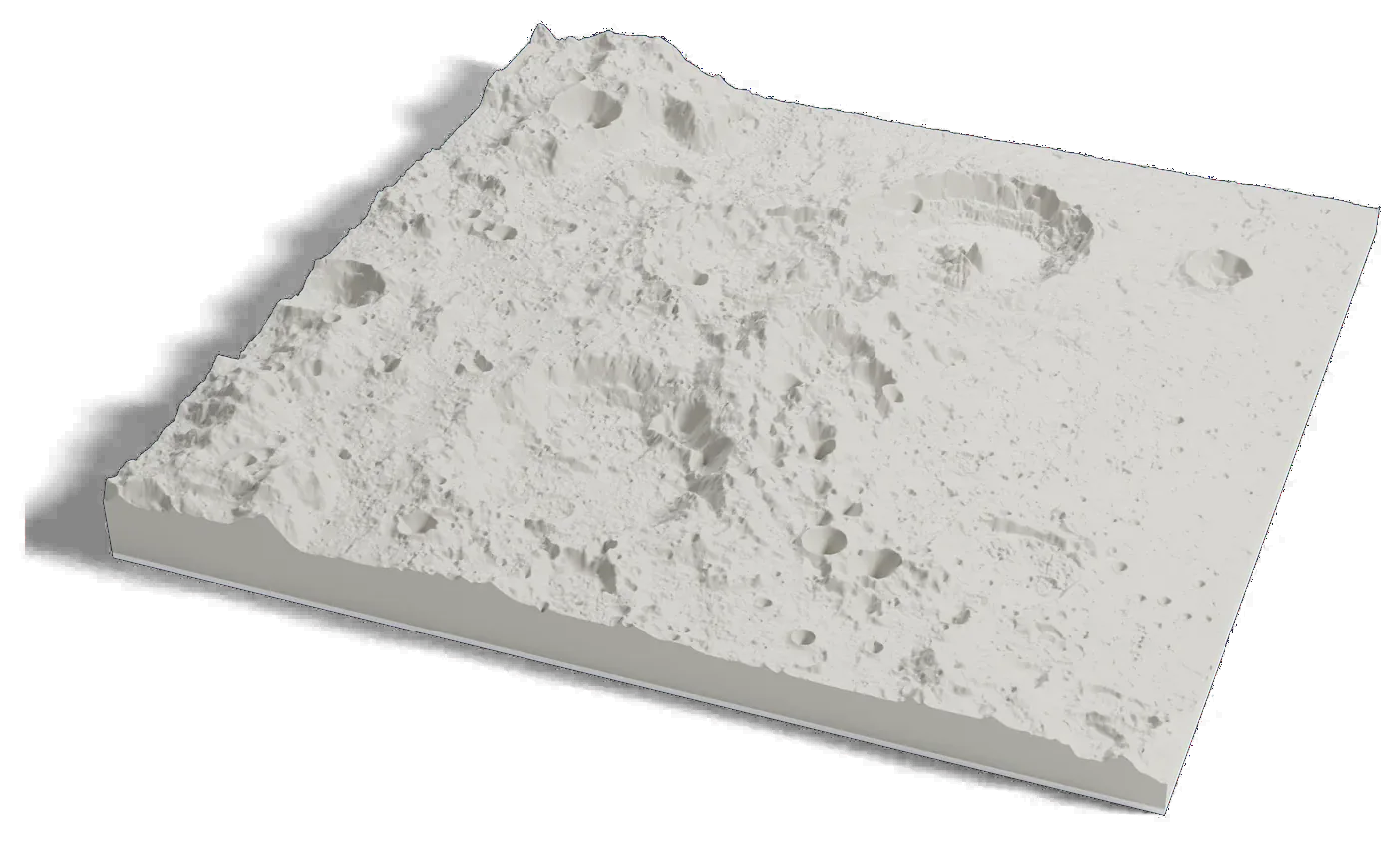
Moon terrain: USGS Astrogeology; NASA LRO LOLA; JAXA SELENE/Kaguya. Surface imagery: LRO LROC WAC mosaic, NASA/GSFC/Arizona State University.
Where it is 11.45°S 26.28°E The Moon · near side
- Theophilus
- About 100 km (62 mi) across
- Cyrillus
- About 98 km (61 mi) across
- Catharina
- About 99 km (62 mi) across
- Named for
- Theophilus, Greek astronomer (d. AD 412)
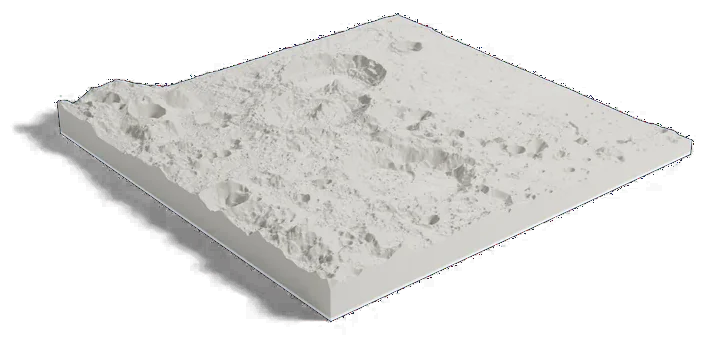
Moon terrain: USGS Astrogeology; NASA LRO LOLA; JAXA SELENE/Kaguya. Surface imagery: LRO LROC WAC mosaic, NASA/GSFC/Arizona State University.
390 by 379 km of the Moon, 160 mm across
About Theophilus crater
Theophilus is an impact crater about 100 km (62 mi) across on the Moon's near side, with a cluster of central peaks whose summits show bare rock brought up from deep in the crust. It sits right against its neighbor Cyrillus, and Catharina lies farther south; each of the three is about 100 km across.
Theophilus is named for a Greek astronomer, Cyrillus for Saint Cyril of Alexandria and Catharina for Saint Catherine of Alexandria. The long cliff Rupes Altai, 545 km (339 mi) long, curves past the three craters to the south, beyond this print.
Sources: IAU Gazetteer of Planetary Nomenclature: Theophilus, IAU Gazetteer of Planetary Nomenclature: Cyrillus, IAU Gazetteer of Planetary Nomenclature: Catharina, IAU Gazetteer of Planetary Nomenclature: Rupes Altai, LROC: Theophilus central peak
Elsewhere on the Moon
All worlds-
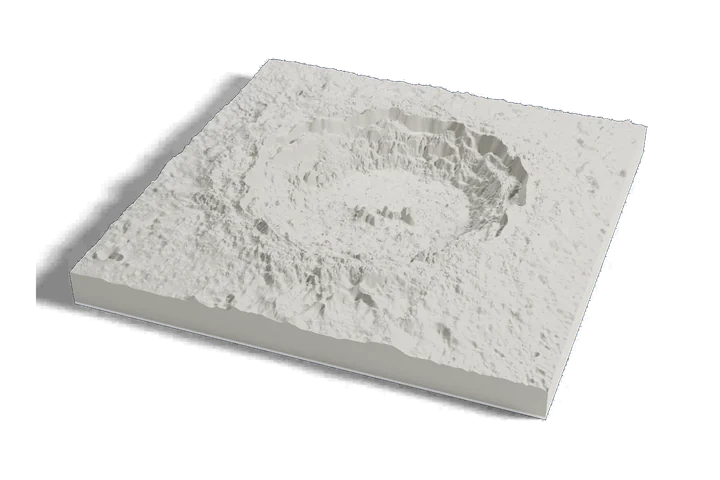 Crater
Copernicus crater
-
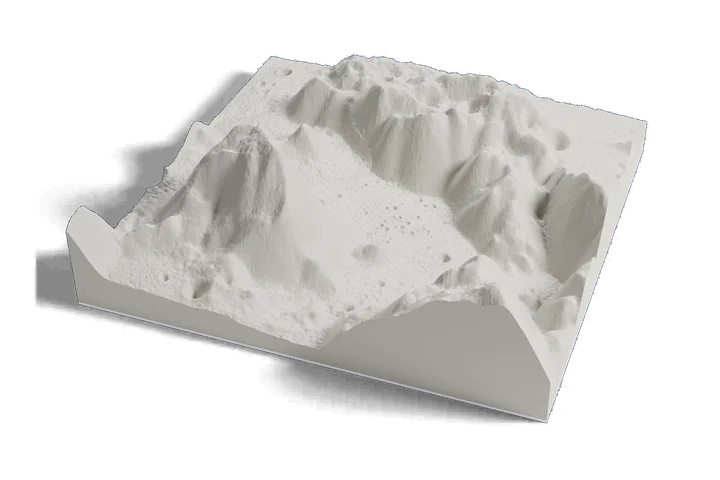 Landing site · Apollo 17, 1972
Taurus-Littrow valley
-
 Landing site · Apollo 11, 1969
Tranquility Base
Moon terrain: USGS Astrogeology; NASA LRO LOLA; JAXA SELENE/Kaguya. Surface imagery: LRO LROC WAC mosaic, NASA/GSFC/Arizona State University.