3D print Tsiolkovskiy crater on the far side of the Moon
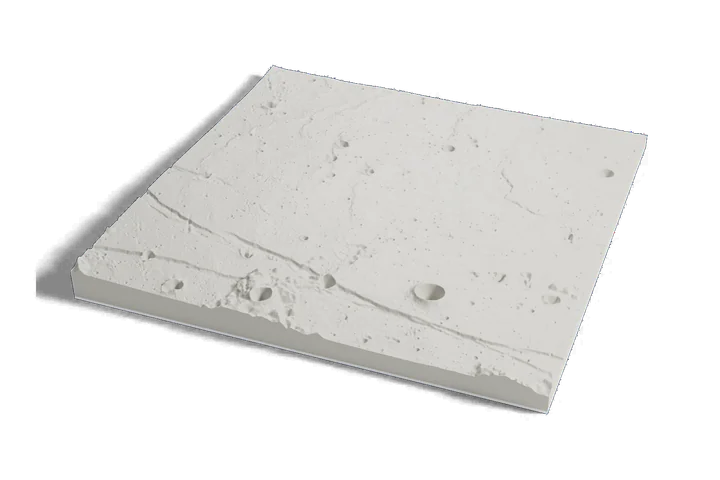
One of the far side's most striking craters on one print: the 185 km rim, the smooth lava floor and the central peak, from elevation data measured by lunar orbiters.
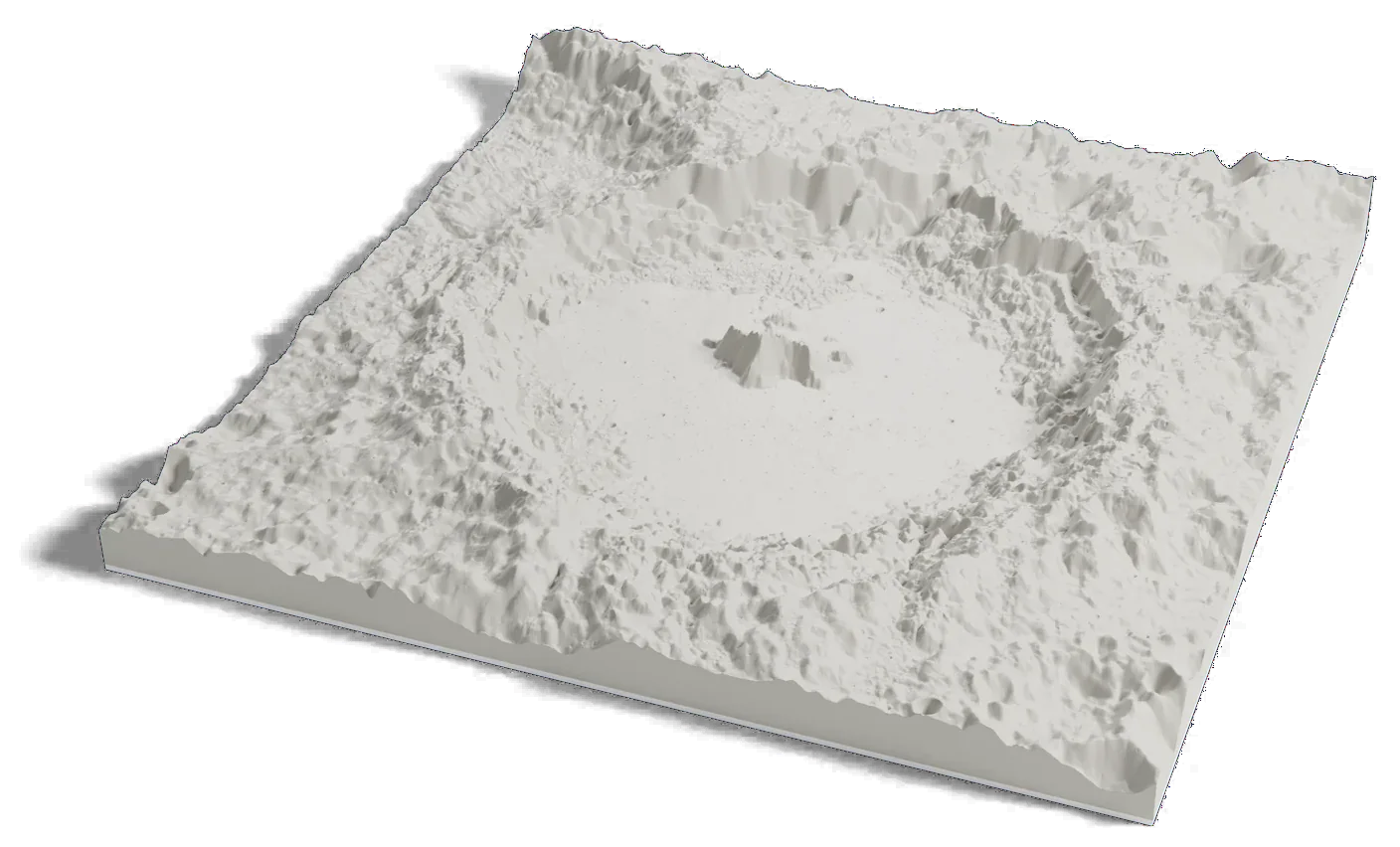
Moon terrain: USGS Astrogeology; NASA LRO LOLA; JAXA SELENE/Kaguya. Surface imagery: LRO LROC WAC mosaic, NASA/GSFC/Arizona State University.
Where it is 20.38°S 128.97°E The Moon · far side
- Diameter
- 185 km (115 mi)
- Central peak
- More than 3,400 m (11,150 ft) above the floor
- Floor
- Smooth mare basalt
- Named for
- Konstantin Tsiolkovsky (1857-1935)
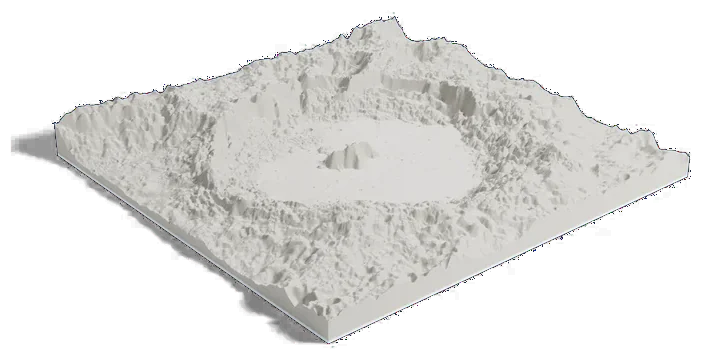
Moon terrain: USGS Astrogeology; NASA LRO LOLA; JAXA SELENE/Kaguya. Surface imagery: LRO LROC WAC mosaic, NASA/GSFC/Arizona State University.
280 by 273 km of the Moon, 160 mm across
About Tsiolkovskiy crater
Tsiolkovskiy is an impact crater 185 km (115 mi) across on the far side of the Moon, the side that never faces Earth. Its floor is covered with smooth mare basalt, dark lava that erupted after the impact and partly buried the boulders on the floor. A central peak rises more than 3,400 m (11,150 ft) from the middle.
The peak is rock from below the crater floor that rebounded upward after the impact, and boulders that rolled down its slopes left trails across the lava. The crater was one of the regions of interest for NASA's Constellation program of human exploration. It is named for Konstantin Tsiolkovsky, the Soviet physicist.
Sources: IAU Gazetteer of Planetary Nomenclature: Tsiolkovskiy, LROC: Tsiolkovskiy central peak, LROC: Tsiolkovskiy crater
Elsewhere on the Moon
All worlds-
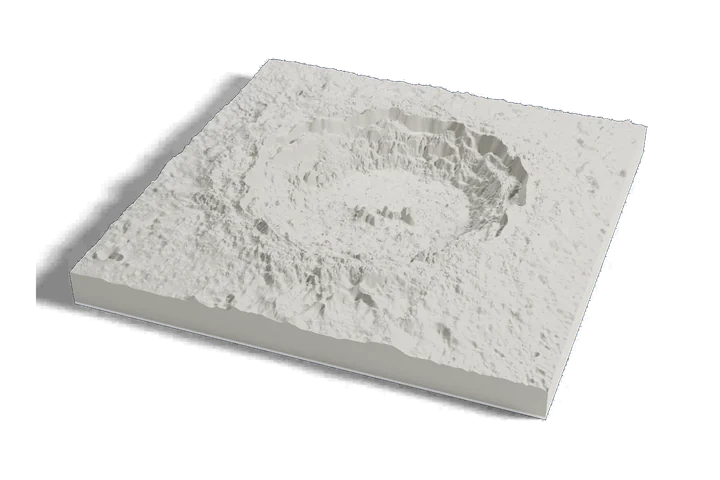 Crater
Copernicus crater
-
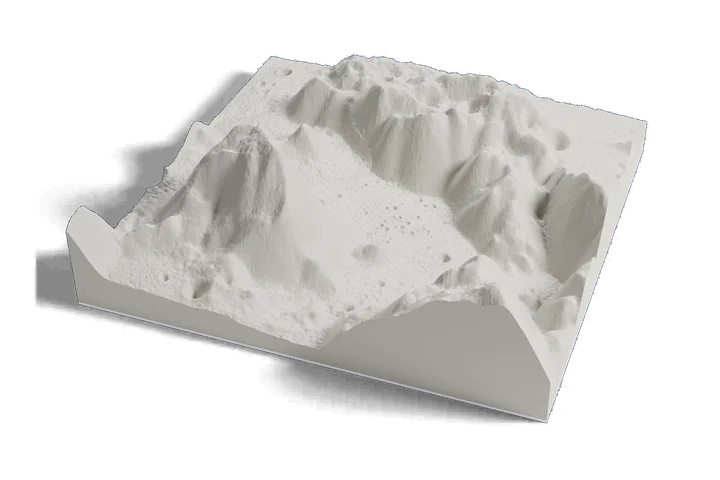 Landing site · Apollo 17, 1972
Taurus-Littrow valley
-
 Landing site · Apollo 11, 1969
Tranquility Base
Moon terrain: USGS Astrogeology; NASA LRO LOLA; JAXA SELENE/Kaguya. Surface imagery: LRO LROC WAC mosaic, NASA/GSFC/Arizona State University.