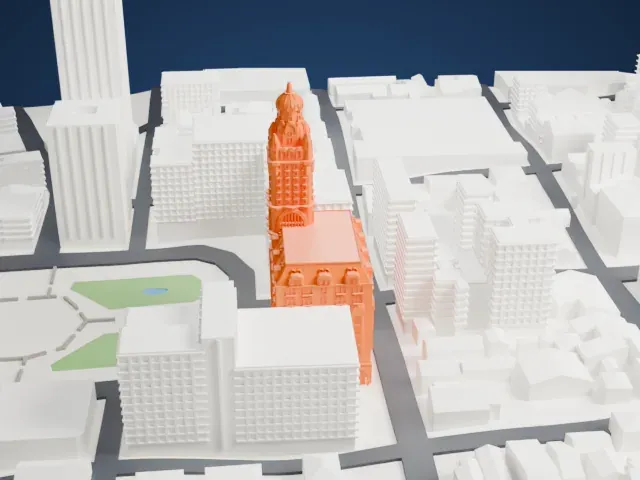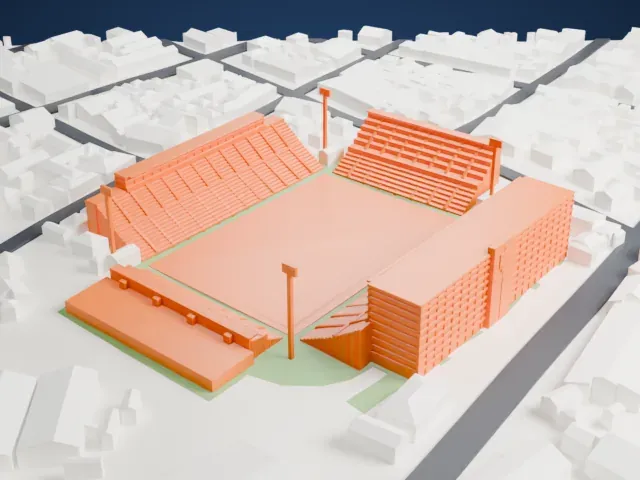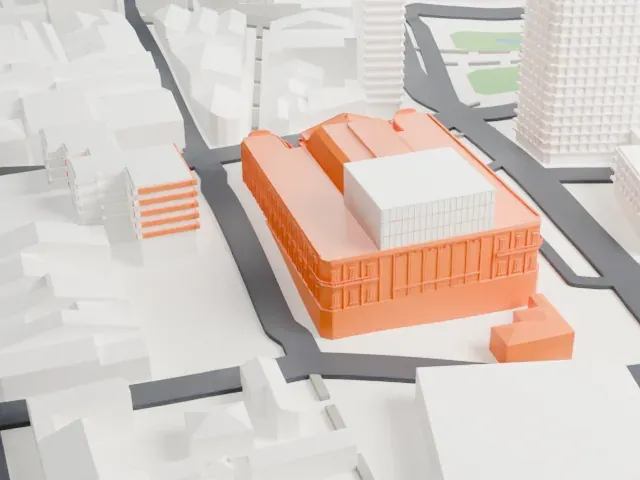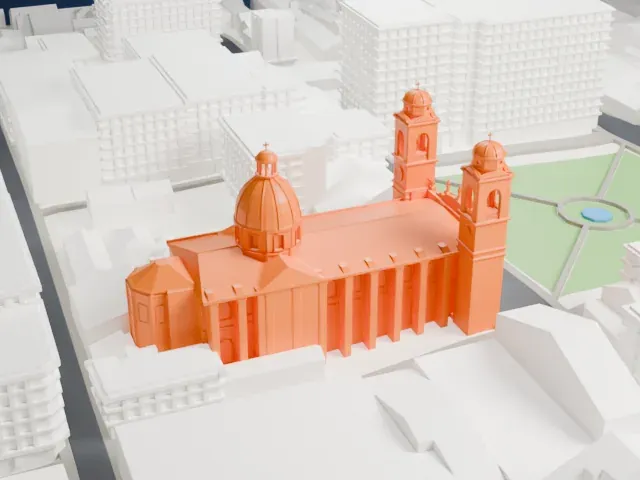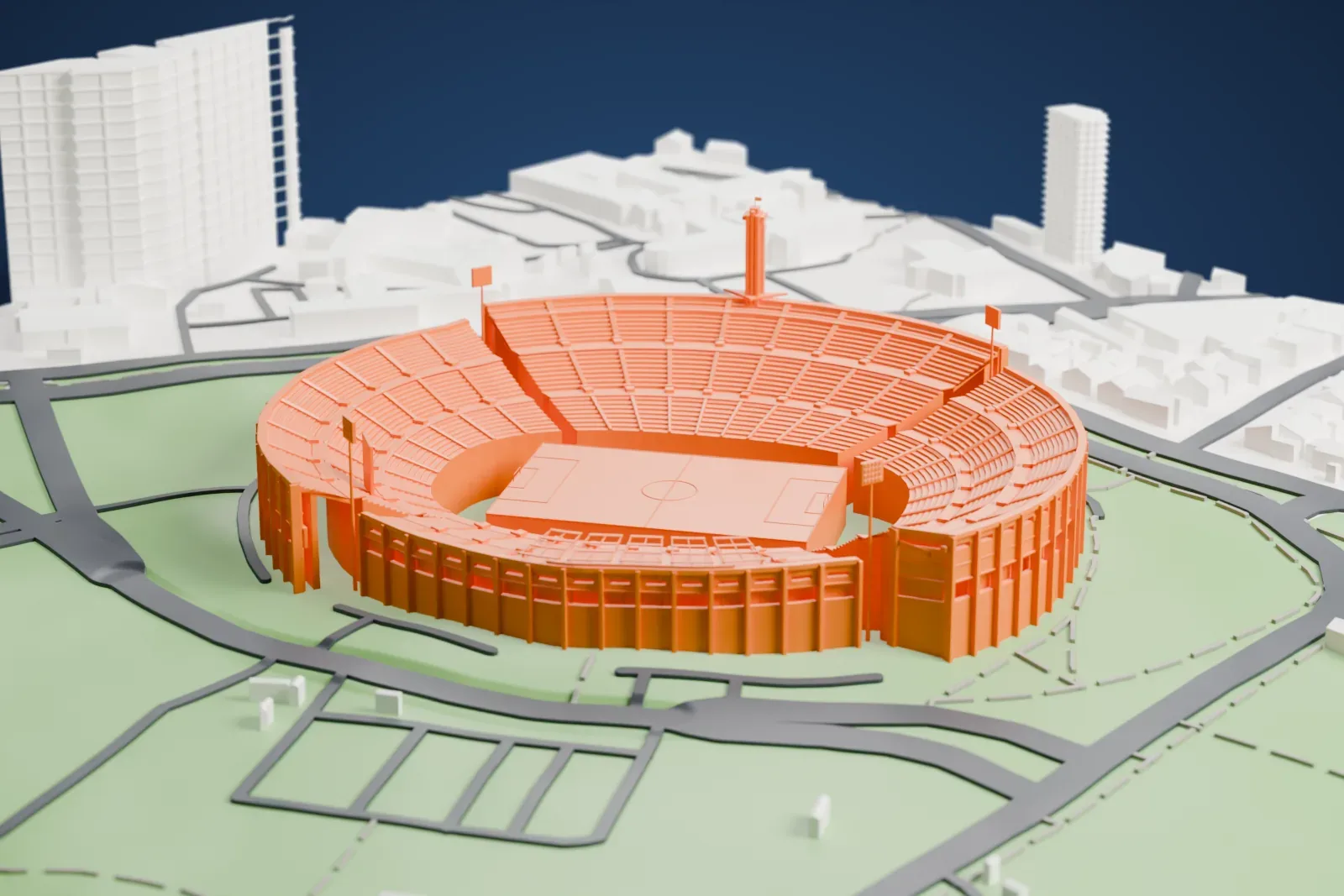
Estadio Centenario in 3D
Estadio Centenario appears in city models you make here; its design may still be protected, so it isn't offered as a separate download.
-
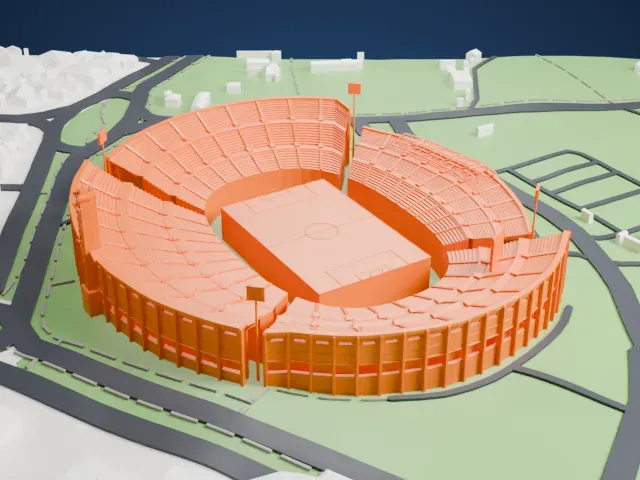 North
-
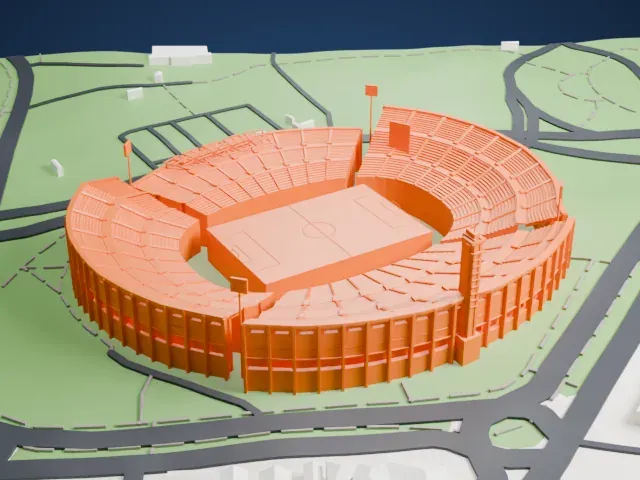 East
-
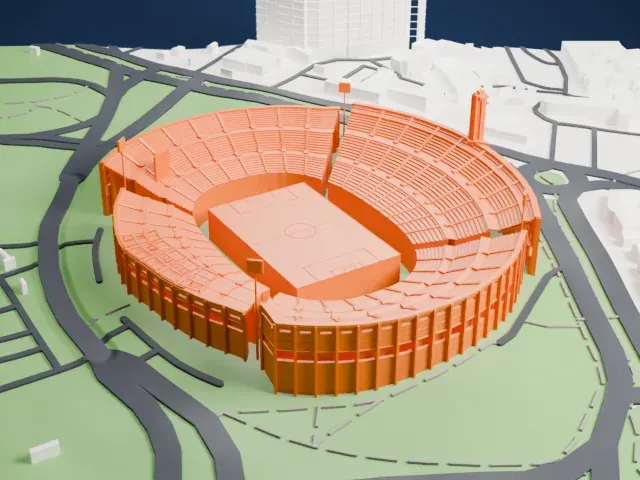 South
-
 West
Copyright notice
The design of Estadio Centenario may still be protected by copyright. It appears in the city models you make here, but it is not offered as a separate model.
- On a 160 mm print
- 21 mm
- Scale
- 1:4,063
21 mm tall on a 160 mm print
Make this print opens the generator on a 650 m square around the landmark. Buildings print at close to true scale, so the landmark grows with the print size.
- Slim poles and a tall tower
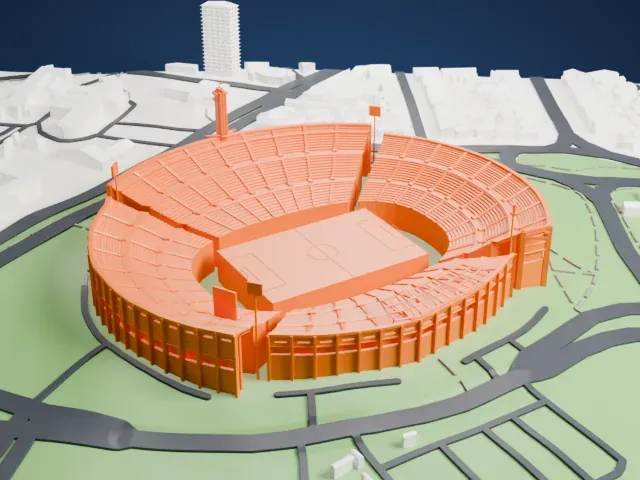
Slim poles with flat panels stand around the pitch, and a tall tower rises at one end. Print slowly with good cooling to keep these thin parts clean; Print friendly adapts the thinnest ones to the print scale.
- Stepped rows in the stands
The stands are drawn as many stepped rows with thin ribs. Full detail and a bigger print size keep more of them, and layers of 0.12 to 0.16 mm keep the steps crisp.
- One piece with the ground
Estadio Centenario is joined to the ground in the exported file, and the four-side check found no floating parts, so nothing needs gluing.
- Pick the detail for your nozzle
In the Buildings settings, set Landmark detail to Print friendly to adapt thin parts and small details to the print scale. Full detail keeps every modeled feature, for larger prints or a finer nozzle.
- Colors
Buildings, roads, water and ground arrive as separate filament slots in the 3MF. Estadio Centenario takes the building color.
- File format
You get a 3MF for Bambu Studio, OrcaSlicer or PrusaSlicer. Any of them can save it as STL if you need one.
About Estadio Centenario
Estadio Centenario is an association football stadium in the Parque Batlle neighborhood of Montevideo, Uruguay, owned by the Montevideo Department. Its name, Spanish for Centenary Stadium, refers to the centenary of Uruguay's Constitution. It serves as Uruguay's national stadium, and the national football team's main home. It has also hosted the Copa América in 1942, 1956, 1967 and 1995.
Immigrant workers built the stadium between 1929 and 1930 for the first FIFA World Cup, taking a record nine months. Heavy rains in Montevideo delayed the work, so several matches were played at other grounds. It was inaugurated on July 18, 1930, with Uruguay beating Peru 1–0. The final that year matched Uruguay and Argentina, and Uruguay won 4–2. In all, the stadium hosted ten matches of that World Cup, including both semi-finals and the final.
FIFA includes the Centenario among the classic stadiums of football, and on July 18, 1983 it declared the ground the first-ever Historical Monument of World Football. The stadium has four grandstands. The main one, the Olympic Tribune, is named for Uruguay's two Olympic championships in a row, in 1924 and 1928, and two others, Colombes and Amsterdam, are named for the cities where those titles were won. The Museum of Uruguayan Football lies under the Olympic grandstand and was inaugurated on December 15, 1975.
About this model
Estadio Centenario is one of more than 5,500 landmark models in Mini Skyline. They are made with AI, and each one is checked in its real surroundings before release. Each model is written as code from public descriptions, plans, photographs and aerial views used only as references; no image or third-party model is copied into it. Everything around it is built from OpenStreetMap and Overture map data. Rights in the building itself, its name and any brands on it are not granted by Mini Skyline; clear them separately before you sell prints. If you would rather print the shape from map data, turn off Landmark models in the Buildings settings.
Mini Skyline is not affiliated with, or endorsed by, the owners of this building or its names and marks.
Same skyline