3D print Helsinki Olympic Stadium
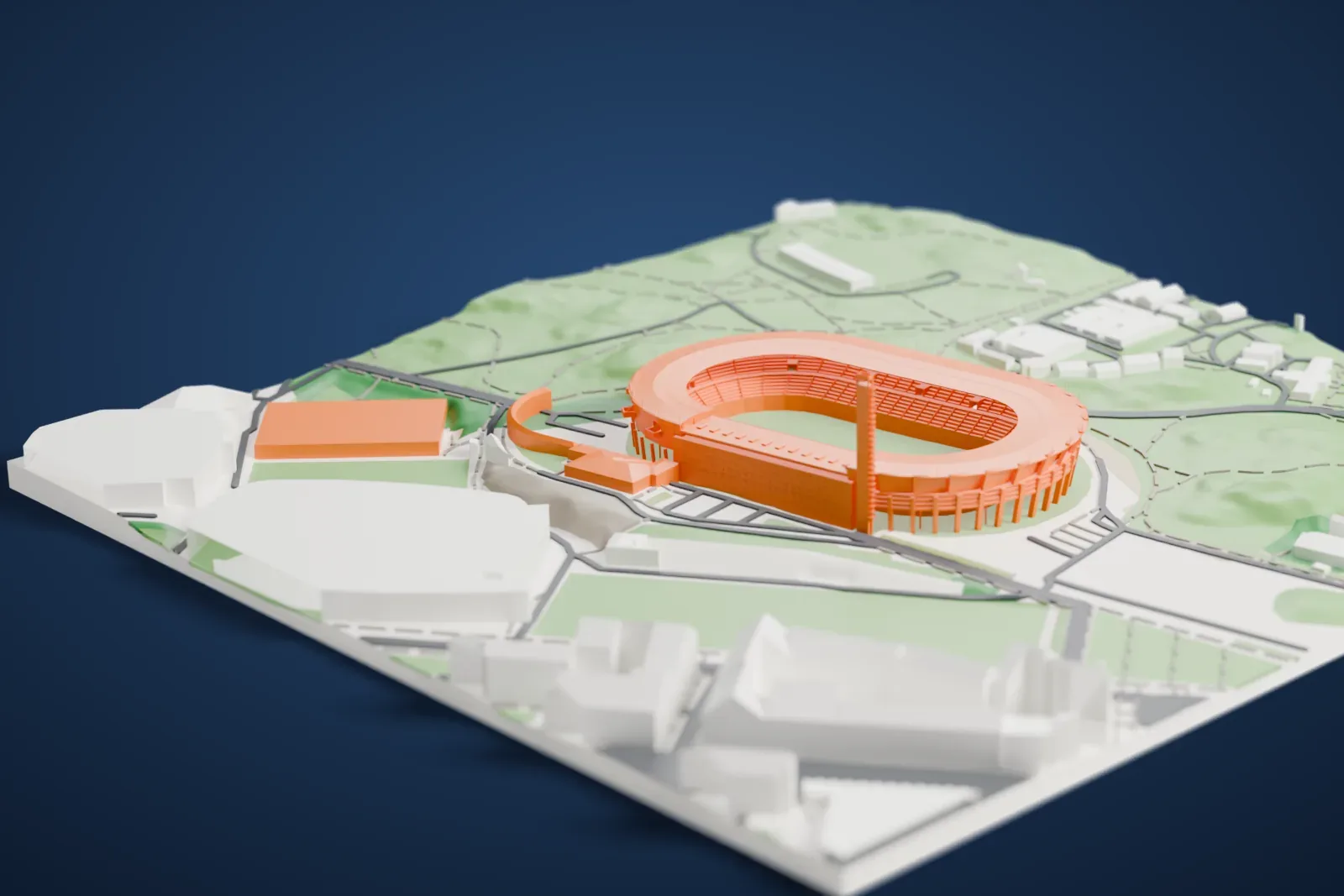
A free, printable model of the Helsinki Olympic Stadium and the green hillsides, roads and buildings around it, generated from real map data in your browser.
-
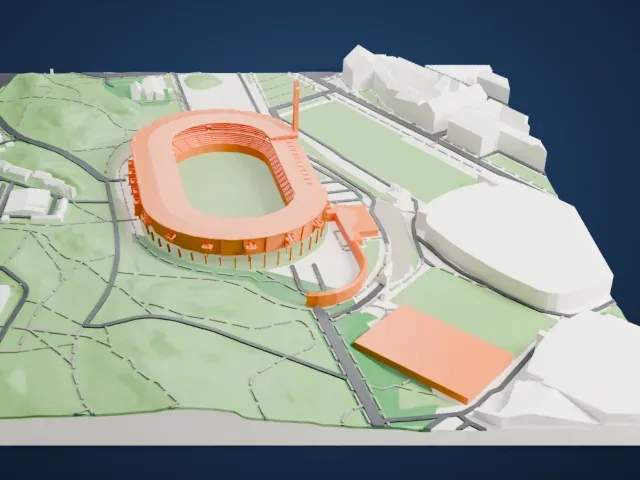 North
-
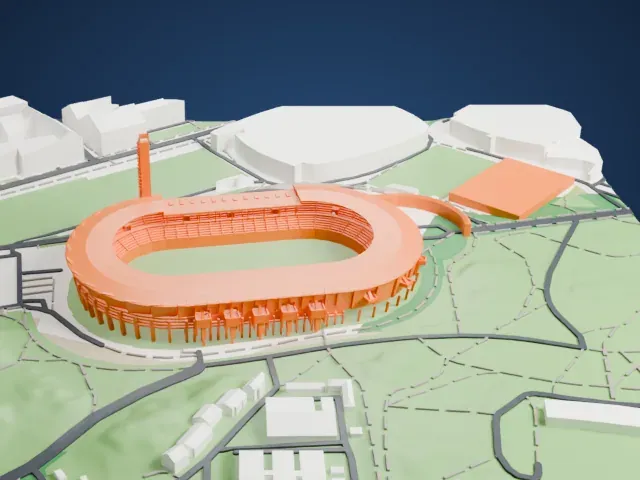 East
-
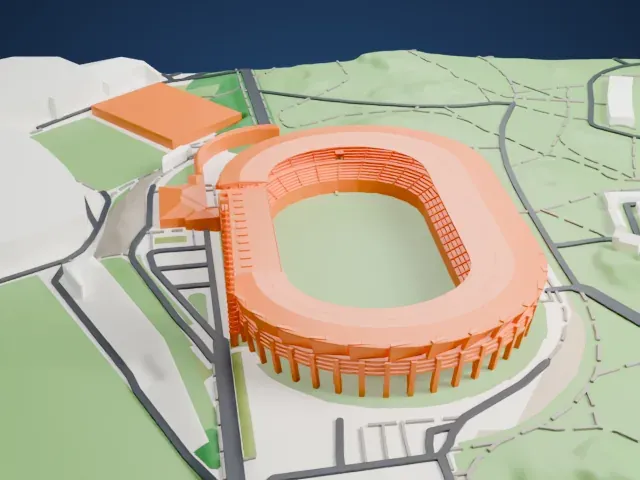 South
-
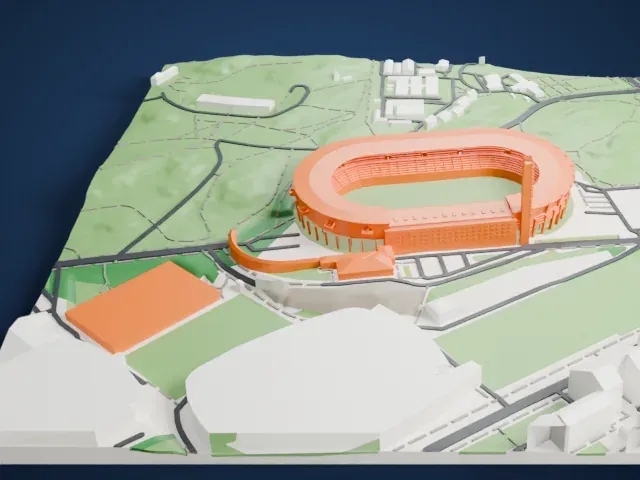 West
- Real height
- 73 m
- On a 160 mm print
- 22 mm
- Scale
- 1:3,750
73 m of Helsinki Olympic Stadium, 22 mm on your shelf
Make this print opens the generator on a 600 m square around the landmark. Buildings print at close to true scale, so the landmark grows with the print size.
- A tall, narrow tower
The slim tower beside the stands is tall and narrow. Print friendly adapts its thin details to the print scale; Full detail keeps them on a larger print. Print slowly with good cooling.
- A ring of slim columns
A ring of thin columns holds up the outer edge of the stands. A larger print size keeps them sturdier, and 0.12–0.16 mm layers keep the roof edge crisp.
- One piece with the ground
Helsinki Olympic Stadium is joined to the ground in the exported file, and the four-side check found no floating parts, so nothing needs gluing.
- Pick the detail for your nozzle
In the Buildings settings, set Landmark detail to Print friendly to adapt thin parts and small details to the print scale. Full detail keeps every modeled feature, for larger prints or a finer nozzle.
- Colors
Buildings, roads, water and ground arrive as separate filament slots in the 3MF. Helsinki Olympic Stadium takes the building color.
- File format
You get a 3MF for Bambu Studio, OrcaSlicer or PrusaSlicer. Any of them can save it as STL if you need one.
About Helsinki Olympic Stadium
Helsinki's Olympic Stadium sits in Töölö, roughly 2.3 kilometers (1.4 mi) from the middle of the city, and ranks as the largest stadium in all of Finland. The 1952 Summer Olympics, for which it was the focal point, brought track and field, equestrian show jumping, and the finals of the football tournament to the venue. Later events included the Bandy World Championship in its first year (1957), plus the World Athletics Championships in its first and tenth editions (1983 and 2005), and the European Athletics Championships of 1971, 1994 and 2012. The Finland national football team plays home matches here.
Yrjö Lindegren and Toivo Jäntti, the architects, designed the stadium, an icon of functionalist style that Architectural Digest featured among the best examples of Olympic architecture. Building work lasted from 1934 until 1938, aimed at the 1940 Summer Olympics; those games moved from Tokyo to Helsinki and were then canceled because of World War II. The stadium instead hosted the 1952 games, over a decade later.
Rising 72.71 meters (238.5 ft), the stadium's tower matches the length of Matti Järvinen's gold-medal javelin throw at the 1932 Summer Olympics. During a Euro 2008 qualifying match on June 6, 2007, an eagle-owl landed on a goalpost, holding up play for ten minutes, and Finland's men's football team has gone by the nickname Huuhkajat (The Eagle-Owls) ever since. A major renovation began in spring 2016, and the stadium reopened in 2020.
About this model
Helsinki Olympic Stadium is one of more than 4,300 landmark models in Mini Skyline. They are made with AI, and each one is checked from four sides in its real surroundings before release. Everything around it is built from OpenStreetMap and Overture map data. If you would rather print the shape from map data, turn off Landmark models in the Buildings settings.
Same skyline