3D print Rice–Eccles Stadium
A free, printable model of Rice–Eccles Stadium, a football bowl with a glazed west box between two towers and rim floodlight banks, among campus buildings, generated from real map data in your browser.
-
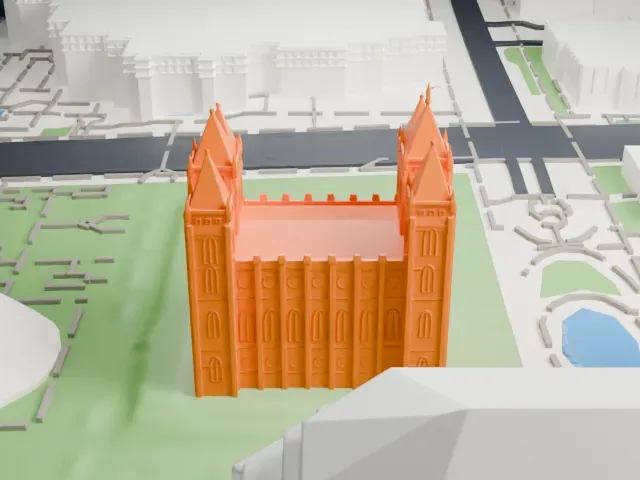
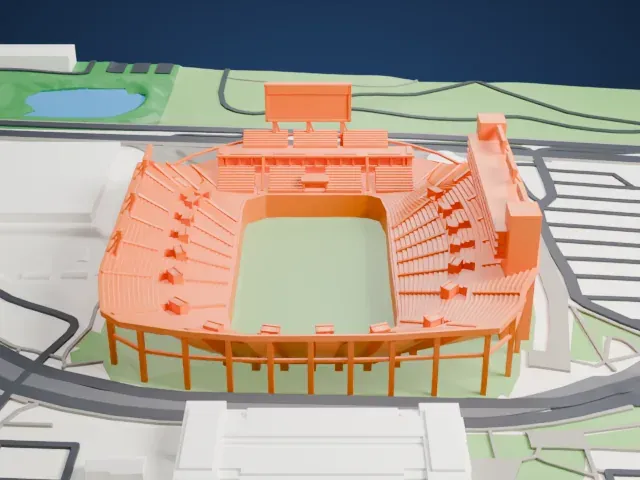 North
-
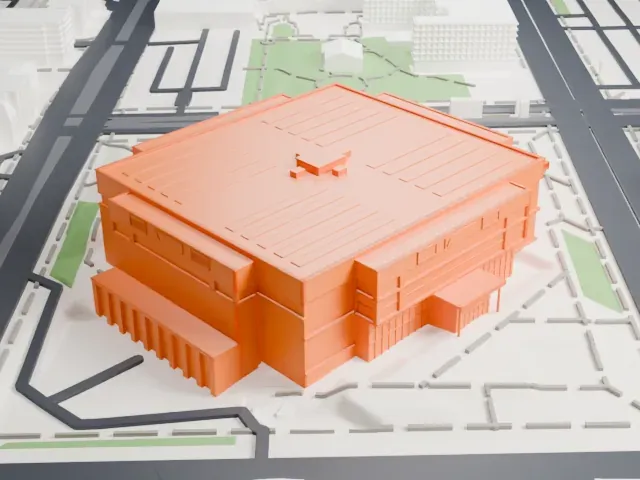
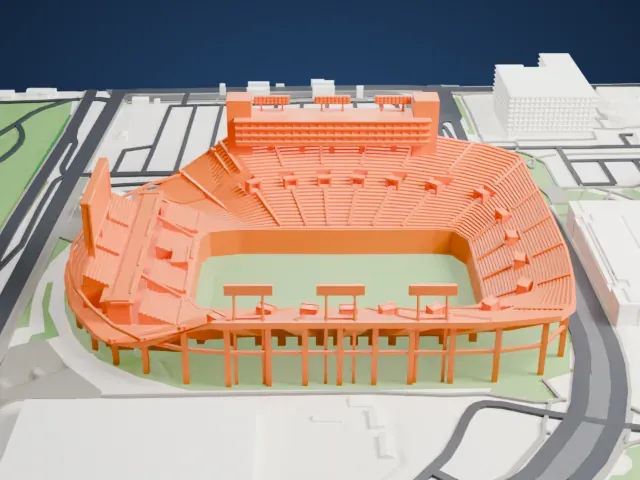 East
-
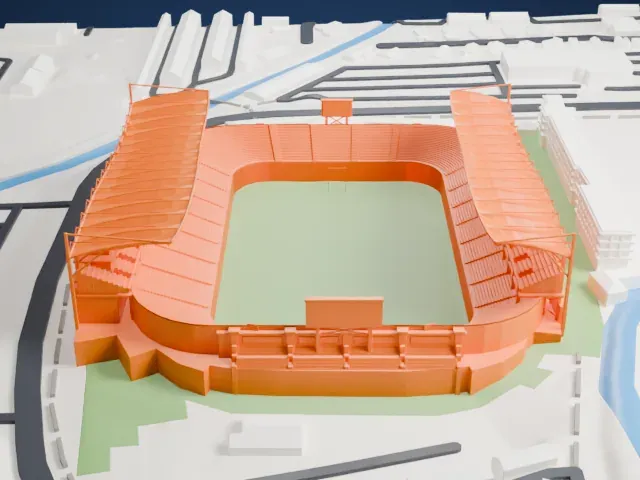
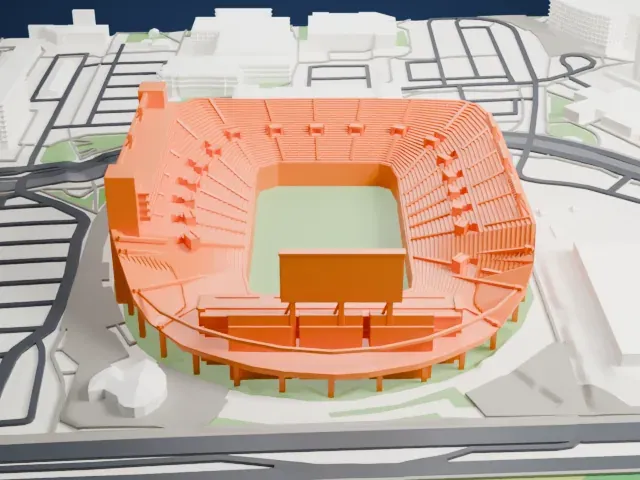 South
-
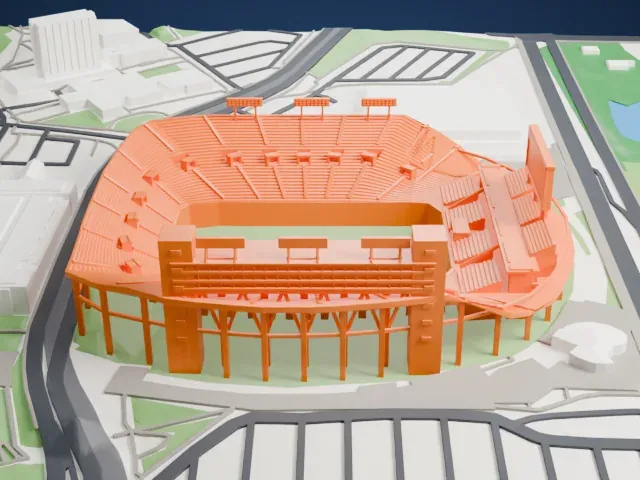 West
The model you print
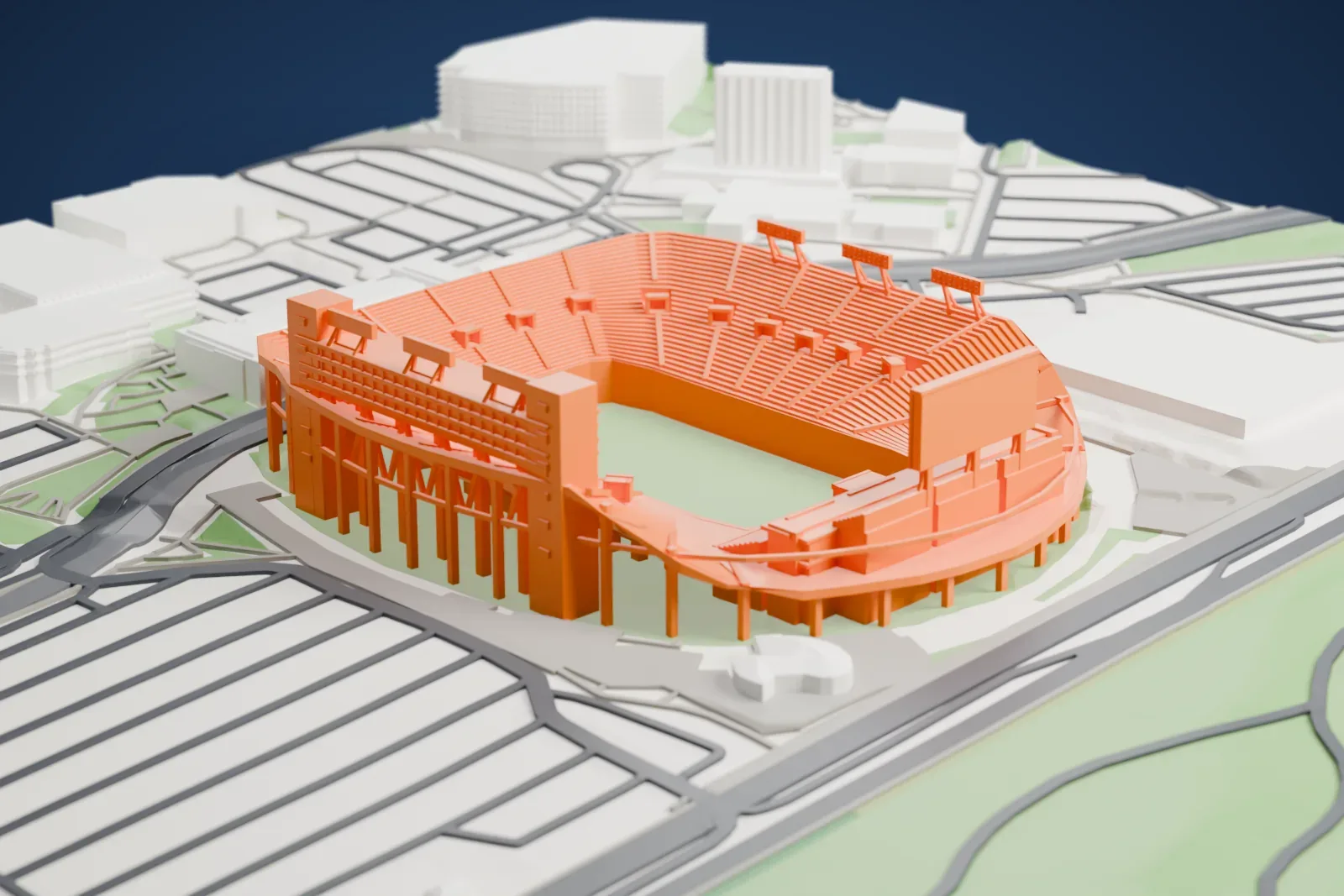
Rice–Eccles Stadium in 3D
The landmark on its own, at its size on a 160 mm print. Print friendly thickens thin parts for a 0.4 mm nozzle; Full detail keeps every part.
- On a 160 mm print
- 18 mm
- Scale
- 1:3,750
18 mm tall on a 160 mm print
Make this print opens the generator on a 600 m square around the landmark. Buildings print at close to true scale, so the landmark grows with the print size.
- West box and end towers
A high glazed press box sits between two taller elevator towers on the west rim. The box's thin roof and the tower caps are the finest parts; print friendly adapts them, and a larger print keeps the glazing bands.
- Open light frames
Each sideline carries three wide floodlight banks on inclined open frames. These slim supports and the south screen's legs print best slowly, with 0.12–0.16 mm layers.
- One piece with the ground
Rice–Eccles Stadium is joined to the ground in the exported file, and the four-side check found no floating parts, so nothing needs gluing.
- Pick the detail for your nozzle
In the Buildings settings, set Landmark detail to Print friendly to adapt thin parts and small details to the print scale. Full detail keeps every modeled feature, for larger prints or a finer nozzle.
- Colors
Buildings, roads, water and ground arrive as separate filament slots in the 3MF. Rice–Eccles Stadium takes the building color.
- File format
You get a 3MF for Bambu Studio, OrcaSlicer or PrusaSlicer. Any of them can save it as STL if you need one.
About Rice–Eccles Stadium
Rice–Eccles Stadium sits on the University of Utah campus in Salt Lake City; it is the home ground for Utah Utes football. The ground was constructed to host the 2002 Winter Olympics opening and closing ceremonies. Its FieldTurf surface runs north to south at 1,413 m (4,637 ft) above sea level, some 120 m (400 ft) higher than downtown Salt Lake City.
In June 1995 Salt Lake City was chosen to host the 2002 Winter Games, and Robert Rice Stadium, built in 1927, was judged unsuitable as the main venue. Plans to renovate Rice Stadium were announced in 1996, and in 1997 Spencer Eccles announced that the Eccles Foundation would give $10 million; the university added Eccles's name beside that of Robert L. Rice. The old ground was almost completely demolished after the 1997 season, and the rebuilt ground was ready within ten months, with 45,017 seats and a six-story press box. Utah beat Louisville 45–22 in the first game there on September 12, 1998.
At the 2002 Winter Olympics the grass was covered with asphalt for a stage, scoreboards were removed and temporary seats lifted capacity above 50,000. The Olympic cauldron stood on the southern bleachers, and the ground was renamed Rice–Eccles Olympic Stadium for the Games. The opening ceremony took place on February 8, 2002, and the closing ceremony on February 24; broadcasts of the two ceremonies were watched by an estimated 3.5 billion people.
About this model
Rice–Eccles Stadium is one of more than 4,900 landmark models in Mini Skyline. They are made with AI, and each one is checked from four sides in its real surroundings before release. Everything around it is built from OpenStreetMap and Overture map data. If you would rather print the shape from map data, turn off Landmark models in the Buildings settings.
Same skyline