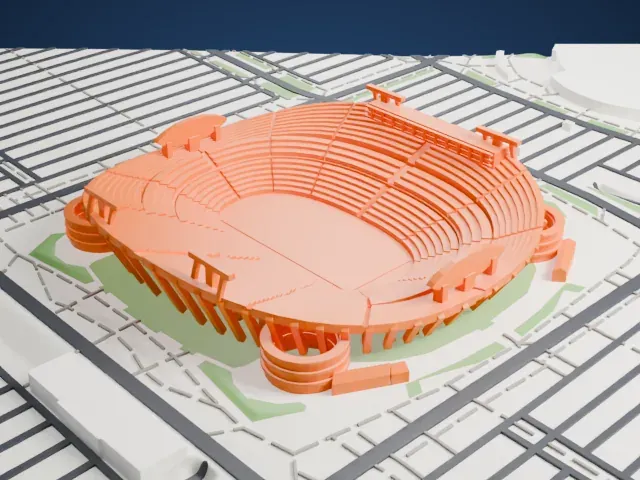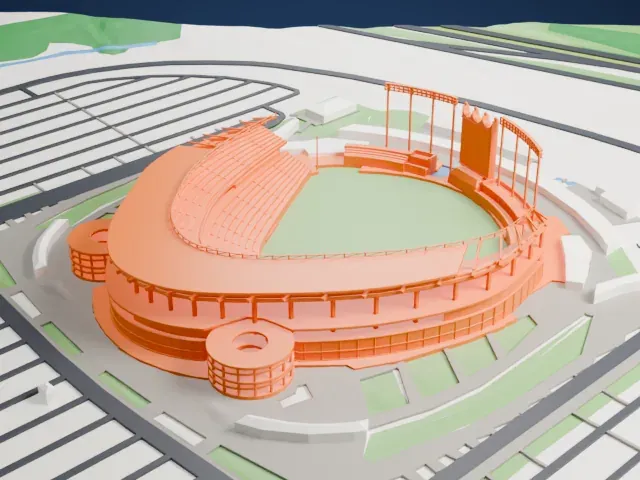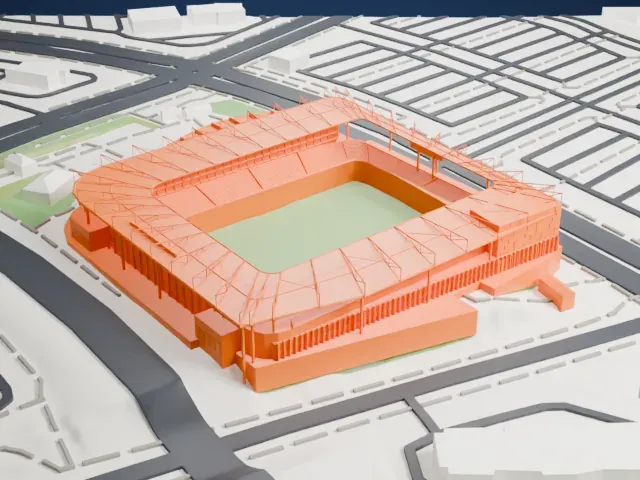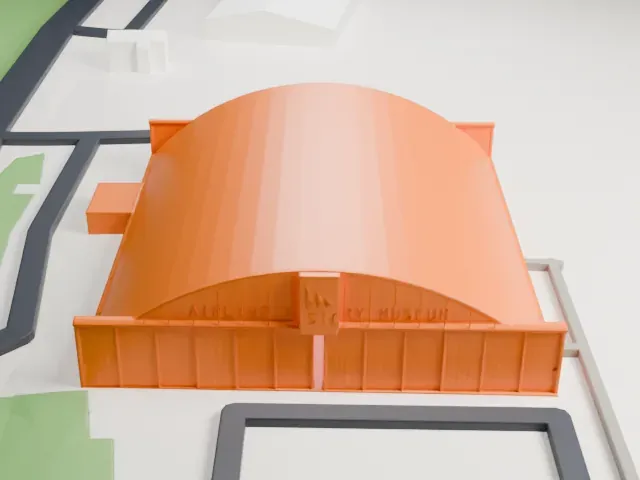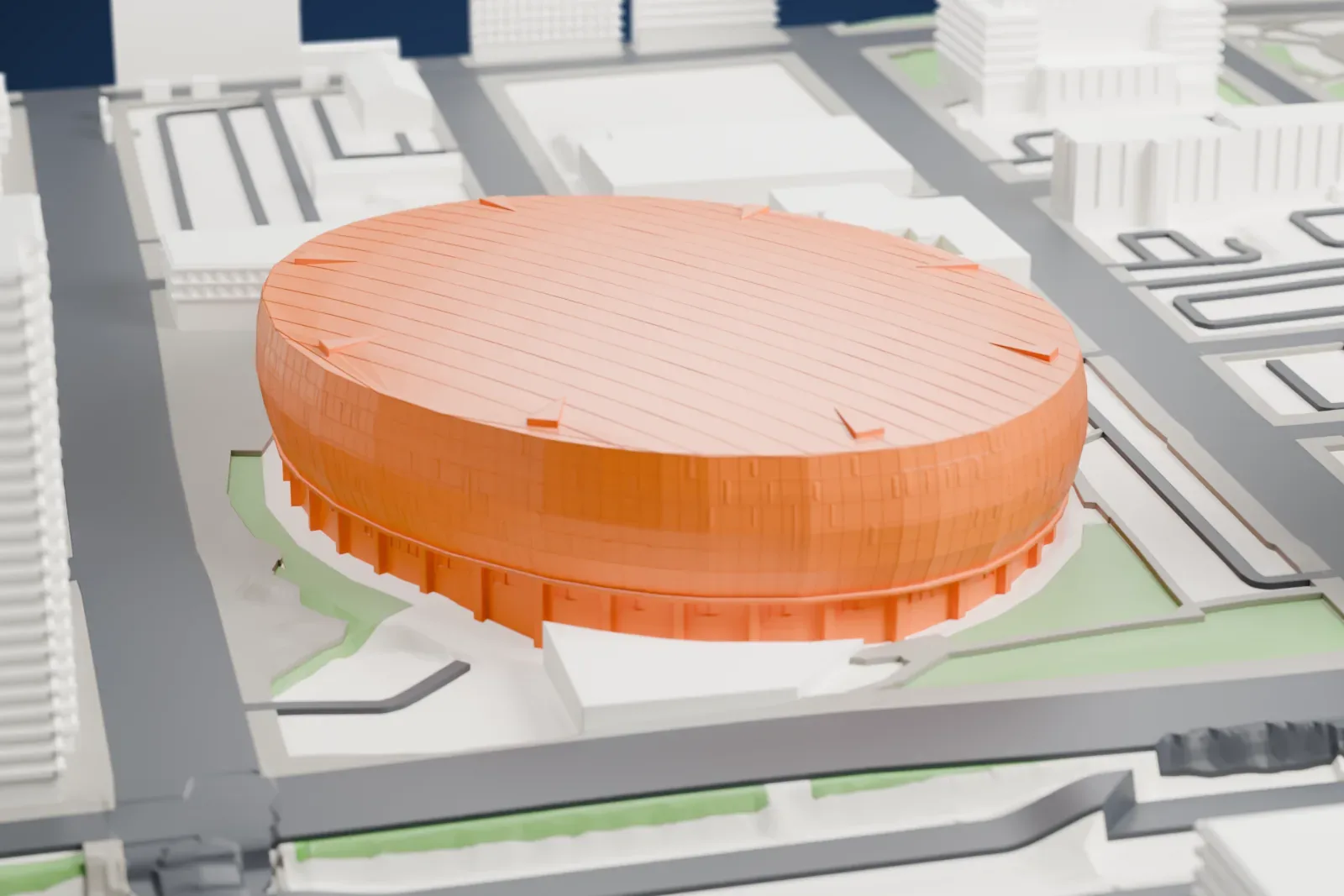
3D print T-Mobile Center
A free, printable model of T-Mobile Center in downtown Kansas City, with its oval glass bowl and the surrounding streets and buildings, generated from real map data in your browser.
-
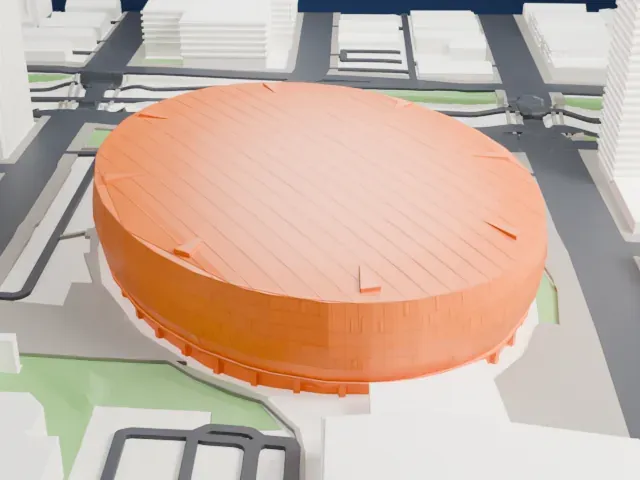 North
-
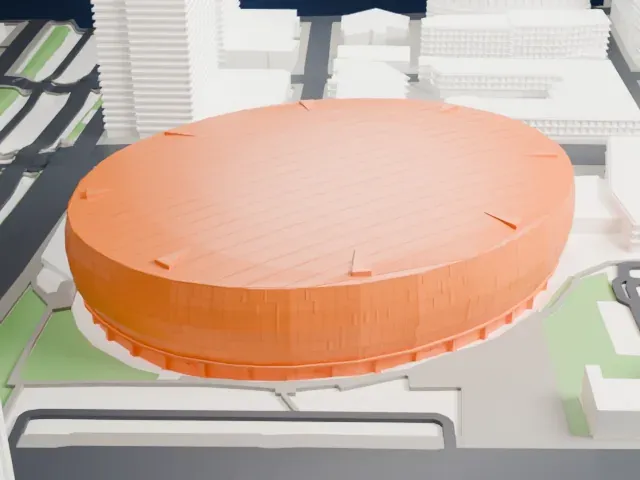 East
-
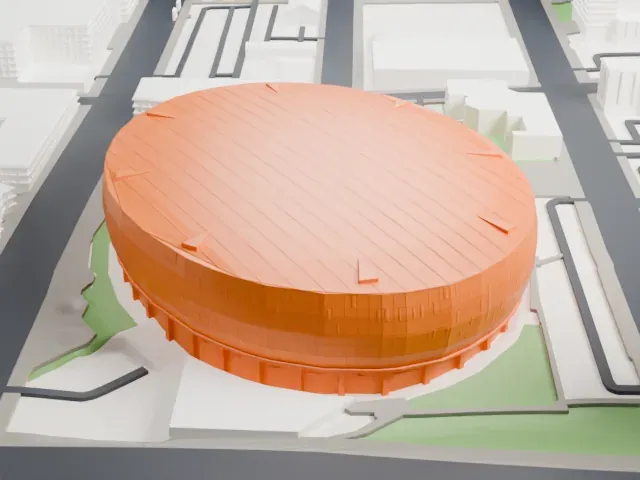 South
-
 West
The model you print
T-Mobile Center in 3D
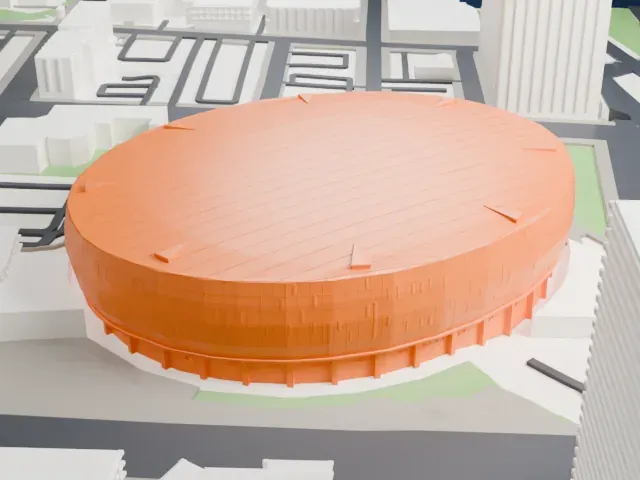
The landmark on its own, at its size on a 160 mm print. Print friendly thickens thin parts for a 0.4 mm nozzle; Full detail keeps every part.
- On a 160 mm print
- 11 mm
- Scale
- 1:3,750
11 mm tall on a 160 mm print
Make this print opens the generator on a 600 m square around the landmark. Buildings print at close to true scale, so the landmark grows with the print size.
- Oval glass bowl
The arena is a broad oval with a shallow roof and a finely divided glass wall. Print friendly adapts the thin mullions and roof hoods; a bigger print keeps the façade rhythm.
- Low roof details
The roof is nearly flat, with small wedge vents along the edge. At 0.12–0.16 mm layers and Full detail on a large print, those low shapes stay readable.
- One piece with the ground
T-Mobile Center is joined to the ground in the exported file, and the four-side check found no floating parts, so nothing needs gluing.
- Pick the detail for your nozzle
In the Buildings settings, set Landmark detail to Print friendly to adapt thin parts and small details to the print scale. Full detail keeps every modeled feature, for larger prints or a finer nozzle.
- Colors
Buildings, roads, water and ground arrive as separate filament slots in the 3MF. T-Mobile Center takes the building color.
- File format
You get a 3MF for Bambu Studio, OrcaSlicer or PrusaSlicer. Any of them can save it as STL if you need one.
About T-Mobile Center
T-Mobile Center is a multi-purpose indoor arena in Kansas City, Missouri. It sits downtown where Grand Boulevard meets 14th Street, on the east edge of the Power & Light District. The venue has effectively become the city's main indoor arena, taking over from Kemper Arena, a 1974 building in the West Bottoms a few miles off.
The city of Kansas City owns it. The final design, chosen in August 2005, came from a team of four firms: Ellerbe Becket, Populous, 360 Architecture and Rafael Architects. Groundbreaking took place on June 24, 2005, and construction finished on October 11, 2007 at a cost of US$276 million. The exterior is a glass façade with roughly 13,000 square meters, or 140,000 sq ft, in double-insulated glazing and another 5,000 square meters (about 54,000 sq ft) in painted aluminum panels. Inside are a 360-degree LED screen, more than 19,000 seats and 72 suites.
The arena opened on October 10, 2007 as the Sprint Center, with Elton John performing three days afterward. In its first month Garth Brooks played nine sold-out shows. T-Mobile US became the naming partner after merging with Sprint, and the venue was renamed T-Mobile Center on July 9, 2020. Attached on the north is the College Basketball Experience.
About this model
T-Mobile Center is one of more than 4,900 landmark models in Mini Skyline. They are made with AI, and each one is checked from four sides in its real surroundings before release. Everything around it is built from OpenStreetMap and Overture map data. If you would rather print the shape from map data, turn off Landmark models in the Buildings settings.
Same skyline