3D print the Snowman craters on Vesta
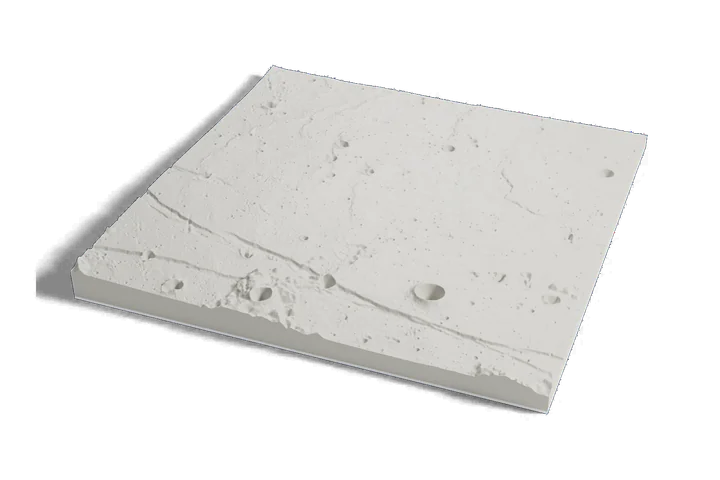
Three craters in a row on a giant asteroid, on one print: Marcia, Calpurnia and Minucia, the "snowman" NASA's Dawn spacecraft photographed in 2011, at their true height.
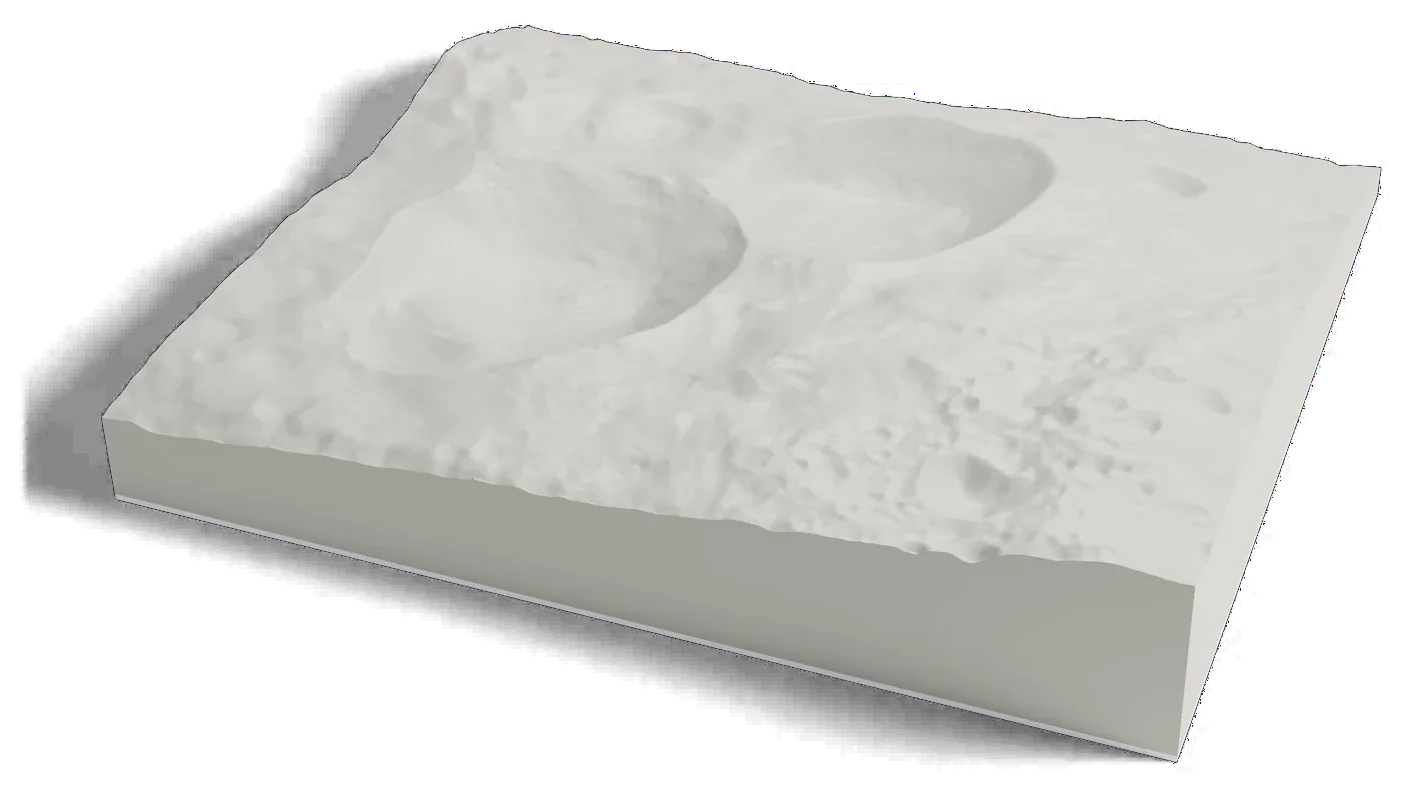
Vesta terrain: DLR; NASA Dawn; USGS Astrogeology. Surface imagery: Dawn Framing Camera mosaic, NASA/JPL-Caltech/UCLA/MPS/DLR/IDA.
Where it is 15.00°N 12.00°W Vesta
- Marcia
- About 60 to 70 km (40 mi) across
- Calpurnia
- About 50 km (31 mi) across
- Minucia
- About 23 km (14 mi) across
- Named for
- Vestal virgins of ancient Rome
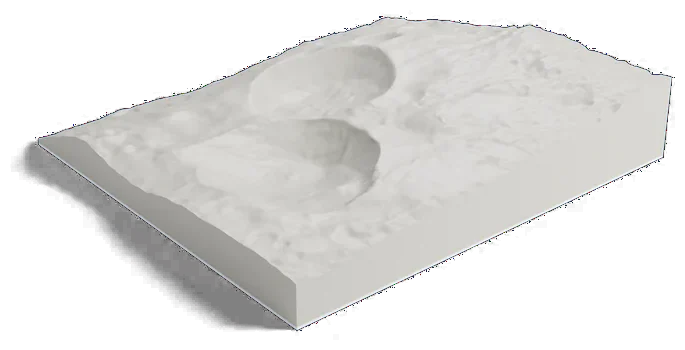
Vesta terrain: DLR; NASA Dawn; USGS Astrogeology. Surface imagery: Dawn Framing Camera mosaic, NASA/JPL-Caltech/UCLA/MPS/DLR/IDA.
156 by 142 km of Vesta, 160 mm across
About Snowman craters
The Snowman is a chain of three craters on the giant asteroid Vesta: Marcia, about 60 to 70 km (40 mi) across, Calpurnia, about 50 km (31 mi), and the smaller Minucia, about 23 km (14 mi). Dawn mission scientists named it from images taken in August 2011.
Marcia and Calpurnia probably formed together, from the impact of a double asteroid; Minucia came later. Marcia is one of the youngest large craters on Vesta and has its best-preserved pitted terrain, thought to form when water brought in by carbon-rich meteorites escaped after later impacts heated the ground. All three are named for Vestal virgins of ancient Rome.
Sources: IAU Gazetteer of Planetary Nomenclature: Marcia, IAU Gazetteer of Planetary Nomenclature: Calpurnia, IAU Gazetteer of Planetary Nomenclature: Minucia, NASA JPL: 3-D image of Vesta's Snowman craters, NASA JPL: Views of the Snowman, NASA: Pitted terrain on Vesta (PIA16182), NASA Science: 4 Vesta
More places to print
All worlds-
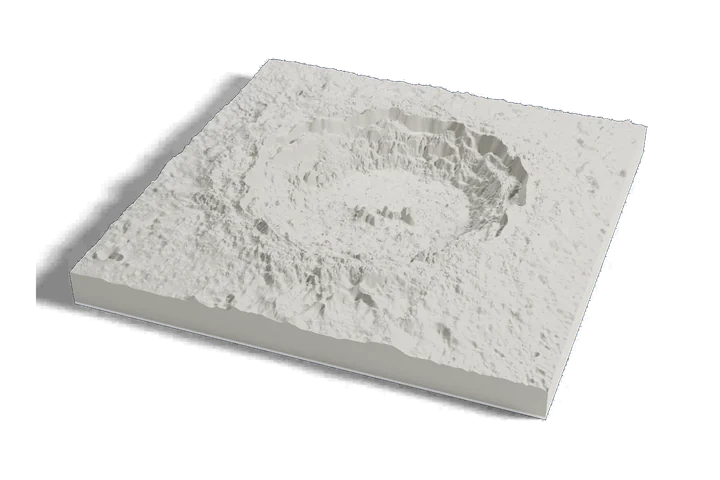 Crater
Copernicus crater
-
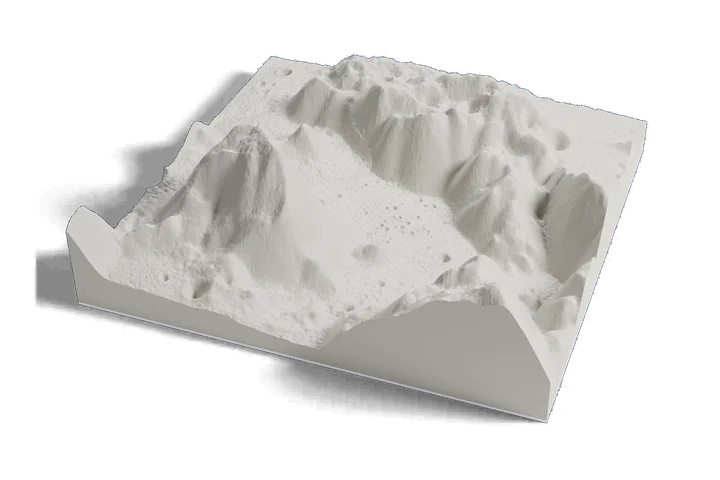 Landing site · Apollo 17, 1972
Taurus-Littrow valley
-
 Landing site · Apollo 11, 1969
Tranquility Base
Moon terrain: USGS Astrogeology; NASA LRO LOLA; JAXA SELENE/Kaguya. Surface imagery: LRO LROC WAC mosaic, NASA/GSFC/Arizona State University.