3D print Kerwan basin on Ceres
The largest crater on a dwarf planet, on one print: the worn rim and wide floor of Kerwan, from elevation data measured by NASA's Dawn spacecraft.
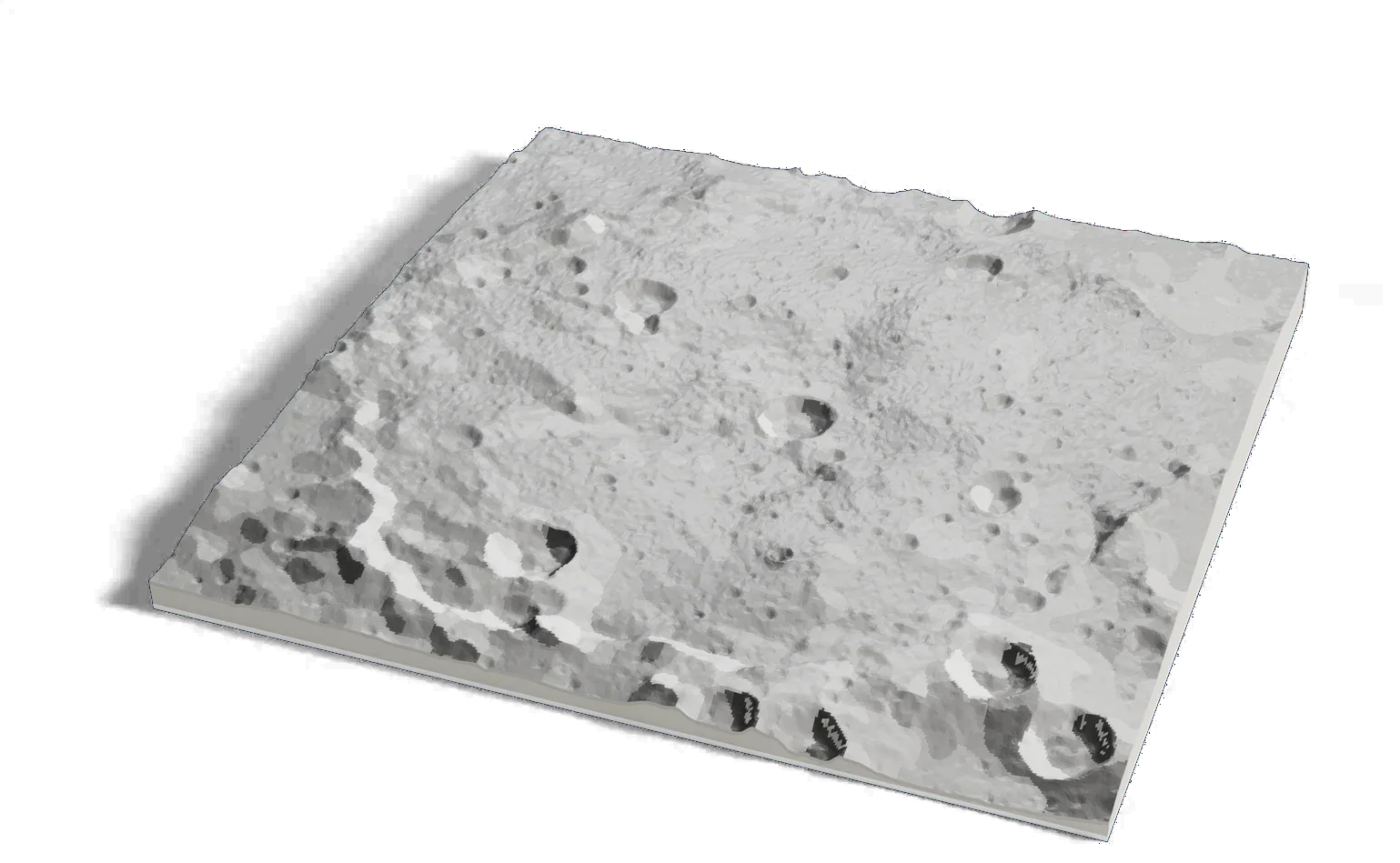
Ceres terrain: NASA Dawn; DLR; USGS Astrogeology. Surface imagery: Dawn Framing Camera mosaic, NASA/JPL-Caltech/UCLA/MPS/DLR/IDA.
Where it is 10.77°S 123.99°E Ceres
- Diameter
- 280 km (174 mi)
- Rank
- Largest crater on Ceres
- Shape
- Shallow and softened with age
- Named for
- The Hopi spirit of sprouting maize
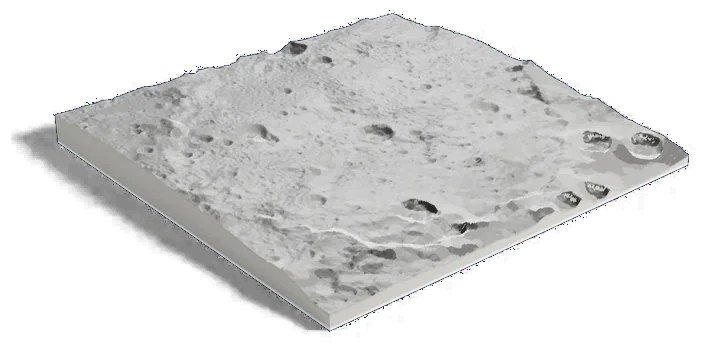
Ceres terrain: NASA Dawn; DLR; USGS Astrogeology. Surface imagery: Dawn Framing Camera mosaic, NASA/JPL-Caltech/UCLA/MPS/DLR/IDA.
310 by 305 km of Ceres, 160 mm across
About Kerwan basin
Kerwan is an impact crater 280 km (174 mi) across, the largest on the dwarf planet Ceres. NASA describes it as "relaxed": its sharp features have softened since it formed, and its overall shape is like a pancake.
A smaller crater, Insitor, sits near the middle of Kerwan. NASA's Dawn spacecraft mapped it from orbit between 2015 and 2018. Kerwan takes its name from the Hopi spirit of sprouting maize.
Sources: IAU Gazetteer of Planetary Nomenclature: Kerwan, IAU Gazetteer of Planetary Nomenclature: Insitor, NASA: Kerwan in full, NASA JPL: Dawn mission comes to an end
Elsewhere on Ceres
All worlds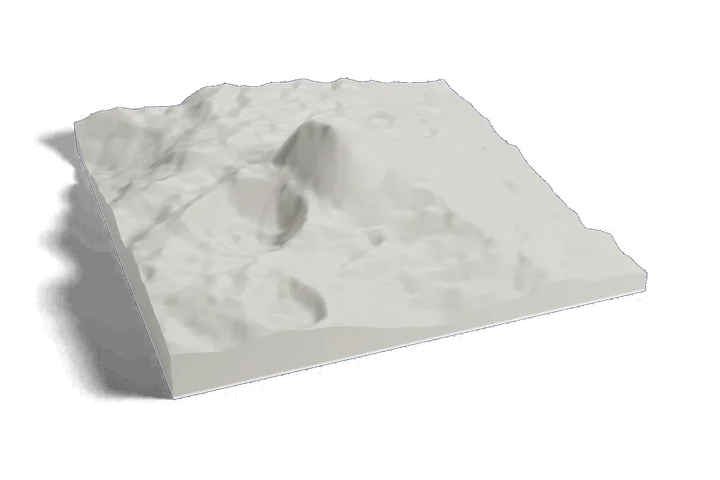
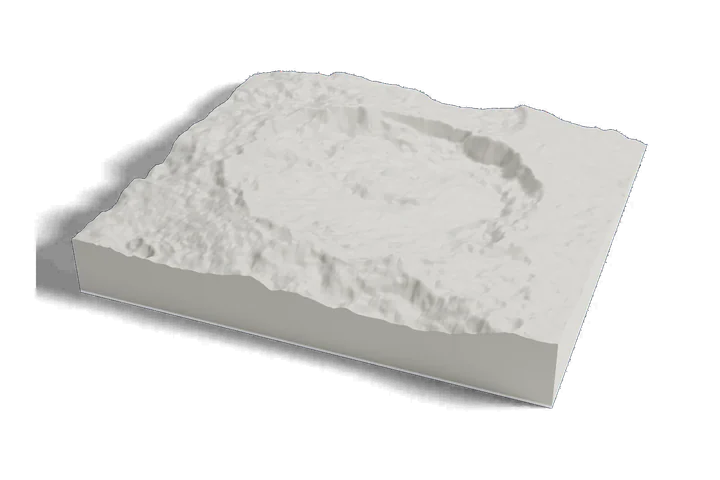
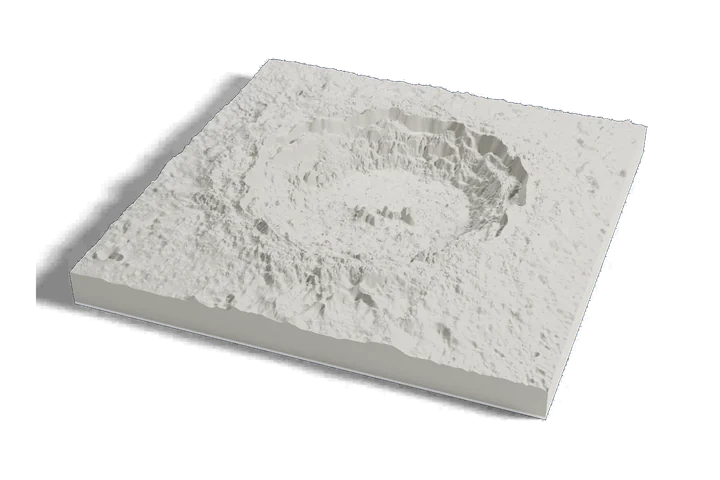
Ceres terrain: NASA Dawn; DLR; USGS Astrogeology. Surface imagery: Dawn Framing Camera mosaic, NASA/JPL-Caltech/UCLA/MPS/DLR/IDA.
Moon terrain: USGS Astrogeology; NASA LRO LOLA; JAXA SELENE/Kaguya. Surface imagery: LRO LROC WAC mosaic, NASA/GSFC/Arizona State University.