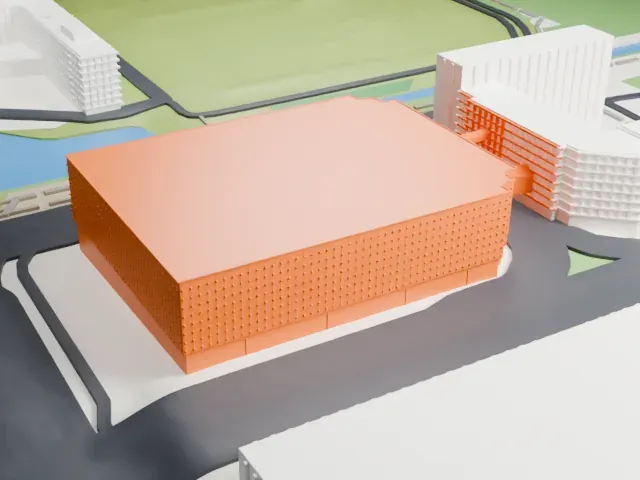
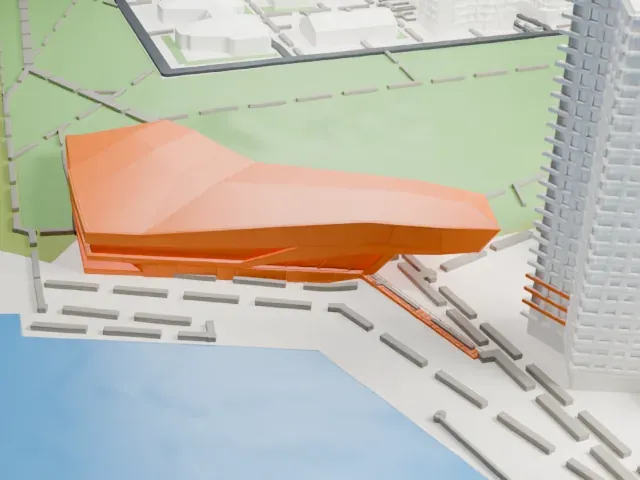
3D print Amsterdam Centraal
A free, printable model of the Amsterdam Centraal station building and the water, roads and buildings around it, generated from real map data in your browser.
Free, in your browser. Exports a slicer-ready 3MF.
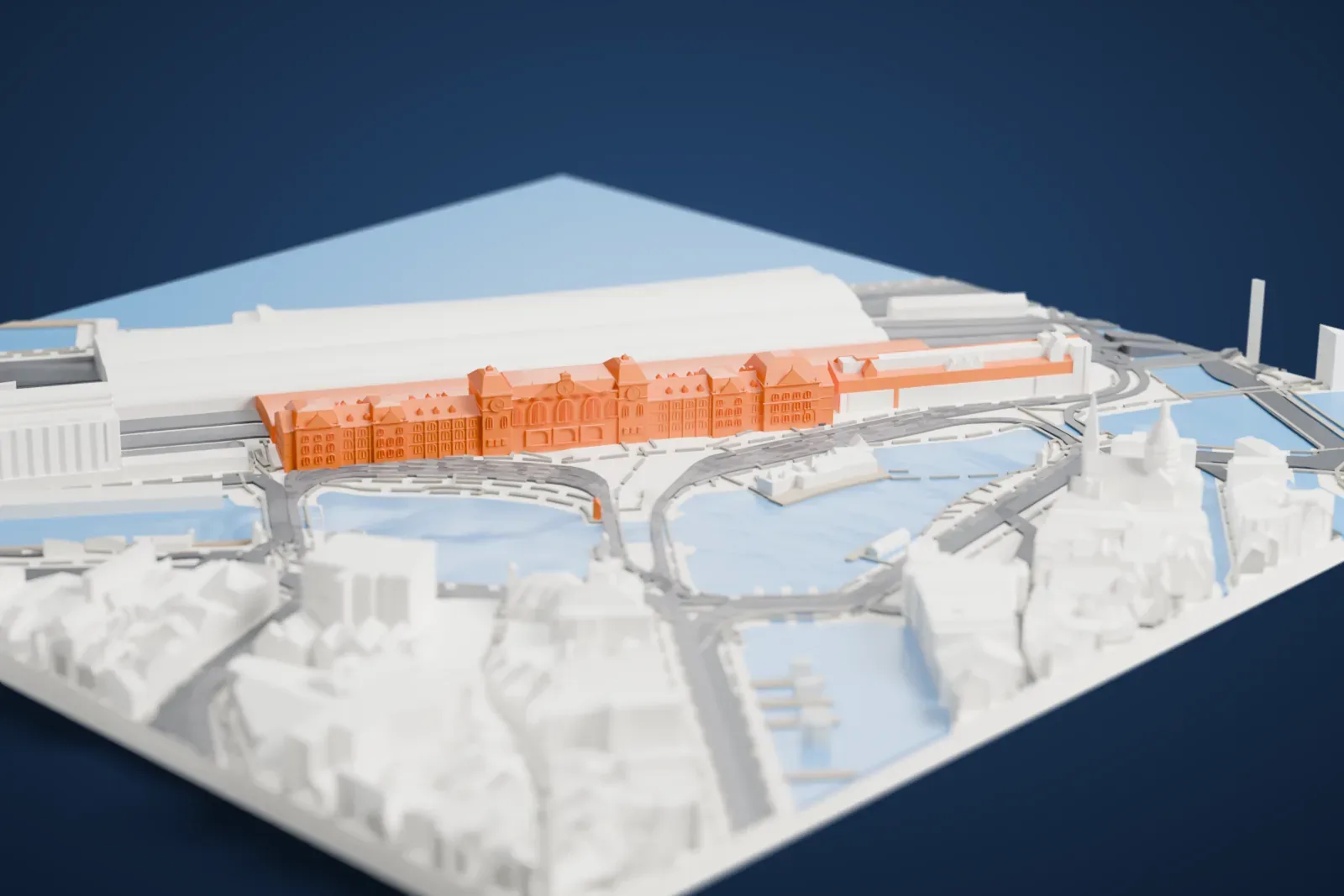
About Amsterdam Centraal
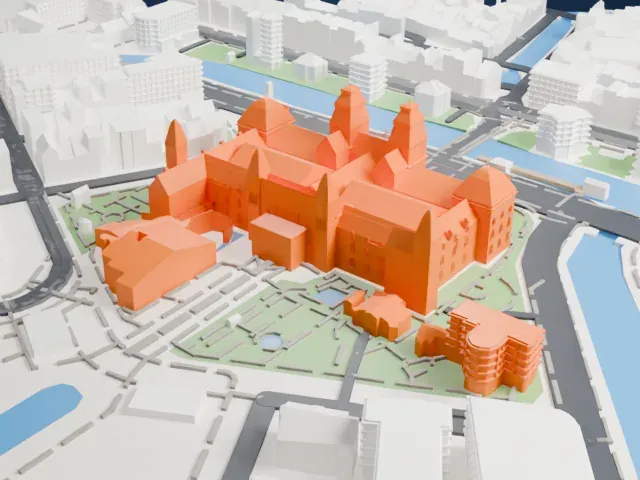
Amsterdam Centraal station serves as Amsterdam's largest railway station, in North Holland, the Netherlands. It was designed by the Dutch architect Pierre Cuypers, who also designed the city's Rijksmuseum, and it officially opened on October 15, 1889. The station building has a palace-like facade in Gothic and Renaissance Revival style, with two turrets, numerous decorative details and stone reliefs that refer to the capital's industrial and commercial importance. The design also included a waiting room reserved for the Dutch monarchy.
The station sits on three linked, man-made islands in the IJ lake, made with sand from dunes near Velsen and together called Stationseiland, or Station Island. As with many Amsterdam structures, it stands on 8,687 wooden piles. Construction started in 1882, and unstable soil delayed the work, with completion slipping by several years. In 1884 the station building itself was finished, though Cuypers was not commissioned to design the platform roof. L.J. Eijmer, a civil engineer, designed that roof, with 50 curved trusses, and it was made by Andrew Handyside and Company in England. Cuypers did design the decoration for the trusses and gable ends.
The plan was highly controversial, partly because many people at the time found the building's overall look similar to medieval cathedrals. Its opening marked the city's shift from a waterfront city into an inland one. A second roof on the north side was completed in 1922, and a third, built in 1996 between the two existing roofs, left all platforms covered. Major reconstruction began in 1997 to make way for the Amsterdam Metro's North-South Line, which opened on July 22, 2018.
How it prints
Make this print opens the generator on a 600 m square around the landmark. Buildings print at close to true scale, so the landmark grows with the print size.
| Print size | Landmark height | Scale |
|---|---|---|
| 160 mm default | 10 mm | 1:3,750 |
| 200 mm | 13 mm | 1:3,000 |
| 256 mm | 16 mm | 1:2,344 |
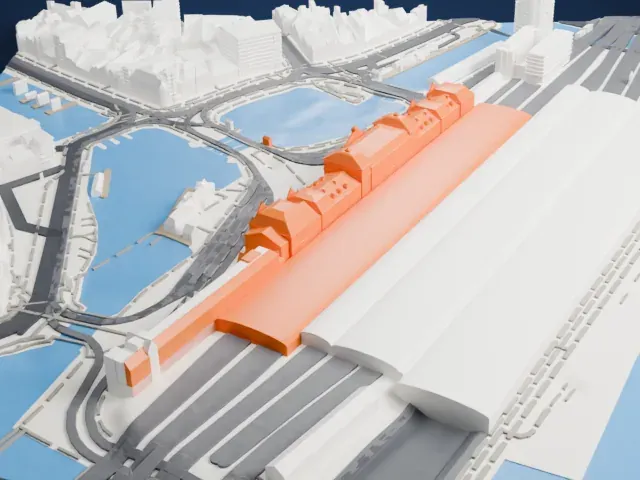
-
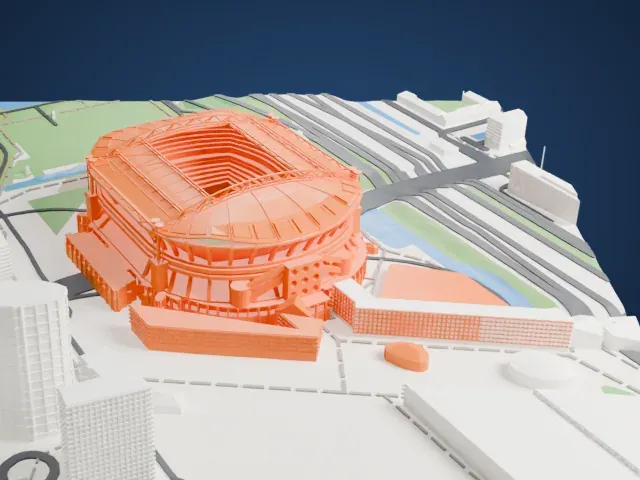
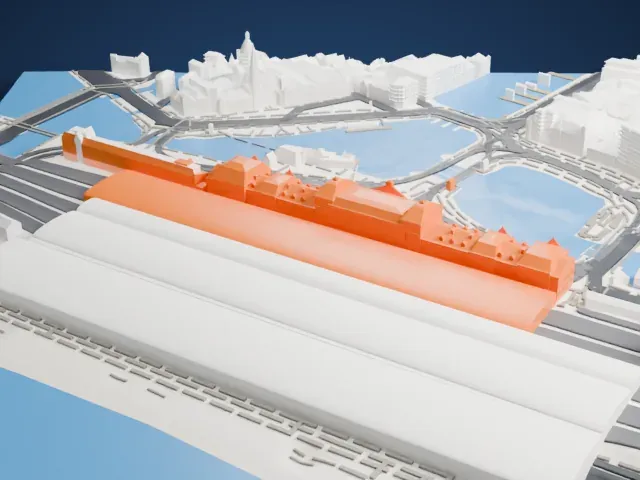 North
North
-
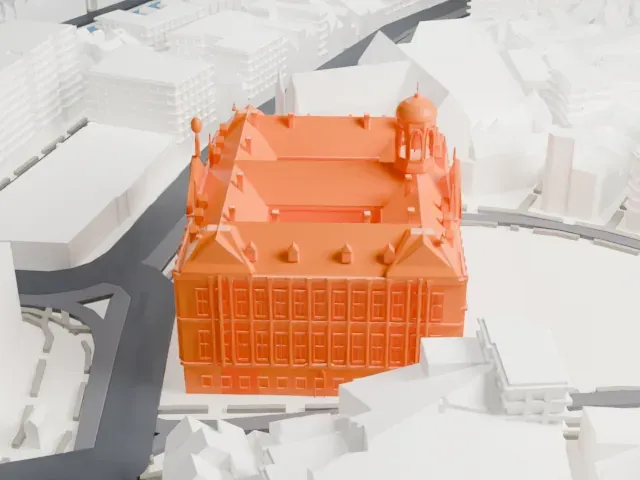
 East
East
-
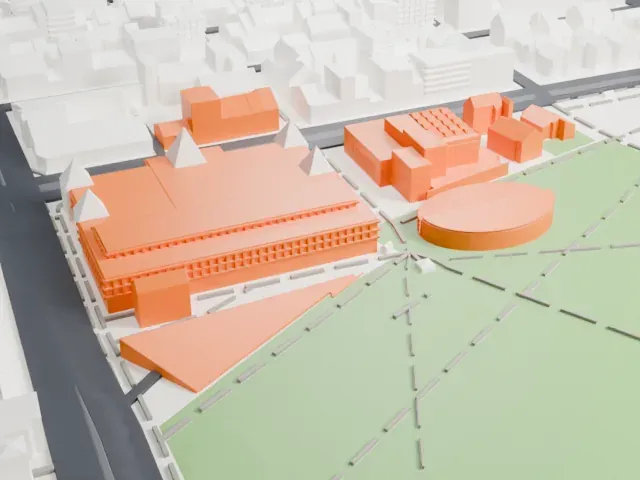
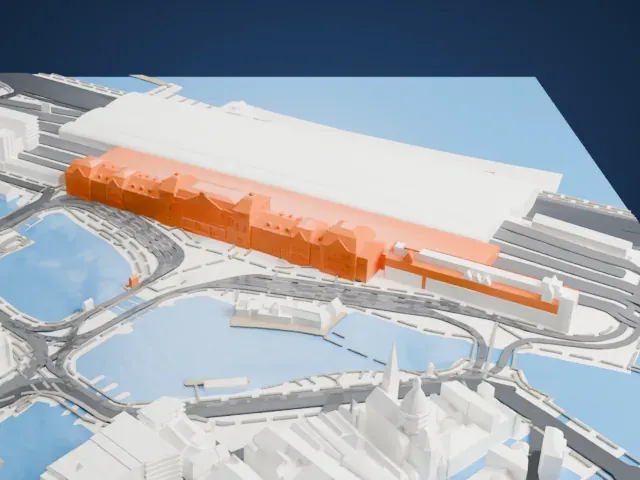 South
South
-
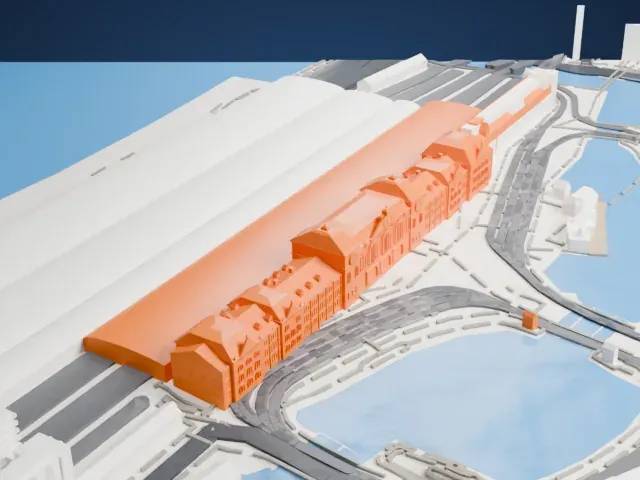 West
West
- Turrets, gables and small dormers
- The long facade carries two turrets, many gables and small dormers. Print friendly adapts these small parts to the print scale; Full detail keeps them, which suits a larger print or a fine nozzle.
- Long and low
- The building is very long compared with its height. A larger print size keeps the arched windows on the south front readable, and layers of 0.12 to 0.16 mm keep the roof edges crisp.
- Pick the detail for your nozzle
- In the Buildings settings, set Landmark detail to Print friendly to adapt thin parts and small details to the print scale. Full detail keeps every modeled feature, for larger prints or a finer nozzle.
- Colors
- Buildings, roads, water and ground arrive as separate filament slots in the 3MF. Amsterdam Centraal takes the building color.
- File format
- You get a 3MF for Bambu Studio, OrcaSlicer or PrusaSlicer. Any of them can save it as STL if you need one.
About this model
Amsterdam Centraal is one of more than 2,300 landmark models in Mini Skyline. They are made with AI, and each one is checked from four sides in its real surroundings before release. Everything around it is built from OpenStreetMap and Overture map data. If you would rather print the shape from map data, turn off Landmark models in the Buildings settings.
Common questions
Is there an Amsterdam Centraal STL I can download?
Mini Skyline builds the file for you in your browser and exports 3MF, which every major slicer opens. If you need an STL, open the 3MF in your slicer and export it from there.
How big can I print it?
Any print size from 40 mm across. Amsterdam Centraal grows with the print: about 10 mm tall on the default 160 mm print. For a model larger than your printer bed, Project Mode splits the area into tiles.
Is it free?
Yes. Generation runs in your browser, with no account and nothing behind a paywall.