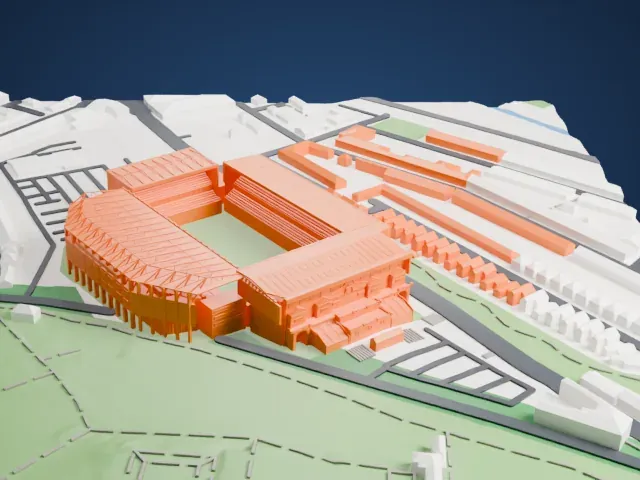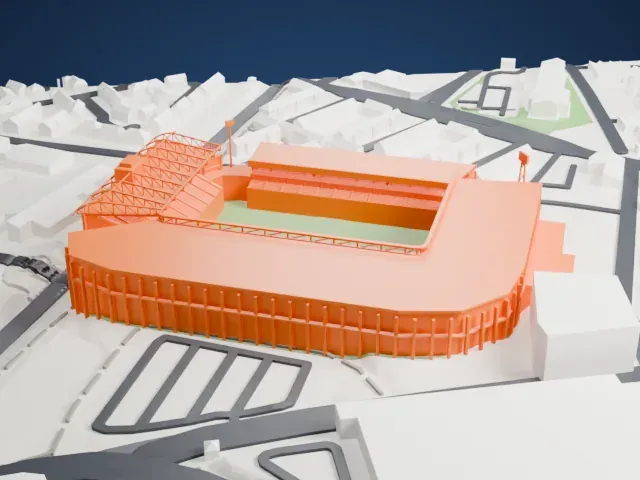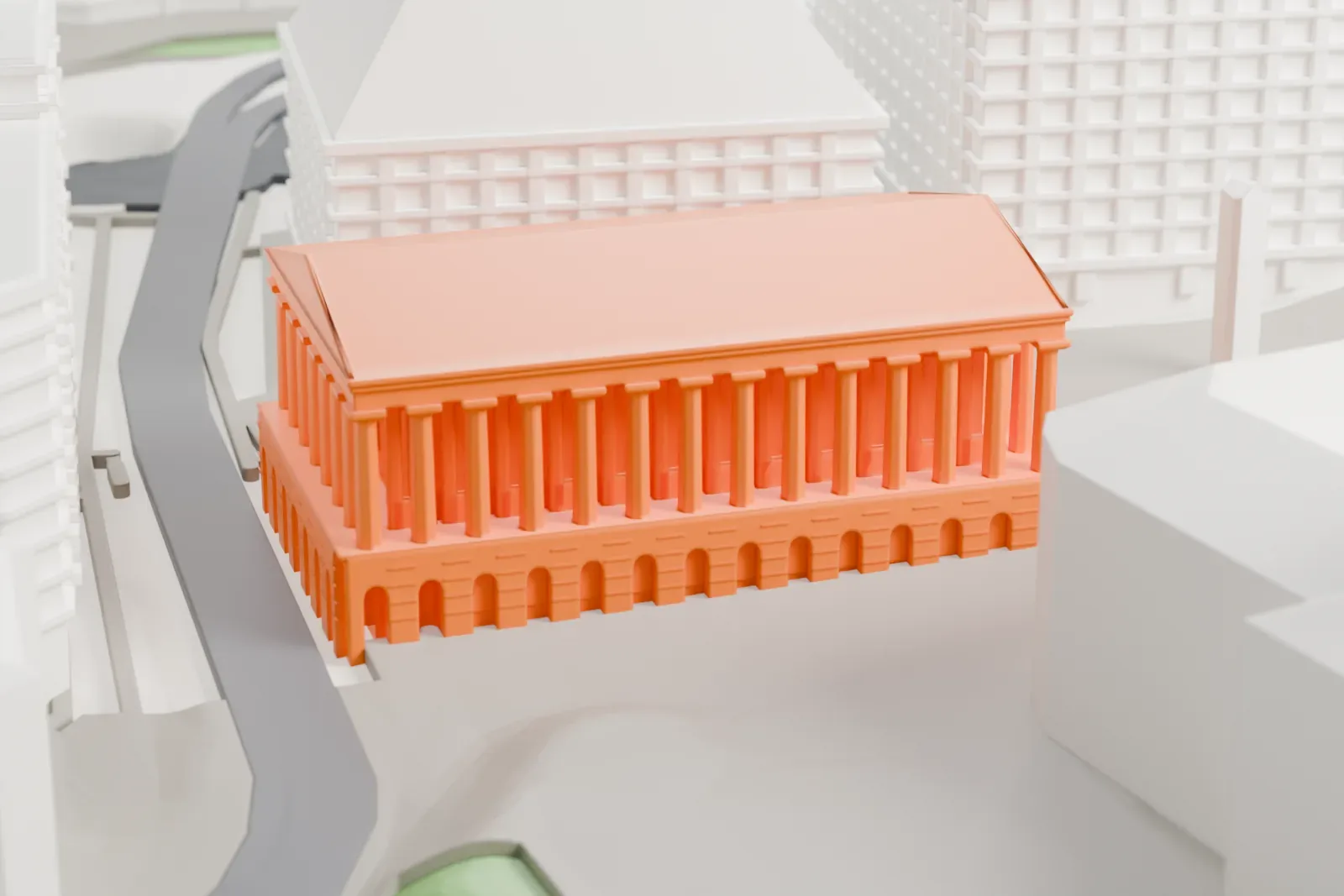
3D print Birmingham Town Hall
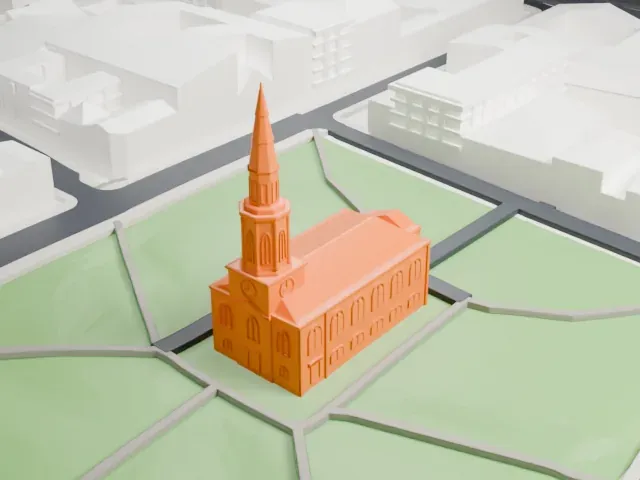
A free, printable model of Birmingham Town Hall, a columned hall on a tall base, set among the large buildings and open square around it, generated from real map data in your browser.
-
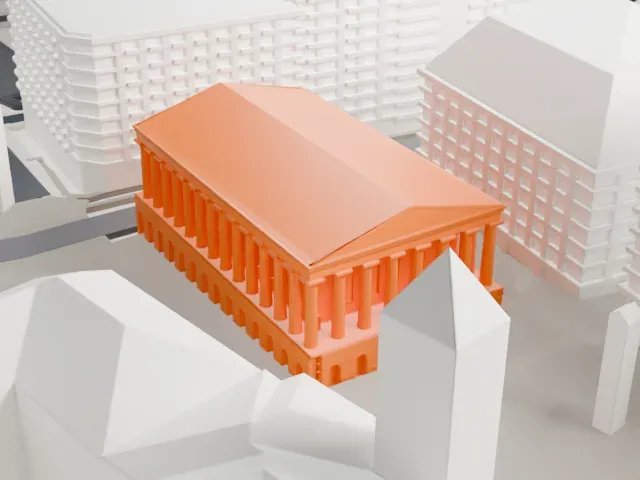 North
-
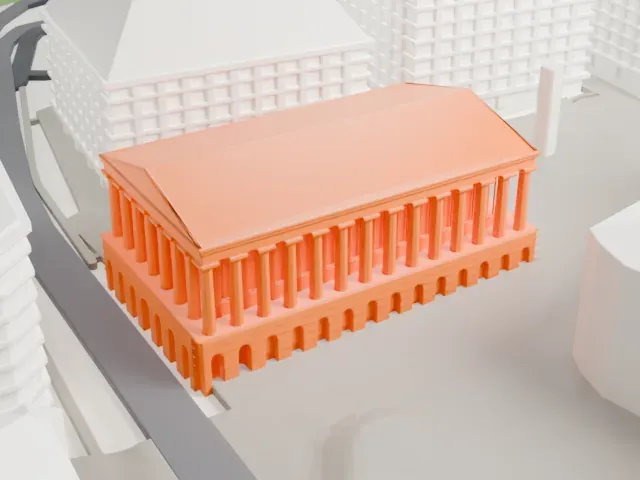 East
-
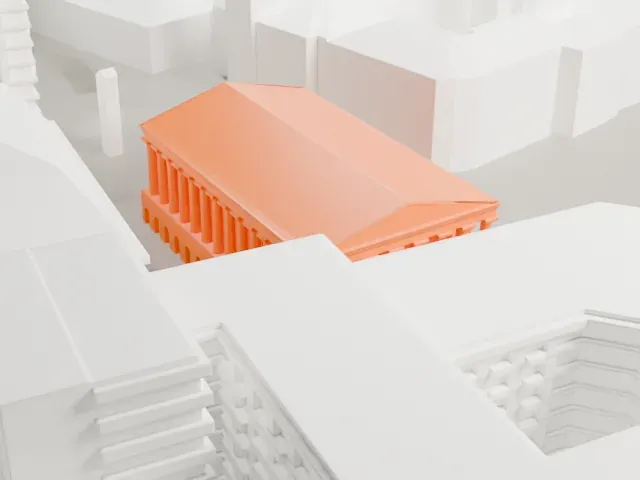 South
-
 West
The model you print
Birmingham Town Hall in 3D
The landmark on its own, at its size on a 160 mm print. Print friendly thickens thin parts for a 0.4 mm nozzle; Full detail keeps every part.
- On a 160 mm print
- 7 mm
- Scale
- 1:3,750
7 mm tall on a 160 mm print
Make this print opens the generator on a 600 m square around the landmark. Buildings print at close to true scale, so the landmark grows with the print size.
- A ring of slim columns
Tall columns surround the whole hall above an arched base. Print friendly adapts them to the print scale; Full detail keeps every column, which works best on a larger print with a layer height of 0.12 to 0.16 mm.
- Hall partly hidden by neighbors
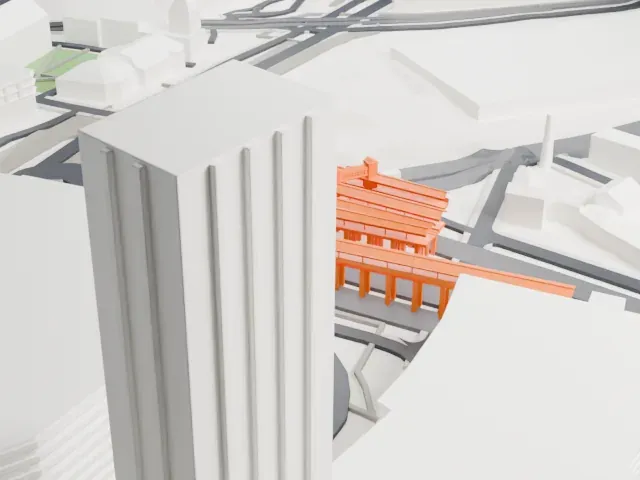
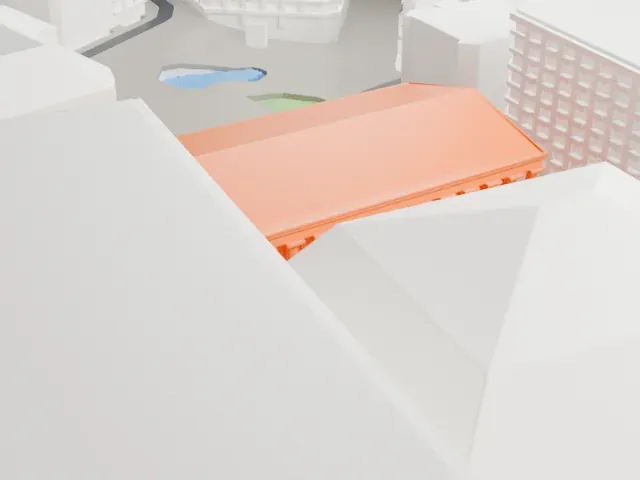
Taller buildings stand close on the south and west sides, so the columned north and east faces are the ones to show. Orient the print so those faces look out.
- One piece with the ground
Birmingham Town Hall is joined to the ground in the exported file, and the four-side check found no floating parts, so nothing needs gluing.
- Pick the detail for your nozzle
In the Buildings settings, set Landmark detail to Print friendly to adapt thin parts and small details to the print scale. Full detail keeps every modeled feature, for larger prints or a finer nozzle.
- Colors
Buildings, roads, water and ground arrive as separate filament slots in the 3MF. Birmingham Town Hall takes the building color.
- File format
You get a 3MF for Bambu Studio, OrcaSlicer or PrusaSlicer. Any of them can save it as STL if you need one.
About Birmingham Town Hall
In Victoria Square, Birmingham, England, stands Birmingham Town Hall, a concert hall and also a venue for popular assemblies that opened in 1834. The building holds Grade I listed status. It was built to house the Birmingham Triennial Music Festival, which raised funds for the General Hospital, and also public meetings. A design competition drew 67 designs. The architects chosen were Joseph Hansom and Edward Welch. Hansom, having tendered too low, went bankrupt during the work, and three guarantors donated money so the building could open on October 7, 1834.
It was the first in a line of monumental town halls that came to characterize the cities of Victorian England, and also the first major work in the Roman architectural revival of the 19th century. Its proportions follow the Temple of Castor and Pollux, which stands in the Roman Forum. A free-standing Corinthian temple in form, it has 14 bays from north to south and 8 bays from east to west, raised on a tall rusticated podium. Its facing is Penmon Anglesey Marble.
The hall has a long musical history. Mendelssohn's Elijah and Elgar's The Dream of Gerontius were both first performed here during the Triennial Musical Festival. At Christmas 1853 the hall hosted the first of Charles Dickens's public readings of his own works. The town hall is also known for its concert pipe organ, installed in 1834 with 6,000 pipes. The seating capacity is 1,100.
About this model
Birmingham Town Hall is one of more than 6,500 landmark models in Mini Skyline. They are made with AI, and each one is checked in its real surroundings before release. Each model is written as code from public descriptions, plans, photographs and aerial views used only as references; no image or third-party model is copied into it. Everything around it is built from OpenStreetMap and Overture map data. Rights in the building itself, its name and any brands on it are not granted by Mini Skyline; clear them separately before you sell prints. If you would rather print the shape from map data, turn off Landmark models in the Buildings settings.
Mini Skyline is not affiliated with, or endorsed by, the owners of this building or its names and marks.
Same skyline