3D print the Campbell-Christie House
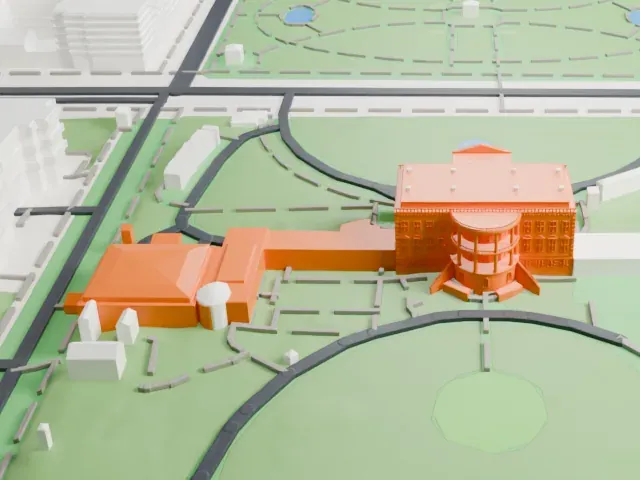
A free, printable model of the Campbell-Christie House and the lawn and paths around it, generated from real map data in your browser.
Free, in your browser. Exports a slicer-ready 3MF.
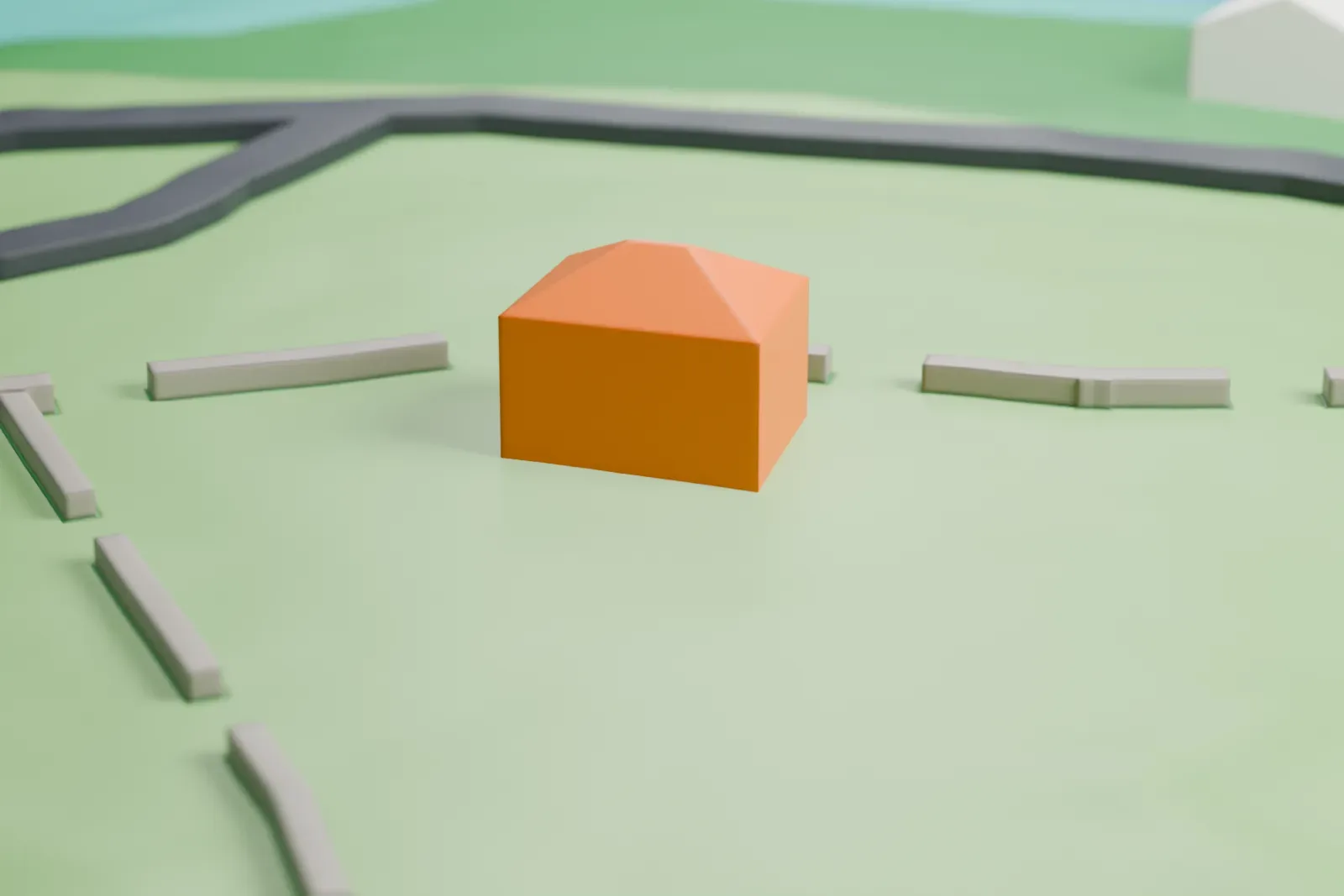
About the Campbell-Christie House
In the New Bridge Landing area of River Edge, in Bergen County, New Jersey, stands the Campbell-Christie House, a historic home that was relocated there. Its National Register of Historic Places listing dates to January 10, 1983, under a multiple property submission covering early stone houses in Bergen County. At the house's original site in New Milford, the stonemason Jacob Campbell built a store about 1774, around the time he married.
In 1795 the blacksmith John D. Christie bought the house for £250 and ran a tavern there. J. Walter Christie, born in the house on May 6, 1865, became famous as an inventor and mechanical genius, and the title he is best known for is "father of the modern tank." Extensive alterations were made to the house by the Brookchester Land Company in 1908.
The house was slated for demolition, and the Bergen County Historical Society offered Bergen County a ground lease of 50 years so the house could be moved. The 200-year-old house traveled two miles, from New Milford to the Society's land in River Edge, in September 1977, helped by a $150,000 grant. The Society furnishes and interprets it as an 18th-century tavern. A Jersey Dutch Out Kitchen, built as a working replica in 1992, stands behind the house.
How it prints
Make this print opens the generator on a 600 m square around the landmark. Buildings print at close to true scale, so the landmark grows with the print size.
| Print size | Landmark height | Scale |
|---|---|---|
| 160 mm default | 2 mm | 1:3,750 |
| 200 mm | 3 mm | 1:3,000 |
| 256 mm | 3 mm | 1:2,344 |
-
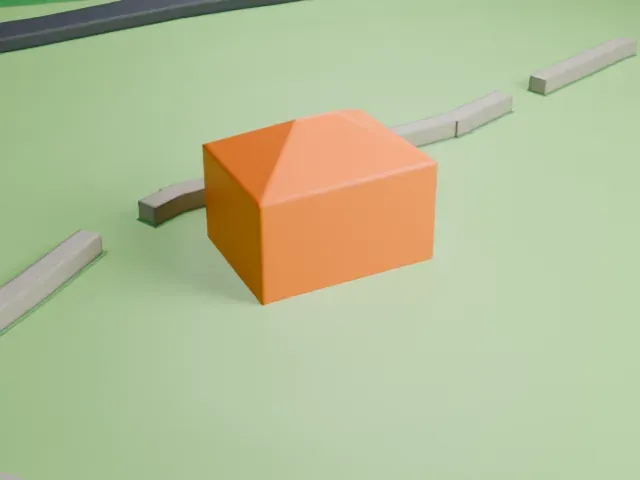 North
North
-
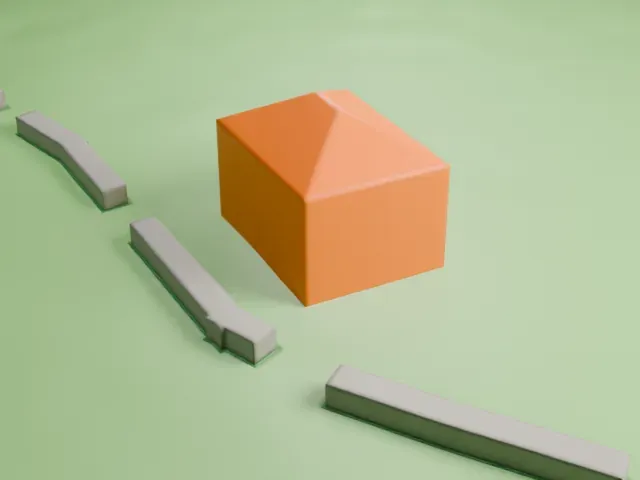 East
East
-
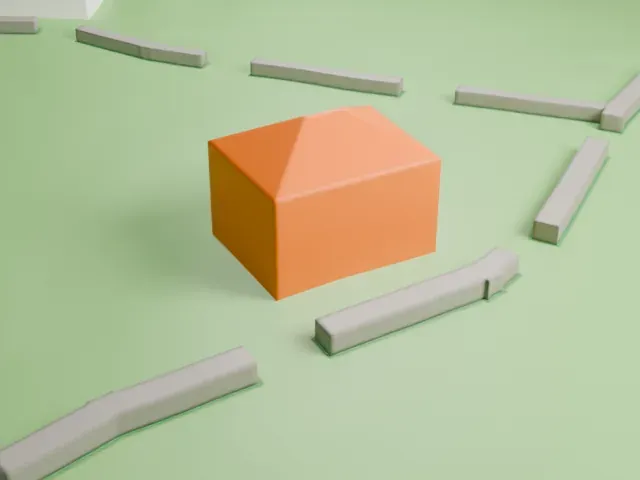 South
South
-
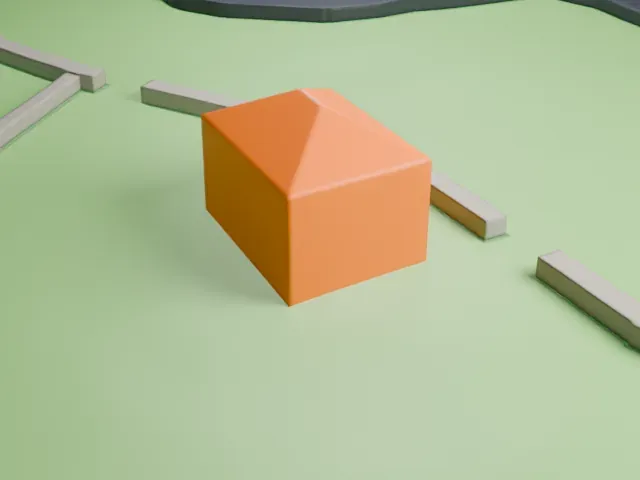 West
West
- Tiny roof details
- The roof boards, dormers and chimneys are small next to the house itself. A larger print size keeps them; Print friendly adapts them to the print scale.
- One piece with the ground
- The Campbell-Christie House is joined to the ground in the exported file, and the four-side check found no floating parts, so nothing needs gluing.
- Pick the detail for your nozzle
- In the Buildings settings, set Landmark detail to Print friendly to adapt thin parts and small details to the print scale. Full detail keeps every modeled feature, for larger prints or a finer nozzle.
- Colors
- Buildings, roads, water and ground arrive as separate filament slots in the 3MF. The Campbell-Christie House takes the building color.
- File format
- You get a 3MF for Bambu Studio, OrcaSlicer or PrusaSlicer. Any of them can save it as STL if you need one.
About this model
The Campbell-Christie House is one of more than 2,300 landmark models in Mini Skyline. They are made with AI, and each one is checked from four sides in its real surroundings before release. Everything around it is built from OpenStreetMap and Overture map data. If you would rather print the shape from map data, turn off Landmark models in the Buildings settings.
Common questions
Is there a Campbell-Christie House STL I can download?
Mini Skyline builds the file for you in your browser and exports 3MF, which every major slicer opens. If you need an STL, open the 3MF in your slicer and export it from there.
How big can I print it?
Any print size from 40 mm across. The Campbell-Christie House grows with the print: about 2 mm tall on the default 160 mm print. For a model larger than your printer bed, Project Mode splits the area into tiles.
Is it free?
Yes. Generation runs in your browser, with no account and nothing behind a paywall.