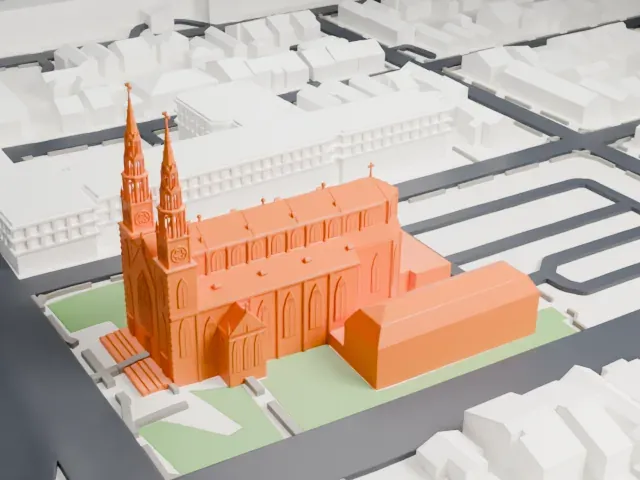
3D print the Canadian Museum of History
A free, printable model of the Canadian Museum of History, with its long curving roofs and rounded domes, and the water, parkland and streets around it, generated from real map data in your browser.
Free, in your browser. Exports a slicer-ready 3MF.
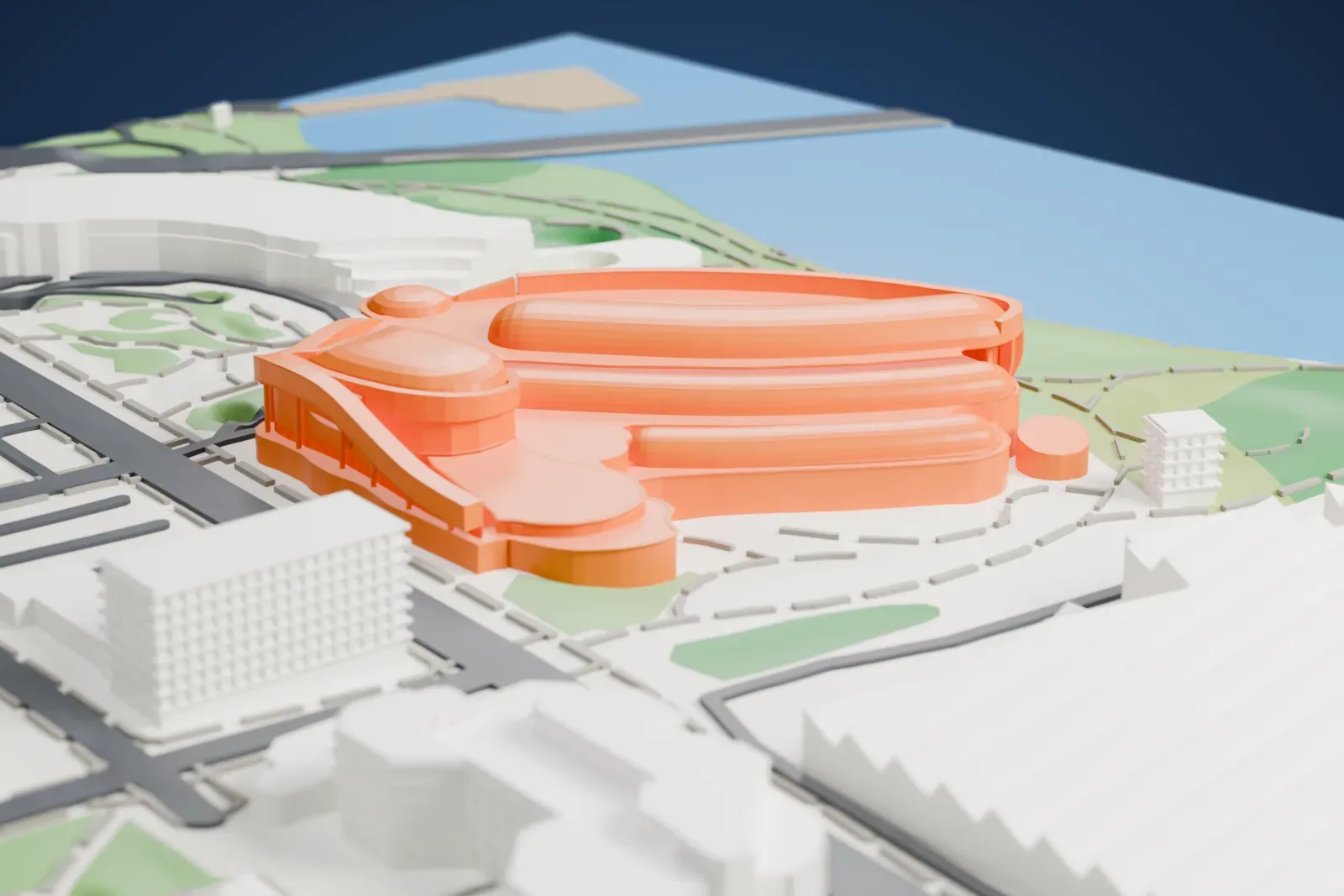
About the Canadian Museum of History
The Canadian Museum of History is a national museum in Gatineau, Quebec, Canada, covering Canadian history, anthropology, ethnology and cultural studies. Its aim is to promote Canada's heritage and support related research. Douglas Cardinal designed the building, a structure of 75,000 square meters (810,000 sq ft). In 1983 his firm, Douglas Cardinal Architect Limited, was named design architect, working with the Montreal firm Tétreault, Parent, Languedoc et Associés, and the Cabinet of Canada approved his design that year.
The museum traces back to an earlier museum established in 1856 by the Geological Survey of Canada. An anthropology division was added in 1910, and in 1927 it took the name National Museum of Canada. In 1968 the institution was divided into several separate institutions, and the anthropology and human history departments formed the National Museum of Man. In 1989 the museum moved into its new building in Gatineau.
The Gatineau site was acquired by the National Capital Commission from the E.B Eddy Company. It was chosen partly because it was already public land, was linked to Confederation Boulevard and stood out in views from the Ottawa River. The new building opened in 1989 with two permanent exhibitions, Canada Hall and a display about the Pacific Northwest Coast's Indigenous peoples. The collection holds over three million artifacts and documents, and the museum also stages temporary, traveling and online exhibitions.
How it prints
Make this print opens the generator on a 600 m square around the landmark. Buildings print at close to true scale, so the landmark grows with the print size.
| Print size | Landmark height | Scale |
|---|---|---|
| 160 mm default | 9 mm | 1:3,750 |
| 200 mm | 12 mm | 1:3,000 |
| 256 mm | 15 mm | 1:2,344 |
-
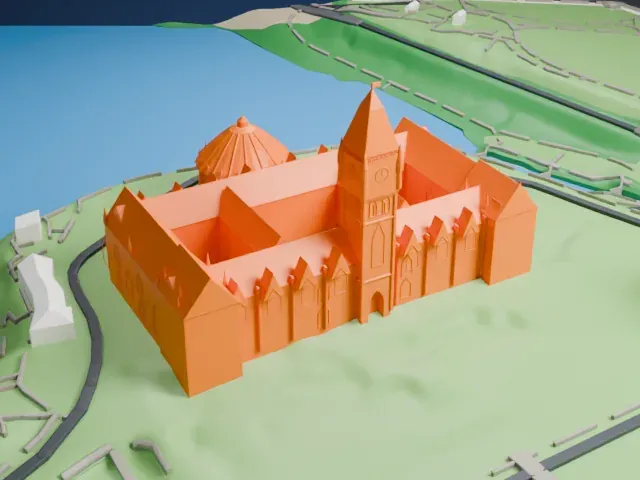
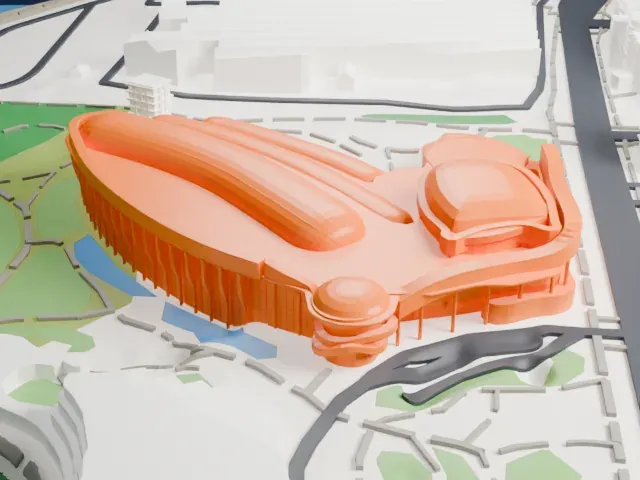 North
North
-
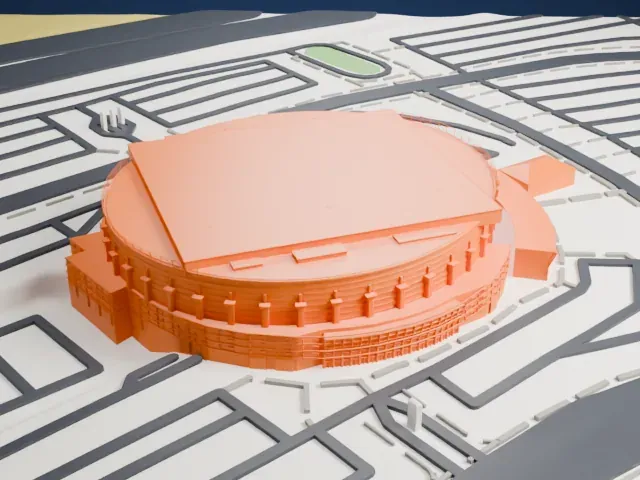
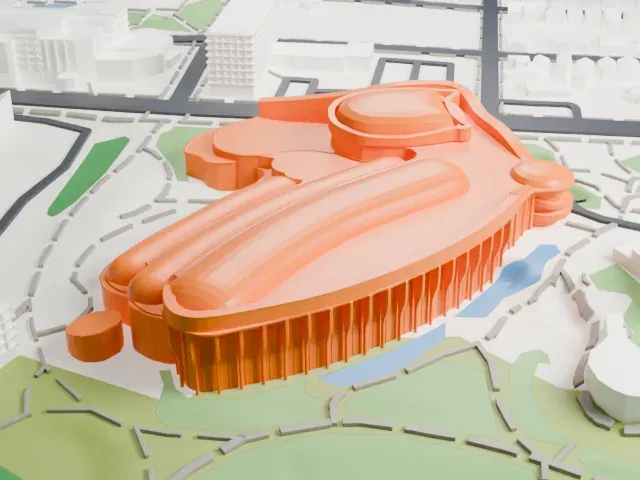 East
East
-
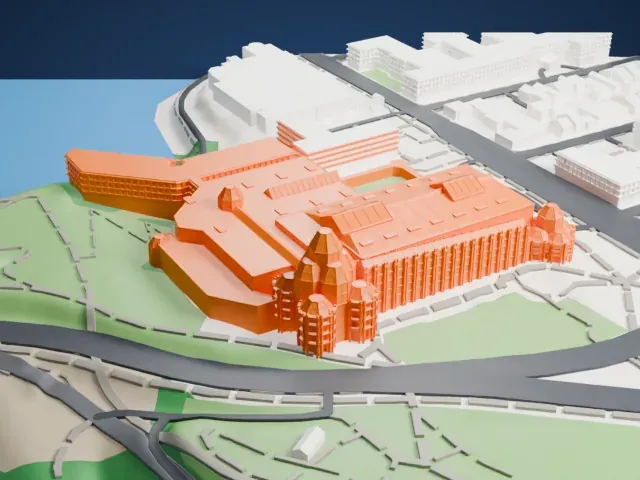
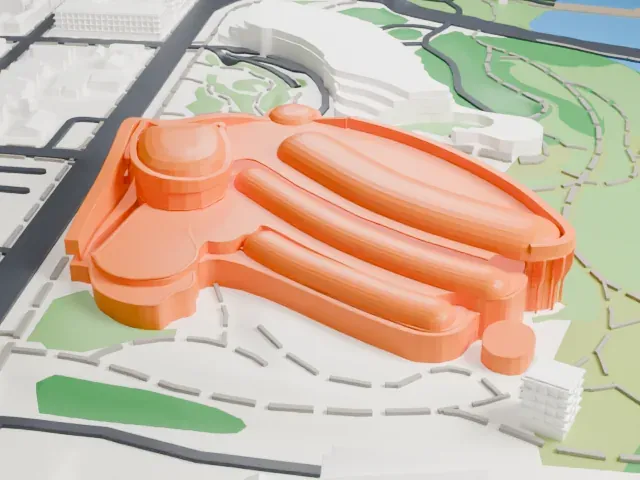 South
South
-
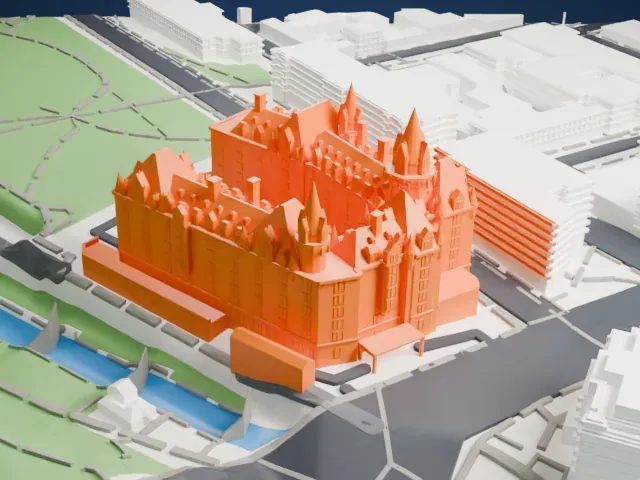
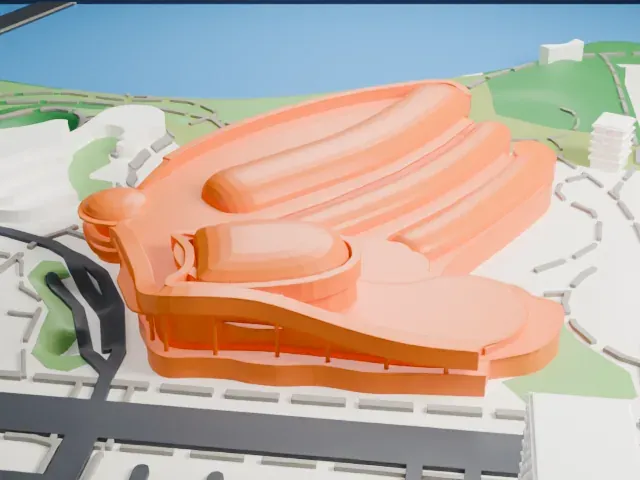 West
West
- Sweeping curved roofs
- The roofs sweep in long smooth curves with no sharp edges. Layers of 0.12–0.16 mm keep the curved surfaces smooth, with less visible stepping.
- Fine ribs on the walls
- Thin vertical ribs run along the curved walls. A larger print size keeps them distinct, and Print friendly adapts them to the print scale if you print small.
- One piece with the ground
- The Canadian Museum of History is joined to the ground in the exported file, and the four-side check found no floating parts, so nothing needs gluing.
- Pick the detail for your nozzle
- In the Buildings settings, set Landmark detail to Print friendly to adapt thin parts and small details to the print scale. Full detail keeps every modeled feature, for larger prints or a finer nozzle.
- Colors
- Buildings, roads, water and ground arrive as separate filament slots in the 3MF. The Canadian Museum of History takes the building color.
- File format
- You get a 3MF for Bambu Studio, OrcaSlicer or PrusaSlicer. Any of them can save it as STL if you need one.
About this model
The Canadian Museum of History is one of more than 2,300 landmark models in Mini Skyline. They are made with AI, and each one is checked from four sides in its real surroundings before release. Everything around it is built from OpenStreetMap and Overture map data. If you would rather print the shape from map data, turn off Landmark models in the Buildings settings.
Common questions
Is there a Canadian Museum of History STL I can download?
Mini Skyline builds the file for you in your browser and exports 3MF, which every major slicer opens. If you need an STL, open the 3MF in your slicer and export it from there.
How big can I print it?
Any print size from 40 mm across. The Canadian Museum of History grows with the print: about 9 mm tall on the default 160 mm print. For a model larger than your printer bed, Project Mode splits the area into tiles.
Is it free?
Yes. Generation runs in your browser, with no account and nothing behind a paywall.