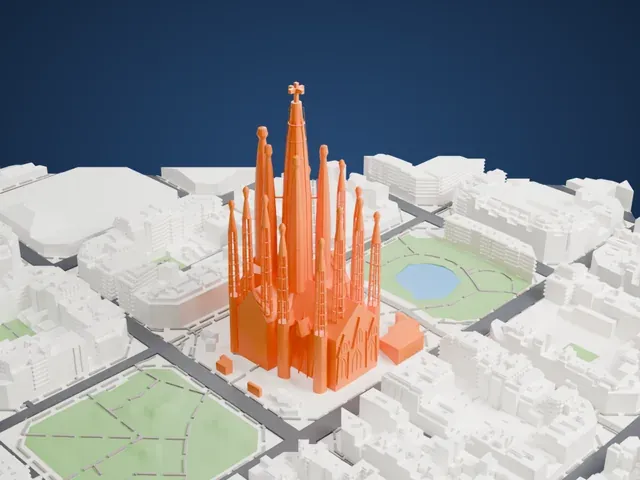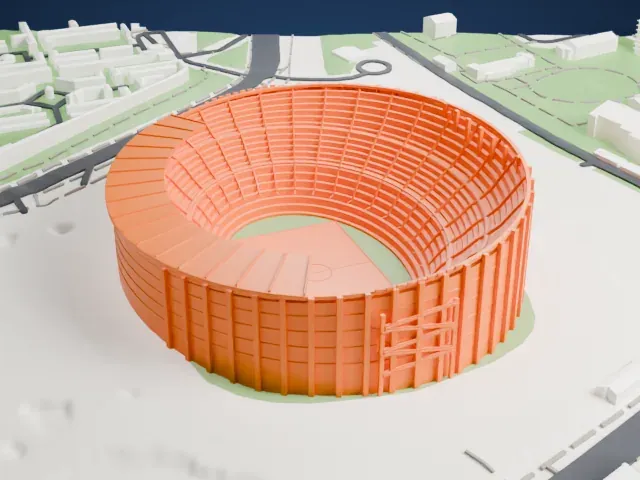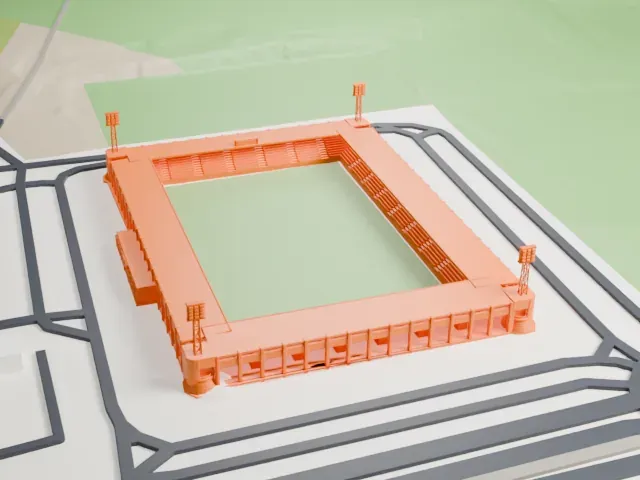
3D print Ceuta Cathedral
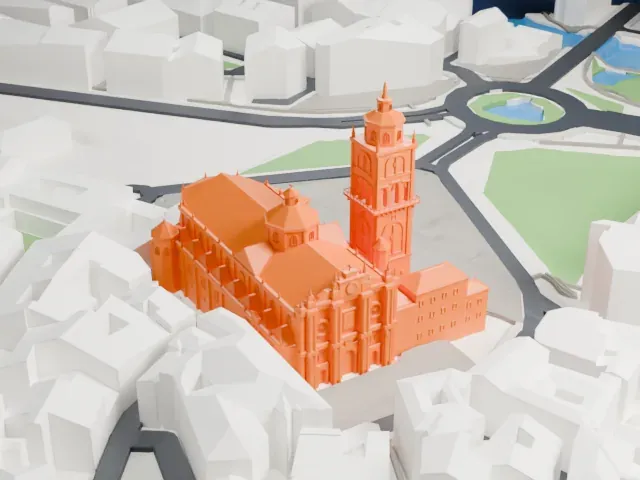
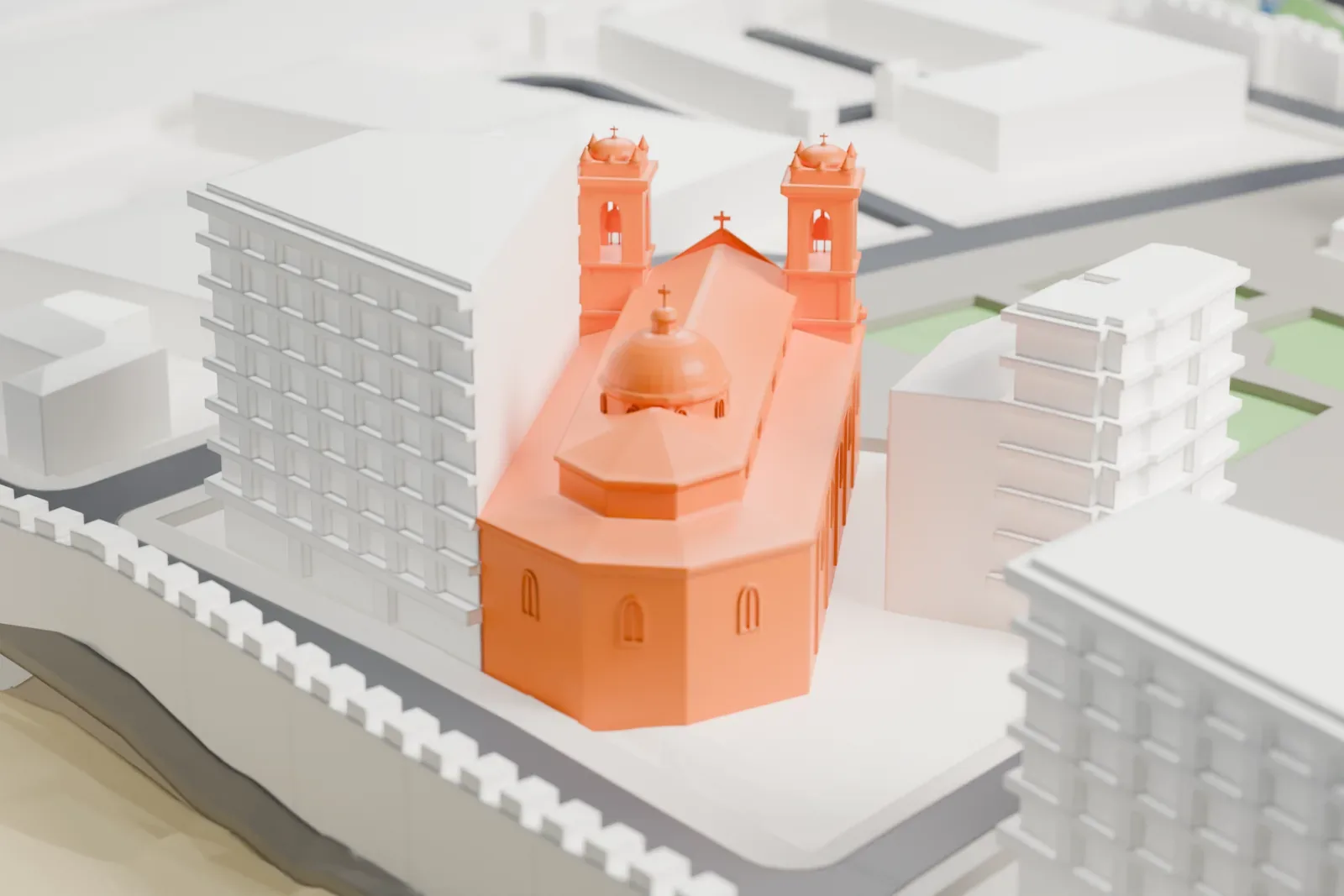
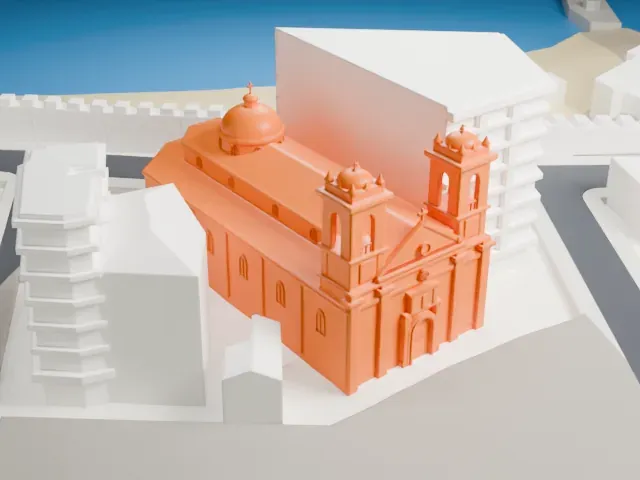
A free, printable model of Ceuta Cathedral, a church with two domed bell towers, a pedimented front and a dome, among taller buildings near the sea, generated from real map data in your browser.
-
 North
-
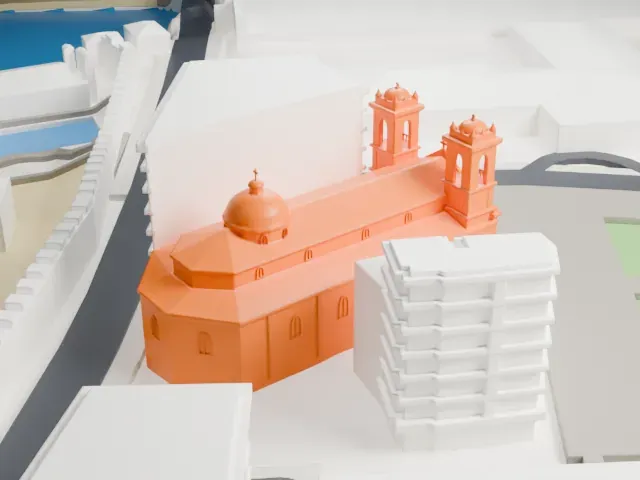 East
-
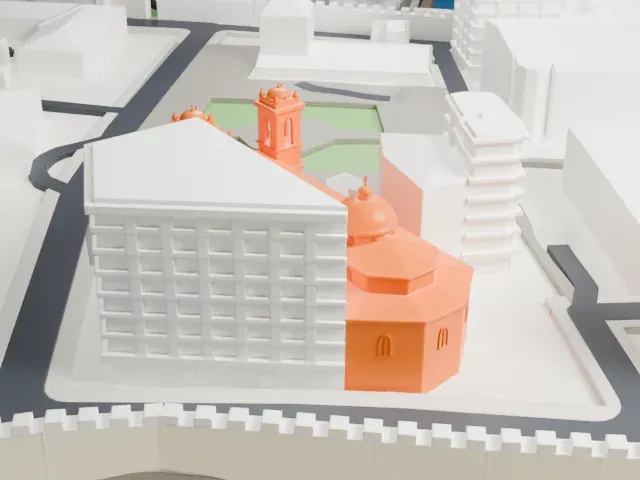 South
-
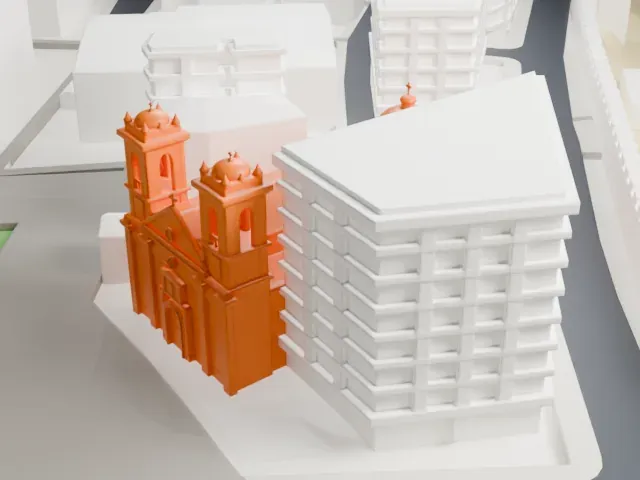 West
The model you print
Ceuta Cathedral in 3D
The landmark on its own, at its size on a 160 mm print. Print friendly thickens thin parts for a 0.4 mm nozzle; Full detail keeps every part.
- On a 160 mm print
- 8 mm
- Scale
- 1:3,750
8 mm tall on a 160 mm print
Make this print opens the generator on a 600 m square around the landmark. Buildings print at close to true scale, so the landmark grows with the print size.
- Twin bell towers
Each bell tower has open arches and a small domed top with pinnacles at the corners. Print friendly adapts these to the print scale; print slowly with good cooling, and use Full detail on a larger print.
- Carved front and dome
The west front has columns, a pediment and a doorway, and a dome with a cross rises behind it. A layer height of 0.12–0.16 mm and a bigger print size keep these crisp.
- One piece with the ground
Ceuta Cathedral is joined to the ground in the exported file, and the four-side check found no floating parts, so nothing needs gluing.
- Pick the detail for your nozzle
In the Buildings settings, set Landmark detail to Print friendly to adapt thin parts and small details to the print scale. Full detail keeps every modeled feature, for larger prints or a finer nozzle.
- Colors
Buildings, roads, water and ground arrive as separate filament slots in the 3MF. Ceuta Cathedral takes the building color.
- File format
You get a 3MF for Bambu Studio, OrcaSlicer or PrusaSlicer. Any of them can save it as STL if you need one.
About Ceuta Cathedral
Ceuta Cathedral, formally dedicated to St Mary of the Assumption, is a Roman Catholic church in Ceuta, a Spanish city on the northwest African coast, in a small exclave. An early Christian church of the Eastern Roman period occupied the site, and some researchers equate it with the church Emperor Justinian I built in the 6th century. The old Great Mosque of Ceuta replaced it.
Portugal’s conquest of 1415 led to the Great Mosque being altered into a Christian church, though what changed is not recorded. Age and war damage ruined the building. Toward the end of the 17th century, the architect Juan de Ochoa was given the task of designing a replacement. Construction started in 1686, yet a great siege of Ceuta caused years of trouble. The cathedral was only consecrated in 1726, with the Assumption of Our Lady as its dedication.
An attached building holds the vicariate, secretariat, diocesan archive, library and cathedral museum, and the bishop’s palace wraps around a small triangular courtyard. Among the notable sights are a Baroque altarpiece, frescoes by Miguel Bernardini, three large canvases, a figure of the Great Virgin from the 15th century, of Portuguese origin, and a chapel to the Most Holy Trinity.
About this model
Ceuta Cathedral is one of more than 6,500 landmark models in Mini Skyline. They are made with AI, and each one is checked in its real surroundings before release. Each model is written as code from public descriptions, plans, photographs and aerial views used only as references; no image or third-party model is copied into it. Everything around it is built from OpenStreetMap and Overture map data. Rights in the building itself, its name and any brands on it are not granted by Mini Skyline; clear them separately before you sell prints. If you would rather print the shape from map data, turn off Landmark models in the Buildings settings.
Mini Skyline is not affiliated with, or endorsed by, the owners of this building or its names and marks.
Keep exploring