3D print Camp Nou
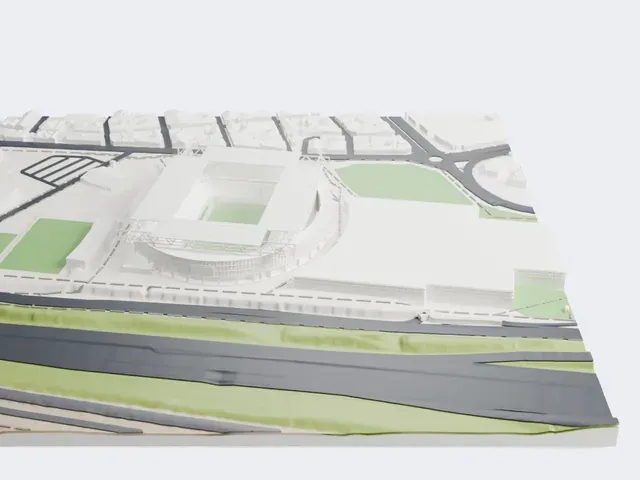
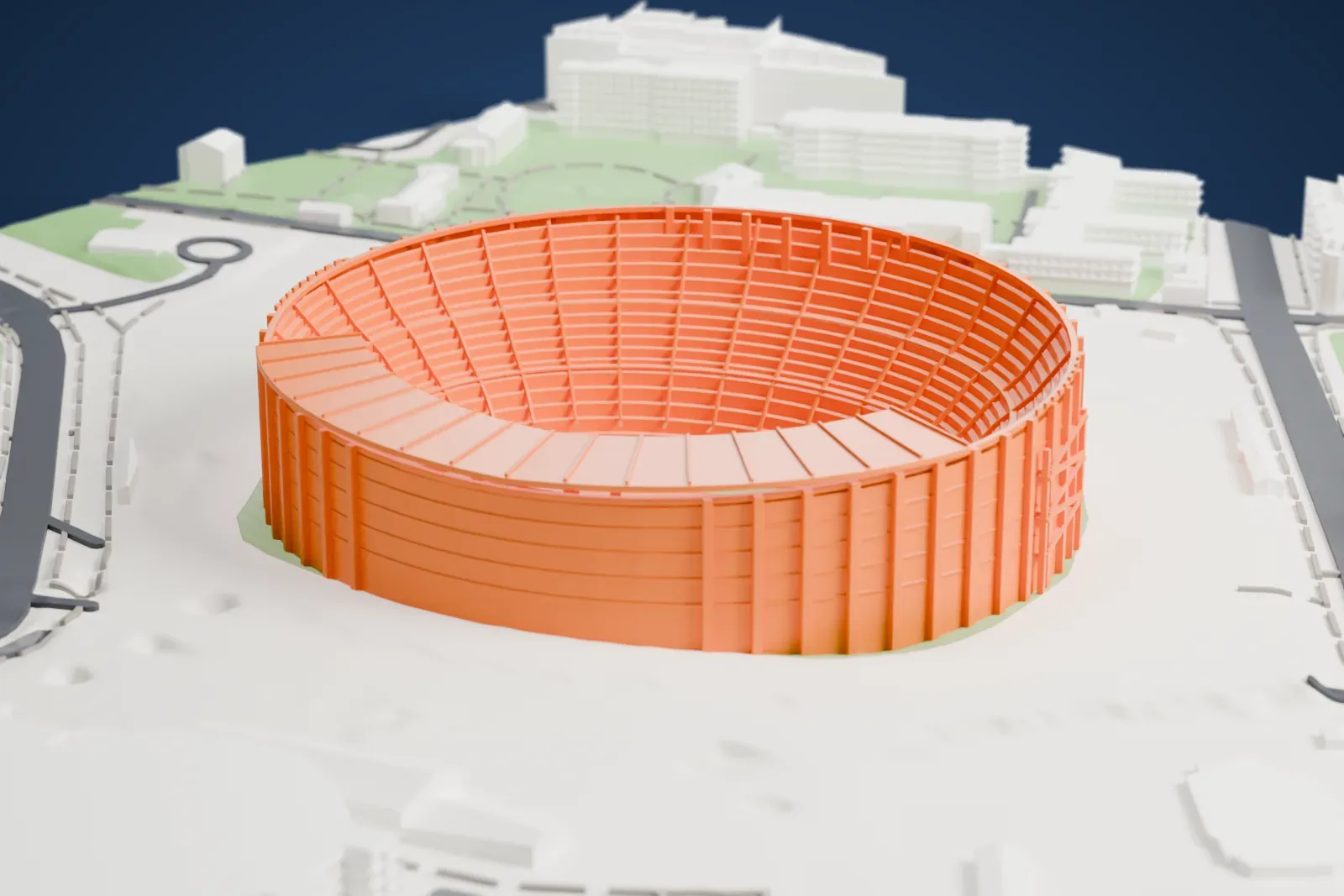
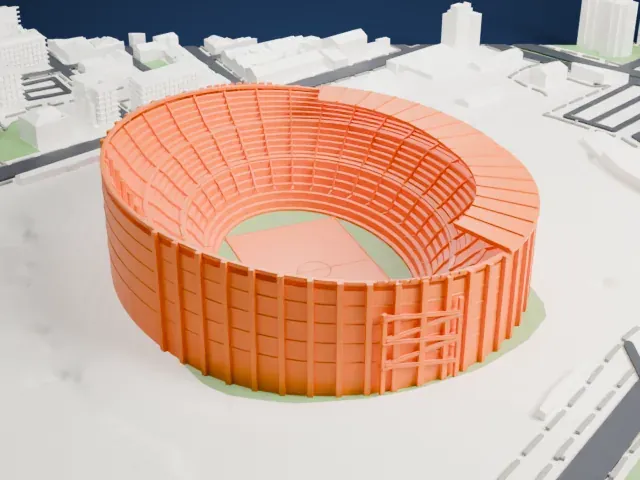
A free, printable model of Camp Nou, an oval stadium bowl with the streets, buildings and green spaces around it, generated from real map data in your browser.
-
 North
-
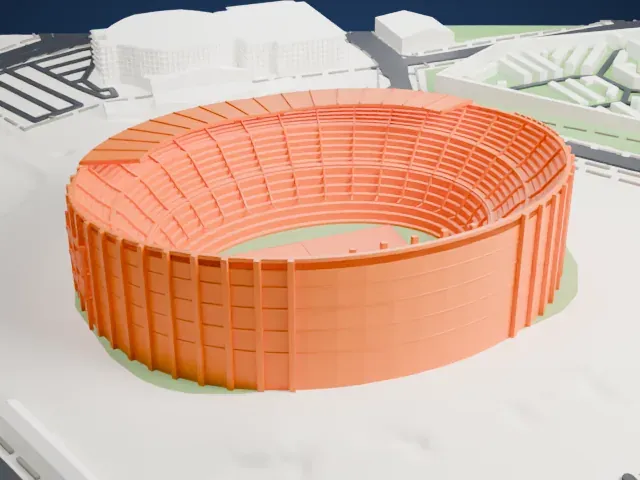 East
-
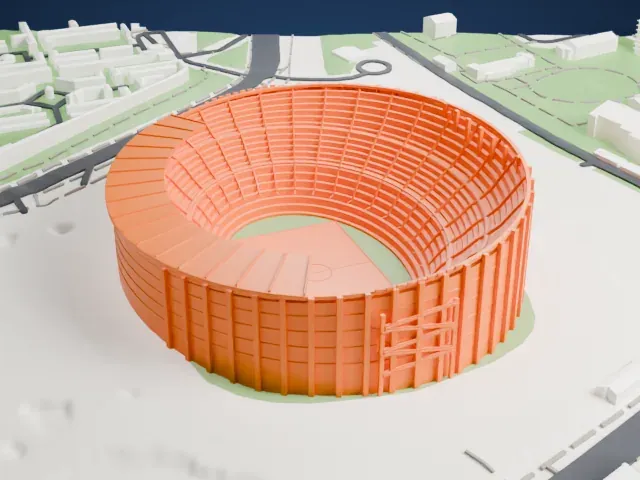 South
-
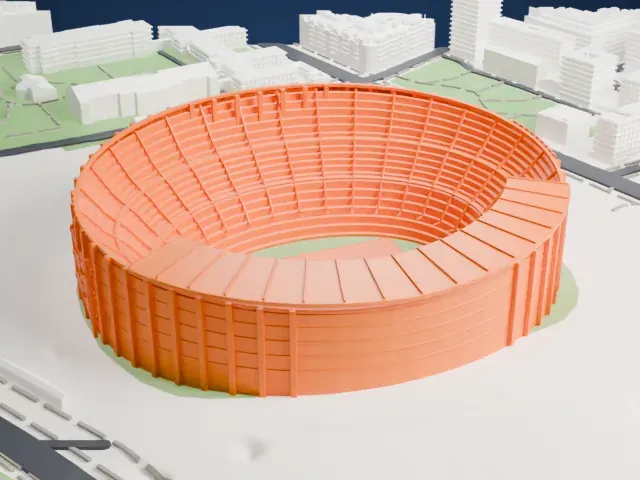 West
- On a 160 mm print
- 16 mm
- Scale
- 1:3,750
16 mm tall on a 160 mm print
Make this print opens the generator on a 600 m square around the landmark. Buildings print at close to true scale, so the landmark grows with the print size.
- Many narrow tiers of seating
The stands are modeled as rows of narrow tiers around the oval. Print friendly adapts them to the print scale; Full detail keeps every tier on a larger print, and 0.12–0.16 mm layers keep the rows crisp.
- Slim posts around the bowl
Thin vertical posts stand along the outer wall and the rim. A bigger print size keeps them sturdier, and printing slowly helps them come out clean.
- One piece with the ground
Camp Nou is joined to the ground in the exported file, and the four-side check found no floating parts, so nothing needs gluing.
- Pick the detail for your nozzle
In the Buildings settings, set Landmark detail to Print friendly to adapt thin parts and small details to the print scale. Full detail keeps every modeled feature, for larger prints or a finer nozzle.
- Colors
Buildings, roads, water and ground arrive as separate filament slots in the 3MF. Camp Nou takes the building color.
- File format
You get a 3MF for Bambu Studio, OrcaSlicer or PrusaSlicer. Any of them can save it as STL if you need one.
About Camp Nou
Camp Nou is a football stadium in Barcelona, and it has been the home ground of FC Barcelona since it opened in 1957. The name is Catalan for "New Field", and English speakers often call it the Nou Camp. The club built it because its previous ground, Camp de Les Corts, had no space to grow. Francesc Mitjans and Josep Soteras were the architects, working with Lorenzo García-Barbón.
Work began on March 28, 1954, and the stadium was inaugurated on September 24, 1957, in front of some 90,000 people. The final cost reached 288 million pesetas, more than four times what had been expected. As at Real Madrid's Santiago Bernabéu, the design drew on De Kuip, Feyenoord's stadium from 1937: oval rings of seating around the pitch, with continuous stands and no open corners.
Capacity has changed a great deal over the years. The stadium opened at 106,146 and rose to 121,401 ahead of the 1982 FIFA World Cup, when it staged the opening match. It has also held two European Cup and Champions League finals, one in 1989 and one in 1999, along with the final of the 1992 Summer Olympics football tournament. The first European Cup Winners' Cup final held there, in May 1972, ended with Rangers beating Dynamo Moscow 3–2.
About this model
Camp Nou is one of more than 4,300 landmark models in Mini Skyline. They are made with AI, and each one is checked from four sides in its real surroundings before release. Everything around it is built from OpenStreetMap and Overture map data. If you would rather print the shape from map data, turn off Landmark models in the Buildings settings.
Same skyline