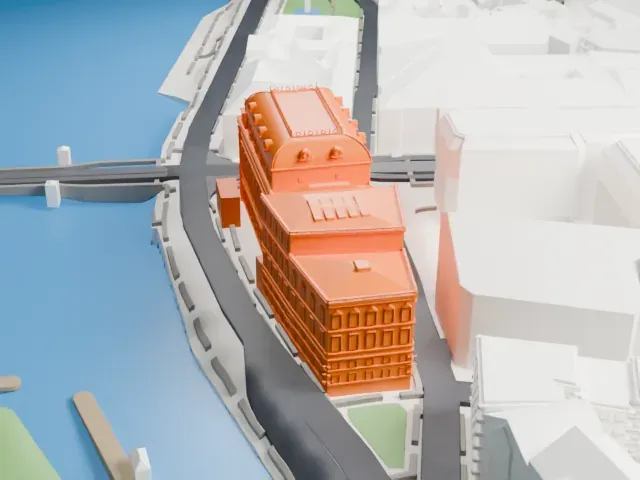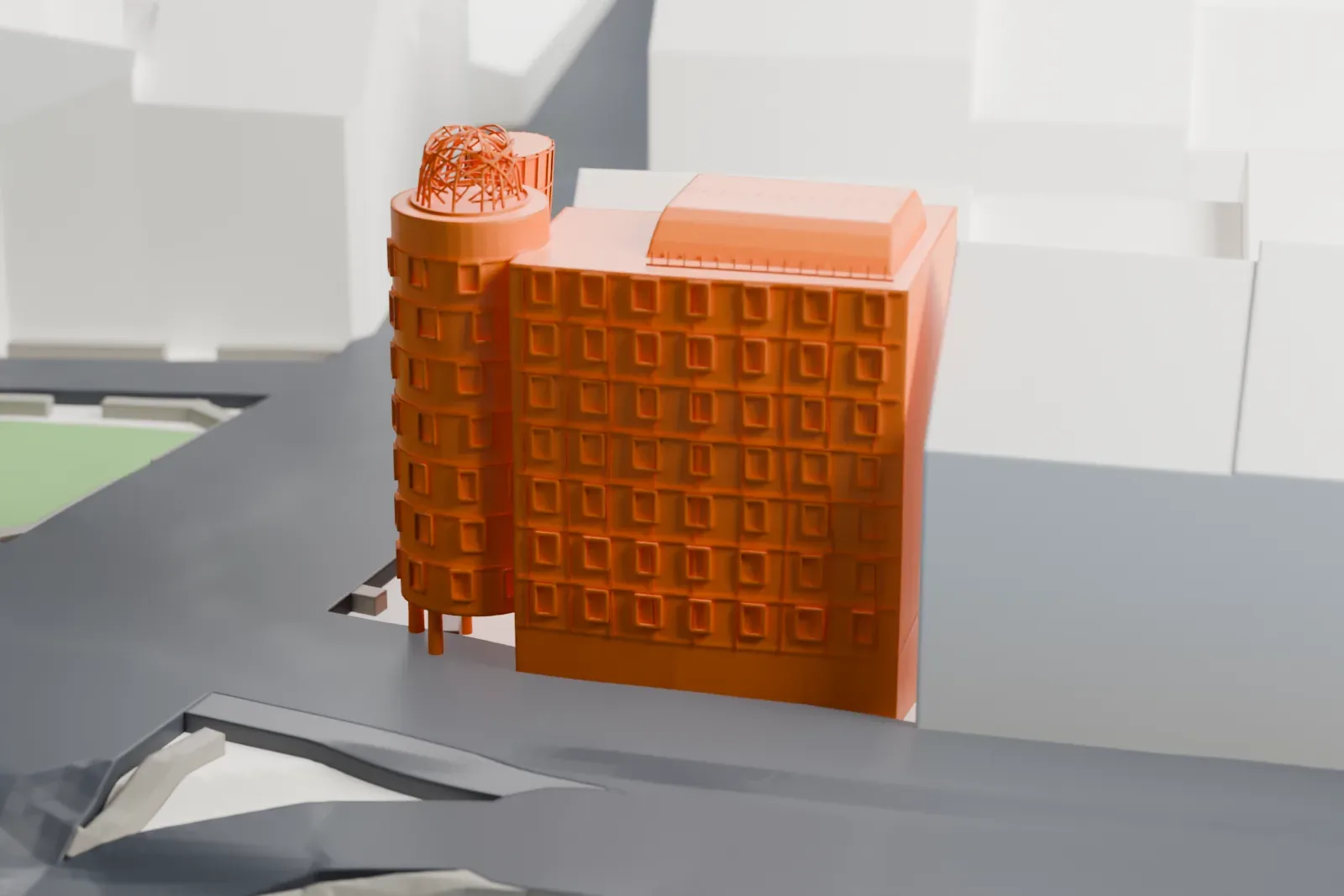
3D print the Dancing House
A free, printable model of the Dancing House's two curving towers and twisted metal top, with the river, wide roads and neighboring buildings around it in Prague, generated from real map data in your browser.
-
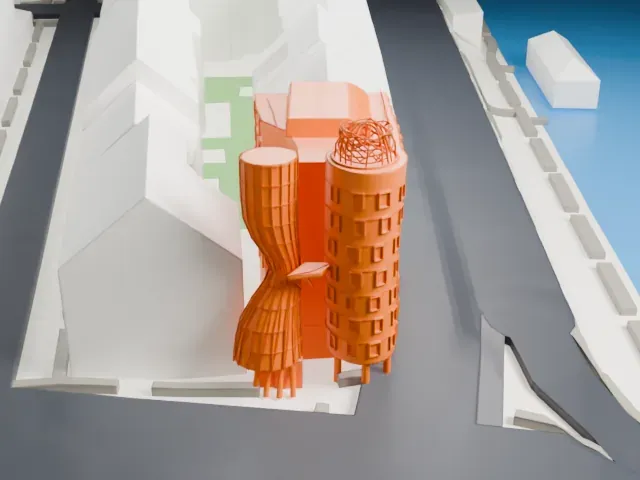 North
-
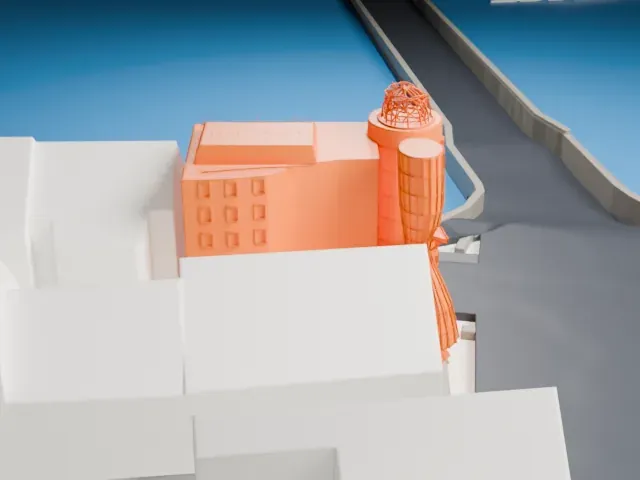 East
-
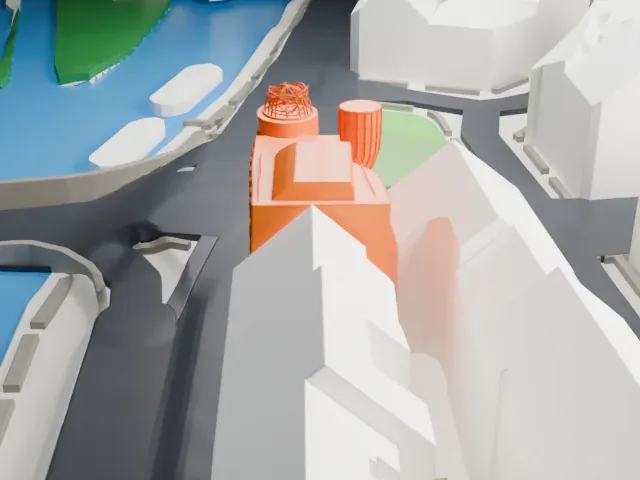 South
-
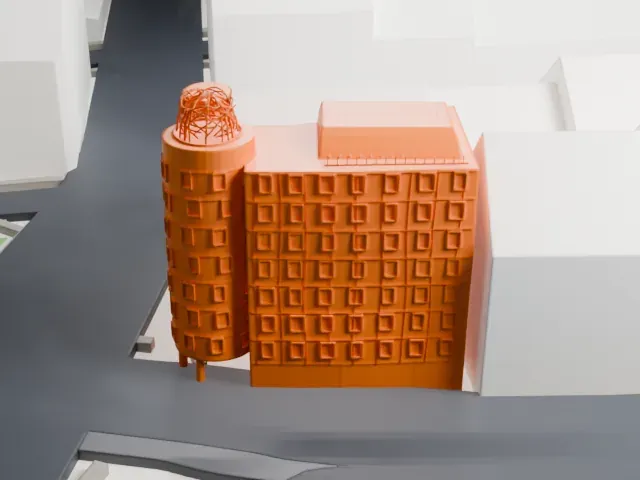 West
- On a 160 mm print
- 10 mm
- Scale
- 1:3,750
10 mm tall on a 160 mm print
Make this print opens the generator on a 600 m square around the landmark. Buildings print at close to true scale, so the landmark grows with the print size.
- Tangled metal top
The twisted metal structure on top is a fine, tangled web and the most delicate part. A slow print, cool layers and layers of 0.12 to 0.16 mm help, and Print friendly adapts it to the print scale.
- Slim pillars under the towers
Both towers rest on thin curved pillars. A larger print size keeps these parts, and Full detail keeps every modeled feature.
- One piece with the ground
The Dancing House is joined to the ground in the exported file, and the four-side check found no floating parts, so nothing needs gluing.
- Pick the detail for your nozzle
In the Buildings settings, set Landmark detail to Print friendly to adapt thin parts and small details to the print scale. Full detail keeps every modeled feature, for larger prints or a finer nozzle.
- Colors
Buildings, roads, water and ground arrive as separate filament slots in the 3MF. The Dancing House takes the building color.
- File format
You get a 3MF for Bambu Studio, OrcaSlicer or PrusaSlicer. Any of them can save it as STL if you need one.
About the Dancing House
The Dancing House, nicknamed Ginger and Fred, is the Nationale-Nederlanden building on the Rašín Embankment (Rašínovo nábřeží) in Prague. The Croatian-Czech architect Vlado Milunić designed it with Frank Gehry, a Canadian-American architect, for an empty plot beside the river. The design dates from 1992, and construction by BESIX finished four years later, in 1996. Gehry first named it for the dancing pair Ginger Rogers and Fred Astaire, because it looks like a pair of dancers, but he later dropped the name, worried about bringing American Hollywood kitsch to Prague.
Milunić first conceived a project for the place in 1986 and discussed it with his neighbor, the dissident Václav Havel. The Dutch insurance company Nationale-Nederlanden agreed to sponsor construction and asked Milunić to partner with a world-renowned architect. From their first meeting in Geneva in 1992, Gehry and Milunić worked up the idea of a two-part building, one static and one dynamic ("yin and yang"), symbolizing Czechoslovakia's move from communism to parliamentary democracy.
The style is called deconstructivist, or "new-baroque" by its designers, because of its unusual shape. The dancing form rests on 99 concrete panels, each of a different shape and size, and a large twisted metal structure on top is nicknamed Medusa. The building has two main parts: a glass tower that narrows halfway up and stands on curved pillars, and a second part that runs parallel to the river with undulating moldings and unaligned windows. It is 9 floors tall with two floors underground, and most of the interior is the work of Eva Jiřičná.
About this model
The Dancing House is one of more than 4,300 landmark models in Mini Skyline. They are made with AI, and each one is checked from four sides in its real surroundings before release. Everything around it is built from OpenStreetMap and Overture map data. If you would rather print the shape from map data, turn off Landmark models in the Buildings settings.
Same skyline