3D print the Gyanvapi Mosque
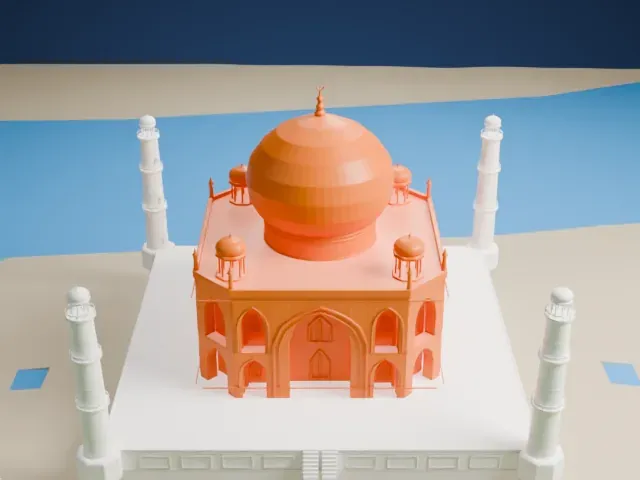
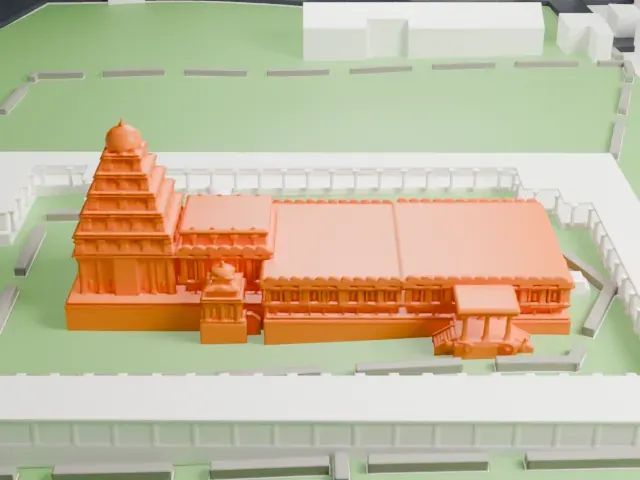
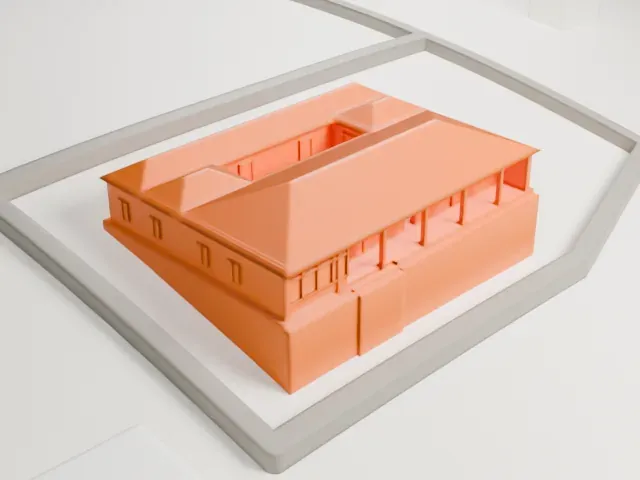
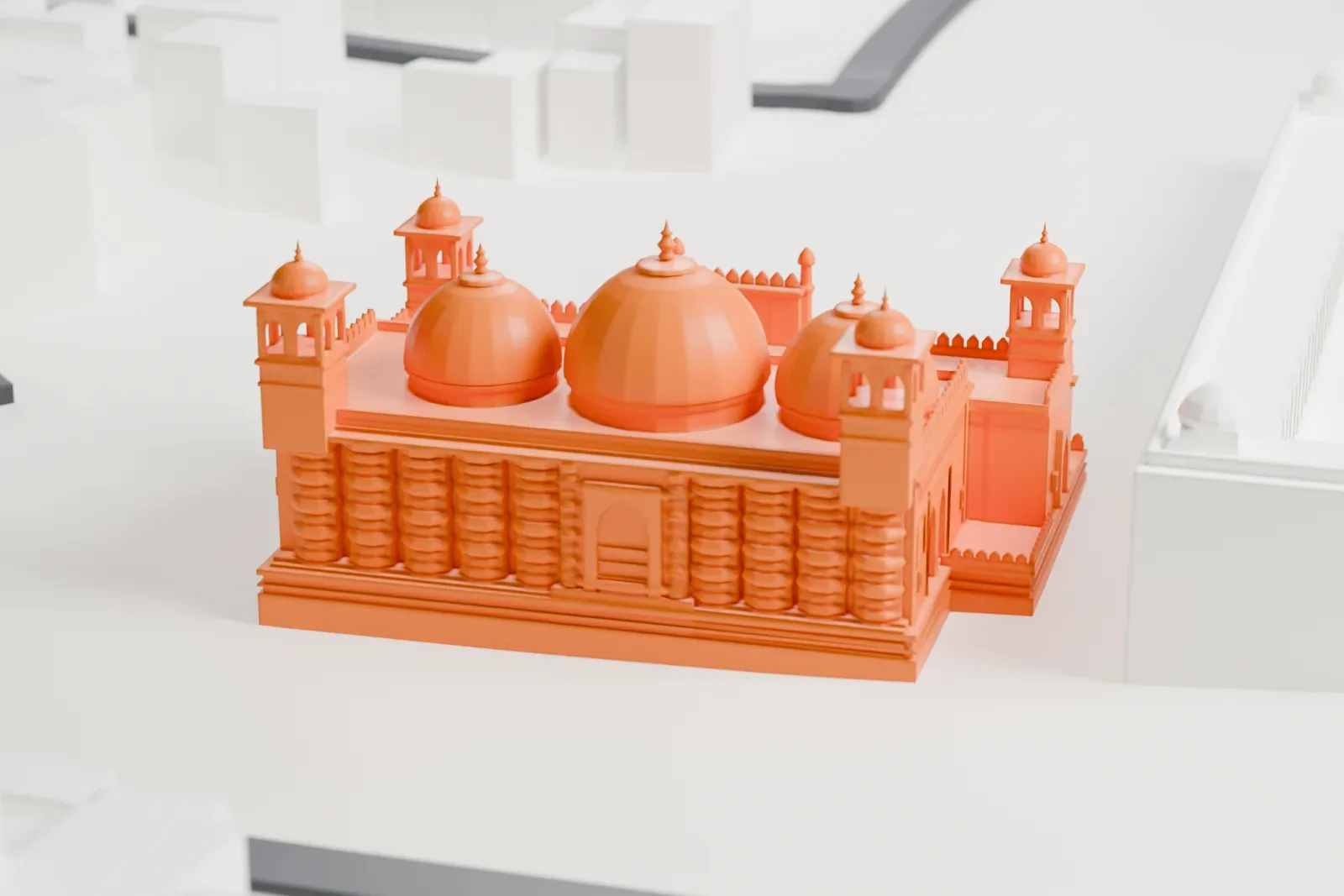
A free, printable model of the Gyanvapi Mosque, with its three domes and corner towers, shown beside a road and the large neighboring complex, generated from real map data in your browser.
-
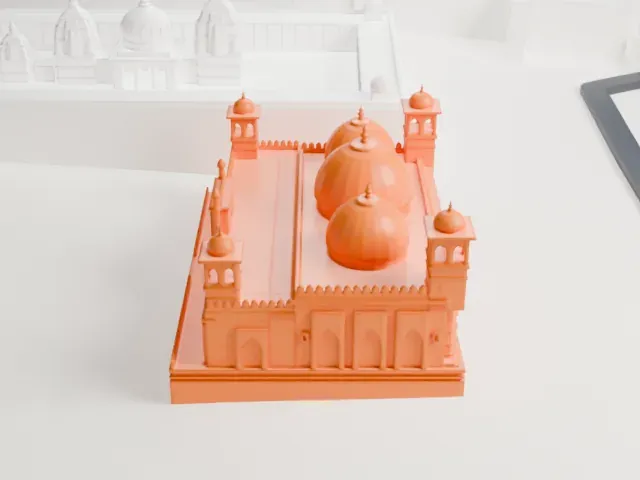 North
-
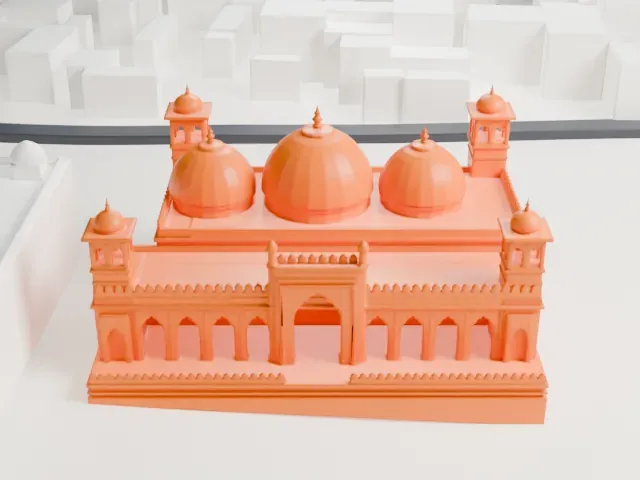 East
-
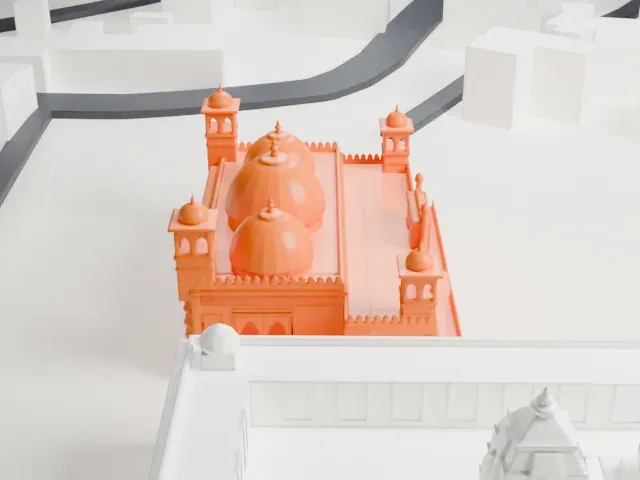 South
-
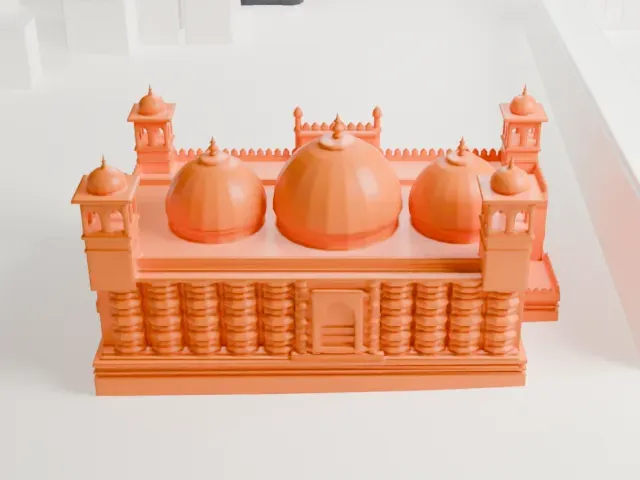 West
The model you print
Gyanvapi Mosque in 3D
The landmark on its own, at its size on a 160 mm print. Print friendly thickens thin parts for a 0.4 mm nozzle; Full detail keeps every part.
- On a 160 mm print
- 6 mm
- Scale
- 1:3,750
6 mm tall on a 160 mm print
Make this print opens the generator on a 600 m square around the landmark. Buildings print at close to true scale, so the landmark grows with the print size.
- Domes, finials and corner towers
Three domes with pointed finials sit between small corner towers topped by tiny domes. Print friendly adapts the thinnest finials; Full detail and a larger print size keep them.
- One piece with the ground
The Gyanvapi Mosque is joined to the ground in the exported file, and the four-side check found no floating parts, so nothing needs gluing.
- Pick the detail for your nozzle
In the Buildings settings, set Landmark detail to Print friendly to adapt thin parts and small details to the print scale. Full detail keeps every modeled feature, for larger prints or a finer nozzle.
- Colors
Buildings, roads, water and ground arrive as separate filament slots in the 3MF. The Gyanvapi Mosque takes the building color.
- File format
You get a 3MF for Bambu Studio, OrcaSlicer or PrusaSlicer. Any of them can save it as STL if you need one.
About the Gyanvapi Mosque
The Gyanvapi Mosque stands in Varanasi, a city in Uttar Pradesh state, India. It was built around 1678, during the reign of the Mughal Emperor Aurangzeb, roughly ten years after a 1669 royal decree commanding that the ancient temple on the site be destroyed.
The site was originally a temple to Shiva, known as Kashi Vishveshwara and counted among twelve sacred Jyotirlingas. The Vishweshwar temple was built in the late 16th century by Todar Mal, a courtier and minister of Akbar, working with the scholar Narayana Bhatta. A survey by the Archaeological Survey of India found the mosque was built on the remains of a large Hindu temple that stood there earlier.
The present structure includes architectural components of the earlier temple, with Hindu motifs and sculptures visible on its pillars. Architectural historian Madhuri Desai suggests the temple was built from intersecting iwans a form taken from Mughal architecture, and had prominent pointed arches and a carved stone exterior. Hindus and Muslims each claim the right to the land.
About this model
The Gyanvapi Mosque is one of more than 6,500 landmark models in Mini Skyline. They are made with AI, and each one is checked in its real surroundings before release. Each model is written as code from public descriptions, plans, photographs and aerial views used only as references; no image or third-party model is copied into it. Everything around it is built from OpenStreetMap and Overture map data. Rights in the building itself, its name and any brands on it are not granted by Mini Skyline; clear them separately before you sell prints. If you would rather print the shape from map data, turn off Landmark models in the Buildings settings.
Mini Skyline is not affiliated with, or endorsed by, the owners of this building or its names and marks.
Keep exploring