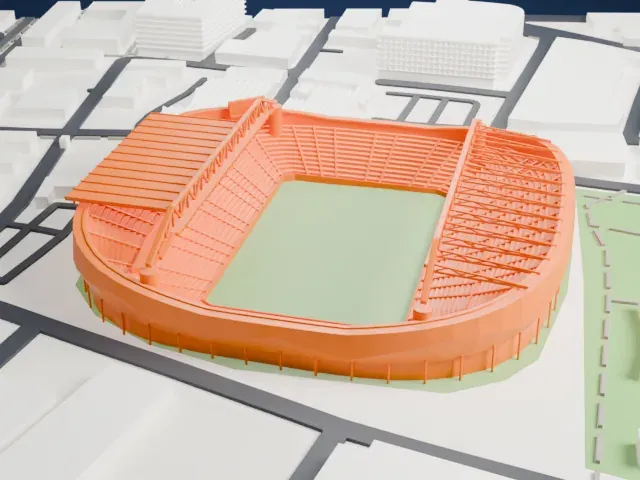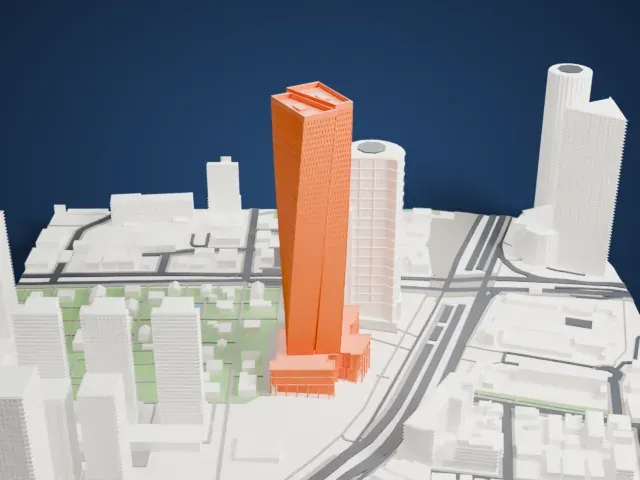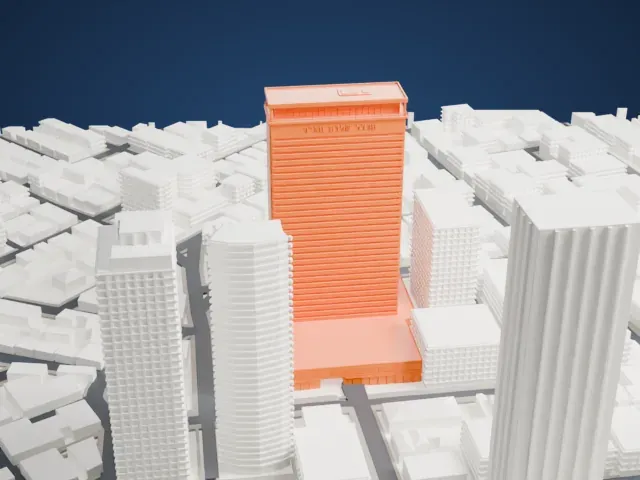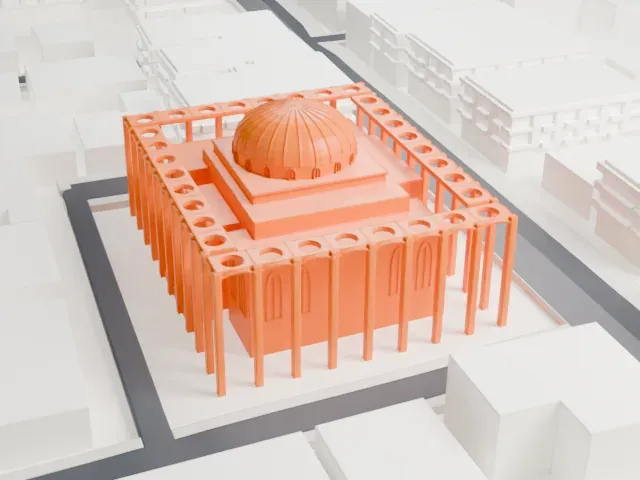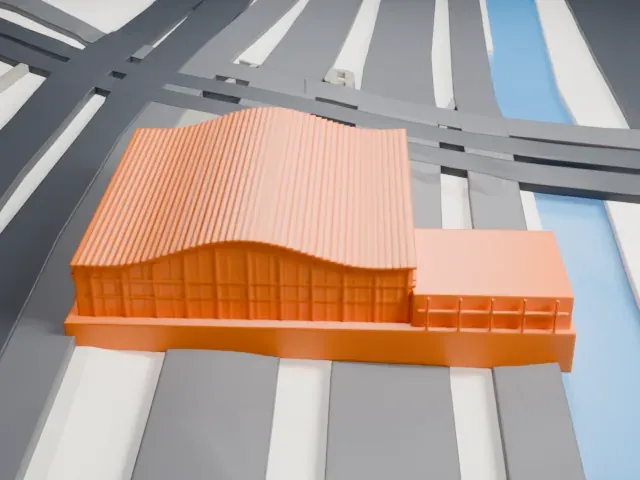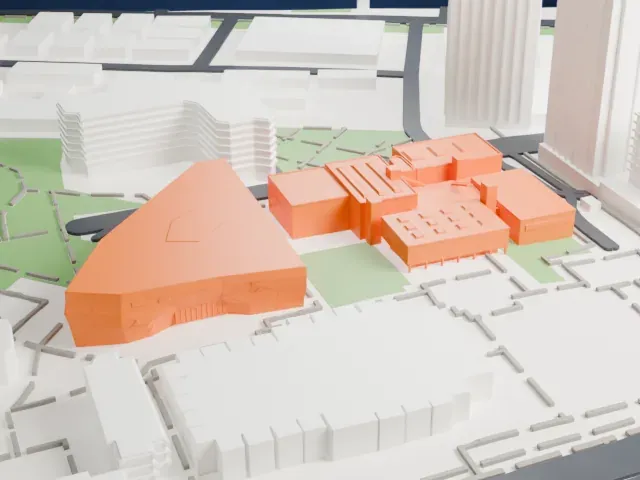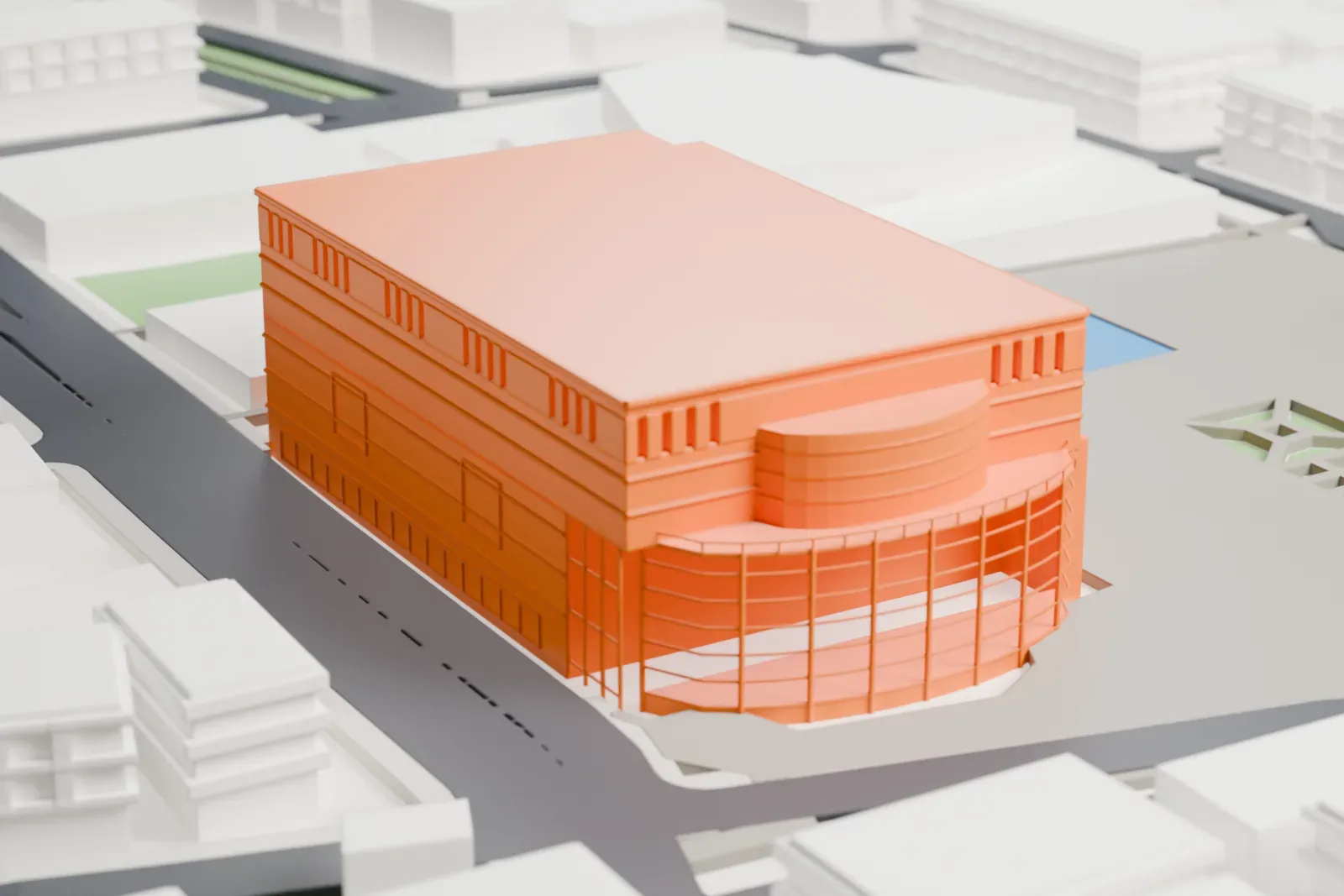
Habima Theatre in 3D
Habima Theatre appears in city models you make here; its design may still be protected, so it isn't offered as a separate download.
-
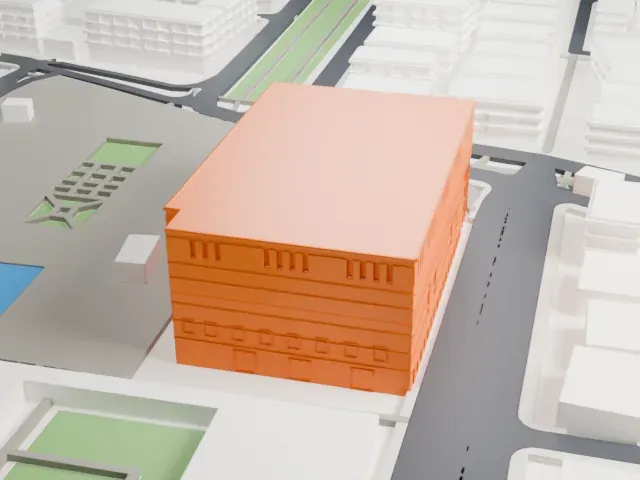 North
-
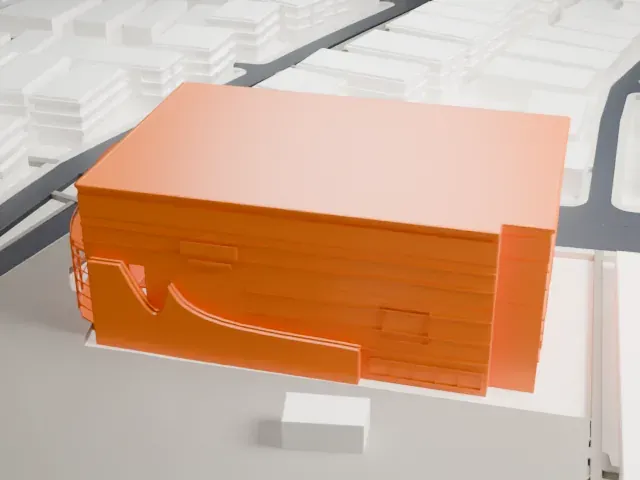 East
-
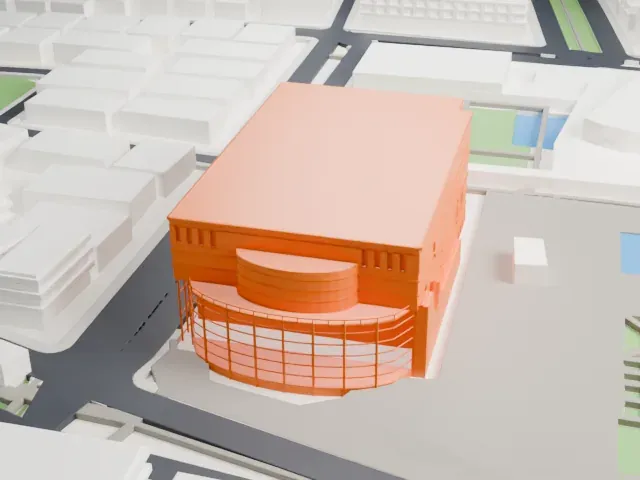 South
-
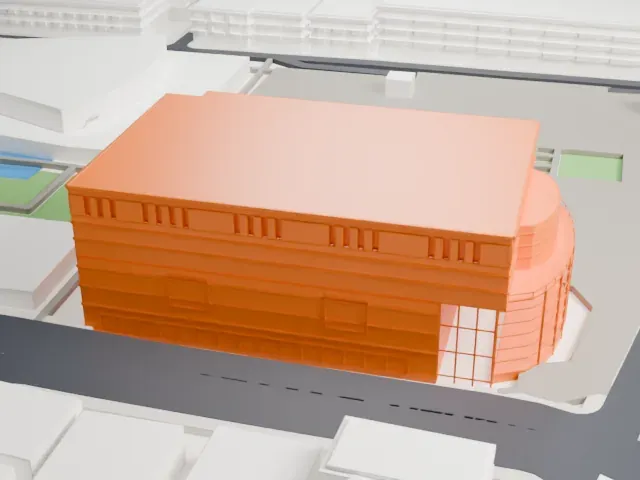 West
Copyright notice
The design of Habima Theatre may still be protected by copyright. It appears in the city models you make here, but it is not offered as a separate model.
- On a 160 mm print
- 7 mm
- Scale
- 1:3,750
7 mm tall on a 160 mm print
Make this print opens the generator on a 600 m square around the landmark. Buildings print at close to true scale, so the landmark grows with the print size.
- Curved, ribbed front
The rounded front is wrapped in thin vertical ribs. Print friendly adapts them to the print scale; Full detail keeps every rib for larger prints. A layer height of 0.12-0.16 mm helps.
- Fine lines on the walls
The walls carry shallow grooves, window outlines and a curved cut line. A bigger print keeps these small details readable.
- One piece with the ground
Habima Theatre is joined to the ground in the exported file, and the four-side check found no floating parts, so nothing needs gluing.
- Pick the detail for your nozzle
In the Buildings settings, set Landmark detail to Print friendly to adapt thin parts and small details to the print scale. Full detail keeps every modeled feature, for larger prints or a finer nozzle.
- Colors
Buildings, roads, water and ground arrive as separate filament slots in the 3MF. Habima Theatre takes the building color.
- File format
You get a 3MF for Bambu Studio, OrcaSlicer or PrusaSlicer. Any of them can save it as STL if you need one.
About Habima Theatre
Habima Theatre serves as the national theater of Israel and was among the first theaters to perform in Hebrew. It stands on Habima Square in the middle of Tel Aviv. The founders liked the name, meaning "The Stage," because it evokes a stage for public expression and performance. It comes from the bimah, a raised platform in a synagogue where prayers are led and the Torah is read.
The company began as an amateur troupe founded by Nahum Tsemakh in Białystok in 1912. Russian authorities soon banned it because its plays were in Hebrew and addressed matters affecting Jewish people, so it became a traveling troupe. From 1918 it worked under the wing of the Moscow Art Theatre, and The Dybbuk, which premiered in Moscow on January 31, 1922, became its signature production. After touring abroad from 1926, the company reached Palestine in 1928 and finally settled there in 1931. It built its own theater in Tel Aviv in 1945, and since 1958 Habima has officially been Israel's national theater, the year it won the Israel Prize in theater, the first time the prize went to an organization.
Habima reopened in January 2012 following a renovation that lasted four and a half years. Ram Karmi was the architect commissioned to redesign the historic building, adding three rehearsal rooms and 500 square meters of floor space. The four auditoriums were completely rebuilt and differ in size and color. Rovina is blue (930 seats), Meskin lavender (320), Bertonov green (220) and Habima 4 wood-paneled (170).
About this model
Habima Theatre is one of more than 6,500 landmark models in Mini Skyline. They are made with AI, and each one is checked in its real surroundings before release. Each model is written as code from public descriptions, plans, photographs and aerial views used only as references; no image or third-party model is copied into it. Everything around it is built from OpenStreetMap and Overture map data. Rights in the building itself, its name and any brands on it are not granted by Mini Skyline; clear them separately before you sell prints. If you would rather print the shape from map data, turn off Landmark models in the Buildings settings.
Mini Skyline is not affiliated with, or endorsed by, the owners of this building or its names and marks.
Same skyline