3D print the Lisbon Astronomical Observatory
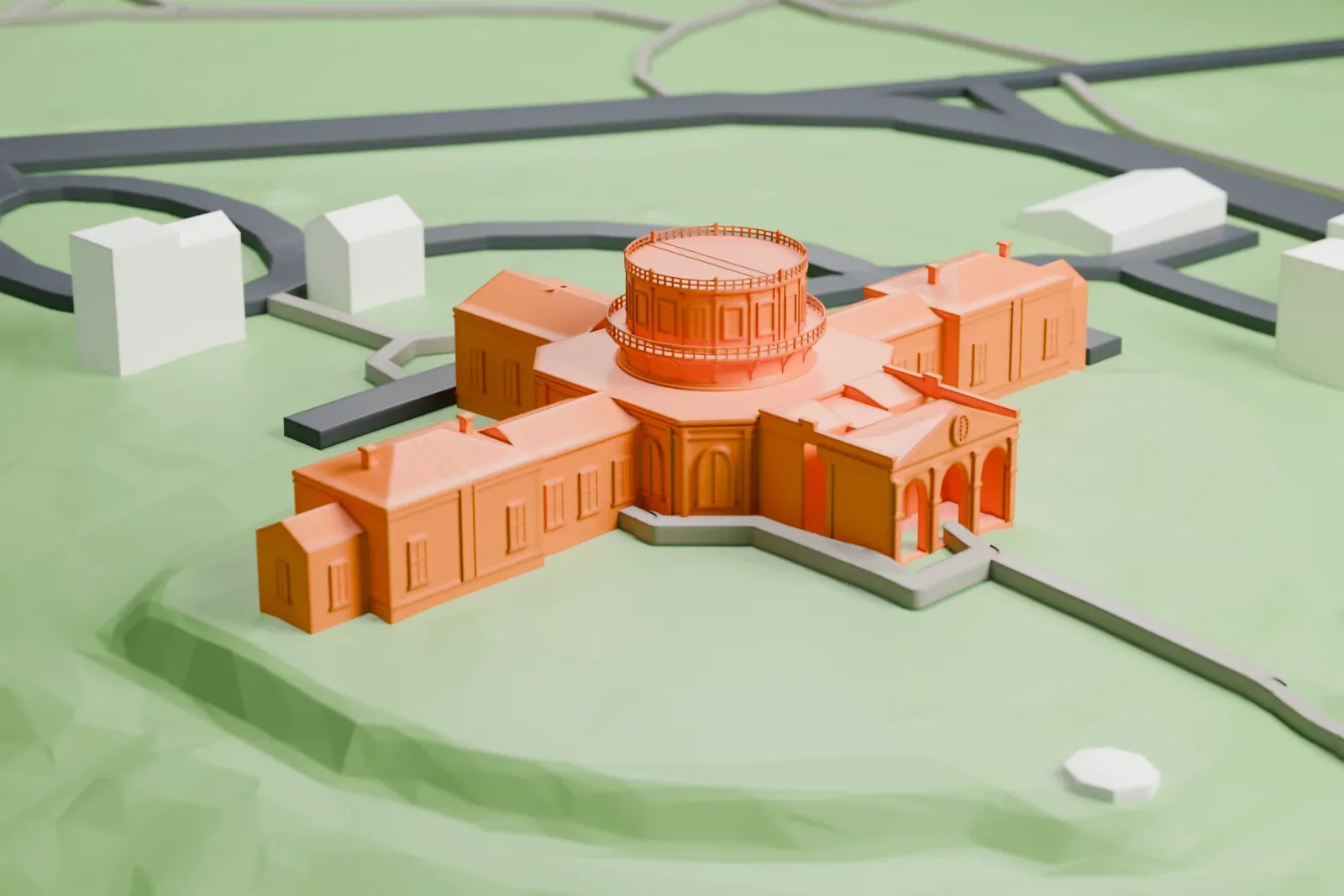
A free, printable model of the Lisbon Astronomical Observatory, with its central drum and long wings on the hillside, shown with surrounding roads and grounds, generated from real map data in your browser.
-
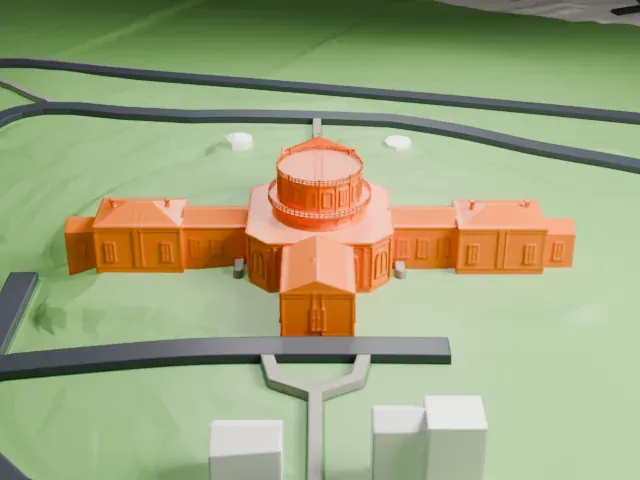 North
-
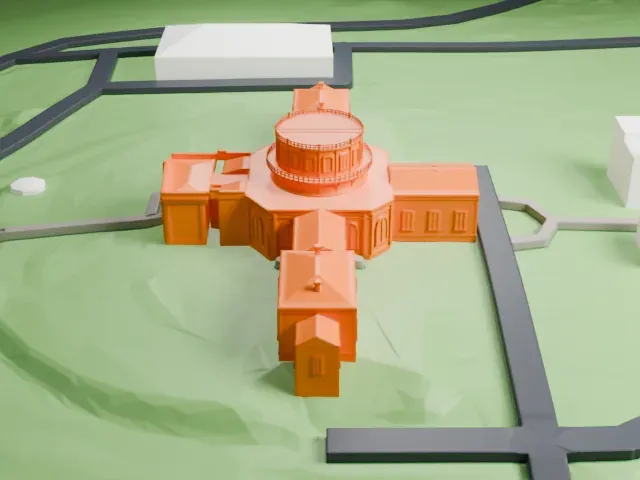 East
-
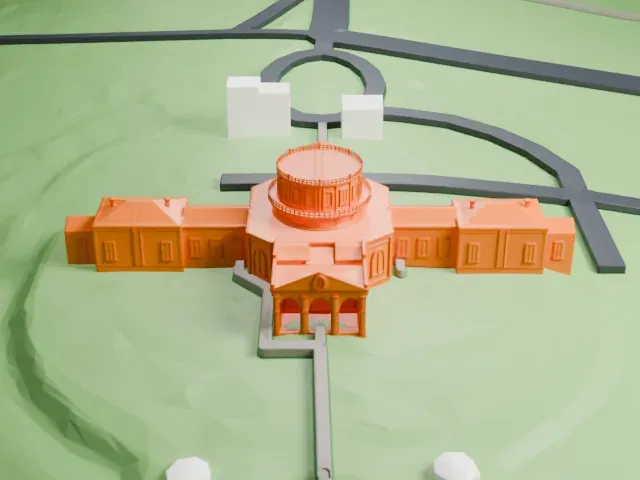 South
-
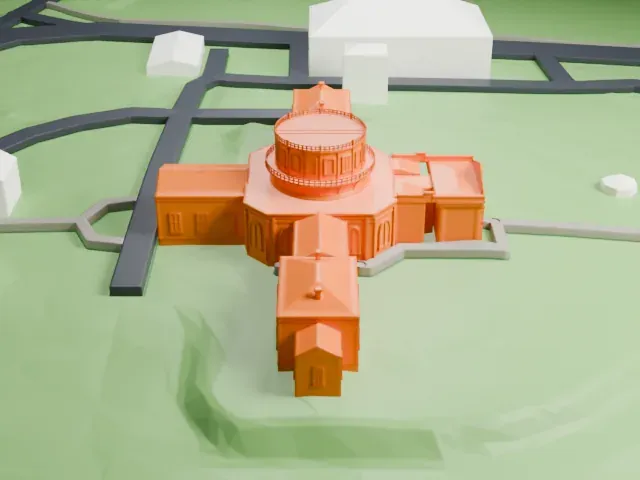 West
The model you print
Lisbon Astronomical Observatory in 3D
The landmark on its own, at its size on a 160 mm print. Print friendly thickens thin parts for a 0.4 mm nozzle; Full detail keeps every part.
- On a 160 mm print
- 5 mm
- Scale
- 1:3,750
5 mm tall on a 160 mm print
Make this print opens the generator on a 600 m square around the landmark. Buildings print at close to true scale, so the landmark grows with the print size.
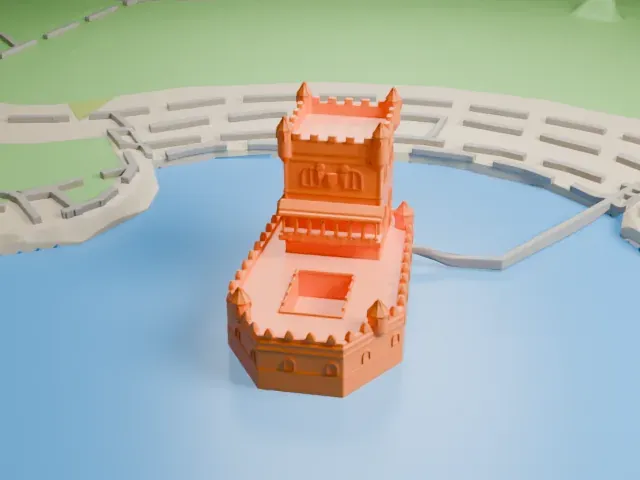
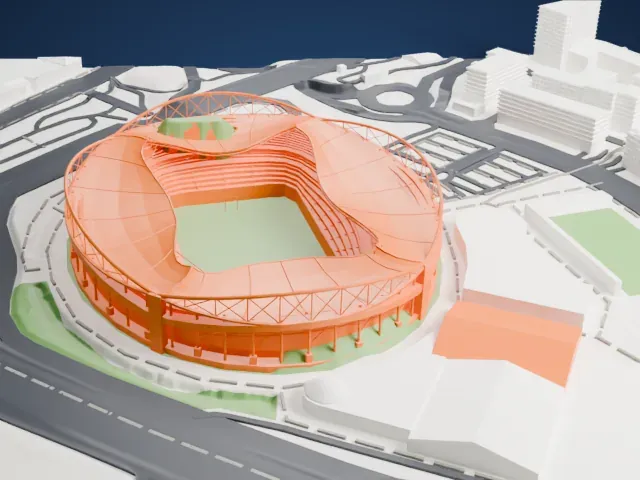
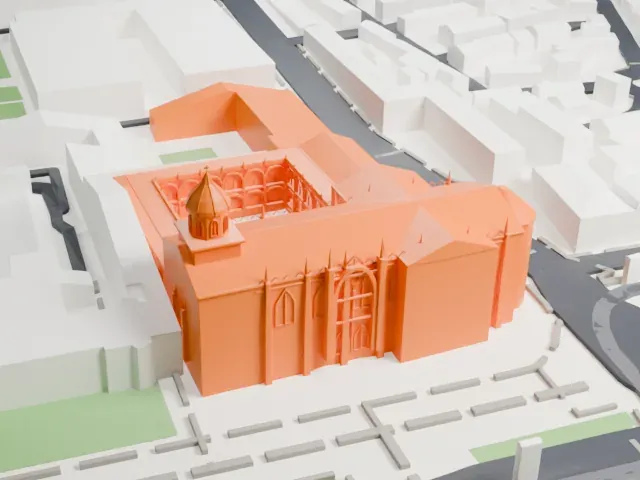
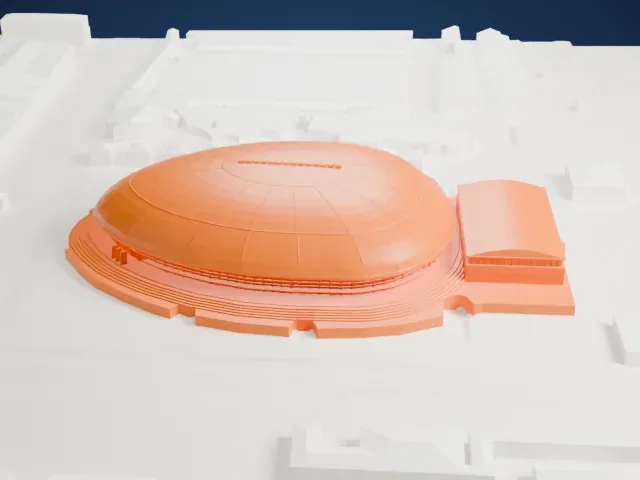
- Central drum with balustrade
The central drum has a balustrade ring above an octagonal base. Print friendly adapts the railing and ornament to the print scale; Full detail keeps them, best with a larger print and a 0.12 mm layer height.
- Arched front and long wings
The arched entrance front and the long, low wings carry small window and arch details. A larger print size keeps them readable.
- One piece with the ground
The Lisbon Astronomical Observatory is joined to the ground in the exported file, and the four-side check found no floating parts, so nothing needs gluing.
- Pick the detail for your nozzle
In the Buildings settings, set Landmark detail to Print friendly to adapt thin parts and small details to the print scale. Full detail keeps every modeled feature, for larger prints or a finer nozzle.
- Colors
Buildings, roads, water and ground arrive as separate filament slots in the 3MF. The Lisbon Astronomical Observatory takes the building color.
- File format
You get a 3MF for Bambu Studio, OrcaSlicer or PrusaSlicer. Any of them can save it as STL if you need one.
About the Lisbon Astronomical Observatory
The Lisbon Astronomical Observatory (Observatório Astronómico de Lisboa) sits in Tapada da Ajuda, in the Alcântara parish of Lisbon. It is recognized internationally for its work in positional astronomy since the 19th century. Construction began on March 11, 1861, under King Luis I, who also gave money from his personal budget. The building rose on the Alto da Eira Velha rather than the Alto da Casa Branca, where an older observatory had stood, and work was completed in 1867. A decree formally established the observatory on May 6, 1878.
The plan was carried out by the architects Jean François Gille Colson, José da Costa Sequeira and Valentim José Correia, and drew on the Russian observatory at Pulkova. Wilhelm Struve, who directed Pulkova at the time, became the main adviser on equipment. A central building stands on the hills of Ajuda overlooking the Tejo river, with two small cupolas to the south that contain instruments. Its circular central room carries a large equatorial refractor on 8 large columns, and many pendulum clocks used to measure time are kept under the arches between them.
Three spacious observation rooms are lined in wood and open to the sky through panels in the side walls and ceiling, giving a view along the meridian of Lisbon, north to south. In 1900 and 1901 the observatory took part in the solar parallax campaign based on observations of the asteroid Eros. The observatory also helped produce a catalogue of reference stars of high quality, and in 1904 the French Academy of Sciences awarded the Valz Prize to César Augusto de Campos Rodrigues, then its director, for this work.
About this model
The Lisbon Astronomical Observatory is one of more than 4,900 landmark models in Mini Skyline. They are made with AI, and each one is checked from four sides in its real surroundings before release. Everything around it is built from OpenStreetMap and Overture map data. If you would rather print the shape from map data, turn off Landmark models in the Buildings settings.
Same skyline