3D print Belém Tower
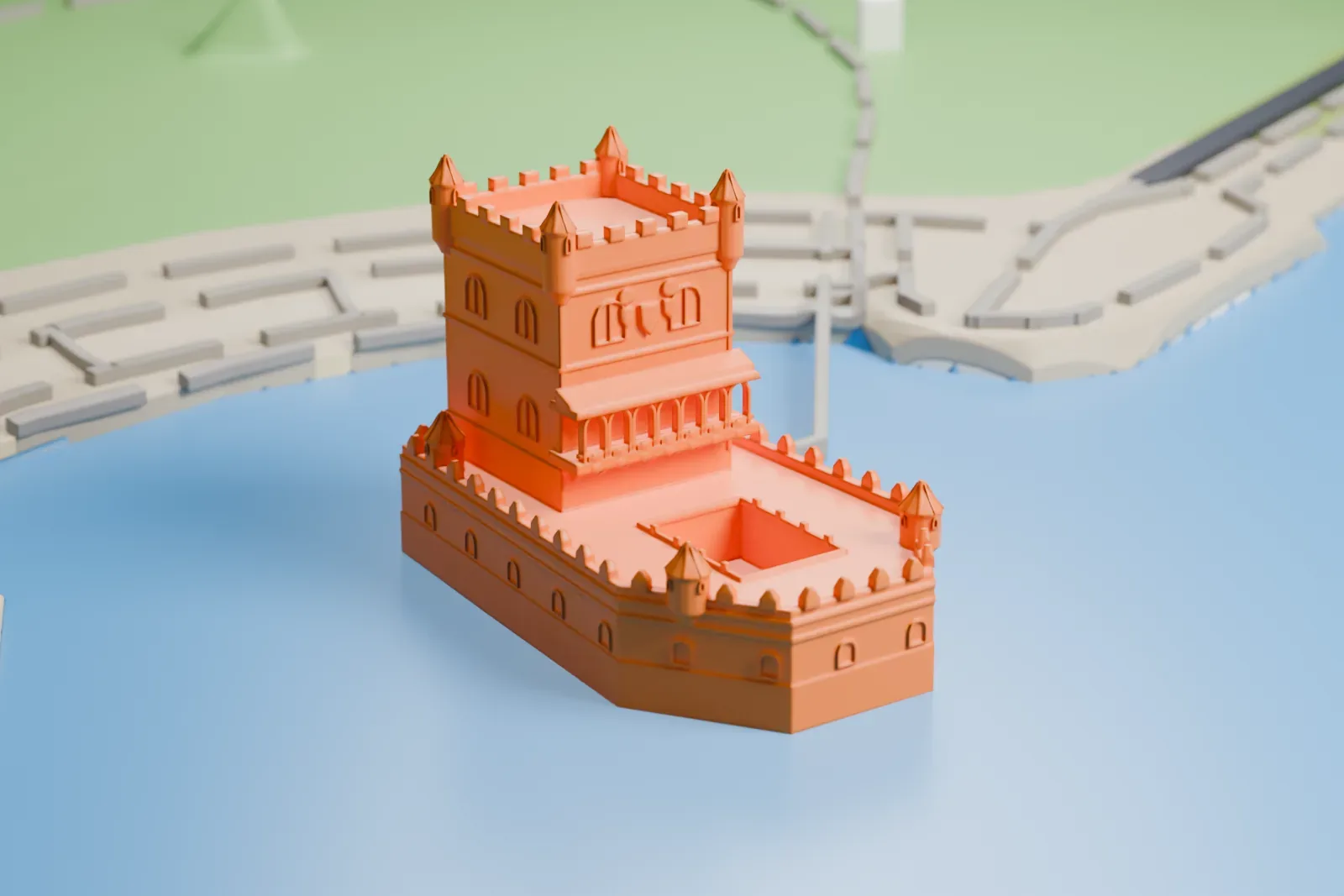
A free, printable model of Belém Tower, its crenellated bastion and corner turrets, standing in the water beside the shore, generated from real map data in your browser.
-
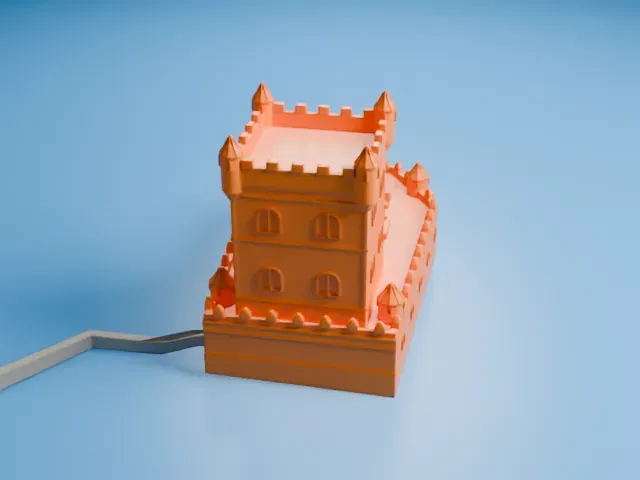 North
-
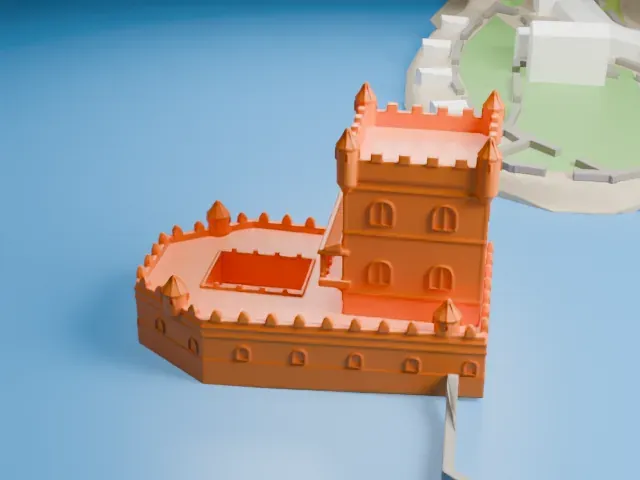 East
-
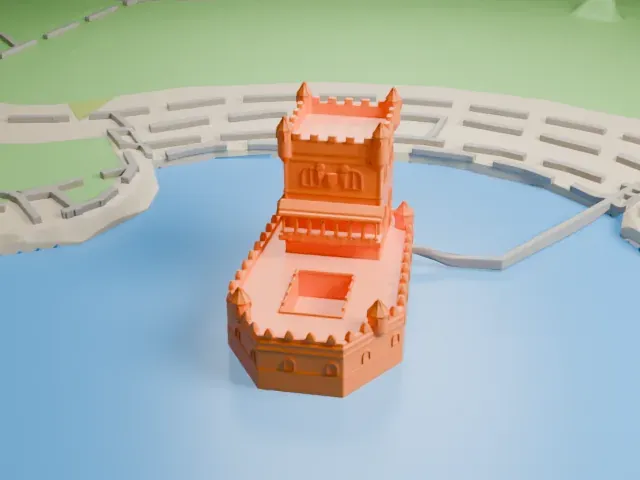 South
-
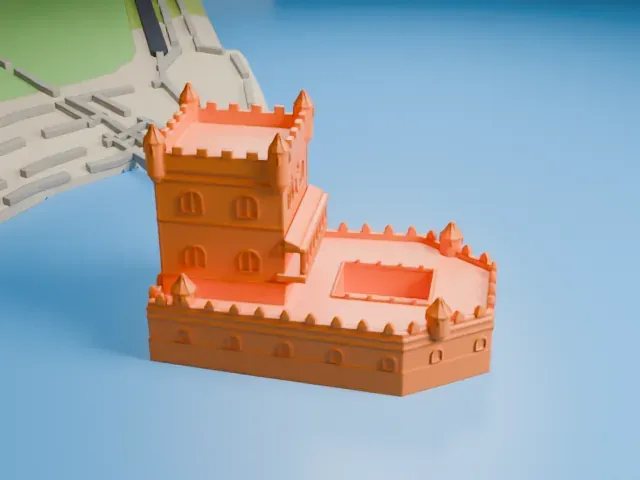 West
The model you print
Belém Tower in 3D
The landmark on its own, at its size on a 160 mm print. Print friendly thickens thin parts for a 0.4 mm nozzle; Full detail keeps every part.
- Real height
- 30 m
- On a 160 mm print
- 8 mm
- Scale
- 1:3,750
30 m of Belém Tower, 8 mm on your shelf
Make this print opens the generator on a 600 m square around the landmark. Buildings print at close to true scale, so the landmark grows with the print size.
- Corner turrets and battlements
Small turrets sit at the corners of the tower and the bastion, with rows of battlements along the walls. Print friendly adapts them to your print scale; Full detail keeps them, best on a larger print.
- Arched windows and balcony
The tower walls carry arched windows, and the south side has an arcaded balcony. Layers of 0.12 to 0.16 mm keep these small openings crisp.
- One piece with the ground
Belém Tower is joined to the ground in the exported file, and the four-side check found no floating parts, so nothing needs gluing.
- Pick the detail for your nozzle
In the Buildings settings, set Landmark detail to Print friendly to adapt thin parts and small details to the print scale. Full detail keeps every modeled feature, for larger prints or a finer nozzle.
- Colors
Buildings, roads, water and ground arrive as separate filament slots in the 3MF. Belém Tower takes the building color.
- File format
You get a 3MF for Bambu Studio, OrcaSlicer or PrusaSlicer. Any of them can save it as STL if you need one.
About Belém Tower
Belém Tower is officially named the Tower of Saint Vincent. It is a 16th-century fortification in Lisbon, Portugal. Portuguese explorers embarked and disembarked there, and it also served as a ceremonial gateway to Lisbon. It was built of lioz limestone, a local stone of the Lisbon area, and combines a bastion with a four-story tower that is 30 m (100 ft) high. The tower is a prominent example of Portugal's Manueline style, though it also draws on other styles, such as the minarets inspired by Moorish architecture. It represents the maritime and colonial power Portugal held in early modern Europe.
Military architect Francisco de Arruda designed the tower. It was founded on a basalt outcrop not far from the riverbank, using stone gathered for a monastery, Santa Maria de Belém. It was finished in 1519, two years before King Manuel died, and the fortress took the name Castle of St Vincent, honoring Lisbon's patron saint. In 1580 the garrison surrendered to Spanish forces under the Duke of Alba after only a few hours of battle.
In 1983 the tower was listed as a UNESCO World Heritage Site, together with the Jerónimos Monastery. Europe's Age of Discoveries is often symbolized by the tower. It has been wrongly claimed that it originally rose in mid-river and ended up beside the shore after the 1755 Lisbon earthquake redirected the Tagus. In fact it stood on a small island close to the Lisbon shore. On July 7, 2007, it was added to the Seven Wonders of Portugal registry.
About this model
Belém Tower is one of more than 5,500 landmark models in Mini Skyline. They are made with AI, and each one is checked in its real surroundings before release. Each model is written as code from public descriptions, plans, photographs and aerial views used only as references; no image or third-party model is copied into it. Everything around it is built from OpenStreetMap and Overture map data. Rights in the building itself, its name and any brands on it are not granted by Mini Skyline; clear them separately before you sell prints. If you would rather print the shape from map data, turn off Landmark models in the Buildings settings.
Mini Skyline is not affiliated with, or endorsed by, the owners of this building or its names and marks.
Same skyline