3D print Maracanã Stadium
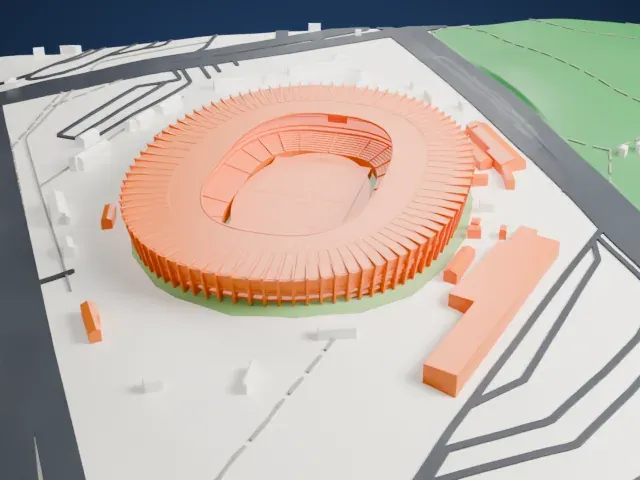
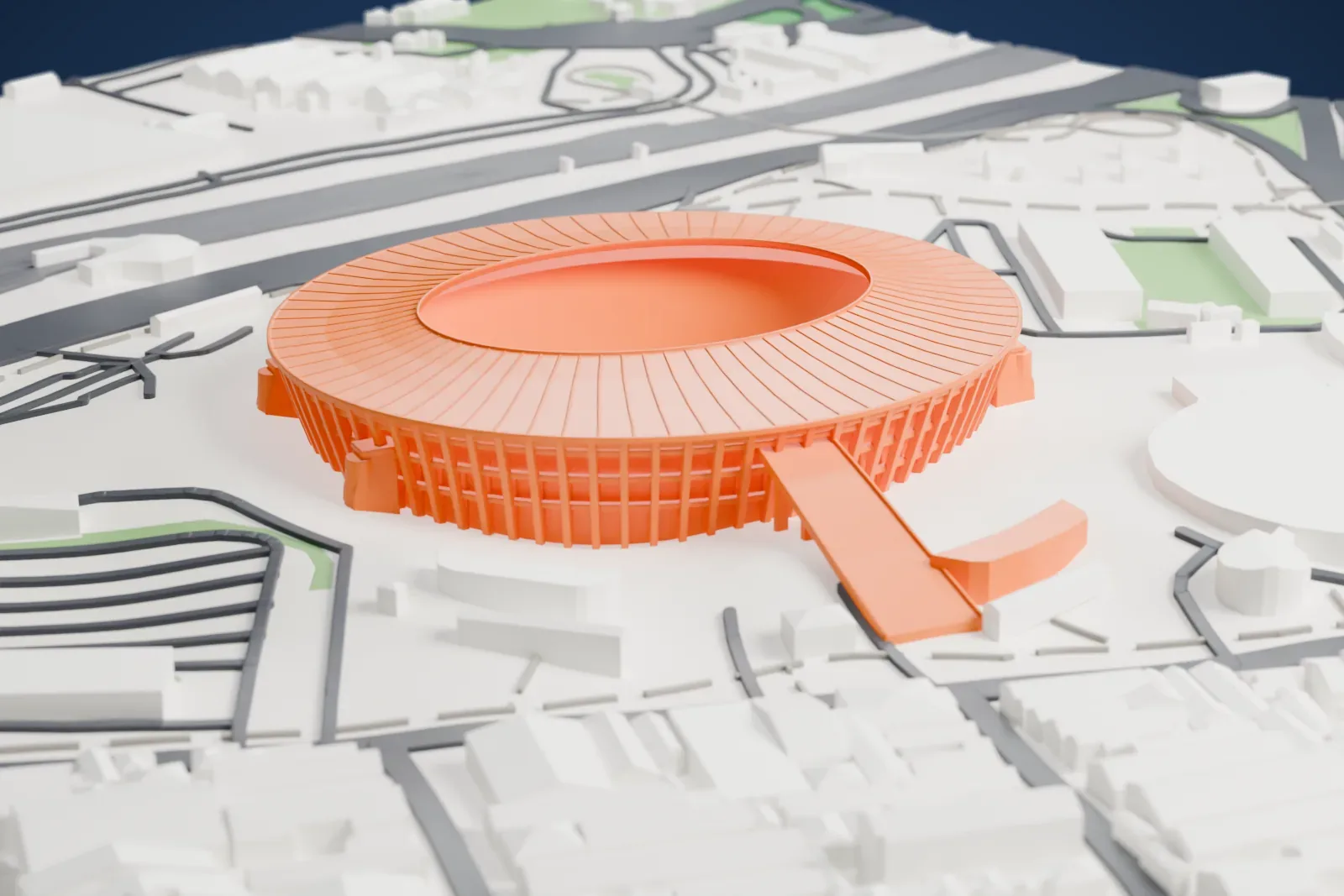
A free, printable model of Maracanã Stadium and the arena, highways and city blocks around it in Rio de Janeiro, generated from real map data in your browser.
Free, in your browser. Exports a slicer-ready 3MF.
About Maracanã Stadium
Maracanã is a football stadium in the Maracanã neighborhood of Rio de Janeiro, Brazil. Its official name, Estádio Jornalista Mário Filho, was given in 1966 in honor of a sports journalist who strongly supported its construction. The popular name comes from the Maracanã River, which crosses neighborhoods of Rio's North Zone and empties into Guanabara Bay, and ultimately from a Tupi word naming a kind of parrot. The state government owns the stadium, and the clubs Flamengo and Fluminense manage it. It forms part of a complex with a second arena, Maracanãzinho, mostly used for volleyball.
The first cornerstone was laid on August 2, 1948, and building took 17 years in all, so it was only finished in 1965. It opened on June 16, 1950, when a Rio de Janeiro all-star team defeated a São Paulo all-star team by 3–1, although it still lacked toilets and a press box. At that time it passed Hampden Park to become the world's largest stadium. On July 16, 1950, Brazil needed only a draw in the deciding match of the World Cup but lost 2–1 to Uruguay, a defeat known as the Maracanazo.
Since then the stadium has mainly hosted matches between Rio's major clubs: Vasco da Gama, Botafogo, Flamengo and Fluminense. It was the main venue of the 2007 Pan American Games, was partially rebuilt ahead of the 2014 World Cup and the 2013 Confederations Cup, and hosted the 2014 final. The 2016 Summer Olympics and Paralympics used it for their opening and closing ceremonies. Its capacity is 73,139, making it the largest stadium in Brazil.
How it prints
Make this print opens the generator on a 950 m square around the landmark. Buildings print at close to true scale, so the landmark grows with the print size.
| Print size | Landmark height | Scale |
|---|---|---|
| 160 mm default | 8 mm | 1:5,938 |
| 200 mm | 10 mm | 1:4,750 |
| 256 mm | 13 mm | 1:3,711 |
-
 North
North
-
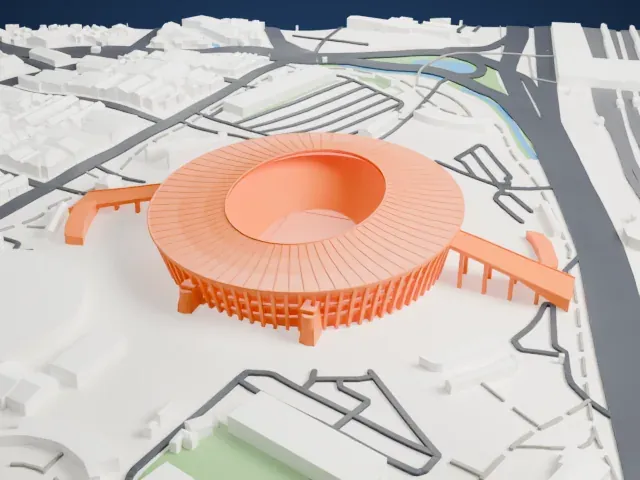 East
East
-
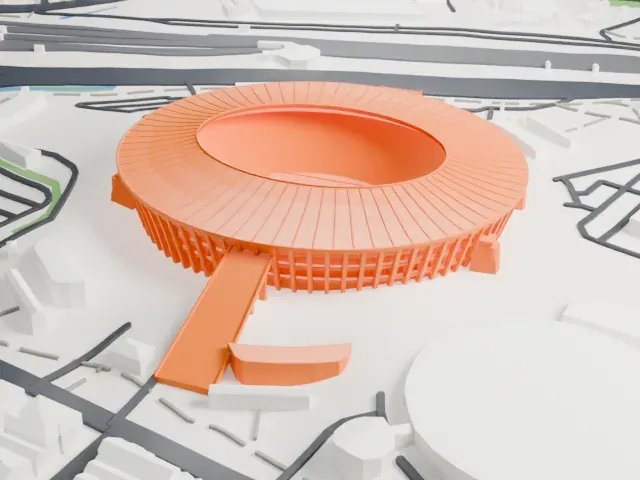 South
South
-
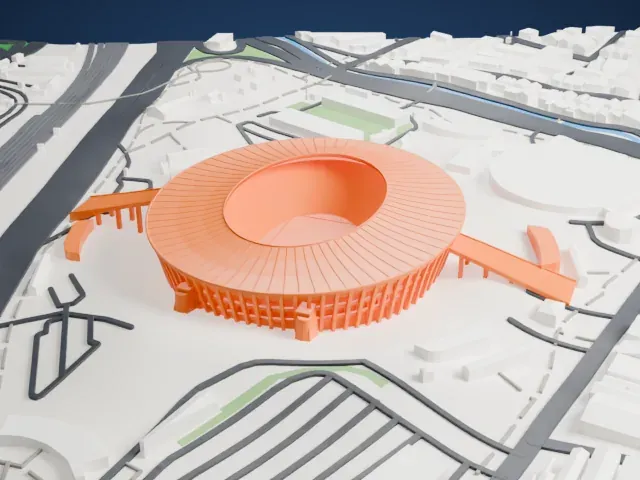 West
West
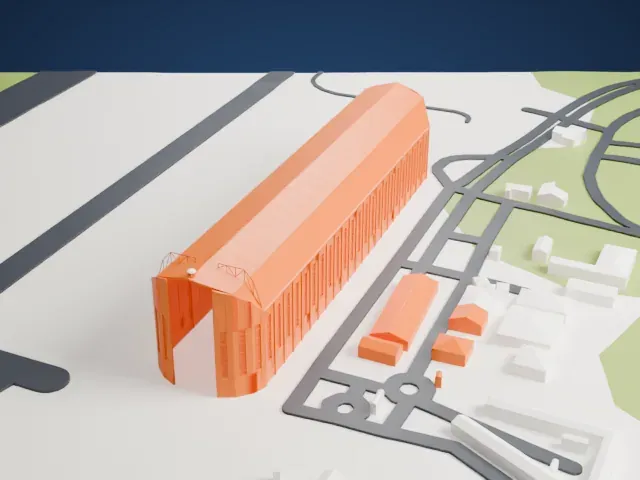
- Long, thin access ramps
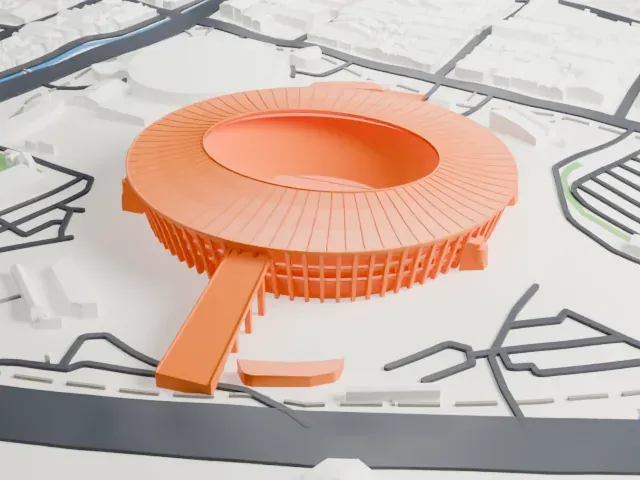
- Two long, straight ramps stretch out from the oval bowl. Print slowly with good cooling so the long thin parts stay tidy, and try Print friendly if they look too slight at your print size.
- Fine ribs around the roof ring
- The ring roof is divided by closely spaced radial ribs. Full detail keeps them, which suits a larger print or a fine nozzle, and layers of 0.12 to 0.16 mm help them read clearly.
- One piece with the ground
- Maracanã Stadium is joined to the ground in the exported file, and the four-side check found no floating parts, so nothing needs gluing.
- Pick the detail for your nozzle
- In the Buildings settings, set Landmark detail to Print friendly to adapt thin parts and small details to the print scale. Full detail keeps every modeled feature, for larger prints or a finer nozzle.
- Colors
- Buildings, roads, water and ground arrive as separate filament slots in the 3MF. Maracanã Stadium takes the building color.
- File format
- You get a 3MF for Bambu Studio, OrcaSlicer or PrusaSlicer. Any of them can save it as STL if you need one.
About this model
Maracanã Stadium is one of more than 2,300 landmark models in Mini Skyline. They are made with AI, and each one is checked from four sides in its real surroundings before release. Everything around it is built from OpenStreetMap and Overture map data. If you would rather print the shape from map data, turn off Landmark models in the Buildings settings.
Common questions
Is there a Maracanã Stadium STL I can download?
Mini Skyline builds the file for you in your browser and exports 3MF, which every major slicer opens. If you need an STL, open the 3MF in your slicer and export it from there.
How big can I print it?
Any print size from 40 mm across. Maracanã Stadium grows with the print: about 8 mm tall on the default 160 mm print. For a model larger than your printer bed, Project Mode splits the area into tiles.
Is it free?
Yes. Generation runs in your browser, with no account and nothing behind a paywall.