3D print the Marmorpalais
A free, printable 3D model of the Marmorpalais in Potsdam and its surroundings, generated from real map data in your browser.
-
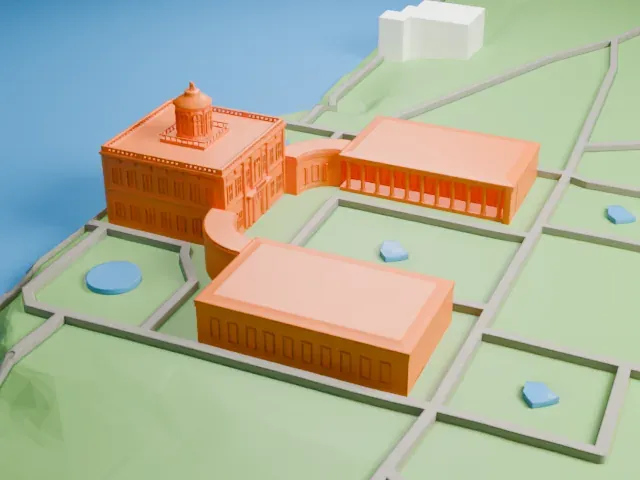 North
-
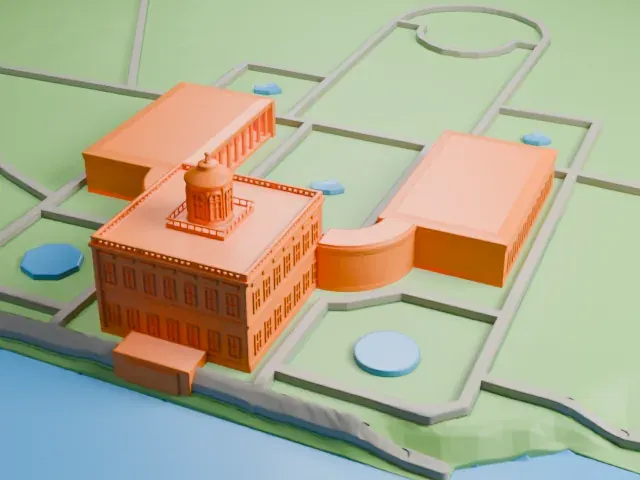 East
-
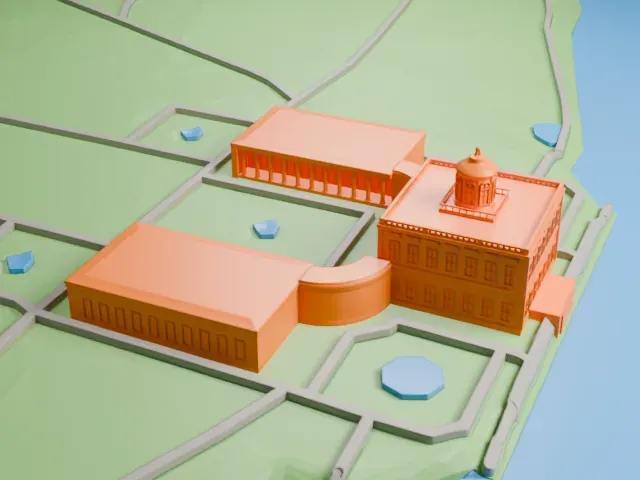 South
-
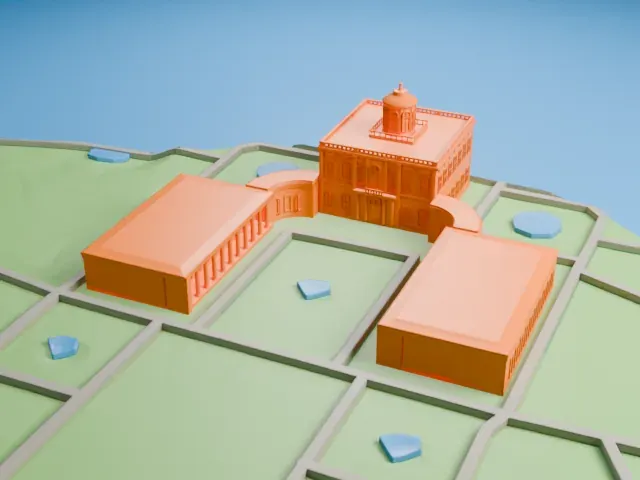 West
The model you print
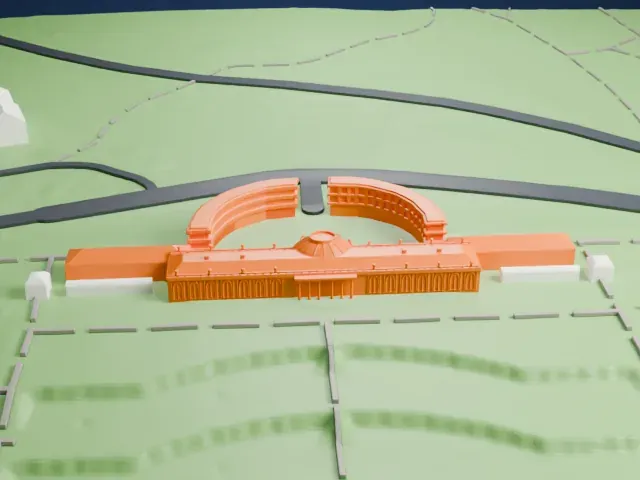
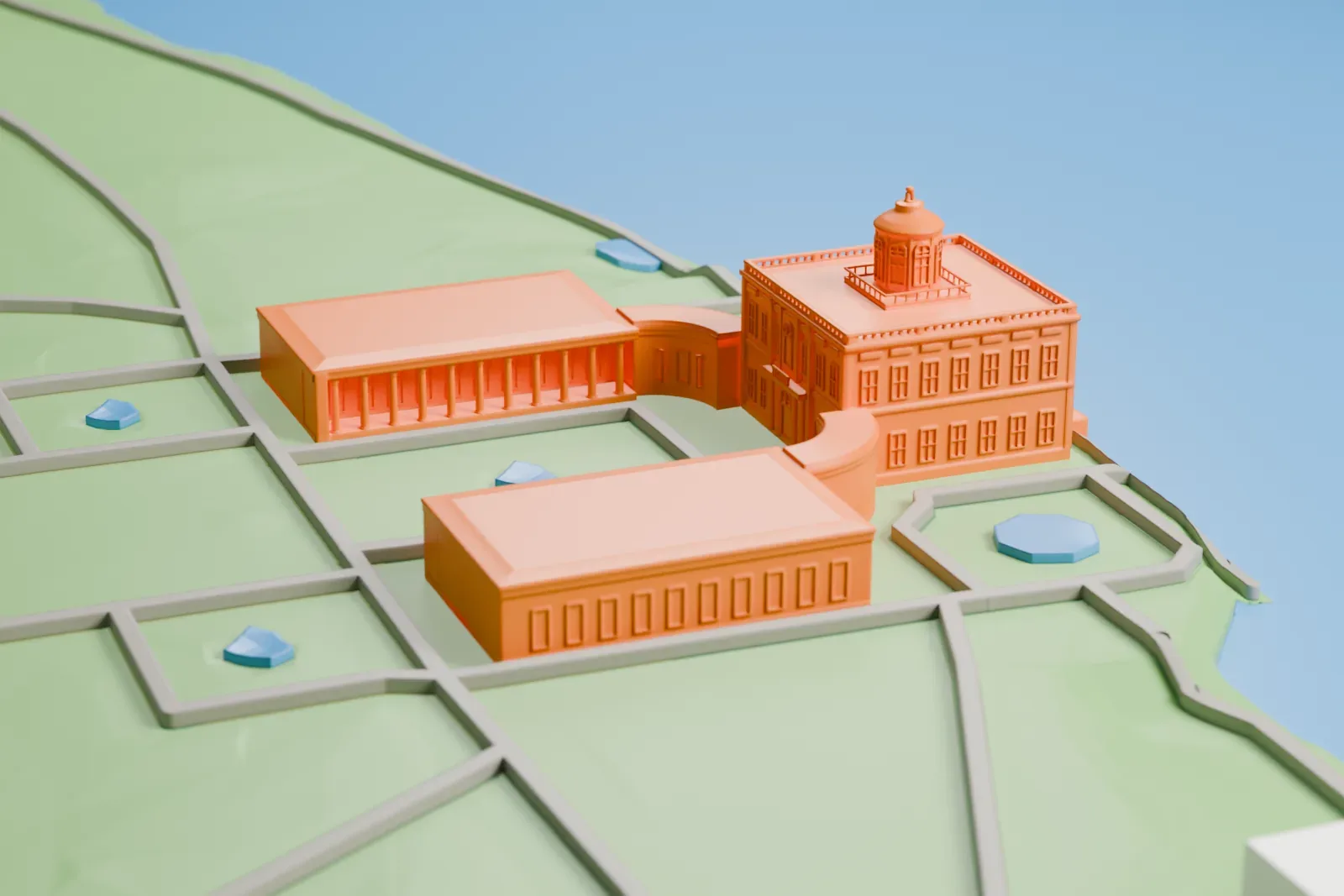
Marmorpalais in 3D
The landmark on its own, at its size on a 160 mm print. Print friendly thickens thin parts for a 0.4 mm nozzle; Full detail keeps every part.
- On a 160 mm print
- 7 mm
- Scale
- 1:3,750
7 mm tall on a 160 mm print
Make this print opens the generator on a 600 m square around the landmark. Buildings print at close to true scale, so the landmark grows with the print size.
- Roof and wing details
A palace has many small roof and facade details. Choose Print friendly to adapt them to the print scale, or Full detail with a larger print size to keep them.
- One piece with the ground
The Marmorpalais is joined to the ground in the exported file, and the four-side check found no floating parts, so nothing needs gluing.
- Pick the detail for your nozzle
In the Buildings settings, set Landmark detail to Print friendly to adapt thin parts and small details to the print scale. Full detail keeps every modeled feature, for larger prints or a finer nozzle.
- Colors
Buildings, roads, water and ground arrive as separate filament slots in the 3MF. The Marmorpalais takes the building color.
- File format
You get a 3MF for Bambu Studio, OrcaSlicer or PrusaSlicer. Any of them can save it as STL if you need one.
About the Marmorpalais
The Marmorpalais, or Marble Palace, was a royal residence in Potsdam, close to Berlin. It sits in the Neuer Garten beside the Heiliger See. King Frederick William II of Prussia commissioned it, and Carl von Gontard, with Carl Gotthard Langhans, designed it in an early Neoclassical style. It was meant as the king's private summer residence. Brick, not marble, is the main material of the building.
The palace began as a two-story square building of red brick. A round pavilion sits on the flat roof of the cube-shaped main block and gives a view over the gardens and lakes around it. Its name comes from the gray and white marble from Silesia used for decorative elements. Within a few years the palace seemed too small, and in 1797 work began on two side wings by Michael Philipp Boumann, joined to the main building by quarter-circle galleries.
The Hohenzollern family used the palace until the early 20th century. In 1932 it became a palace museum, and in 1961 an East German army museum was established inside it. Since 1990 it has been part of a UNESCO World Heritage Site of palaces and parks in Potsdam and Berlin. All 40 rooms were renovated and opened to the public from April 14, 2006.
About this model
The Marmorpalais is one of more than 5,500 landmark models in Mini Skyline. They are made with AI, and each one is checked from four sides in its real surroundings before release. Each model is written as code from public descriptions, plans, photographs and aerial views used only as references; no image or third-party model is copied into it. Everything around it is built from OpenStreetMap and Overture map data. Rights in the building itself, its name and any brands on it are not granted by Mini Skyline; clear them separately before you sell prints. If you would rather print the shape from map data, turn off Landmark models in the Buildings settings.
Same skyline