3D print the National Air and Space Museum
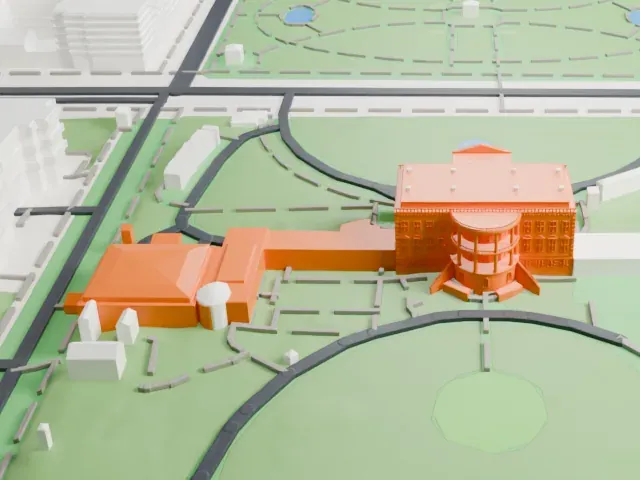
A free, printable model of the National Air and Space Museum's four blocks, with the lawns, roads and city buildings around them, generated from real map data in your browser.
Free, in your browser. Exports a slicer-ready 3MF.
About the National Air and Space Museum
The Smithsonian Institution's National Air and Space Museum, in Washington, D.C., is devoted to human flight and space exploration. It was founded as the National Air Museum in 1946, and its main building opened in 1976, near L'Enfant Plaza on the National Mall. The museum is a research center for aviation and spaceflight history and science, plus planetary science, terrestrial geology and geophysics. Nearly all the spacecraft and aircraft on display are the real primary or backup craft, not replicas. Its holdings include the Wright brothers' Wright Flyer, John Glenn's Friendship 7 capsule, the Apollo 11 Command Module Columbia and Lindbergh's Spirit of St. Louis.
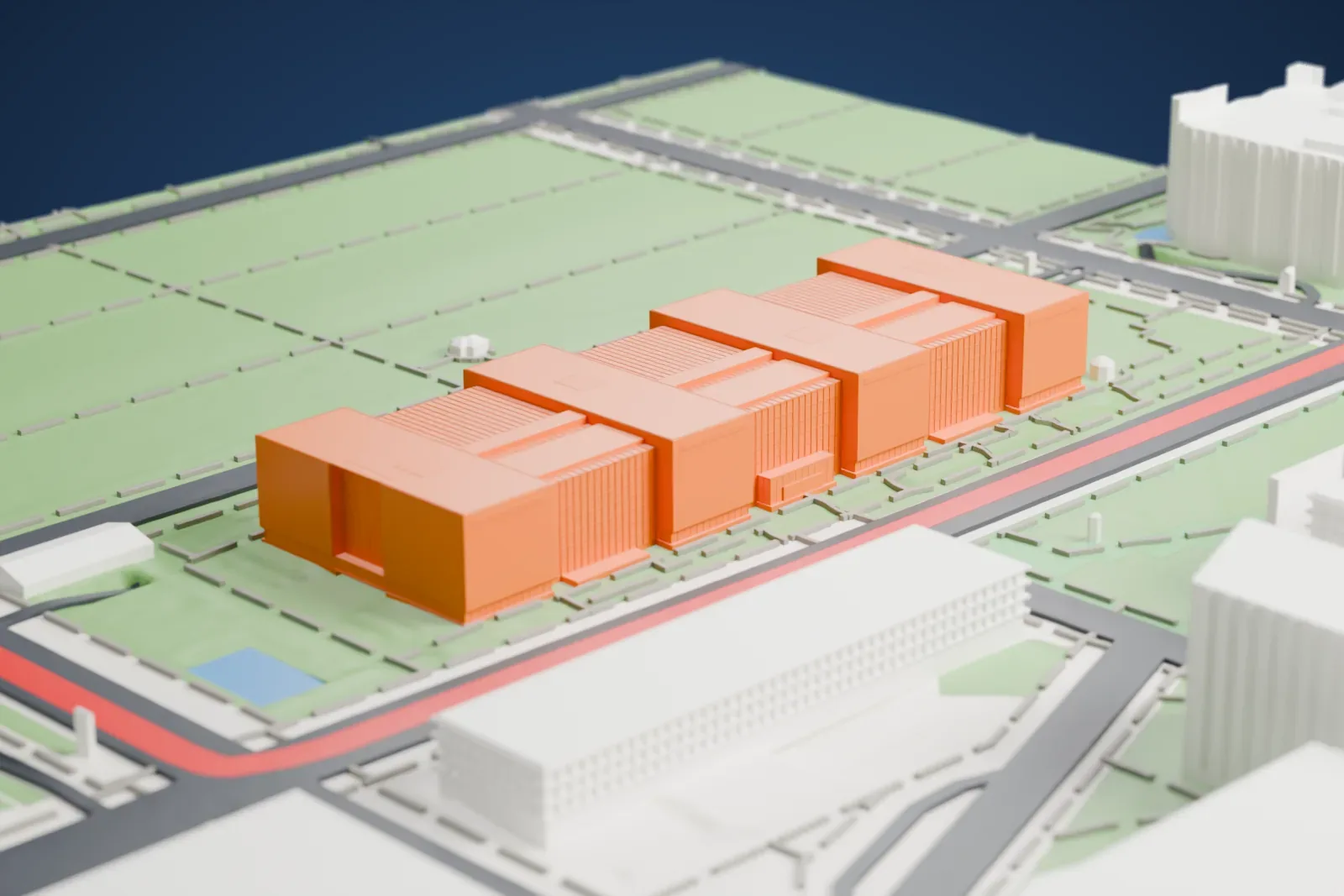
Since the site is near the U.S. Capitol, the Smithsonian wanted something architecturally impressive that would not compete too boldly with it. Architect Gyo Obata of HOK, who was based in St. Louis, designed it as four simple marble-encased cubes for the smaller, more theatrical exhibits, joined by three roomy steel-and-glass atria for larger pieces like missiles, airplanes and spacecraft. Its mass is comparable to that of the National Gallery of Art, on the other side of the National Mall, and both use pink Tennessee marble.
Congress passed an act forming the museum on August 12, 1946, which President Harry S. Truman signed into law. The 1950s and 1960s space race prompted the new name and, finally, led to congressional funding for a new exhibition hall. That hall opened on July 1, 1976, amid the Bicentennial celebrations, with Michael Collins, who flew to the Moon aboard Apollo 11, as director. Earlier, the site held the city's armory, which served as Armory Square Hospital in the Civil War.
How it prints
Make this print opens the generator on a 600 m square around the landmark. Buildings print at close to true scale, so the landmark grows with the print size.
| Print size | Landmark height | Scale |
|---|---|---|
| 160 mm default | 7 mm | 1:3,750 |
| 200 mm | 9 mm | 1:3,000 |
| 256 mm | 11 mm | 1:2,344 |
-
 North
North
-
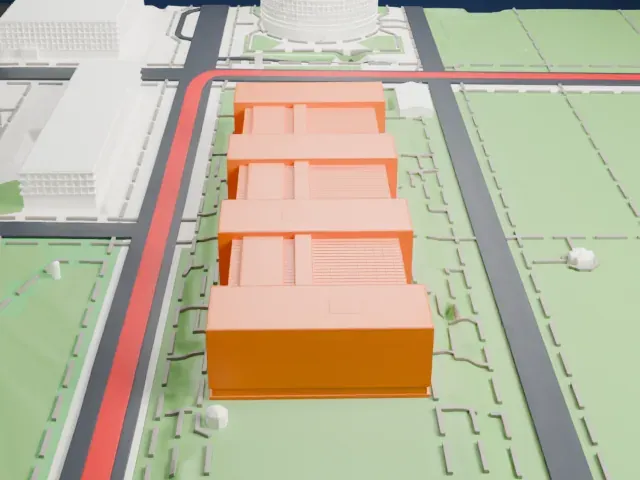 East
East
-
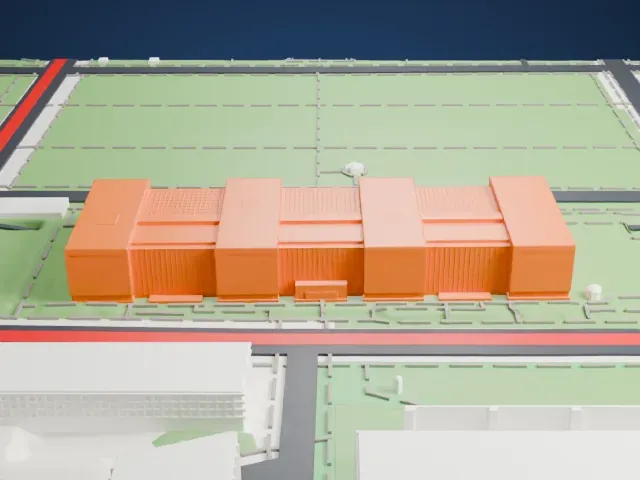 South
South
-
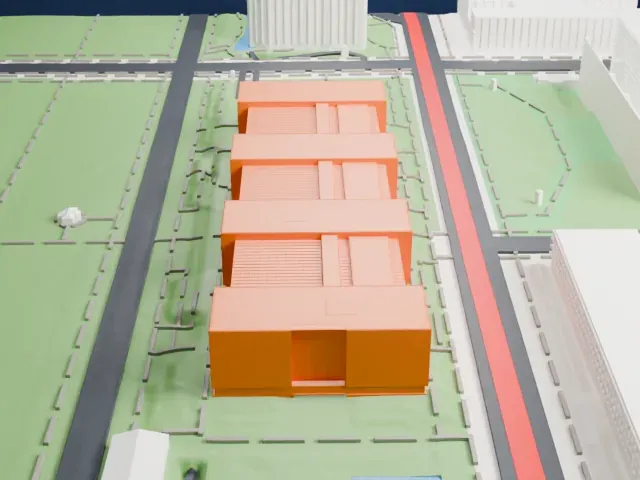 West
West
- Fine lines on glazed sections
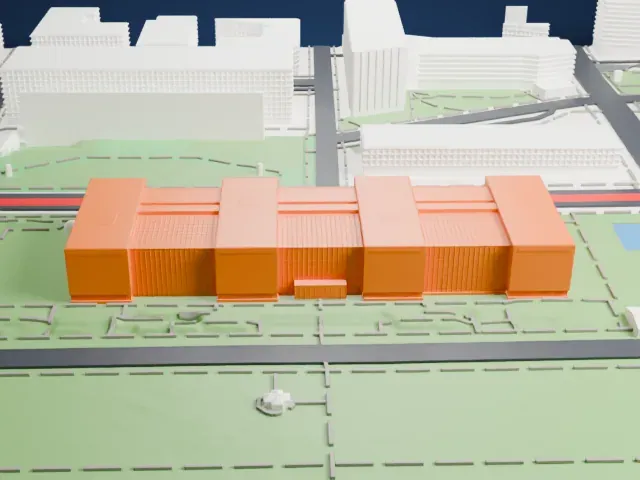
- The sections between the four blocks carry fine horizontal lines. Print friendly adapts them to the print scale; Full detail keeps them on a larger print, ideally with 0.12–0.16 mm layers.
- Long, low footprint
- The building is wide and low, so a larger print size makes the recessed sections between the four blocks easier to see.
- One piece with the ground
- The National Air and Space Museum is joined to the ground in the exported file, and the four-side check found no floating parts, so nothing needs gluing.
- Pick the detail for your nozzle
- In the Buildings settings, set Landmark detail to Print friendly to adapt thin parts and small details to the print scale. Full detail keeps every modeled feature, for larger prints or a finer nozzle.
- Colors
- Buildings, roads, water and ground arrive as separate filament slots in the 3MF. The National Air and Space Museum takes the building color.
- File format
- You get a 3MF for Bambu Studio, OrcaSlicer or PrusaSlicer. Any of them can save it as STL if you need one.
About this model
The National Air and Space Museum is one of more than 2,300 landmark models in Mini Skyline. They are made with AI, and each one is checked from four sides in its real surroundings before release. Everything around it is built from OpenStreetMap and Overture map data. If you would rather print the shape from map data, turn off Landmark models in the Buildings settings.
Common questions
Is there a National Air and Space Museum STL I can download?
Mini Skyline builds the file for you in your browser and exports 3MF, which every major slicer opens. If you need an STL, open the 3MF in your slicer and export it from there.
How big can I print it?
Any print size from 40 mm across. The National Air and Space Museum grows with the print: about 7 mm tall on the default 160 mm print. For a model larger than your printer bed, Project Mode splits the area into tiles.
Is it free?
Yes. Generation runs in your browser, with no account and nothing behind a paywall.