3D print the Palau de la Música Catalana
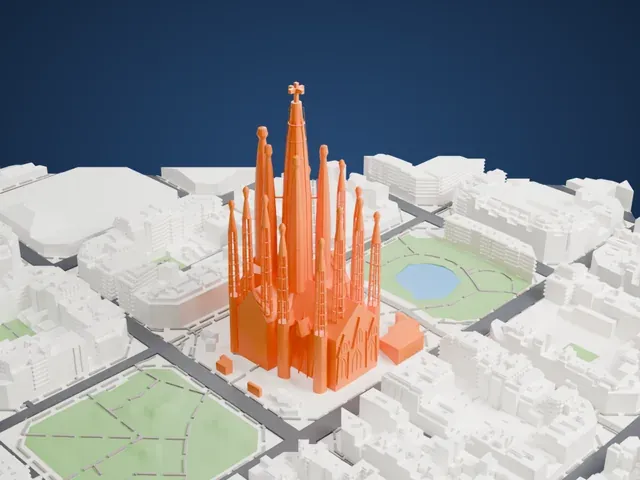
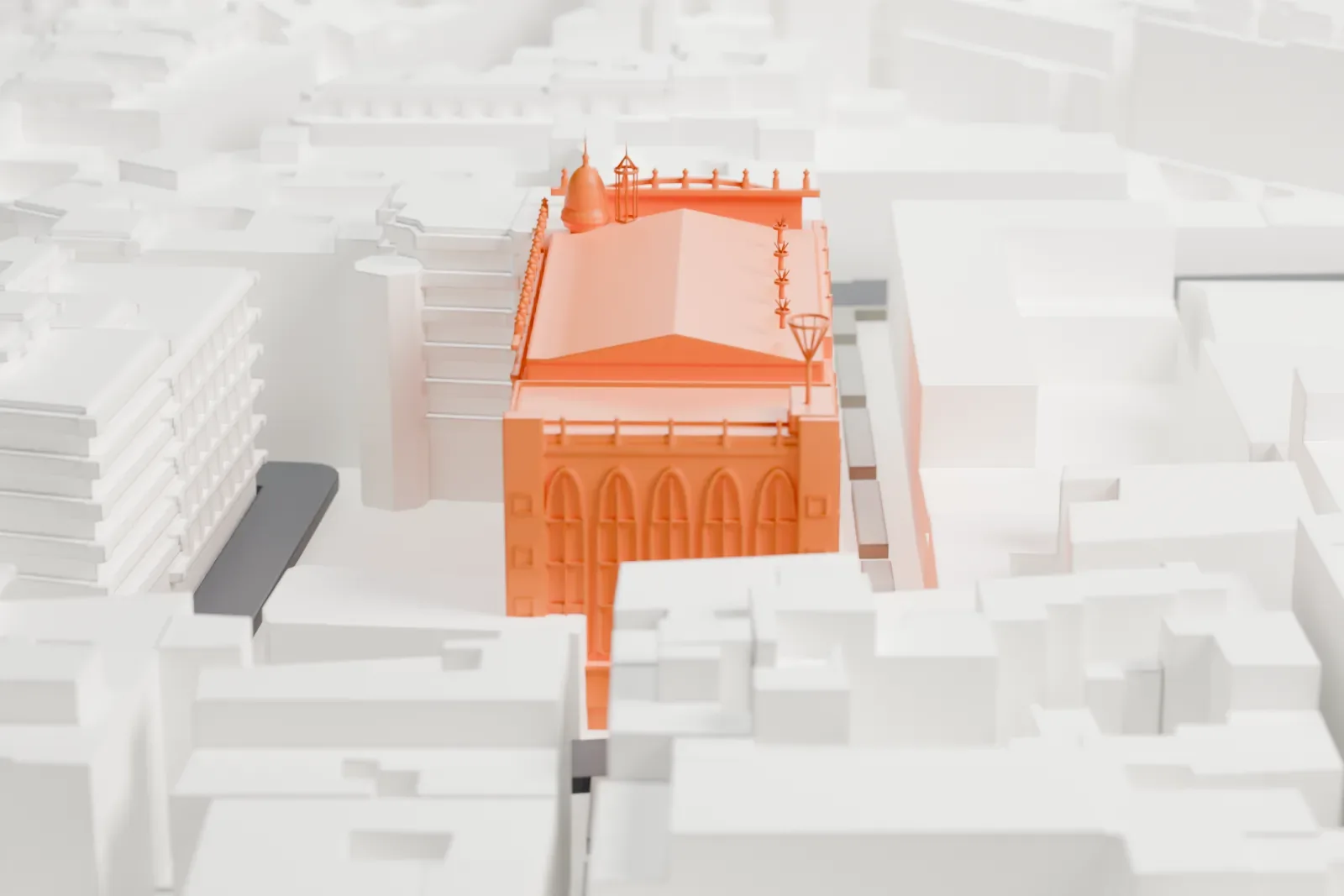
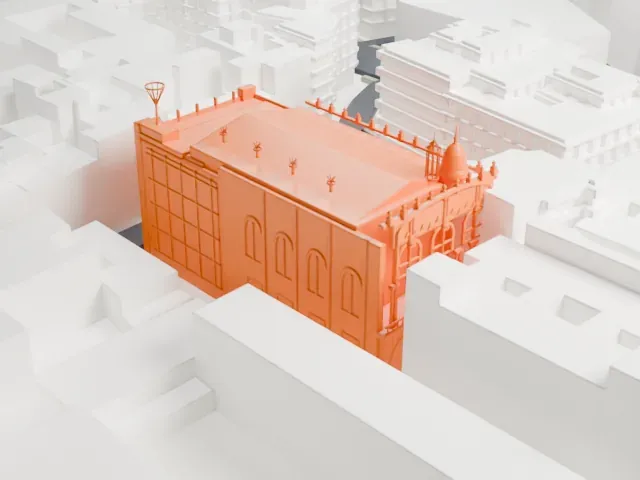
A free, printable model of the Palau de la Música Catalana's arched windows, domed corner and gabled roof, with the dense city blocks of Barcelona around it, generated from real map data in your browser.
-
 North
-
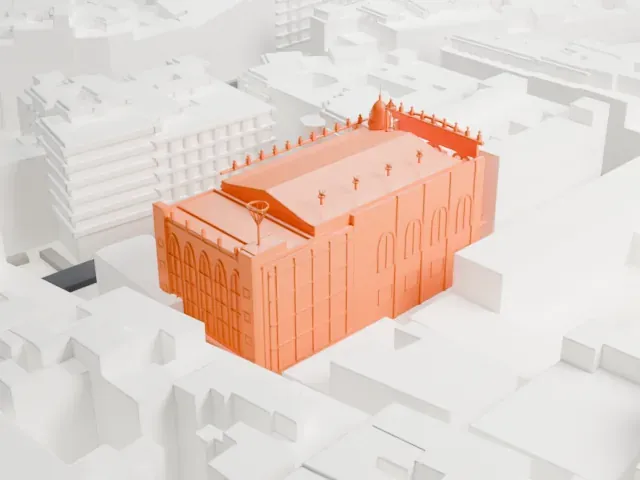 East
-
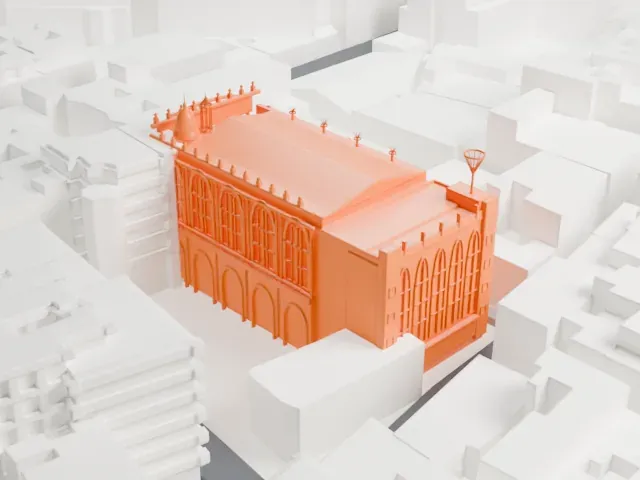 South
-
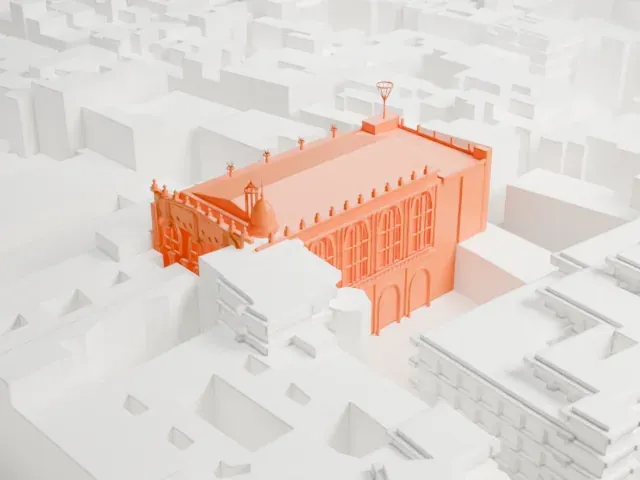 West
- On a 160 mm print
- 9 mm
- Scale
- 1:3,750
9 mm tall on a 160 mm print
Make this print opens the generator on a 600 m square around the landmark. Buildings print at close to true scale, so the landmark grows with the print size.
- Domed corner and roofline ornaments
A small dome and spire sit at one corner, with thin finials along the roofline. Print friendly adapts these small parts; layers of 0.12 to 0.16 mm keep the tips crisp.
- Tall arched windows
Tall arched windows line the walls. A larger print keeps them open, and Full detail keeps every window.
- Pick the detail for your nozzle
In the Buildings settings, set Landmark detail to Print friendly to adapt thin parts and small details to the print scale. Full detail keeps every modeled feature, for larger prints or a finer nozzle.
- Colors
Buildings, roads, water and ground arrive as separate filament slots in the 3MF. The Palau de la Música Catalana takes the building color.
- File format
You get a 3MF for Bambu Studio, OrcaSlicer or PrusaSlicer. Any of them can save it as STL if you need one.
About the Palau de la Música Catalana
The Palau de la Música Catalana (Palace of Catalan Music) stands in Barcelona, Catalonia, Spain, as a concert hall. The architect Lluís Domènech i Montaner designed it in the Catalan modernista style, and it went up between 1905 and 1908 for the choral society Orfeó Català, founded in 1891. It was inaugurated on February 9, 1908. Orfeó Català financed most of the project, and wealthy industrialists and members of the bourgeoisie in Barcelona also contributed. In 1909 the Barcelona City Council gave the architect an award for the palace, as the best building of the previous year.
The palace stands in the Casc Antic quarter of old Barcelona, at the corner of Carrer de Sant Pere Mes Alt and Carrer Palau de la Música. Like much Catalan modernism, it favors curves over straight lines and dynamic shapes over static ones, with rich decoration built on floral and organic motifs. It is also a rational design that pays close attention to function and uses the newest materials of its day, such as steel framing. On the main facade, two colonnades line the balcony on the second level; every column is covered in multicolored glazed tile pieces, mostly in floral designs, and topped with a candelabrum.
The concert hall seats about 2,200 people. It is the only auditorium in Europe lit entirely by natural light in the daytime. Two of its walls are mostly arched stained-glass panes, and a stained glass skylight by Antoni Rigalt overhead has an inverted dome in gold, ringed by blue, for the sun and the sky. Architects Oscar Tusquets and Carles Díaz led a restoration, remodeling and extension from 1982 to 1989. UNESCO declared the palace a World Heritage Site in 1997, along with Hospital de Sant Pau.
About this model
The Palau de la Música Catalana is one of more than 4,300 landmark models in Mini Skyline. They are made with AI, and each one is checked from four sides in its real surroundings before release. Everything around it is built from OpenStreetMap and Overture map data. If you would rather print the shape from map data, turn off Landmark models in the Buildings settings.
Same skyline