3D print the Palazzo dei Normanni
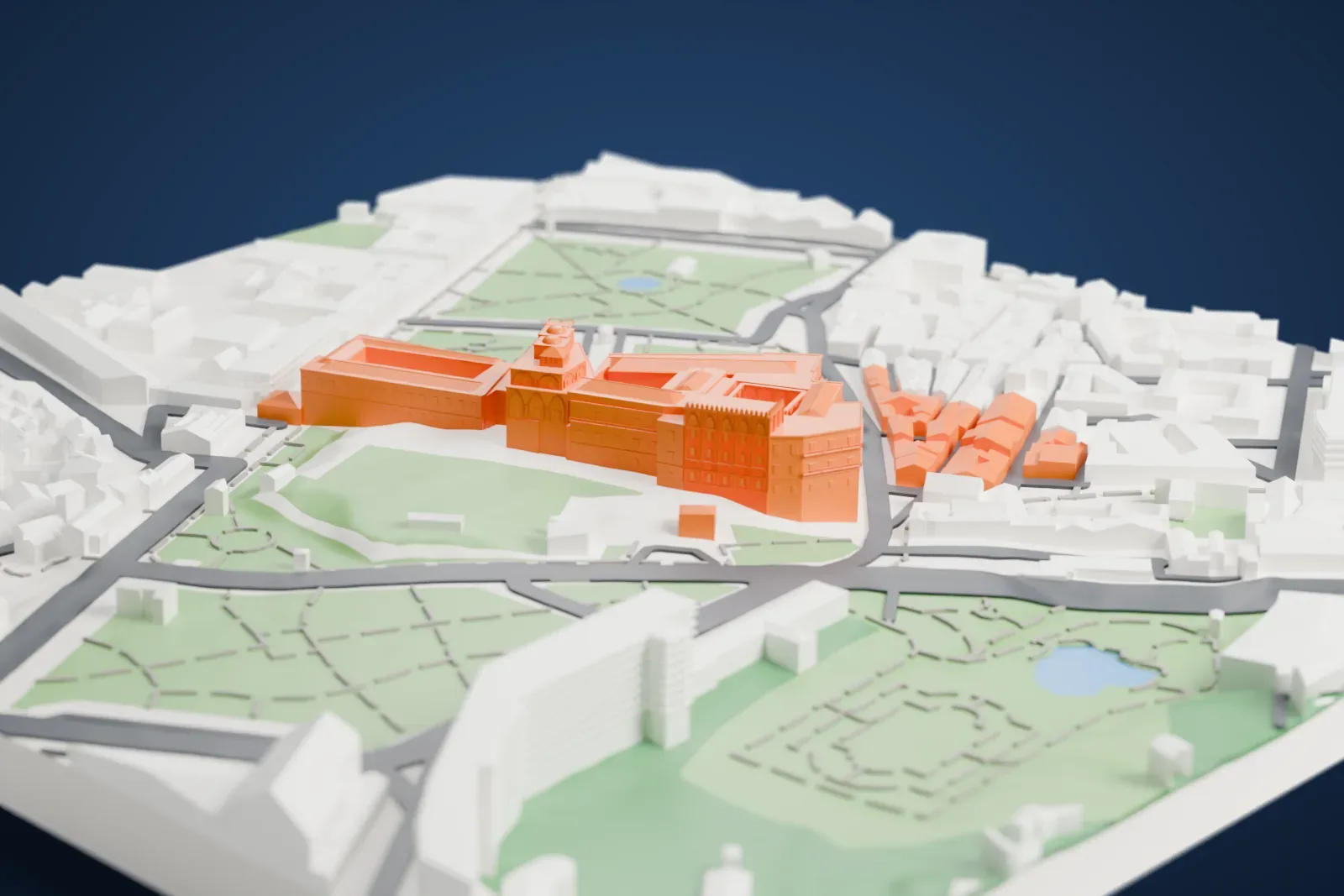
A free, printable model of the Palazzo dei Normanni, a palace with open courtyards, a tower and small domes, beside park paths and the streets of Palermo, generated from real map data in your browser.
-
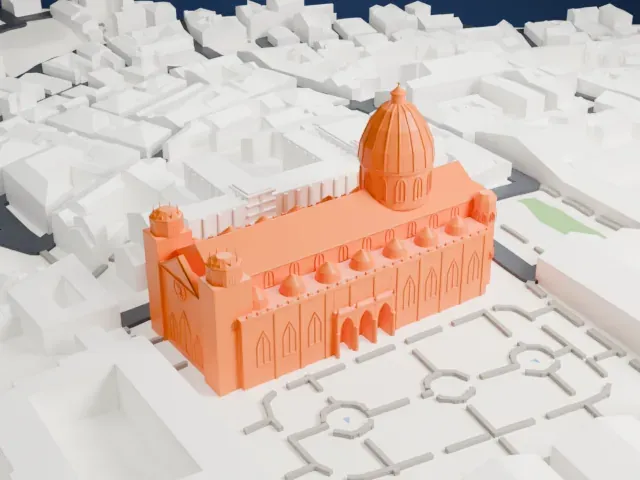
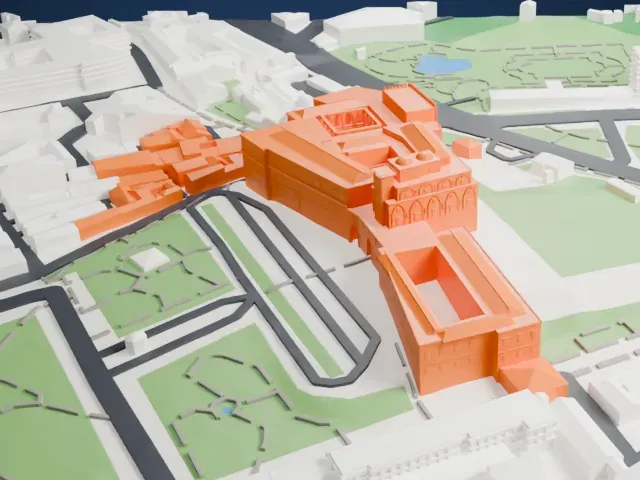 North
-
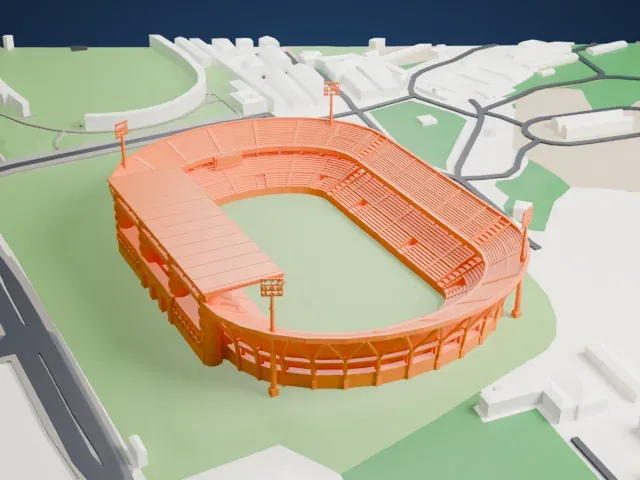
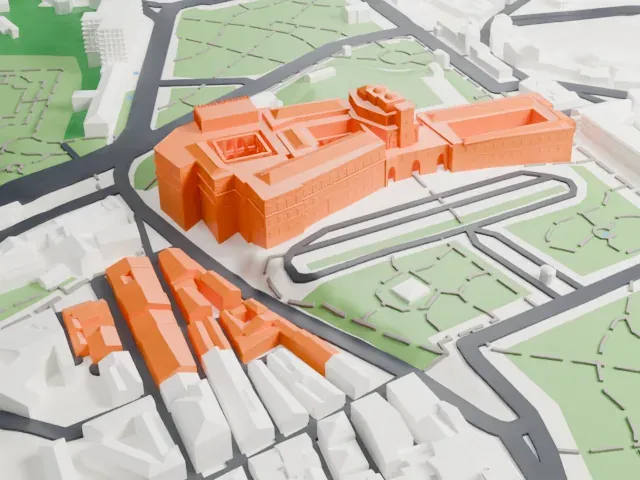 East
-
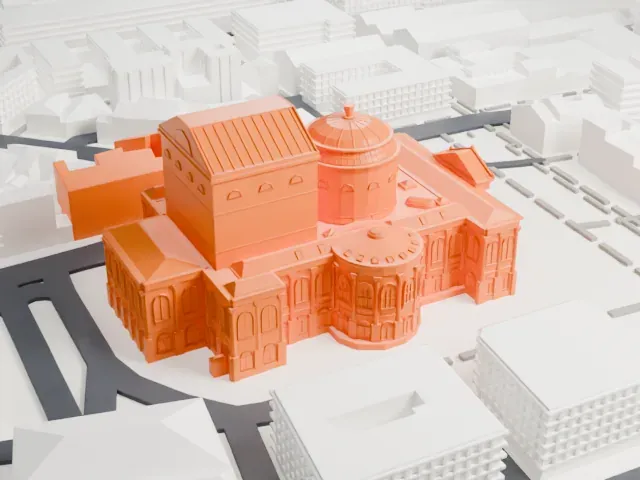
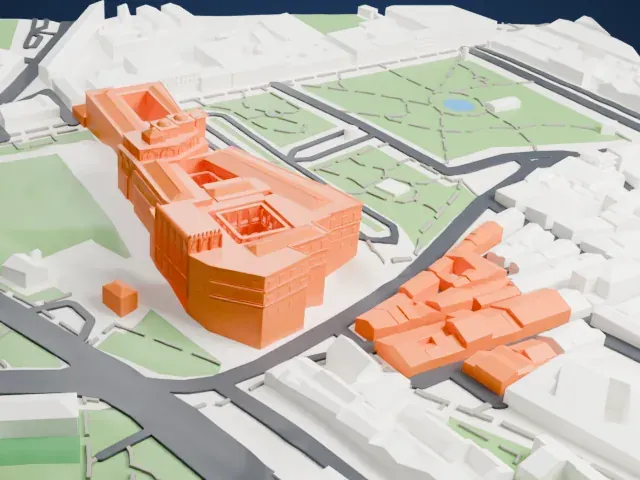 South
-
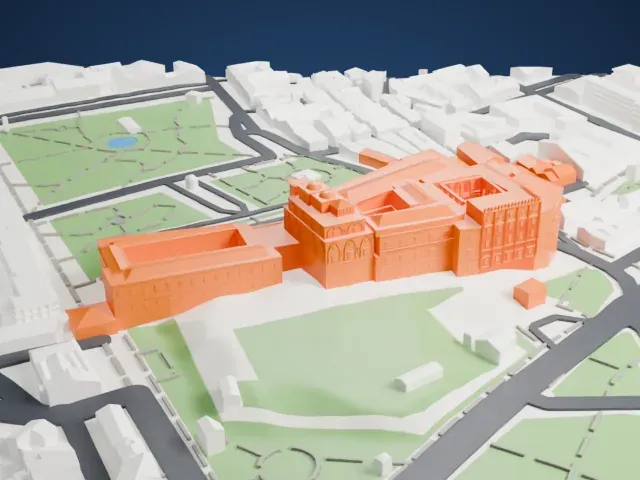 West
The model you print
Palazzo dei Normanni in 3D
The landmark on its own, at its size on a 160 mm print. Print friendly thickens thin parts for a 0.4 mm nozzle; Full detail keeps every part.
- On a 160 mm print
- 14 mm
- Scale
- 1:3,750
14 mm tall on a 160 mm print
Make this print opens the generator on a 600 m square around the landmark. Buildings print at close to true scale, so the landmark grows with the print size.
- Arches and a tower
Rows of small arches line the facades, and a tower with arched openings rises over the entrance. Print friendly adapts these small details to the print scale; Full detail keeps them, best on a larger print with 0.12–0.16 mm layers.
- Open interior courtyards
Several courtyards sit open to the sky inside the walls. A larger print size keeps their arcades readable.
- One piece with the ground
The Palazzo dei Normanni is joined to the ground in the exported file, and the four-side check found no floating parts, so nothing needs gluing.
- Pick the detail for your nozzle
In the Buildings settings, set Landmark detail to Print friendly to adapt thin parts and small details to the print scale. Full detail keeps every modeled feature, for larger prints or a finer nozzle.
- Colors
Buildings, roads, water and ground arrive as separate filament slots in the 3MF. The Palazzo dei Normanni takes the building color.
- File format
You get a 3MF for Bambu Studio, OrcaSlicer or PrusaSlicer. Any of them can save it as STL if you need one.
About the Palazzo dei Normanni
The Palazzo dei Normanni, meaning Palace of the Normans, is also known as the Royal Palace of Palermo, and it stands in Palermo, Sicily. It housed the Kings of Sicily of the Hauteville dynasty and later became the chief seat of power for Sicily's rulers. It is Europe's oldest royal residence. It was the private home of the Kingdom of Sicily's rulers, and Frederick II and Conrad IV used it as an imperial seat. The Sicilian Regional Assembly has had its seat there since 1946.
The palace occupies the city's highest point, over a Punic structure found in 1984 under the Duke of Montalto Halls. Under Arab rule, the first core of the building appeared between the rivers Kemonia and Papireto, with defenses typical of fortresses. After the Norman conquest of 1072, the Normans put up a castle that served as royal residence and administrative hub. Roger II of Altavilla was crowned the first Norman king of Sicily, and in 1130 the Palatine Chapel was built, an emblem of Norman culture and faith. Four towers marked the palace's core, which also held workshops and textile laboratories.
After a decline under the Angevins and the Aragonese, the palace was revived in the late 16th century under the Spanish viceroys, who added the Maqueda Courtyard (1600) and the Fountain Courtyard (1584). Inside is the Cappella Palatina, the best illustration of Sicily's 12th-century Norman–Arab–Byzantine style. Most of the palace was rebuilt or added to in Aragonese times, though some of Roger's work remains, especially the Sala Normanna hall.
About this model
The Palazzo dei Normanni is one of more than 5,500 landmark models in Mini Skyline. They are made with AI, and each one is checked in its real surroundings before release. Each model is written as code from public descriptions, plans, photographs and aerial views used only as references; no image or third-party model is copied into it. Everything around it is built from OpenStreetMap and Overture map data. Rights in the building itself, its name and any brands on it are not granted by Mini Skyline; clear them separately before you sell prints. If you would rather print the shape from map data, turn off Landmark models in the Buildings settings.
Mini Skyline is not affiliated with, or endorsed by, the owners of this building or its names and marks.
Same skyline