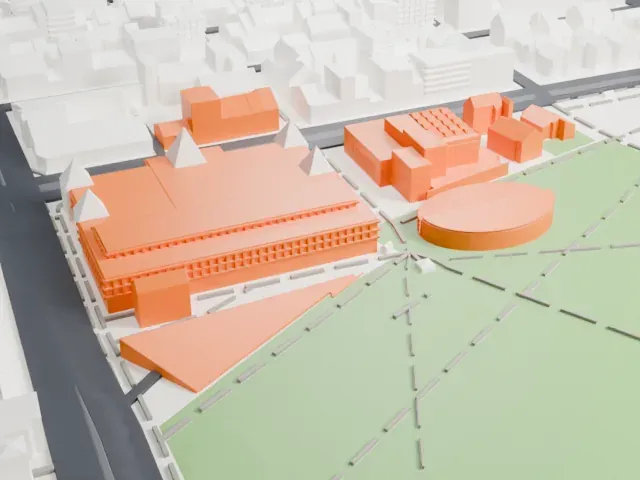
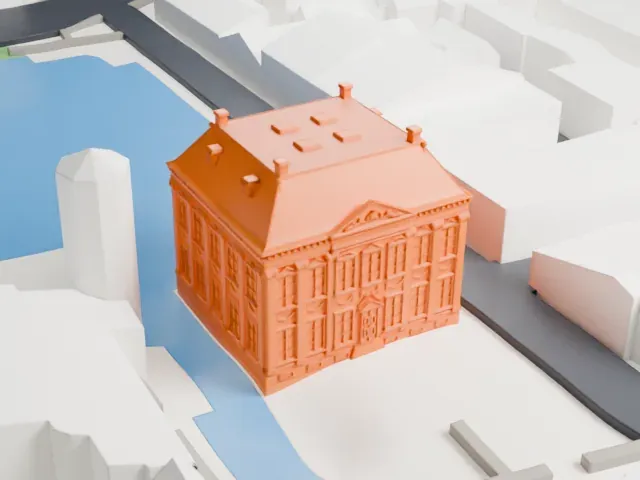
3D print the Philips Stadion
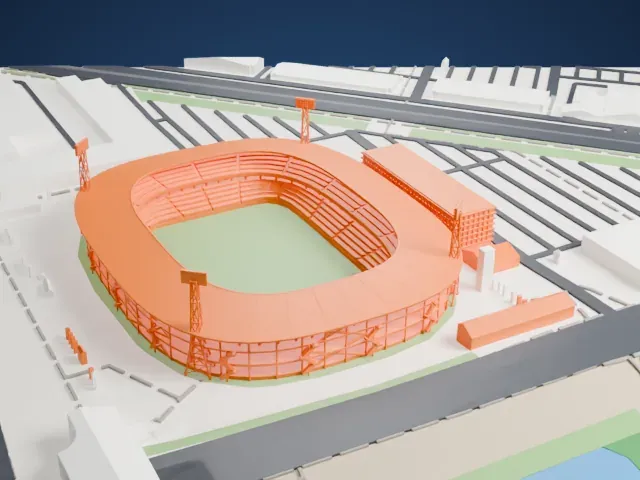
A free, printable model of the Philips Stadion's rounded bowl and slanted corner pylons, with the streets, wide roads and buildings around it in Eindhoven, generated from real map data in your browser.
Free, in your browser. Exports a slicer-ready 3MF.
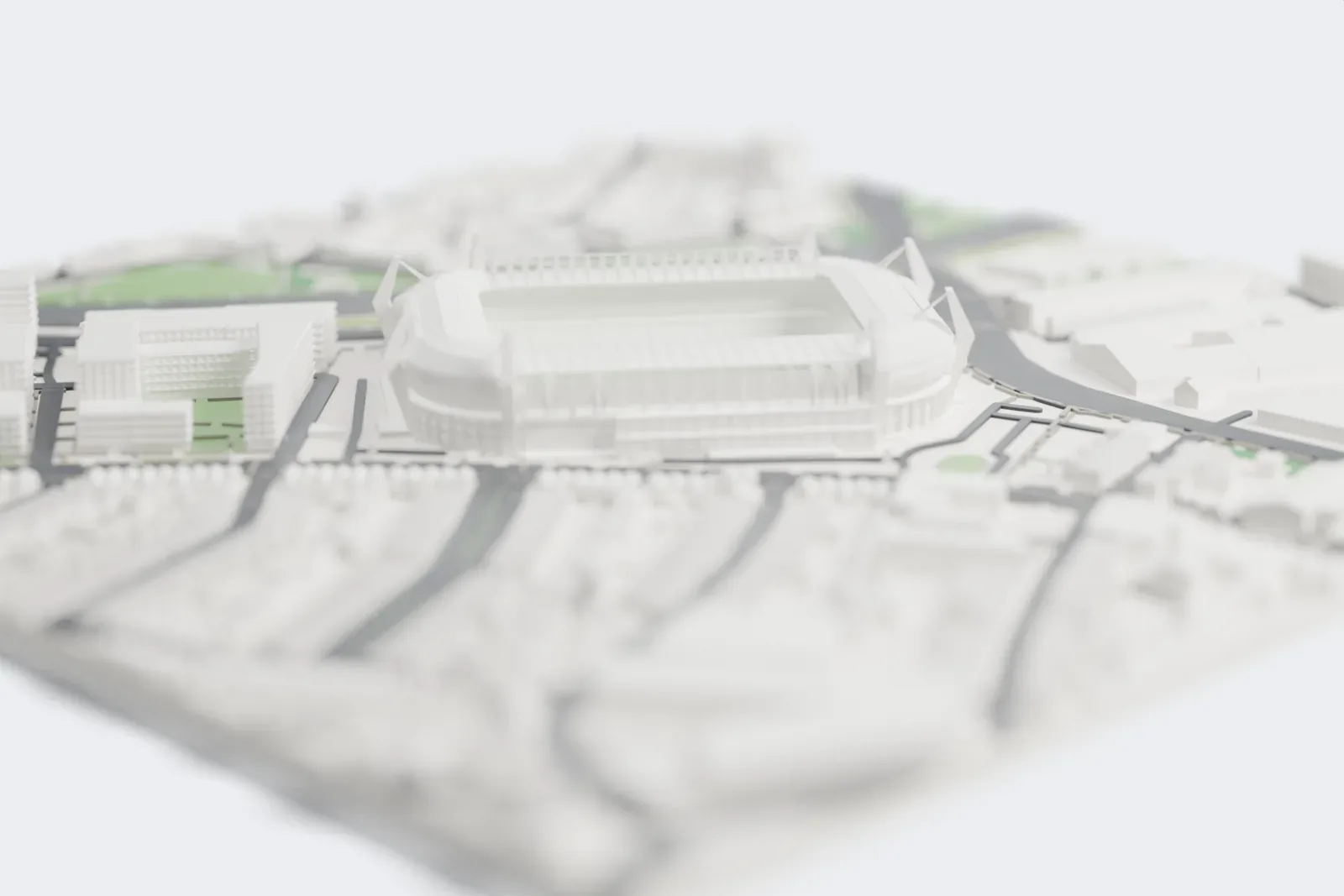
About the Philips Stadion
The Philips Stadion, in Eindhoven in the Netherlands, is a stadium for football and the home of PSV Eindhoven, whose full name is Philips Sport Vereniging, which is why it is also known as the PSV Stadion. It began in 1910 as the Philips Sportpark, a sports field for the company's employees. The Philips Elftal played football matches there between 1911 and 1913. PSV took over from that team in 1913 and has played on the original ground since.
The first wooden stand, with room for 550 viewers, was built in 1916 and funded by Philips, then celebrating its 25th anniversary. In 1958 Philips installed four floodlights, each 40 meters high. A complete renovation from 1969 to 1977 enclosed the stadium and covered every seat. After cracks were found in the south stand in April 1987, it was rebuilt with two tiers and 830 VIP seats behind glass, and two years after the rebuilt south stand opened in 1988, the ground was renamed from Philips Sportpark to Philips Stadion.
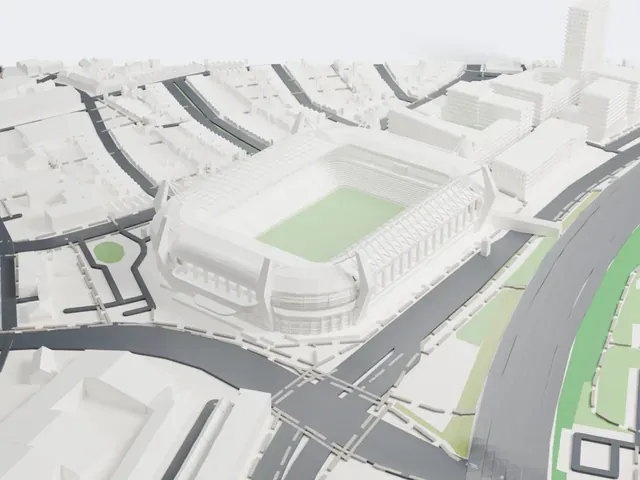
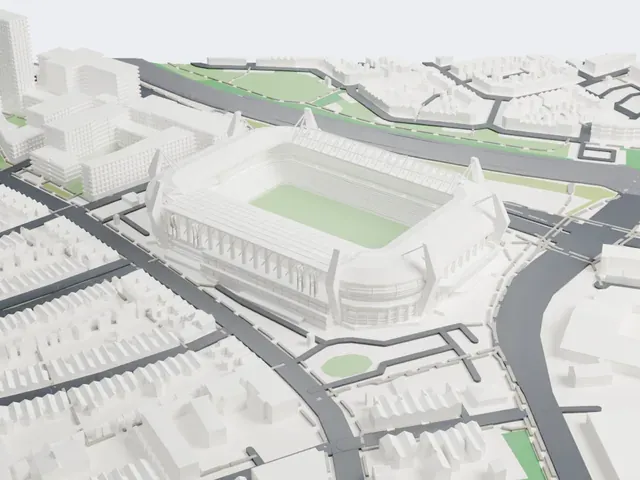
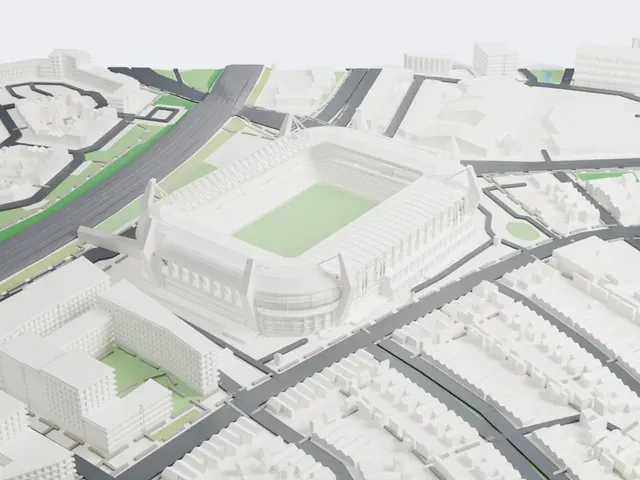
The last major renovation closed the four open corners. Their window blind-type frames let air flow to the grass and can be shut during events as protection for spectators against the weather, and Toon van Aken designed the four corners. The stadium hosted three group matches of UEFA Euro 2000 and the 2006 UEFA Cup Final, in which Sevilla defeated Middlesbrough 4–0. It has hosted Netherlands national team fixtures since 1971.
How it prints
Make this print opens the generator on a 600 m square around the landmark. Buildings print at close to true scale, so the landmark grows with the print size.
| Print size | Landmark height | Scale |
|---|---|---|
| 160 mm default | 13 mm | 1:3,750 |
| 200 mm | 16 mm | 1:3,000 |
| 256 mm | 20 mm | 1:2,344 |
-
 North
North
-
 East
East
-
 South
South
-
 West
West
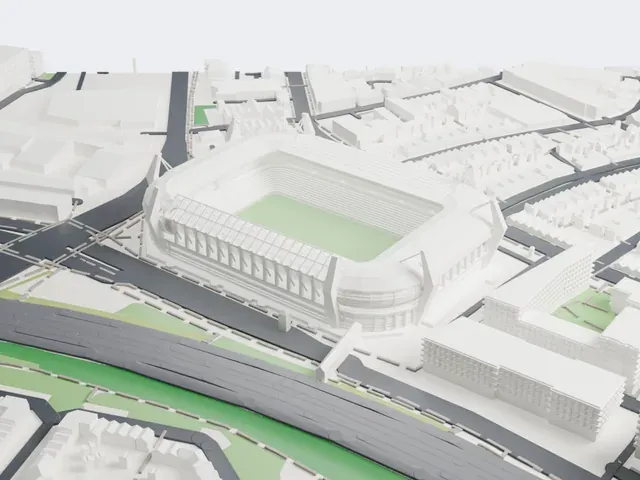
- Corner pylons and stays
- Slanted pylons at the four corners carry thin stays. Printing slowly and letting layers cool helps these slender parts, and Print friendly adapts the thinnest ones to the print scale.
- Ribbed side roofs
- The long side roofs show a row of slim ribs. Layers of 0.12 to 0.16 mm keep them distinct, and a larger print size keeps more of them.
- One piece with the ground
- The Philips Stadion is joined to the ground in the exported file, and the four-side check found no floating parts, so nothing needs gluing.
- Pick the detail for your nozzle
- In the Buildings settings, set Landmark detail to Print friendly to adapt thin parts and small details to the print scale. Full detail keeps every modeled feature, for larger prints or a finer nozzle.
- Colors
- Buildings, roads, water and ground arrive as separate filament slots in the 3MF. The Philips Stadion takes the building color.
- File format
- You get a 3MF for Bambu Studio, OrcaSlicer or PrusaSlicer. Any of them can save it as STL if you need one.
About this model
The Philips Stadion is one of more than 2,300 landmark models in Mini Skyline. They are made with AI, and each one is checked from four sides in its real surroundings before release. Everything around it is built from OpenStreetMap and Overture map data. If you would rather print the shape from map data, turn off Landmark models in the Buildings settings.
Common questions
Is there a Philips Stadion STL I can download?
Mini Skyline builds the file for you in your browser and exports 3MF, which every major slicer opens. If you need an STL, open the 3MF in your slicer and export it from there.
How big can I print it?
Any print size from 40 mm across. The Philips Stadion grows with the print: about 13 mm tall on the default 160 mm print. For a model larger than your printer bed, Project Mode splits the area into tiles.
Is it free?
Yes. Generation runs in your browser, with no account and nothing behind a paywall.