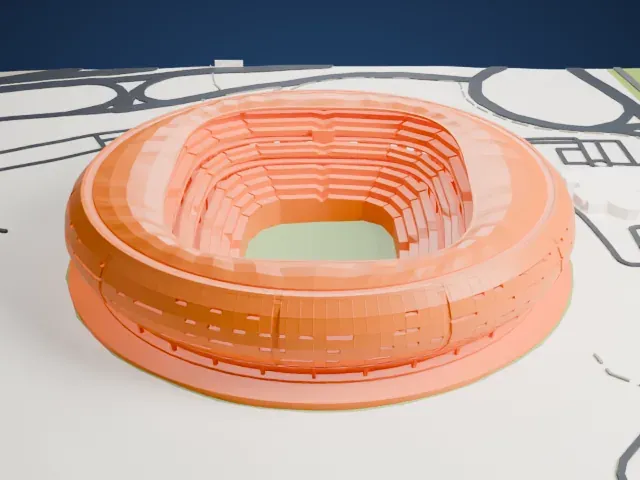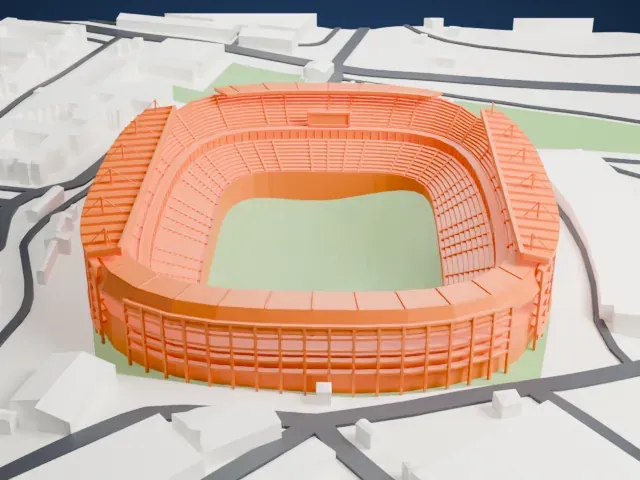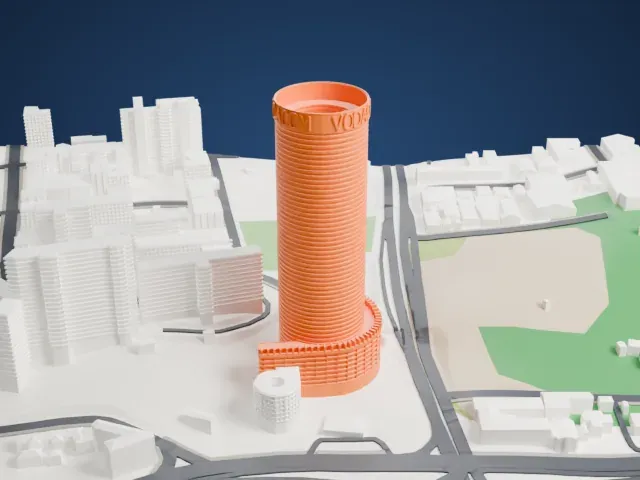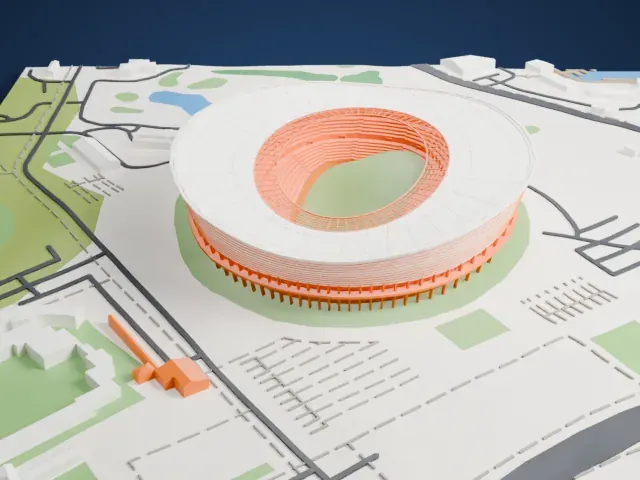
3D print the Royal Observatory, Cape of Good Hope
A free, printable model of the Royal Observatory's main building and the open grounds and streets around it, generated from real map data in your browser.
-
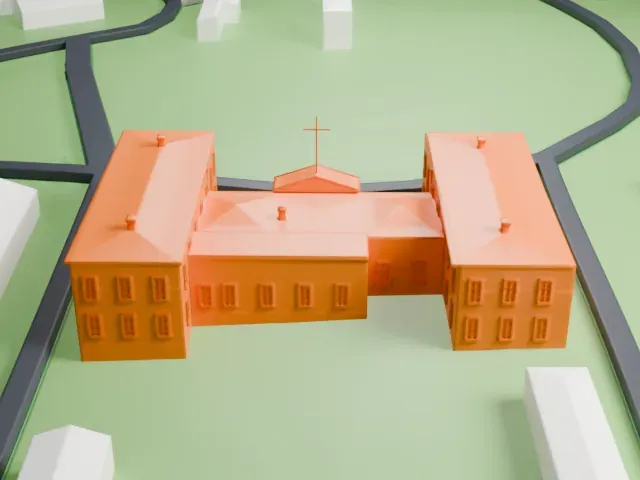 North
-
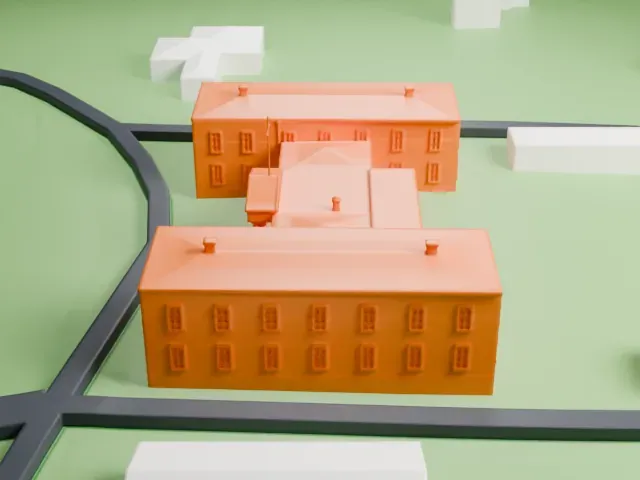 East
-
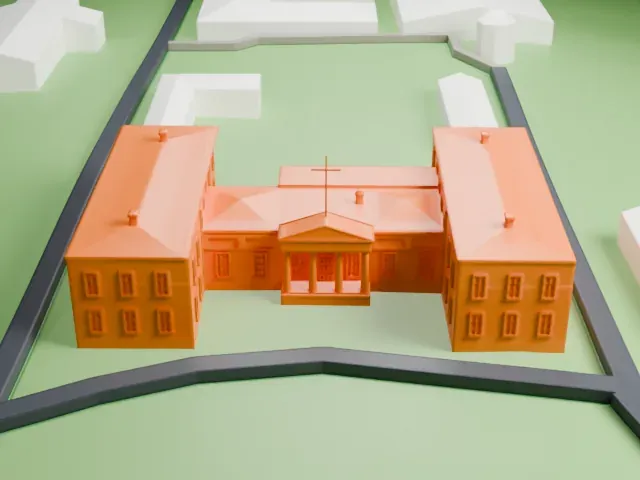 South
-
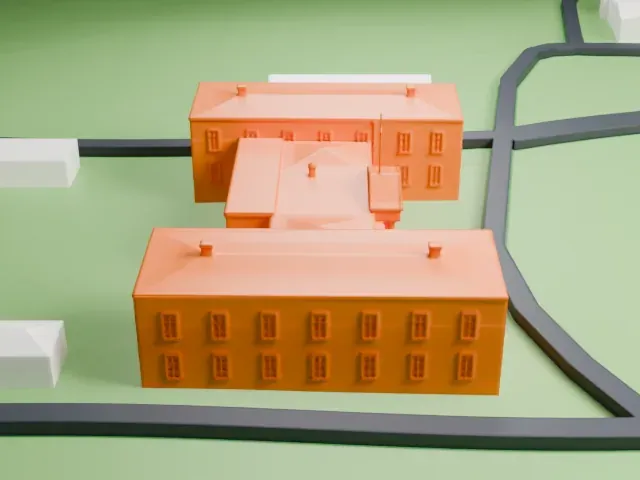 West
The model you print
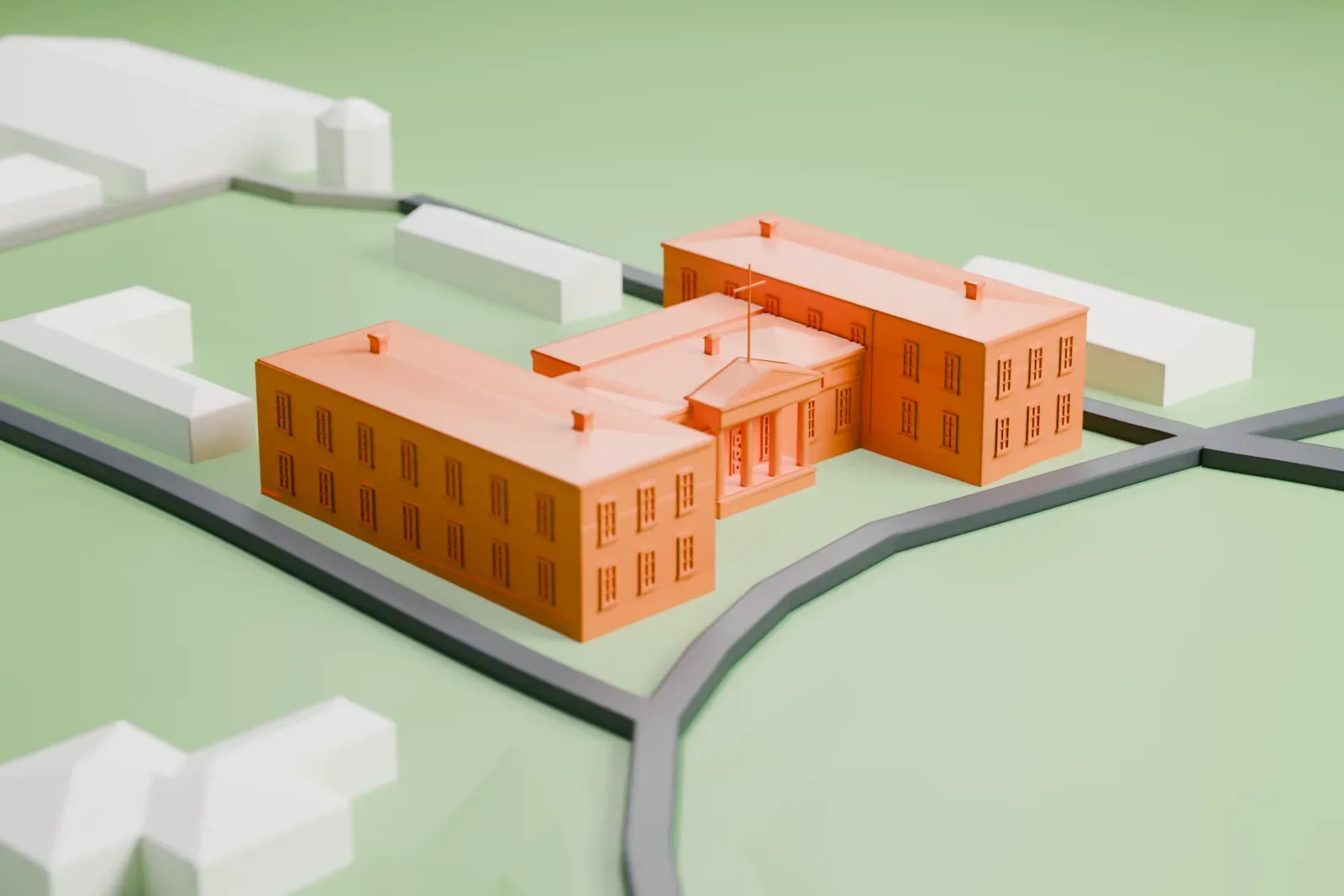
Royal Observatory, Cape of Good Hope in 3D
The landmark on its own, at its size on a 160 mm print. Print friendly thickens thin parts for a 0.4 mm nozzle; Full detail keeps every part.
- On a 160 mm print
- 4 mm
- Scale
- 1:3,750
4 mm tall on a 160 mm print
Make this print opens the generator on a 600 m square around the landmark. Buildings print at close to true scale, so the landmark grows with the print size.
- Thin mast over the portico
A slim mast rises above the entrance. Print slowly with good cooling, and use Print friendly unless you print larger, where Full detail keeps the mast.
- Fine windows on a small build
This building is small on the plate, with many small window recesses. A bigger print size and a layer height of 0.12–0.16 mm keep them readable.
- One piece with the ground
The Royal Observatory, Cape of Good Hope is joined to the ground in the exported file, and the four-side check found no floating parts, so nothing needs gluing.
- Pick the detail for your nozzle
In the Buildings settings, set Landmark detail to Print friendly to adapt thin parts and small details to the print scale. Full detail keeps every modeled feature, for larger prints or a finer nozzle.
- Colors
Buildings, roads, water and ground arrive as separate filament slots in the 3MF. The Royal Observatory, Cape of Good Hope takes the building color.
- File format
You get a 3MF for Bambu Studio, OrcaSlicer or PrusaSlicer. Any of them can save it as STL if you need one.
About the Royal Observatory, Cape of Good Hope
The Royal Observatory at the Cape of Good Hope was a scientific institution in South Africa. It was set up in 1820 by the British body known as the Board of Longitude, and King George IV made it official on October 20, 1820, by an Order in Council. It stood on a small hill 5 kilometers (3.1 miles) south-east of the center of Cape Town, and a suburb that grew up around it was named Observatory after it.
Its main work was astrometry, and over its life it published many catalogues of star positions. Thomas Henderson, the second HM Astronomer, made the first observations, of Alpha Centauri, toward a believable stellar parallax. In 1882, David Gill photographed a great comet and found stars in the background, which led to the Cape Photographic Durchmusterung, the first star catalogue made by photography.
By the 1950s, light from Cape Town itself had made work on faint objects impossible. The observatory remained a separate body until 1972, when it merged with Johannesburg's Republic Observatory to create the South African Astronomical Observatory. Its main building is the headquarters of that observatory, and it received National Heritage Site status in December 2018.
About this model
The Royal Observatory, Cape of Good Hope is one of more than 4,900 landmark models in Mini Skyline. They are made with AI, and each one is checked from four sides in its real surroundings before release. Everything around it is built from OpenStreetMap and Overture map data. If you would rather print the shape from map data, turn off Landmark models in the Buildings settings.
Keep exploring