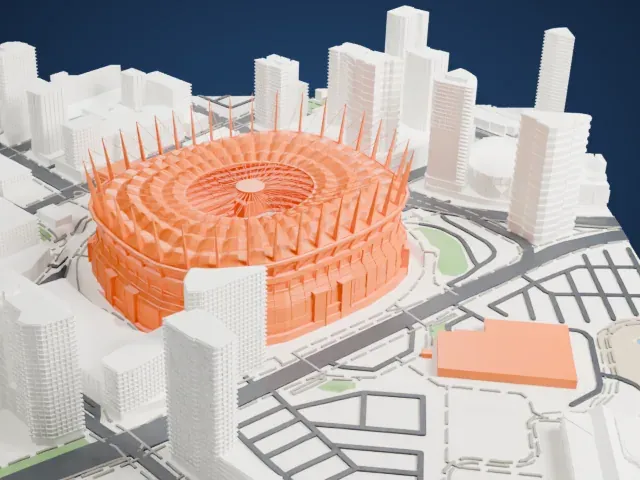
3D print Saputo Stadium
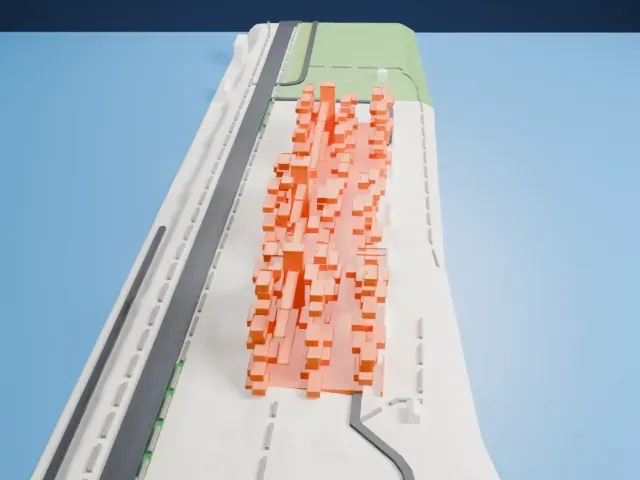
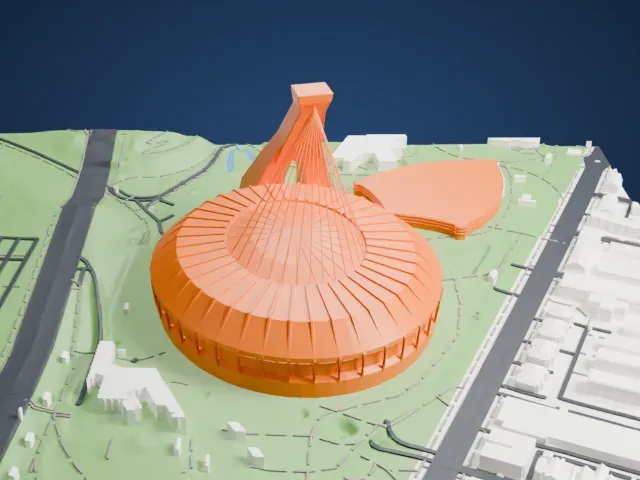
A free, printable model of Saputo Stadium's open-sided stands on stilts, with a long neighboring building, parking lots, grass and roads around it in Montreal, generated from real map data in your browser.
Free, in your browser. Exports a slicer-ready 3MF.
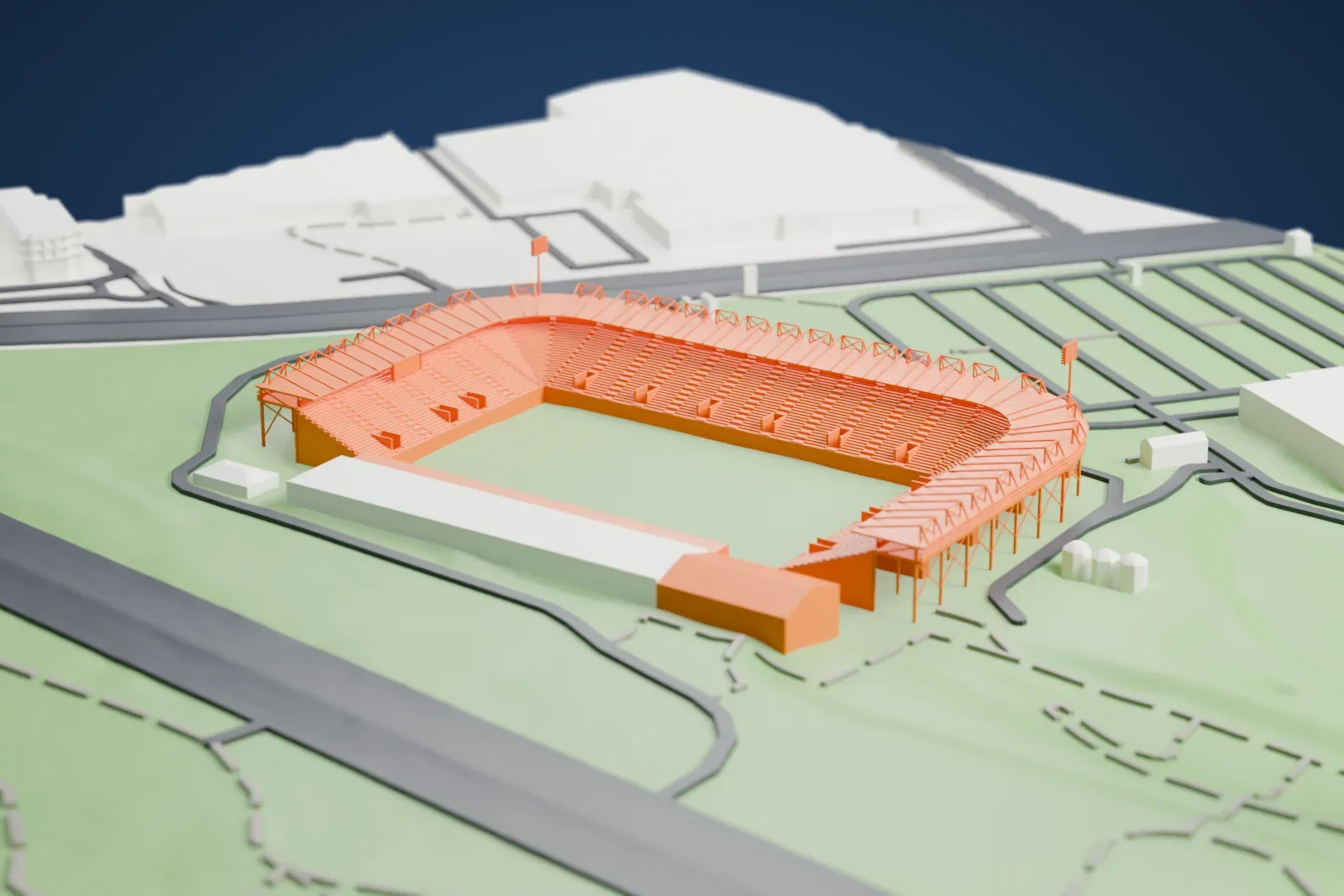
About Saputo Stadium
Saputo Stadium (French: Stade Saputo) stands at Olympic Park in Montreal, Quebec, Canada, and was built specifically for soccer; the borough is Mercier–Hochelaga-Maisonneuve. It opened in 2008, and CF Montréal, the club once known as the Montreal Impact, plays there. It was built where the practice track and field of the 1976 Summer Olympics once stood, and from its east side one can see the inclined tower of Olympic Stadium. In North American competitions it is known as Stade de Montréal because of advertising rules.
Building it cost CA$17 million: the Saputo family paid $7.5 million, and a 25-year financing term covered the rest. Dant Clayton Corporation designed and fabricated it, and Broccolini Construction Inc. built it. Inside the complex are 34 corporate suites, a training field and full facilities for player welfare. It covers approximately 150,000 square meters (1,600,000 sq ft) and has a natural grass playing surface. With a Major League Soccer team for Montreal expected, plans called for growing it from the original capacity of 13,034 to 20,000.
The Impact's first home game at the stadium, in 2008, ended 0–0 with the Vancouver Whitecaps. On June 13, 2008, Rocco Placentino scored the club's first goal in the stadium, against the Charleston Battery, in a 1–0 result that was also the club's first win there. The first game after the renovation and expansion was on June 16, 2012, when the Impact beat Seattle Sounders FC 4–1. Its only official international matches were two by Canada's men's national soccer team during 2010 FIFA World Cup qualification.
How it prints
Make this print opens the generator on a 600 m square around the landmark. Buildings print at close to true scale, so the landmark grows with the print size.
| Print size | Landmark height | Scale |
|---|---|---|
| 160 mm default | 10 mm | 1:3,750 |
| 200 mm | 12 mm | 1:3,000 |
| 256 mm | 15 mm | 1:2,344 |
-
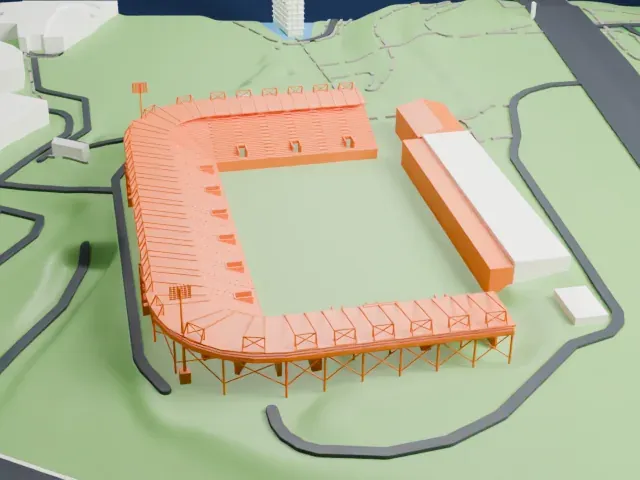 North
North
-
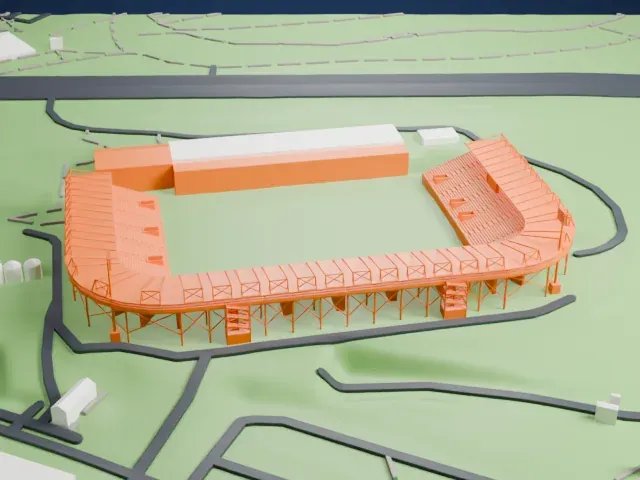 East
East
-
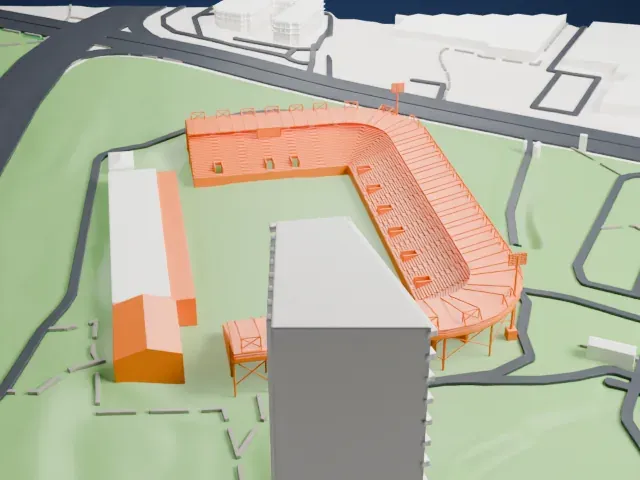 South
South
-
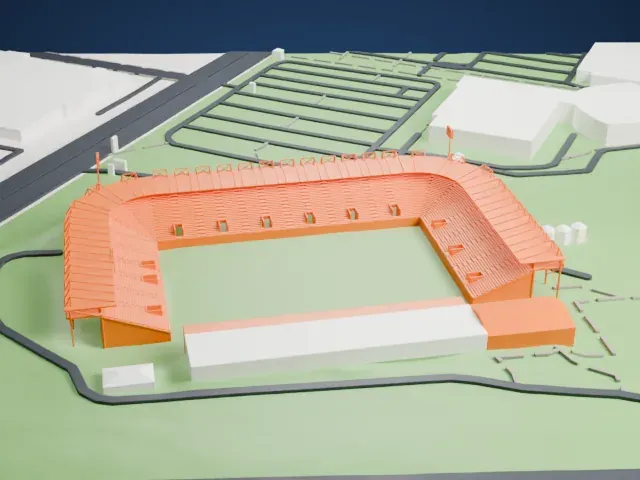 West
West
- Stilts and cross-bracing
- The stands rest on slim stilts with cross-braces beneath them. Printing slowly and letting layers cool helps these thin parts, and layers of 0.12 to 0.16 mm keep them crisp.
- Floodlight masts and truss frames
- Thin floodlight masts and small truss frames sit along the stand edges. Print friendly adapts them to the print scale, and a larger print size keeps more of them.
- One piece with the ground
- Saputo Stadium is joined to the ground in the exported file, and the four-side check found no floating parts, so nothing needs gluing.
- Pick the detail for your nozzle
- In the Buildings settings, set Landmark detail to Print friendly to adapt thin parts and small details to the print scale. Full detail keeps every modeled feature, for larger prints or a finer nozzle.
- Colors
- Buildings, roads, water and ground arrive as separate filament slots in the 3MF. Saputo Stadium takes the building color.
- File format
- You get a 3MF for Bambu Studio, OrcaSlicer or PrusaSlicer. Any of them can save it as STL if you need one.
About this model
Saputo Stadium is one of more than 2,300 landmark models in Mini Skyline. They are made with AI, and each one is checked from four sides in its real surroundings before release. Everything around it is built from OpenStreetMap and Overture map data. If you would rather print the shape from map data, turn off Landmark models in the Buildings settings.
Common questions
Is there a Saputo Stadium STL I can download?
Mini Skyline builds the file for you in your browser and exports 3MF, which every major slicer opens. If you need an STL, open the 3MF in your slicer and export it from there.
How big can I print it?
Any print size from 40 mm across. Saputo Stadium grows with the print: about 10 mm tall on the default 160 mm print. For a model larger than your printer bed, Project Mode splits the area into tiles.
Is it free?
Yes. Generation runs in your browser, with no account and nothing behind a paywall.