3D print Apollinaris Mons on Mars
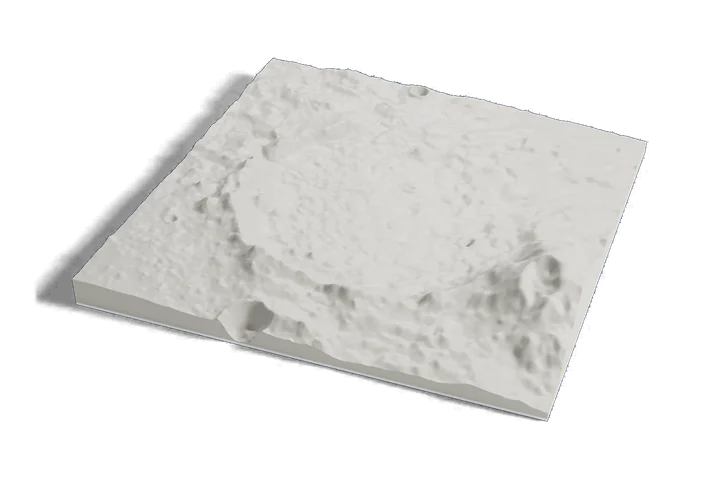
An old volcano north of Gusev crater, with a wide summit caldera, on one print, from elevation data measured by Mars orbiters.
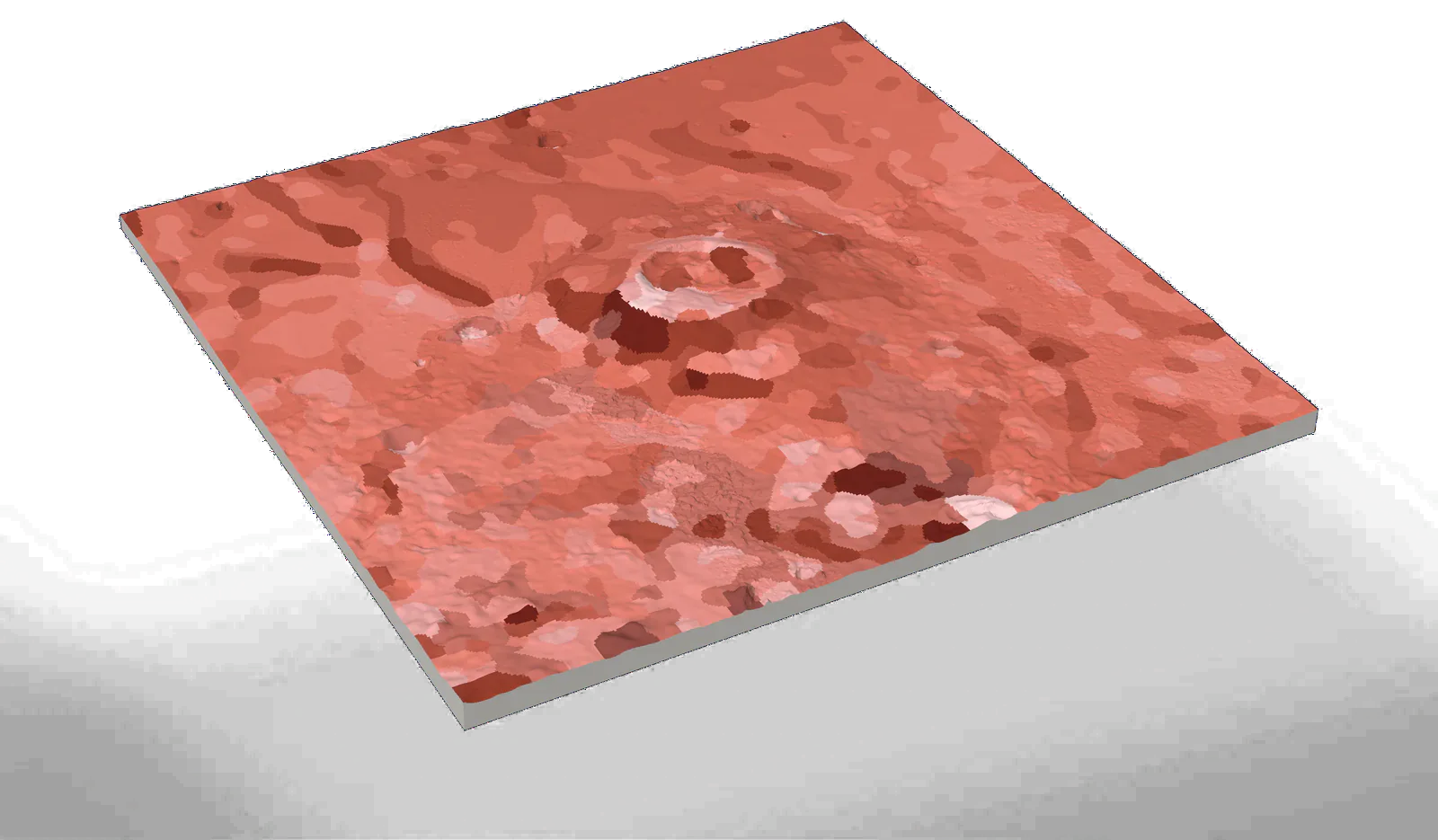
Mars terrain: USGS Astrogeology; ESA Mars Express HRSC (DLR, FU Berlin); NASA MGS MOLA. Surface imagery: Viking MDIM 2.1 mosaic, NASA/JPL/USGS. Pictures CC BY-SA 3.0 IGO: these are renders of a 3D model made from the terrain data above, cropped, scaled and exaggerated in height. They are shared under that license.
Where it is 8.50°S 174.10°E Mars
- Height
- About 5 km (3 mi)
- Base
- About 296 km (184 mi) across
- Summit caldera
- About 80 km (50 mi)
- Age
- 3 to 3.5 billion years
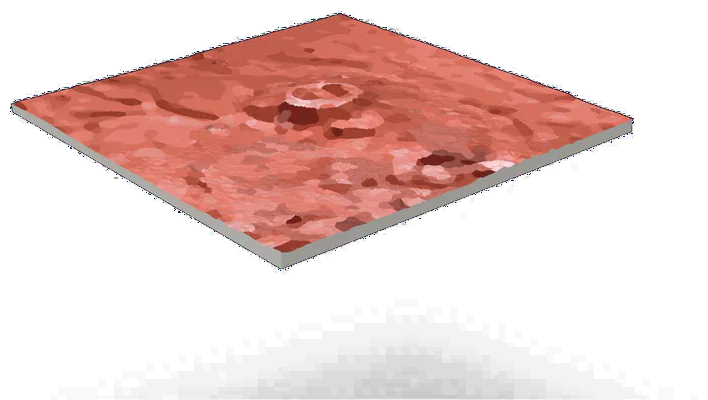
Mars terrain: USGS Astrogeology; ESA Mars Express HRSC (DLR, FU Berlin); NASA MGS MOLA. Surface imagery: Viking MDIM 2.1 mosaic, NASA/JPL/USGS. Pictures CC BY-SA 3.0 IGO: these are renders of a 3D model made from the terrain data above, cropped, scaled and exaggerated in height. They are shared under that license.
477 by 474 km of Mars, 160 mm across
About Apollinaris Mons
Apollinaris Mons is a volcano about 5 km high with a base about 296 km across, south of Elysium Planitia and north of Gusev crater. It is roughly 3 to 3.5 billion years old.
A caldera about 80 km across sits at its summit. The volcano was named in 1973 after a mountain spring near Rome.
Sources: IAU Gazetteer of Planetary Nomenclature: Apollinaris Patera, Wikipedia: Apollinaris Mons, USGS Astrogeology: Mars MGS MOLA - MEX HRSC Blended DEM 200m
Elsewhere on Mars
All worlds-
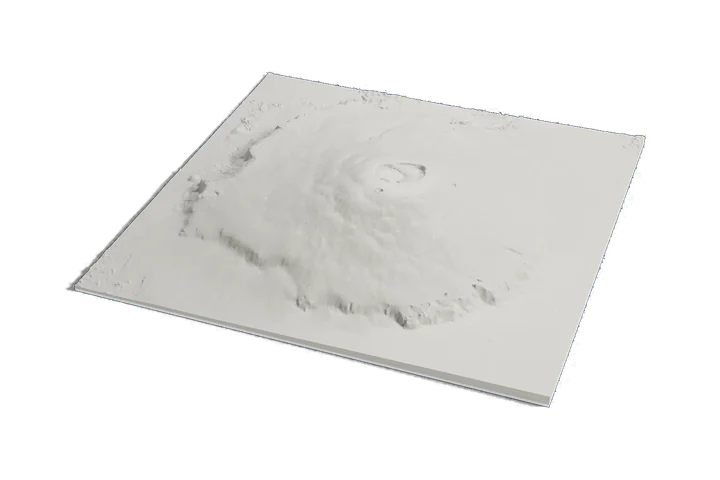 Volcano
Olympus Mons
-
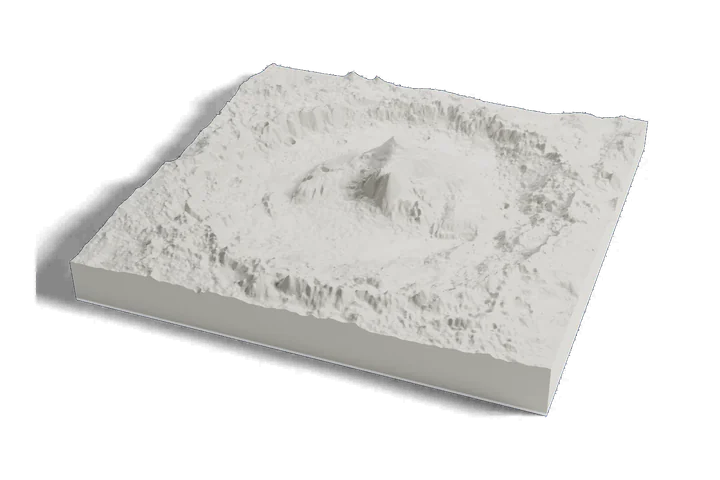 Landing site · Curiosity, 2012
Gale crater and Mount Sharp
-
 Landing site · Perseverance, 2021
Jezero crater
Mars terrain: USGS Astrogeology; ESA Mars Express HRSC (DLR, FU Berlin); NASA MGS MOLA. Surface imagery: Viking MDIM 2.1 mosaic, NASA/JPL/USGS. Pictures CC BY-SA 3.0 IGO: these are renders of a 3D model made from the terrain data above, cropped, scaled and exaggerated in height. They are shared under that license.