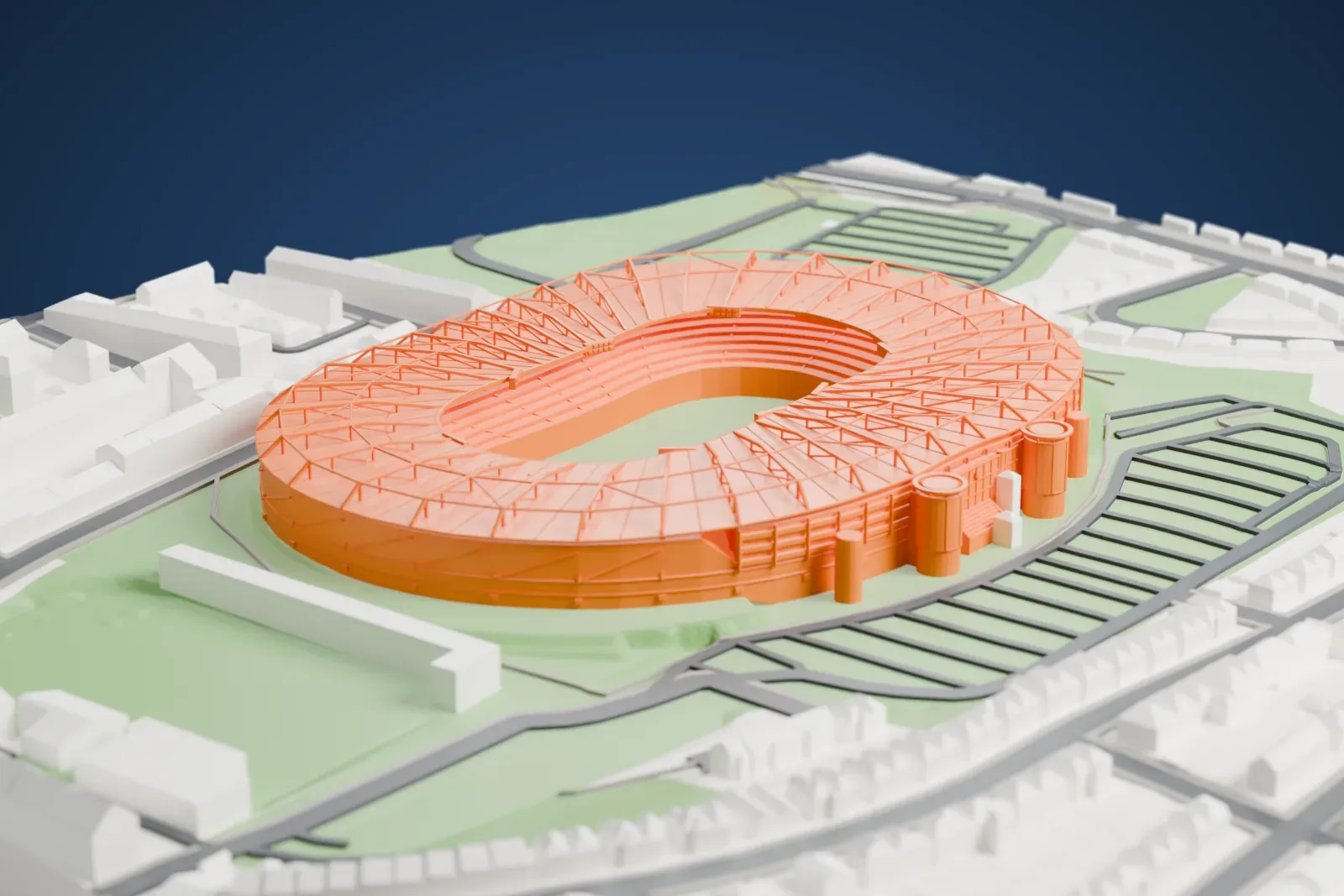
3D print Hampden Park
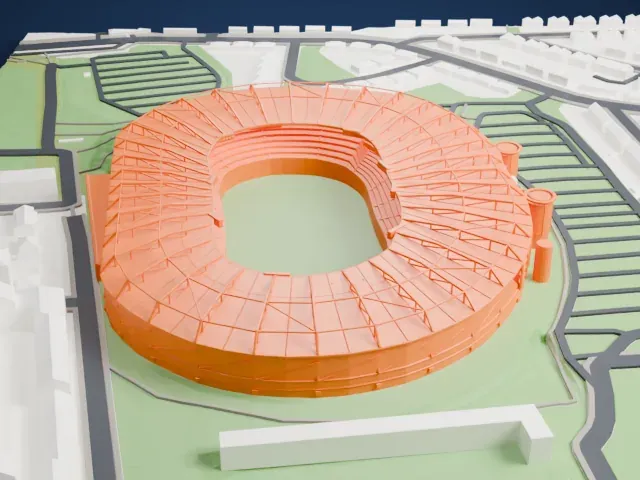
A free, printable model of Hampden Park and the surrounding streets and buildings, generated from real map data in your browser.
-
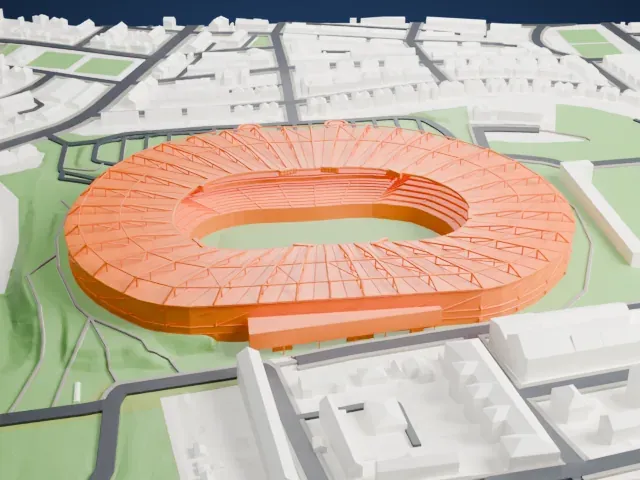 North
-
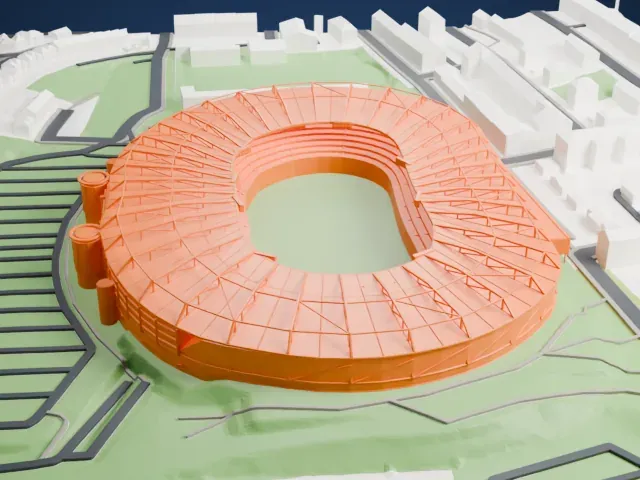 East
-
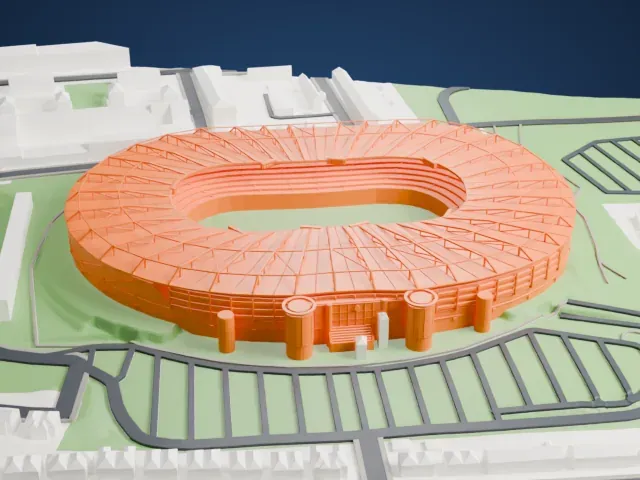 South
-
 West
The model you print
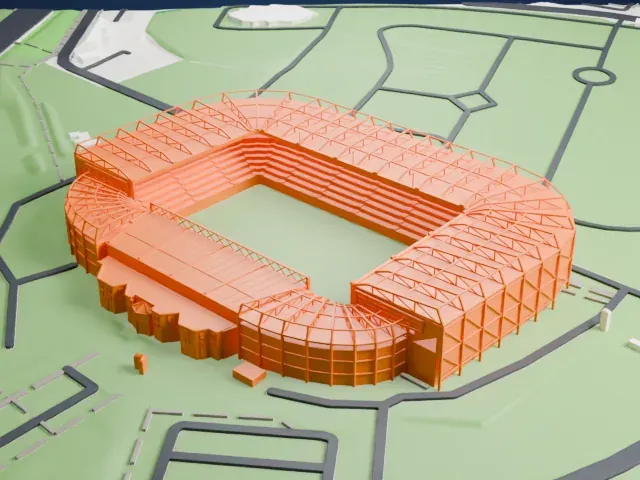
Hampden Park in 3D
The landmark on its own, at its size on a 160 mm print. Print friendly thickens thin parts for a 0.4 mm nozzle; Full detail keeps every part.
- On a 160 mm print
- 10 mm
- Scale
- 1:4,063
10 mm tall on a 160 mm print
Make this print opens the generator on a 650 m square around the landmark. Buildings print at close to true scale, so the landmark grows with the print size.
- Fine details on a large stadium
A stadium combines a large footprint with small details. A larger print size keeps those details, and Print friendly adapts the thinnest parts to the print scale.
- One piece with the ground
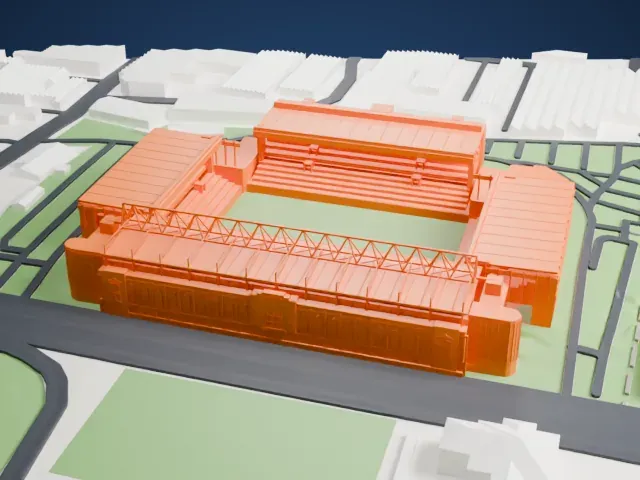
Hampden Park is joined to the ground in the exported file, and the four-side check found no floating parts, so nothing needs gluing.
- Pick the detail for your nozzle
In the Buildings settings, set Landmark detail to Print friendly to adapt thin parts and small details to the print scale. Full detail keeps every modeled feature, for larger prints or a finer nozzle.
- Colors
Buildings, roads, water and ground arrive as separate filament slots in the 3MF. Hampden Park takes the building color.
- File format
You get a 3MF for Bambu Studio, OrcaSlicer or PrusaSlicer. Any of them can save it as STL if you need one.
About Hampden Park
Hampden Park, in Glasgow's Mount Florida area, serves as Scotland's national football stadium, and the Scotland national football team plays its home games there. The Scottish Football Association owns it. Both the Scottish Cup and the Scottish League Cup regularly stage their semi-finals and finals there. The ground on this site opened its gates on October 31, 1903, when Queen's Park won 1–0 against Celtic in a Scottish Football League match. From its opening until 1950 no stadium anywhere had a bigger capacity.
The oldest club in Scottish football, Queen's Park, began playing at a ground called Hampden Park on October 25, 1873. Later the club moved to a new site: in November 1899 Henry Erskine Gordon agreed to sell it a 12-acre plot off Somerville Drive. Along the south side, James Miller placed twin grandstands with a pavilion between them, and Archibald Leitch designed the terraced banks shaped from the natural slopes. Building took over three years. In the same period, a disaster at Ibrox saw wooden terracing give way.
Capacity was increased between 1927 and 1937 and reached a peak of 150,000. Scotland v England in 1937 drew 149,415, the European record among international football matches. Real Madrid and Eintracht Frankfurt met in the 1960 European Cup final, watched by 127,621, the largest crowd ever recorded at a European Cup final. In 1977 tighter safety regulations reduced capacity to 81,000. The stadium was also a venue for the 2012 Olympic Games and for the 2014 Commonwealth Games, for which it gained a running track.
About this model
Hampden Park is one of more than 5,500 landmark models in Mini Skyline. They are made with AI, and each one is checked from four sides in its real surroundings before release. Each model is written as code from public descriptions, plans, photographs and aerial views used only as references; no image or third-party model is copied into it. Everything around it is built from OpenStreetMap and Overture map data. Rights in the building itself, its name and any brands on it are not granted by Mini Skyline; clear them separately before you sell prints. If you would rather print the shape from map data, turn off Landmark models in the Buildings settings.
Same skyline