Signal Iduna Park in 3D
Signal Iduna Park appears in city models you make here; its design may still be protected, so it isn't offered as a separate download.
-
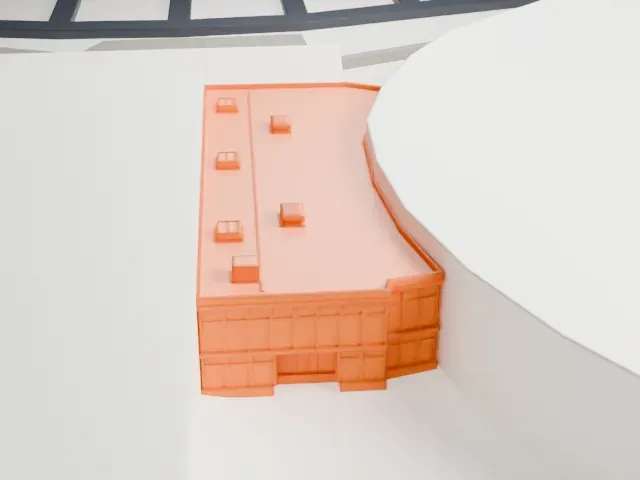
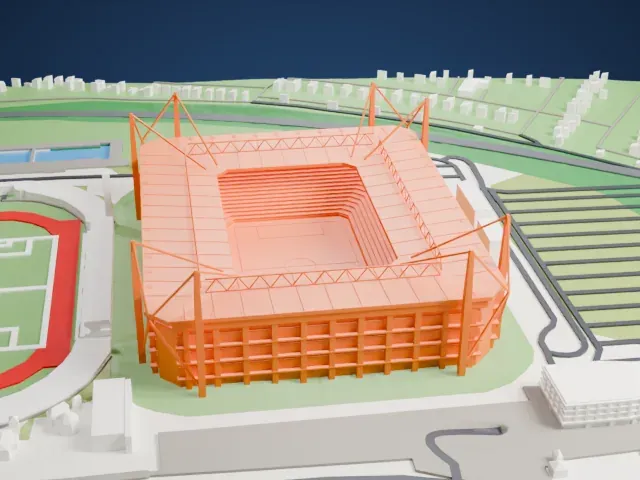 North
-
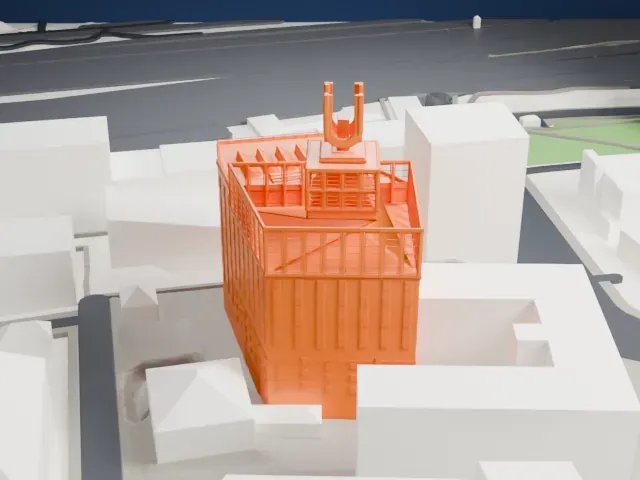
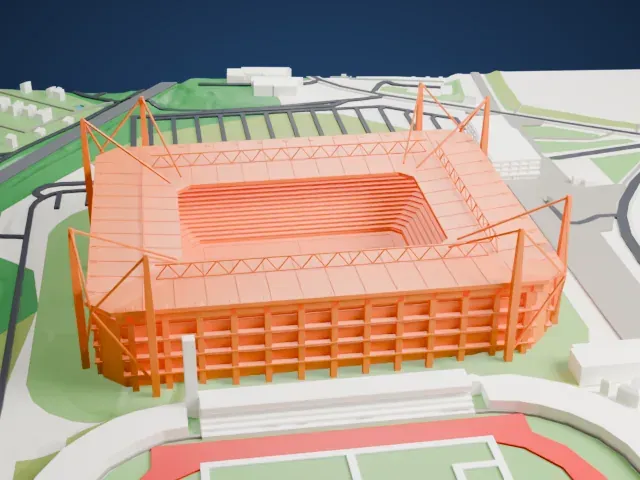 East
-
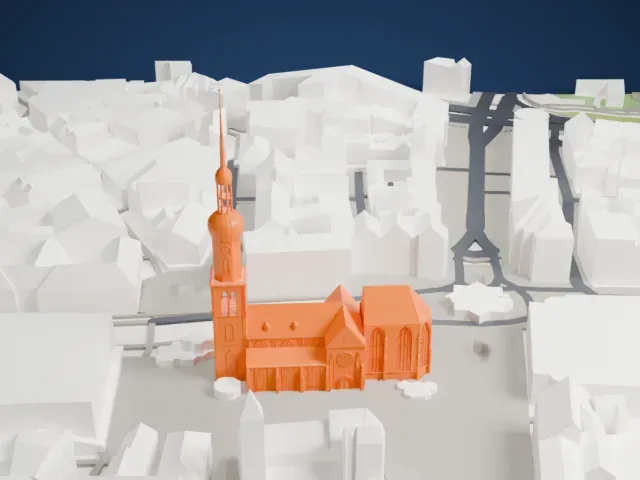
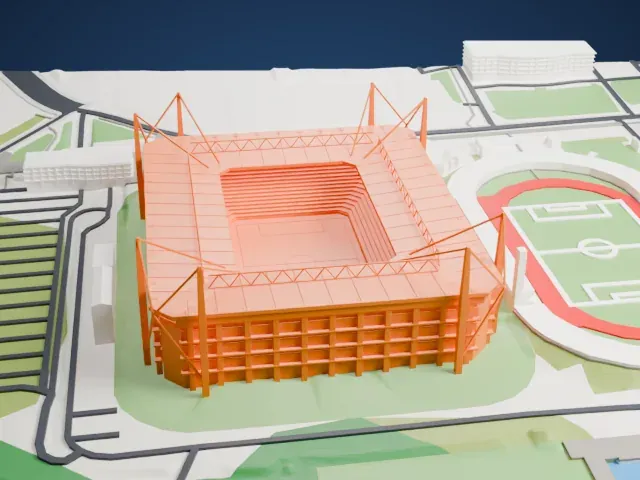 South
-
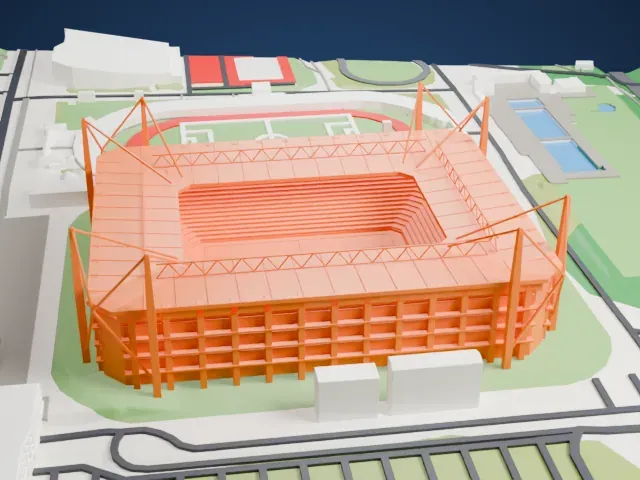 West
Copyright notice
The design of Signal Iduna Park may still be protected by copyright. It appears in the city models you make here, but it is not offered as a separate model.
- On a 160 mm print
- 18 mm
- Scale
- 1:3,750
18 mm tall on a 160 mm print
Make this print opens the generator on a 600 m square around the landmark. Buildings print at close to true scale, so the landmark grows with the print size.
- Thin pylons and roof trusses
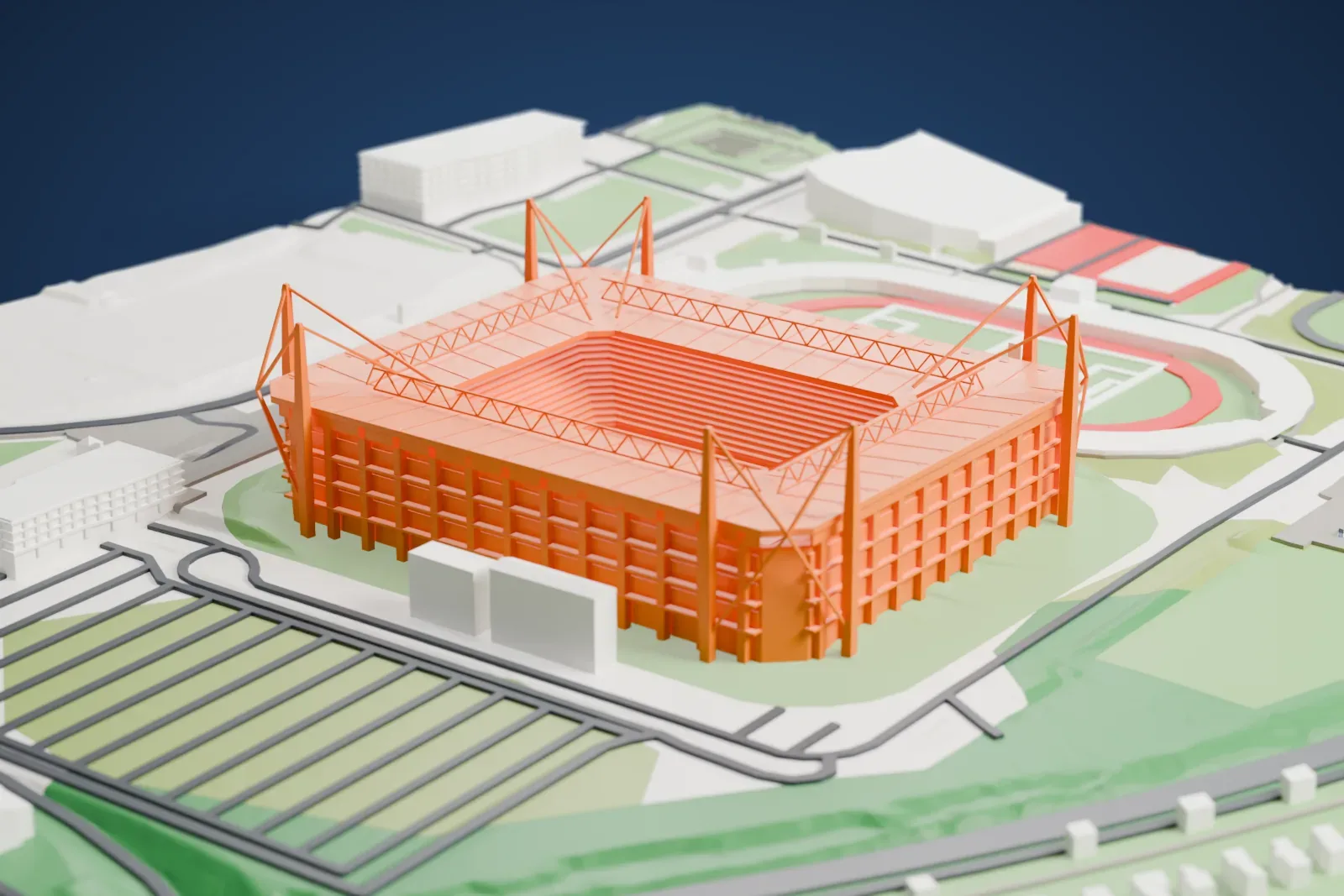
Slender corner pylons with cables and open roof trusses rise above the stands. Print friendly adapts these thin parts to the print scale; Full detail keeps them for large prints or a fine nozzle.
- Rows of facade ribs
Closely spaced ribs run around the outer walls and roof. Layers of 0.12 to 0.16 mm keep them crisp, and printing slowly with good cooling helps the tall pylon tips.
- Pick the detail for your nozzle
In the Buildings settings, set Landmark detail to Print friendly to adapt thin parts and small details to the print scale. Full detail keeps every modeled feature, for larger prints or a finer nozzle.
- Colors
Buildings, roads, water and ground arrive as separate filament slots in the 3MF. Signal Iduna Park takes the building color.
- File format
You get a 3MF for Bambu Studio, OrcaSlicer or PrusaSlicer. Any of them can save it as STL if you need one.
About Signal Iduna Park
Signal Iduna Park, also known as the Westfalenstadion, is a football stadium in Dortmund, in North Rhine-Westphalia, Germany, and the home ground of Borussia Dortmund. Its everyday name comes from Westphalia, a former Prussian province. It holds 81,365 for league games, standing and seated, and 65,829 for international games, seated only, making it Germany's largest stadium and the sixth-largest in Europe.
The stadium was planned when the club outgrew the neighboring Stadion Rote Erde. In 1971 Dortmund took over World Cup games from Cologne, and a cheaper 54,000-spectator football arena of pre-fabricated concrete sections was built instead of an oval with athletics facilities. Borussia Dortmund moved in on April 2, 1974. It hosted matches at the FIFA World Cups of 1974 and 2006 and the 2001 UEFA Cup final.
Four roofed grandstands face the pitch from each side. The east and west stands got a second tier after 1995, the north and south stands were enlarged later, and new corner stands were added for the 2006 World Cup, when exterior pylons painted yellow replaced the inner roof supports. The Südtribüne (South Bank), nicknamed The Yellow Wall, is the largest standing terrace in European football since governing bodies banned terraces.
About this model
Signal Iduna Park is one of more than 6,500 landmark models in Mini Skyline. They are made with AI, and each one is checked in its real surroundings before release. Each model is written as code from public descriptions, plans, photographs and aerial views used only as references; no image or third-party model is copied into it. Everything around it is built from OpenStreetMap and Overture map data. Rights in the building itself, its name and any brands on it are not granted by Mini Skyline; clear them separately before you sell prints. If you would rather print the shape from map data, turn off Landmark models in the Buildings settings.
Mini Skyline is not affiliated with, or endorsed by, the owners of this building or its names and marks.
Same skyline