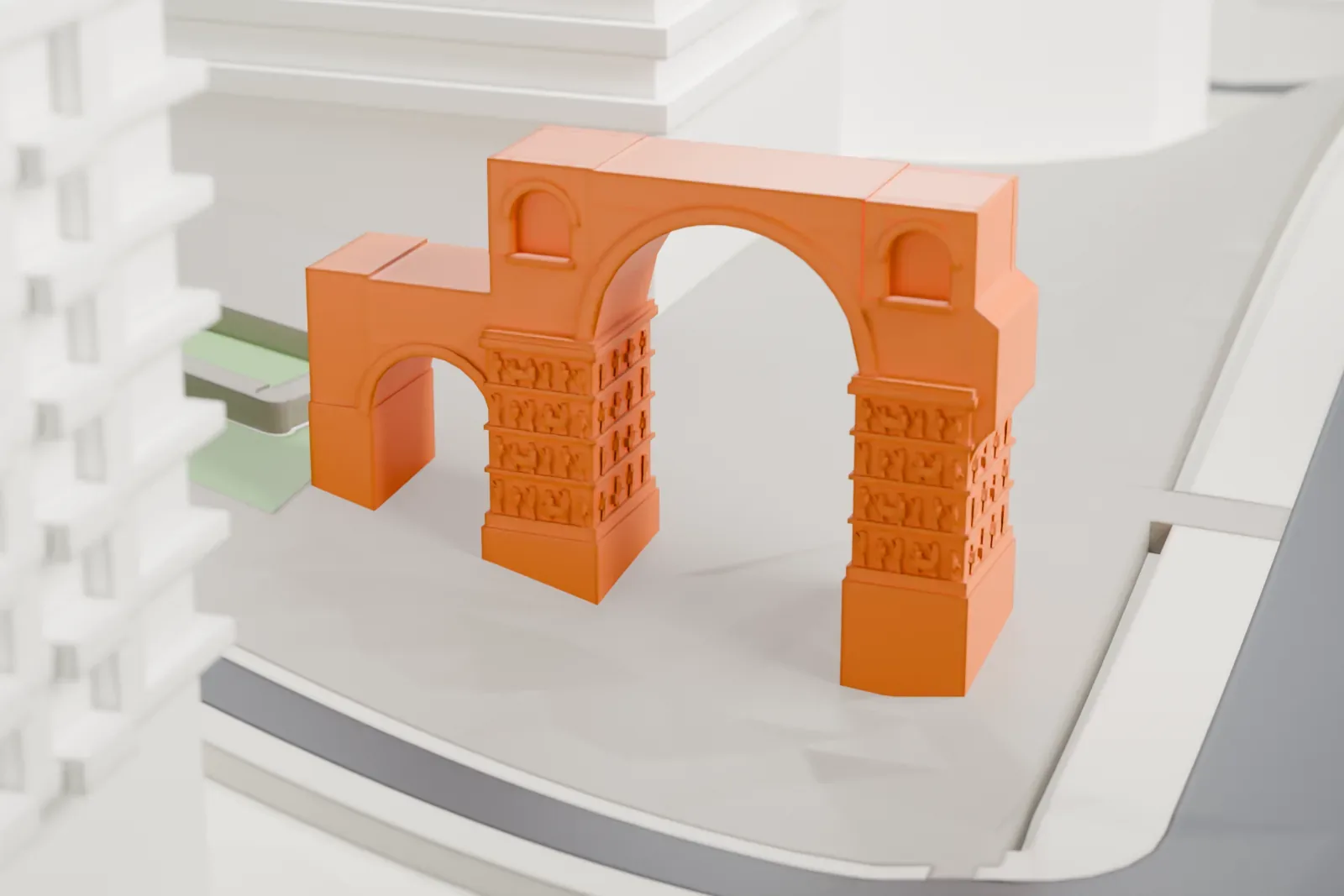
3D print the Arch of Galerius
A free, printable model of the Arch of Galerius and the streets and buildings around it, generated from real map data in your browser.
-
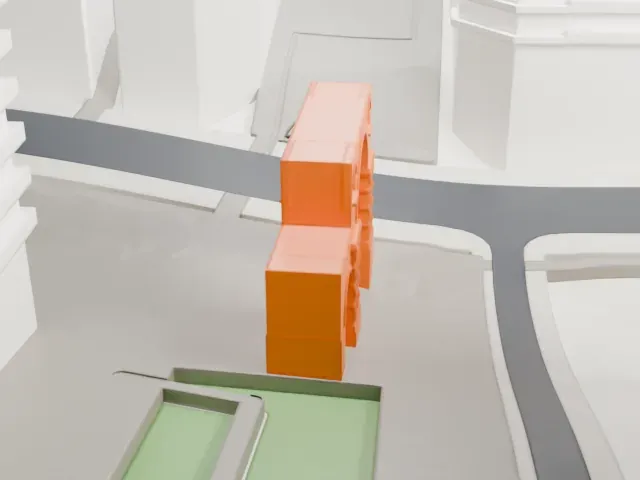 North
-
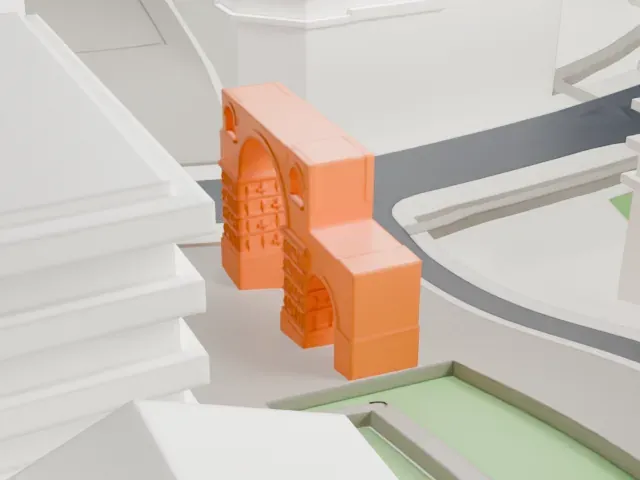 East
-
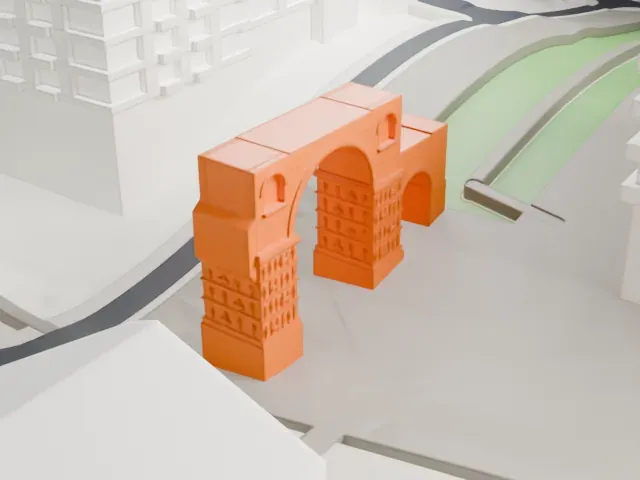 South
-
 West
The model you print
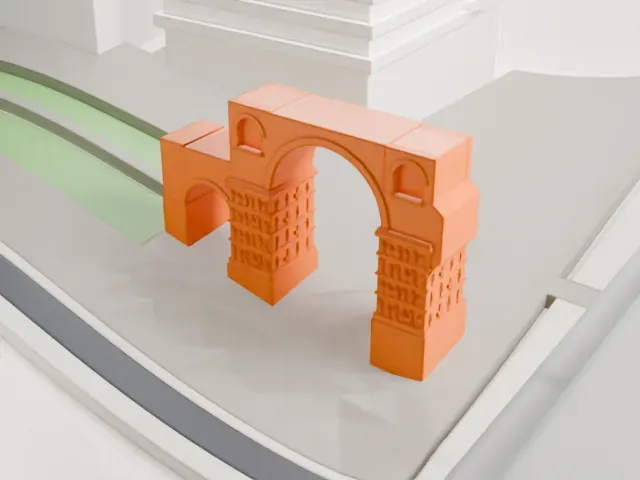
Arch of Galerius in 3D
The landmark on its own, at its size on a 160 mm print. Print friendly thickens thin parts for a 0.4 mm nozzle; Full detail keeps every part.
- On a 160 mm print
- 5 mm
- Scale
- 1:3,750
5 mm tall on a 160 mm print
Make this print opens the generator on a 600 m square around the landmark. Buildings print at close to true scale, so the landmark grows with the print size.
- Relief panels on the pillars
The pillars carry rows of small carved figures. Full detail keeps them on a larger print; Print friendly simplifies them at small sizes. A 0.12-0.16 mm layer height helps.
- Open arch passages
The central and side arch openings are small at this scale. A bigger print keeps the openings clear, and slower printing helps the curved tops of the arches.
- One piece with the ground
The Arch of Galerius is joined to the ground in the exported file, and the four-side check found no floating parts, so nothing needs gluing.
- Pick the detail for your nozzle
In the Buildings settings, set Landmark detail to Print friendly to adapt thin parts and small details to the print scale. Full detail keeps every modeled feature, for larger prints or a finer nozzle.
- Colors
Buildings, roads, water and ground arrive as separate filament slots in the 3MF. The Arch of Galerius takes the building color.
- File format
You get a 3MF for Bambu Studio, OrcaSlicer or PrusaSlicer. Any of them can save it as STL if you need one.
About the Arch of Galerius
The Arch of Galerius, also called the Kamara, is an early fourth-century monument in Thessaloniki, in northern Greece. It sits where Egnatia and Dimitriou Gounari streets cross. The emperor Galerius commissioned it, together with the neighboring Rotunda, for an imperial precinct tied to his palace. UNESCO inscribed both monuments on its World Heritage List in 1988.
Construction took place in 298 and 299 AD, and the arch was dedicated in 303 AD. It marks a victory by the tetrarch Galerius against the Sassanids in the Battle of Satala, along with the taking of Ctesiphon, their capital, in 298. The design was an octopylon, a gateway with eight pillars forming a triple arch, with a rubble masonry core under a facing of brick and then marble relief panels. The central opening measured 9.7 m across and 12.5 m tall, and the secondary openings 4.8 m across and 6.5 m tall.
Only three of the eight pillars survive, on the northwestern side, plus portions of the arches' masonry cores above them. The two pillars beside the central passage keep their sculpted marble slabs, with four stacked registers of relief on each pillar. At some point the reason the arch was built was forgotten, and Karl Frederik Kinch identified its dedication to Galerius in a monograph published in 1890.
About this model
The Arch of Galerius is one of more than 6,500 landmark models in Mini Skyline. They are made with AI, and each one is checked in its real surroundings before release. Each model is written as code from public descriptions, plans, photographs and aerial views used only as references; no image or third-party model is copied into it. Everything around it is built from OpenStreetMap and Overture map data. Rights in the building itself, its name and any brands on it are not granted by Mini Skyline; clear them separately before you sell prints. If you would rather print the shape from map data, turn off Landmark models in the Buildings settings.
Mini Skyline is not affiliated with, or endorsed by, the owners of this building or its names and marks.
Same skyline