3D print the Aula Palatina
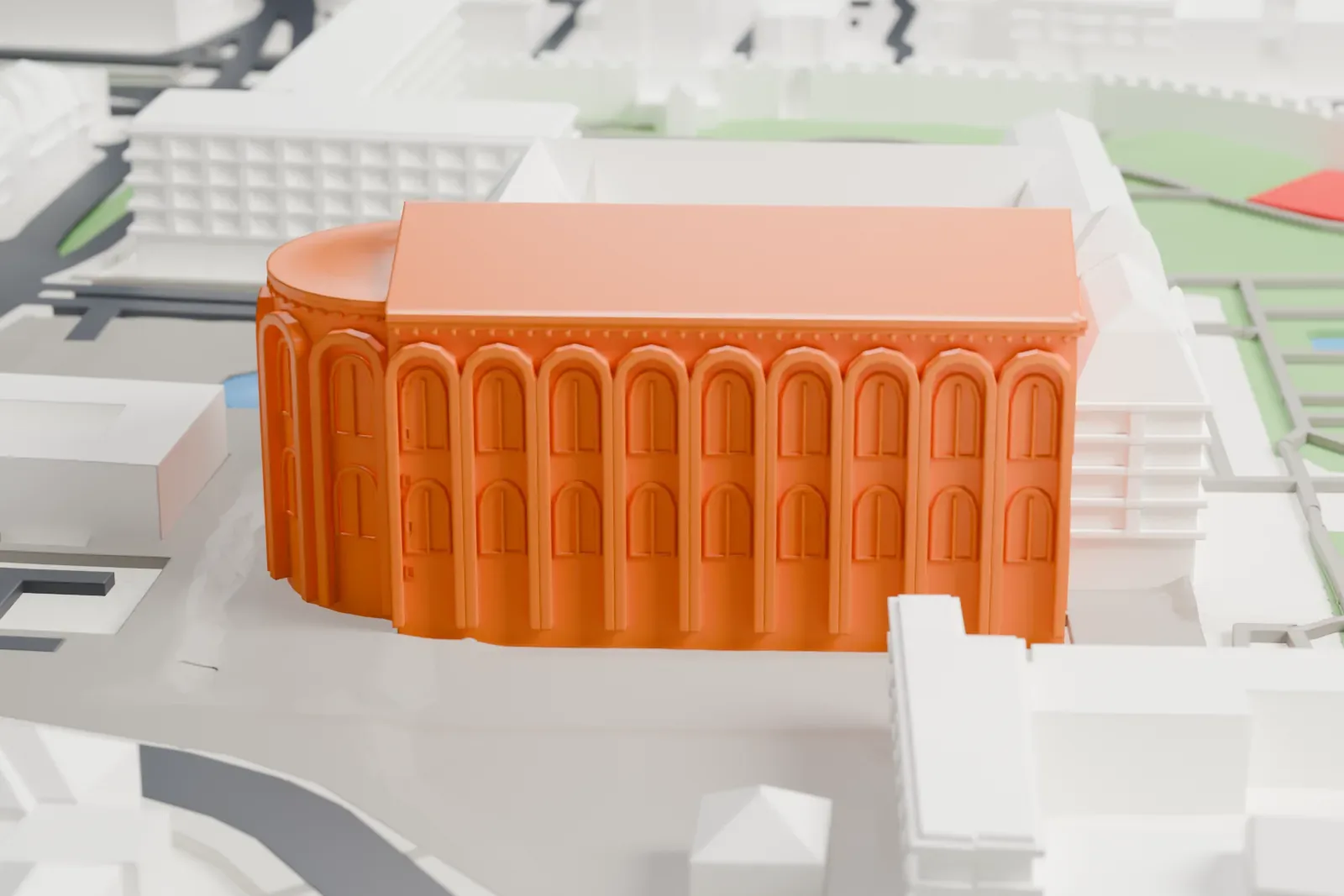
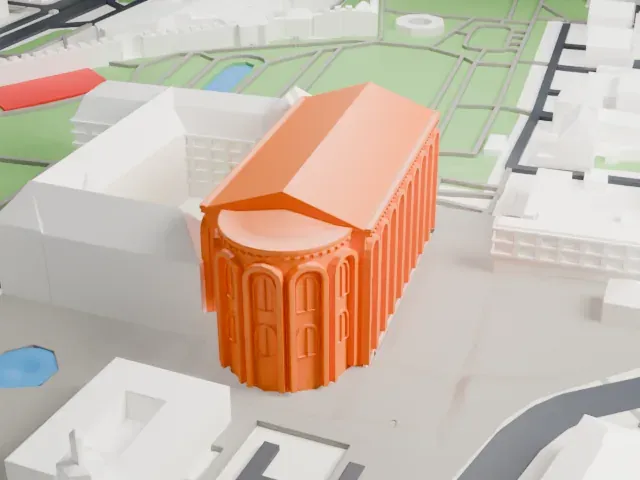
A free, printable model of the Aula Palatina, a tall hall with a rounded apse and arched wall recesses, with the park paths and buildings around it, generated from real map data in your browser.
-
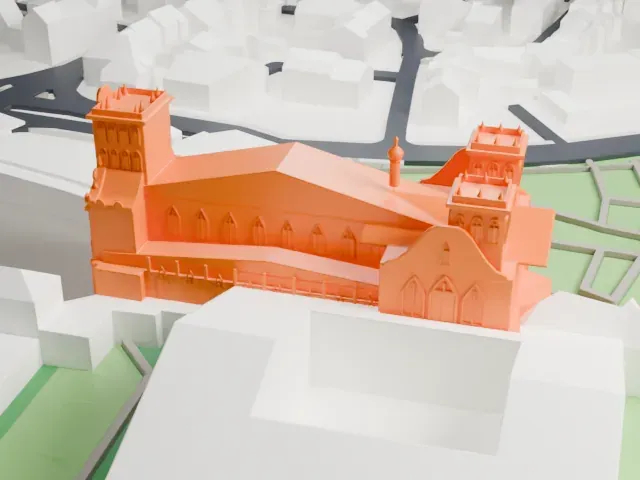
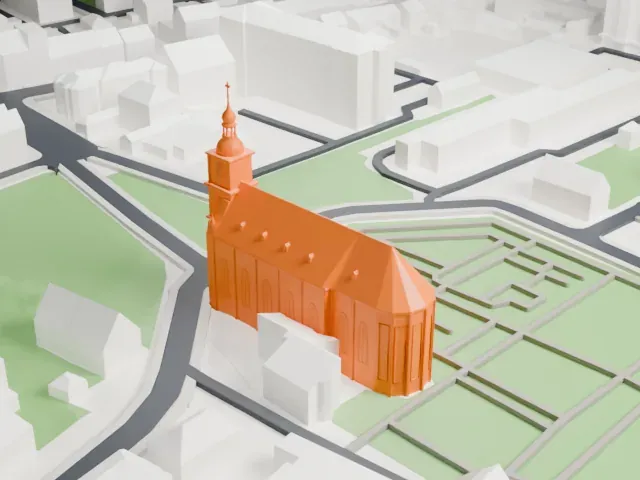
 North
-
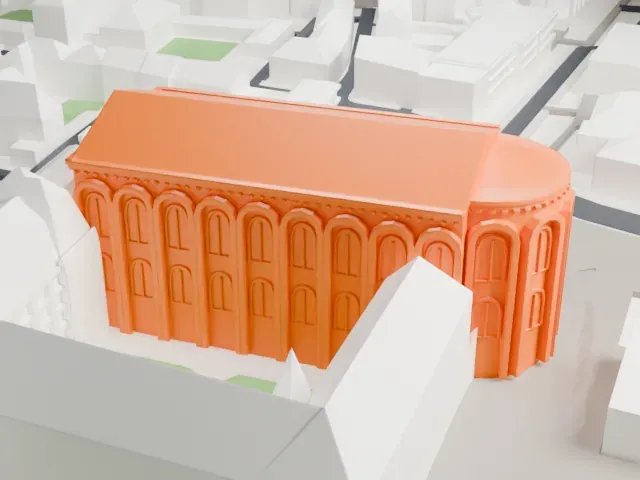 East
-
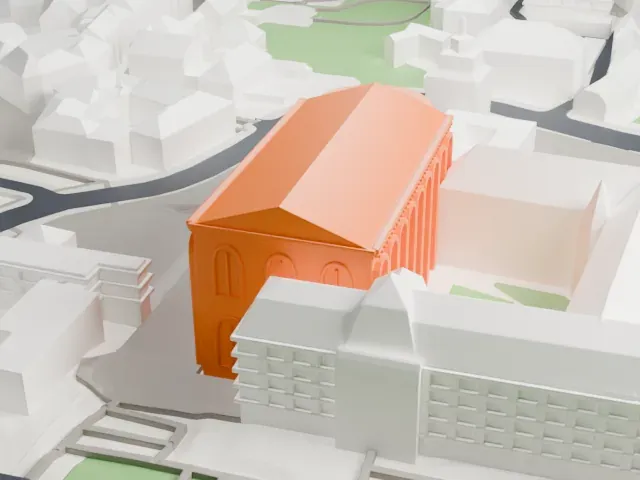 South
-
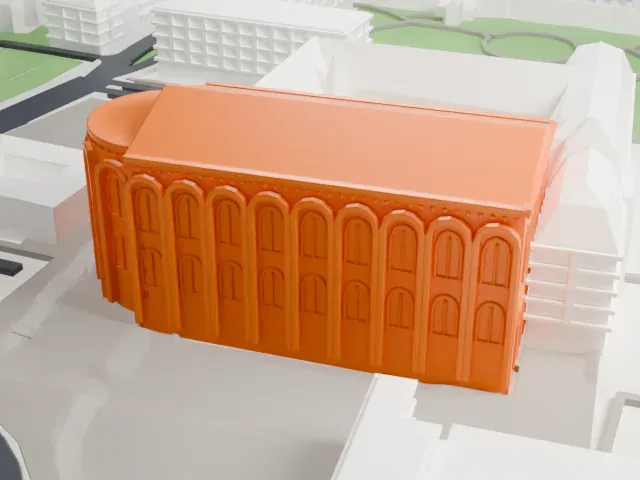 West
The model you print
Aula Palatina in 3D
The landmark on its own, at its size on a 160 mm print. Print friendly thickens thin parts for a 0.4 mm nozzle; Full detail keeps every part.
- Real height
- 33 m
- On a 160 mm print
- 10 mm
- Scale
- 1:3,750
33 m of the Aula Palatina, 10 mm on your shelf
Make this print opens the generator on a 600 m square around the landmark. Buildings print at close to true scale, so the landmark grows with the print size.
- Tall arched recesses
Rows of tall, narrow arched recesses run along the walls and around the curved apse. A larger print size keeps them crisp; Print friendly adapts them, and Full detail keeps every one.
- One piece with the ground
The Aula Palatina is joined to the ground in the exported file, and the four-side check found no floating parts, so nothing needs gluing.
- Pick the detail for your nozzle
In the Buildings settings, set Landmark detail to Print friendly to adapt thin parts and small details to the print scale. Full detail keeps every modeled feature, for larger prints or a finer nozzle.
- Colors
Buildings, roads, water and ground arrive as separate filament slots in the 3MF. The Aula Palatina takes the building color.
- File format
You get a 3MF for Bambu Studio, OrcaSlicer or PrusaSlicer. Any of them can save it as STL if you need one.
About the Aula Palatina
The Aula Palatina, also called the Basilica of Constantine, stands in Trier, Germany. Constructed from AD 300 to 310 during the rule of Constantius Chlorus and of Constantine the Great, it is an early Christian structure and also a Roman palace basilica. Its congregation, part of the Evangelical Church in the Rhineland, uses it as the Church of the Redeemer. It has the largest surviving hall from classical antiquity, 67 m long, 26.05 m wide and 33 m high. In 1986 it became part of a UNESCO World Heritage Site with other Roman monuments of Trier, the Cathedral of St. Peter and the Church of Our Lady.
The basilica follows the standard plan of earlier basilicas, with no columns inside and an open, box-like shape, plus a transverse vestibule that recalls a narthex. Solid brick formed its walls, black-and-white marble covered the floors, and a hypocaust heated floors and walls. It began as part of a palace complex with smaller buildings attached.
In the Middle Ages it was the residence of the Bishop of Trier, and the apse became living quarters. The 19th century brought a restoration to its original Roman state, ordered by Frederick William IV of Prussia, and in 1856 it became a Protestant church. It burned in an air raid in 1944; after the war the 19th-century inner decorations were not rebuilt, so the brick walls are visible inside.
About this model
The Aula Palatina is one of more than 6,500 landmark models in Mini Skyline. They are made with AI, and each one is checked in its real surroundings before release. Each model is written as code from public descriptions, plans, photographs and aerial views used only as references; no image or third-party model is copied into it. Everything around it is built from OpenStreetMap and Overture map data. Rights in the building itself, its name and any brands on it are not granted by Mini Skyline; clear them separately before you sell prints. If you would rather print the shape from map data, turn off Landmark models in the Buildings settings.
Mini Skyline is not affiliated with, or endorsed by, the owners of this building or its names and marks.
Keep exploring