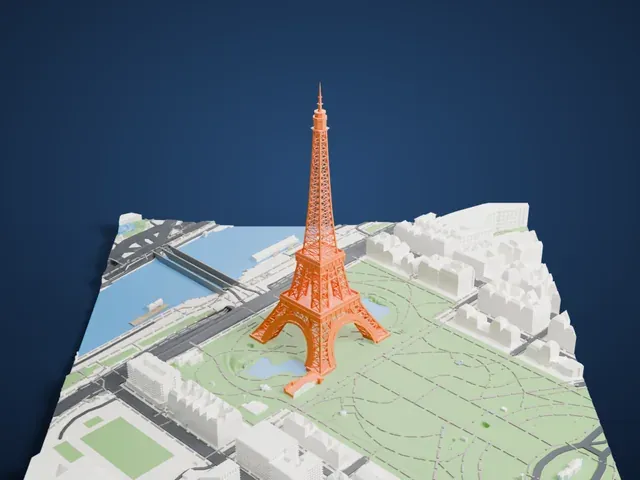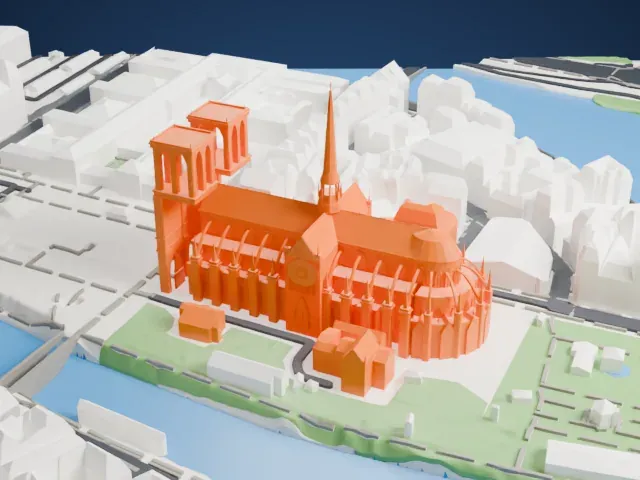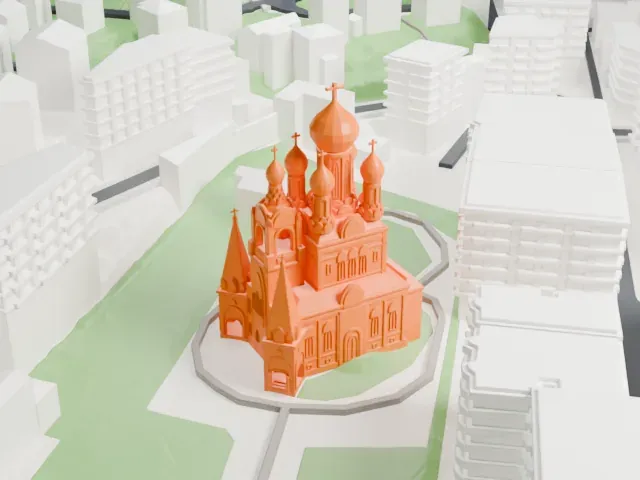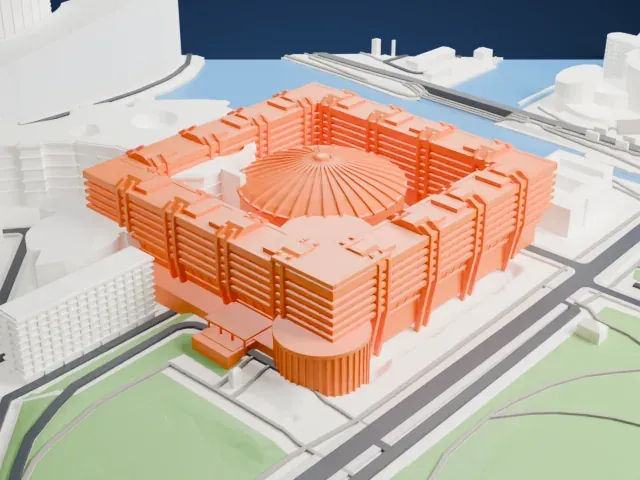
3D print Château de Saumur
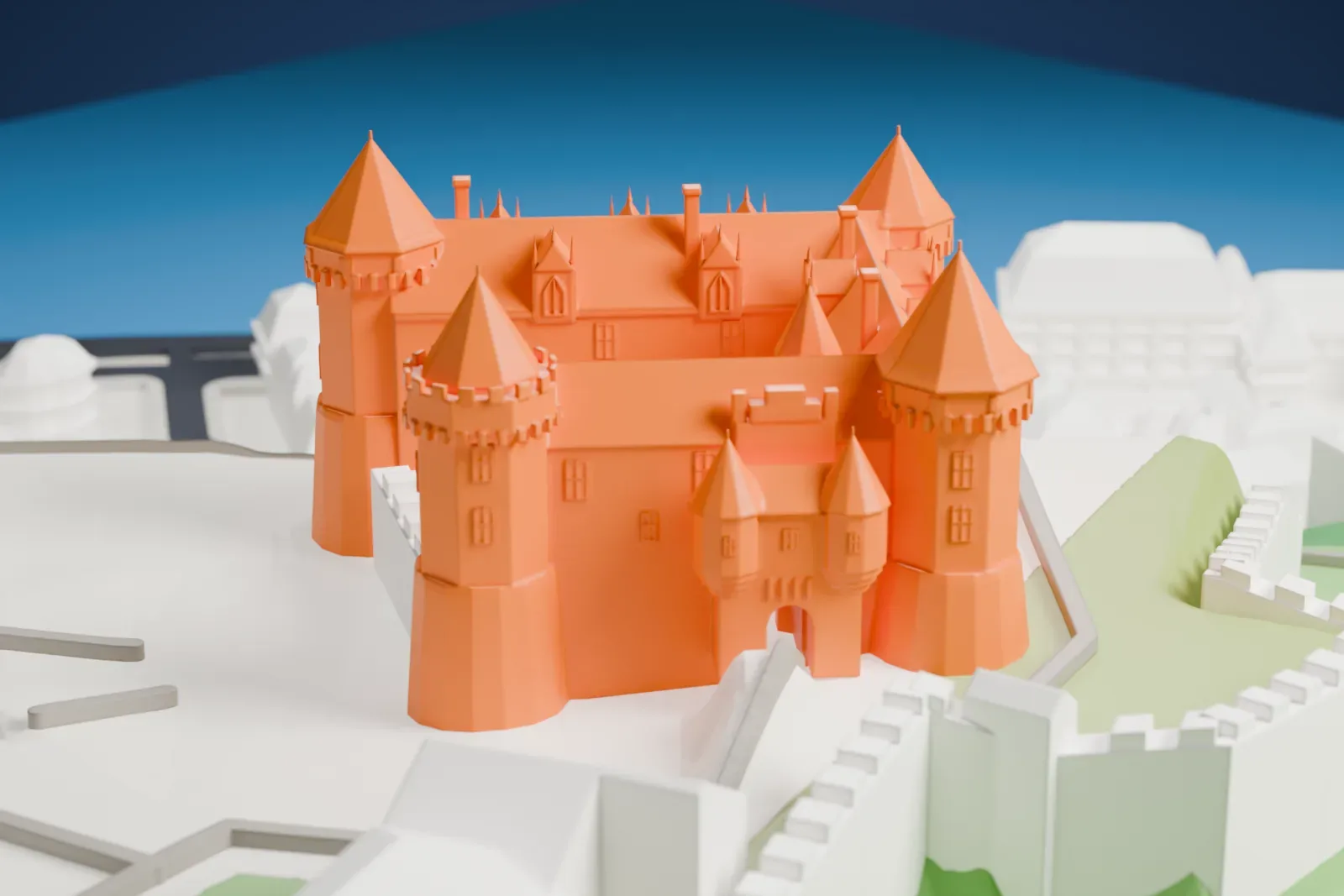
A free, printable model of the Château de Saumur with its corner towers and pointed roofs, set inside its surrounding walls and the buildings of the town below, generated from real map data in your browser.
-
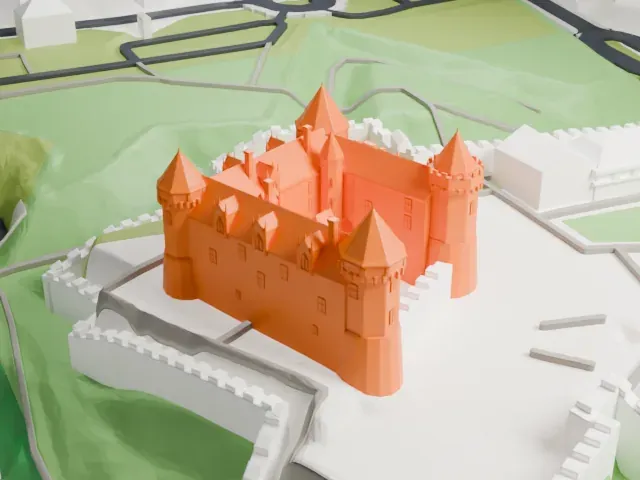 North
-
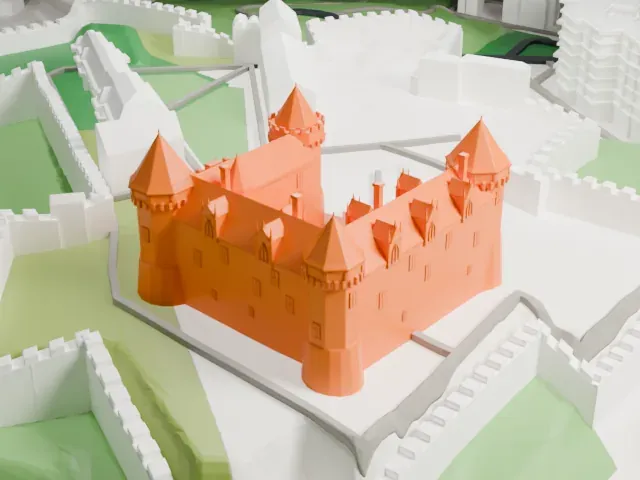 East
-
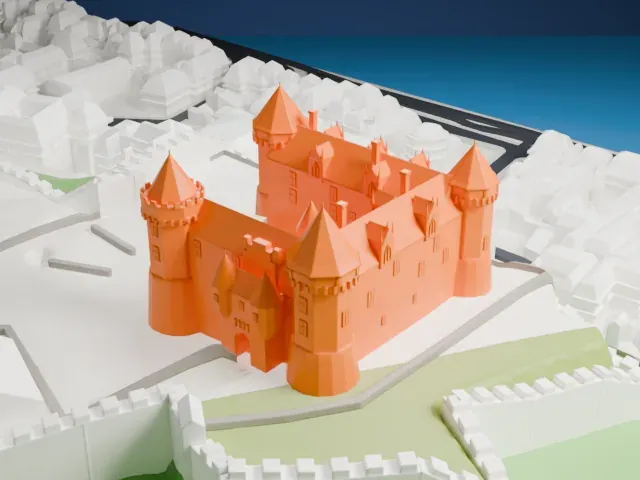 South
-
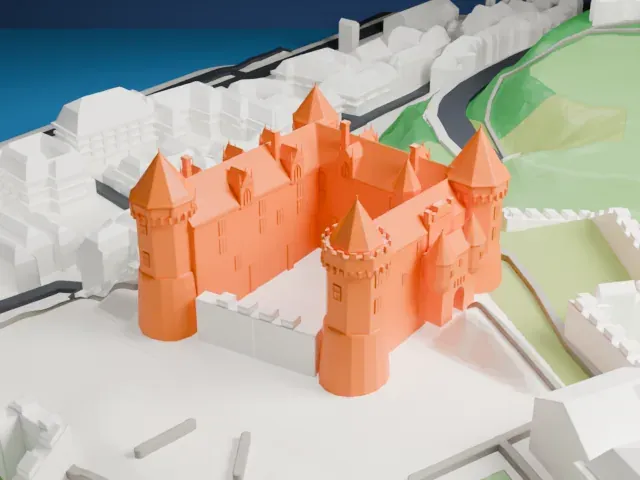 West
The model you print
Château de Saumur in 3D
The landmark on its own, at its size on a 160 mm print. Print friendly thickens thin parts for a 0.4 mm nozzle; Full detail keeps every part.
- On a 160 mm print
- 9 mm
- Scale
- 1:3,750
9 mm tall on a 160 mm print
Make this print opens the generator on a 600 m square around the landmark. Buildings print at close to true scale, so the landmark grows with the print size.
- Pointed tower roofs and small spires
Cone-shaped tower roofs and little dormer spires rise above the main wings. Print slowly with good cooling for those tips; Print friendly thickens the thinnest points, and Full detail keeps them for larger prints.
- Battlements around the tower tops
Fine notched battlements ring the towers and surrounding walls. A layer height of 0.12 to 0.16 mm and a larger print size help keep them crisp.
- One piece with the ground
Château de Saumur is joined to the ground in the exported file, and the four-side check found no floating parts, so nothing needs gluing.
- Pick the detail for your nozzle
In the Buildings settings, set Landmark detail to Print friendly to adapt thin parts and small details to the print scale. Full detail keeps every modeled feature, for larger prints or a finer nozzle.
- Colors
Buildings, roads, water and ground arrive as separate filament slots in the 3MF. Château de Saumur takes the building color.
- File format
You get a 3MF for Bambu Studio, OrcaSlicer or PrusaSlicer. Any of them can save it as STL if you need one.
About Château de Saumur
Saumur's château began as a castle and was later developed into a château, in the town of Saumur in France's Maine-et-Loire département. Theobald I, Count of Blois, first built it in the 10th century as a fortified stronghold against attacks by the Normans. From its height it looks over the point where the Loire and Thouet rivers meet. In 1026 Fulk Nerra, count of Anjou, took possession and left it to his Plantagenet heirs. After its destruction in 1067, Henry II of England rebuilt the castle in the later 12th century.
Philip II of France seized the castle in 1203 and added Saumur to his royal domain, and it soon became an official royal residence. During the 1360s Louis I of Anjou replaced the round towers with octagonal ones that survive in today's château. The Duke of Berry's illuminated manuscript Tres Riches Heures shows the château as it appeared in 1410, on its September page. The castle originally had four wings enclosing the courtyard, and one of them fell apart in the 1600s.
It became an army barracks in 1621, and later a state prison under Napoleon Bonaparte. The town purchased it from the state government in 1906 and turned it into a museum. Reflecting the horse-riding tradition of the Saumur area and its famous Cadre Noir, the château also houses a Museum of the Horse. Another collection is the Musée de la Figurine-Jouet, with very old toys and figurines. The Ministry of Culture has listed it as a monument historique since 1862.
About this model
Château de Saumur is one of more than 6,500 landmark models in Mini Skyline. They are made with AI, and each one is checked in its real surroundings before release. Each model is written as code from public descriptions, plans, photographs and aerial views used only as references; no image or third-party model is copied into it. Everything around it is built from OpenStreetMap and Overture map data. Rights in the building itself, its name and any brands on it are not granted by Mini Skyline; clear them separately before you sell prints. If you would rather print the shape from map data, turn off Landmark models in the Buildings settings.
Mini Skyline is not affiliated with, or endorsed by, the owners of this building or its names and marks.
Keep exploring