3D print the Grand Canyon Depot
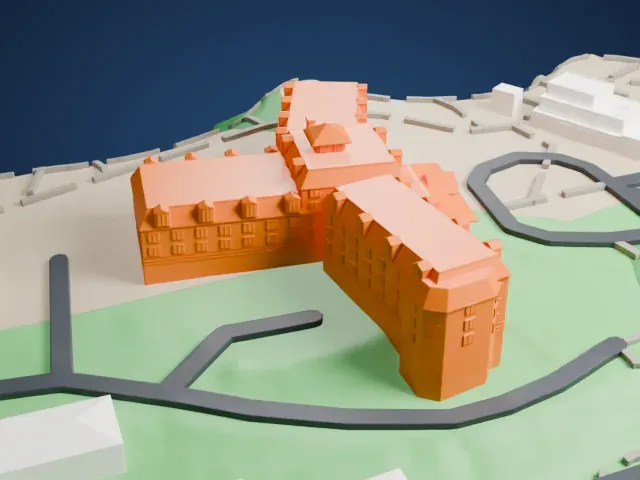
A free, printable model of the Grand Canyon Depot, a small log building, and the grassy ground and wide paved areas around it, generated from real map data in your browser.
Free, in your browser. Exports a slicer-ready 3MF.
About the Grand Canyon Depot
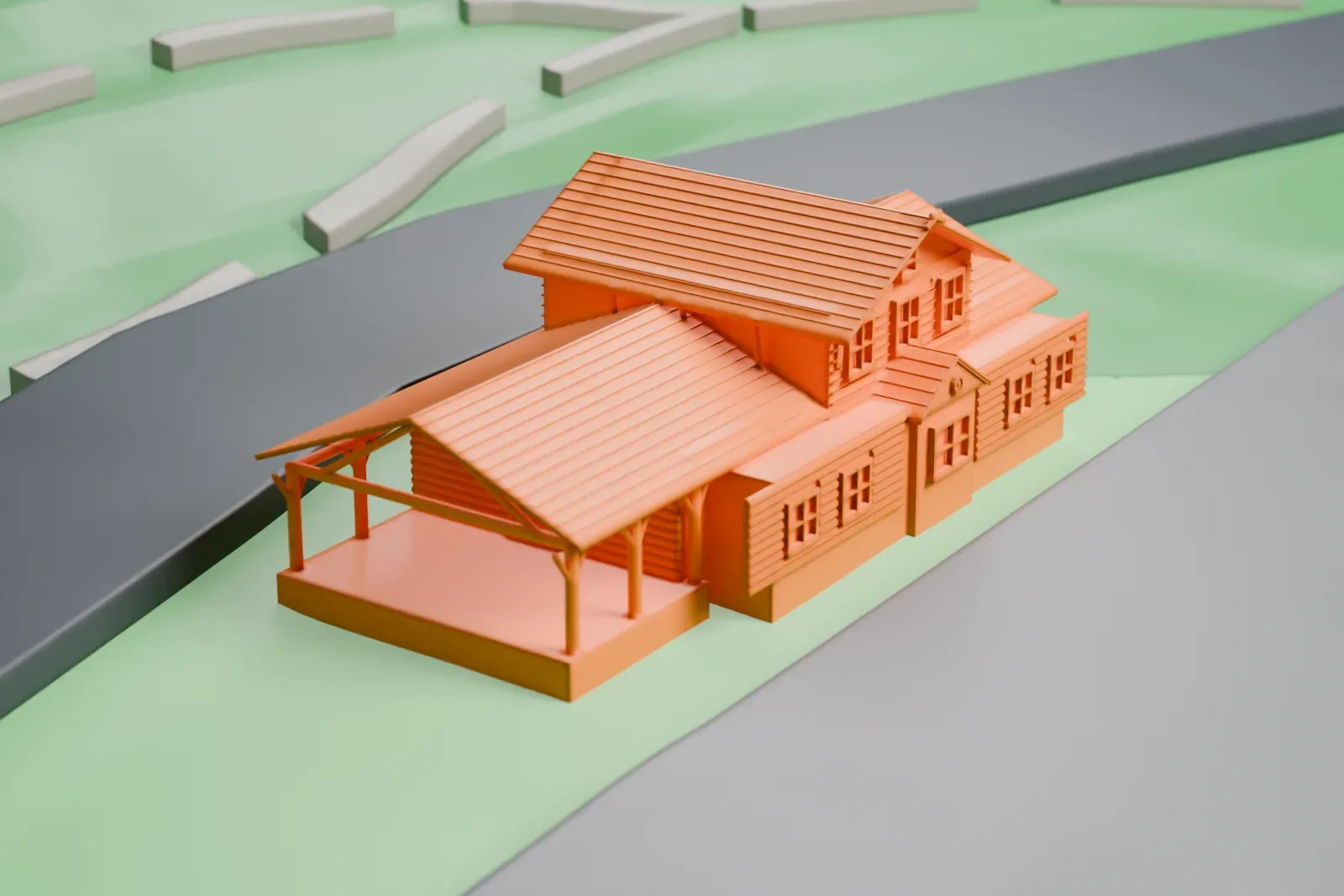
The Grand Canyon Depot dates from 1909–10, when the Santa Fe Railway, formally the Atchison, Topeka and Santa Fe, built it on the Grand Canyon's South Rim, in the area of Grand Canyon National Park. It goes by Grand Canyon Railroad Station as well. It is among three surviving railroad depots in the United States that are built chiefly of logs. The depot stands within 100 m (330 ft) of the canyon rim, across from the El Tovar Hotel, which the railroad also built.
The Santa Fe Railway secured rights to turn the South Rim into a destination resort in the early twentieth century, before the area became a national park, and its branch line was the sole railroad route to a destination inside a national park. The tracks reached the South Rim in 1901, thanks to the Grand Canyon Railway, a Santa Fe subsidiary. Once the El Tovar Hotel was finished in 1905, a more suitable terminus was needed. The railway's architect, Francis W. Wilson, designed the new station directly opposite the hotel, using materials that echoed it. A log building was a one-time choice in his career.
The depot is a 2½-story wood building of about 280 m2 (3,000 sq ft), mostly log, with a framed second floor. Its front faces south, turned away from the canyon, under a broad gable roof, and the second story overhangs the first on heavy vertical log posts. Passenger service first ended in 1968, and the National Park Service acquired the property in 1982. On September 6, 1974, it was entered in the National Register of Historic Places. National Historic Landmark status followed on May 28, 1987.
How it prints
Make this print opens the generator on a 600 m square around the landmark. Buildings print at close to true scale, so the landmark grows with the print size.
| Print size | Landmark height | Scale |
|---|---|---|
| 160 mm default | 3 mm | 1:3,750 |
| 200 mm | 4 mm | 1:3,000 |
| 256 mm | 4 mm | 1:2,344 |
-
 North
North
-
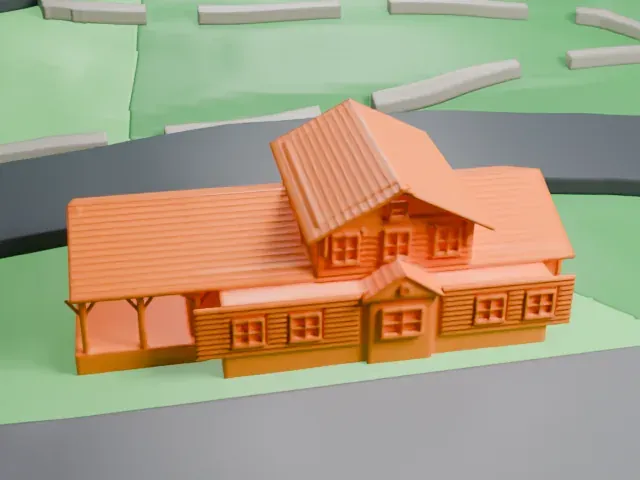
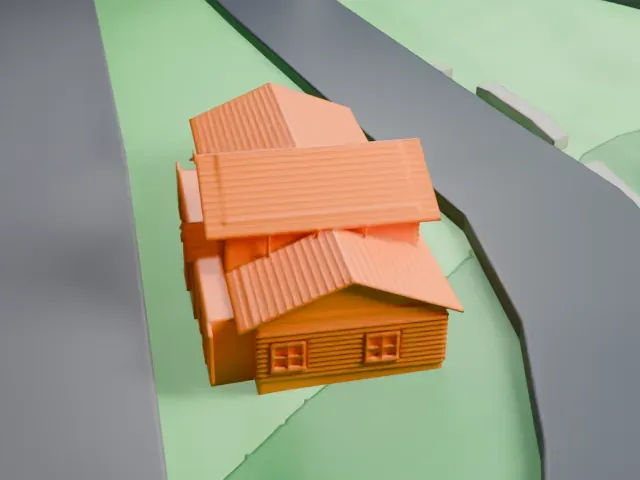 East
East
-
 South
South
-
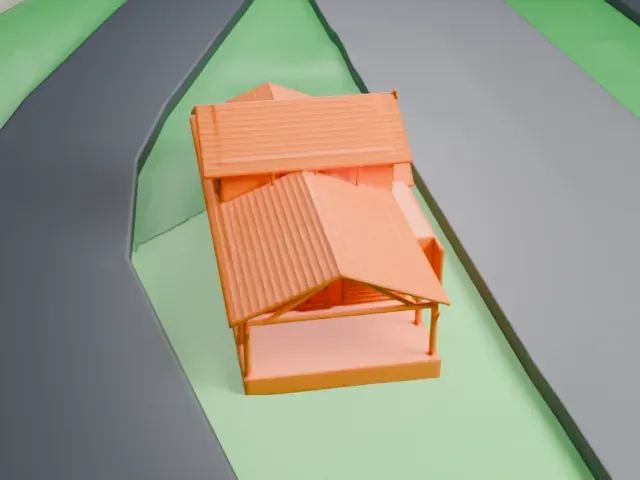 West
West
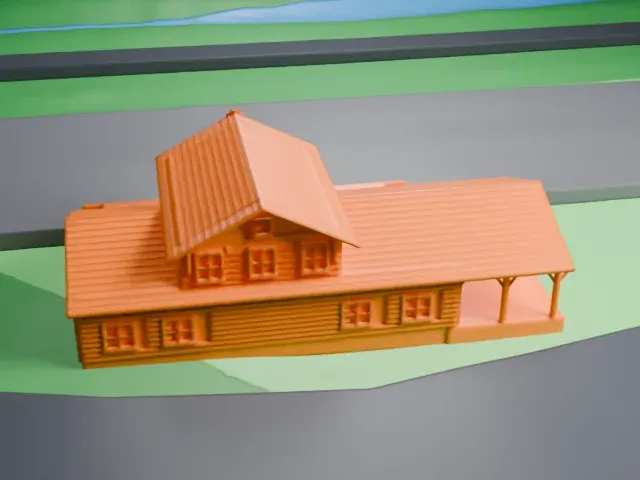
- Stacked log walls
- The walls are made of horizontal logs, and the roofs have fine plank lines. Print friendly adapts these fine lines to the print scale; Full detail keeps them, and a larger print size shows more of them.
- Thin porch posts
- The porch roof rests on thin vertical posts, and the upper story overhangs the one below. Print slowly with good cooling, and use layers of 0.12–0.16 mm to keep the posts crisp.
- One piece with the ground
- The Grand Canyon Depot is joined to the ground in the exported file, and the four-side check found no floating parts, so nothing needs gluing.
- Pick the detail for your nozzle
- In the Buildings settings, set Landmark detail to Print friendly to adapt thin parts and small details to the print scale. Full detail keeps every modeled feature, for larger prints or a finer nozzle.
- Colors
- Buildings, roads, water and ground arrive as separate filament slots in the 3MF. The Grand Canyon Depot takes the building color.
- File format
- You get a 3MF for Bambu Studio, OrcaSlicer or PrusaSlicer. Any of them can save it as STL if you need one.
About this model
The Grand Canyon Depot is one of more than 2,300 landmark models in Mini Skyline. They are made with AI, and each one is checked from four sides in its real surroundings before release. Everything around it is built from OpenStreetMap and Overture map data. If you would rather print the shape from map data, turn off Landmark models in the Buildings settings.
Common questions
Is there a Grand Canyon Depot STL I can download?
Mini Skyline builds the file for you in your browser and exports 3MF, which every major slicer opens. If you need an STL, open the 3MF in your slicer and export it from there.
How big can I print it?
Any print size from 40 mm across. The Grand Canyon Depot grows with the print: about 3 mm tall on the default 160 mm print. For a model larger than your printer bed, Project Mode splits the area into tiles.
Is it free?
Yes. Generation runs in your browser, with no account and nothing behind a paywall.