3D print Hearst Castle
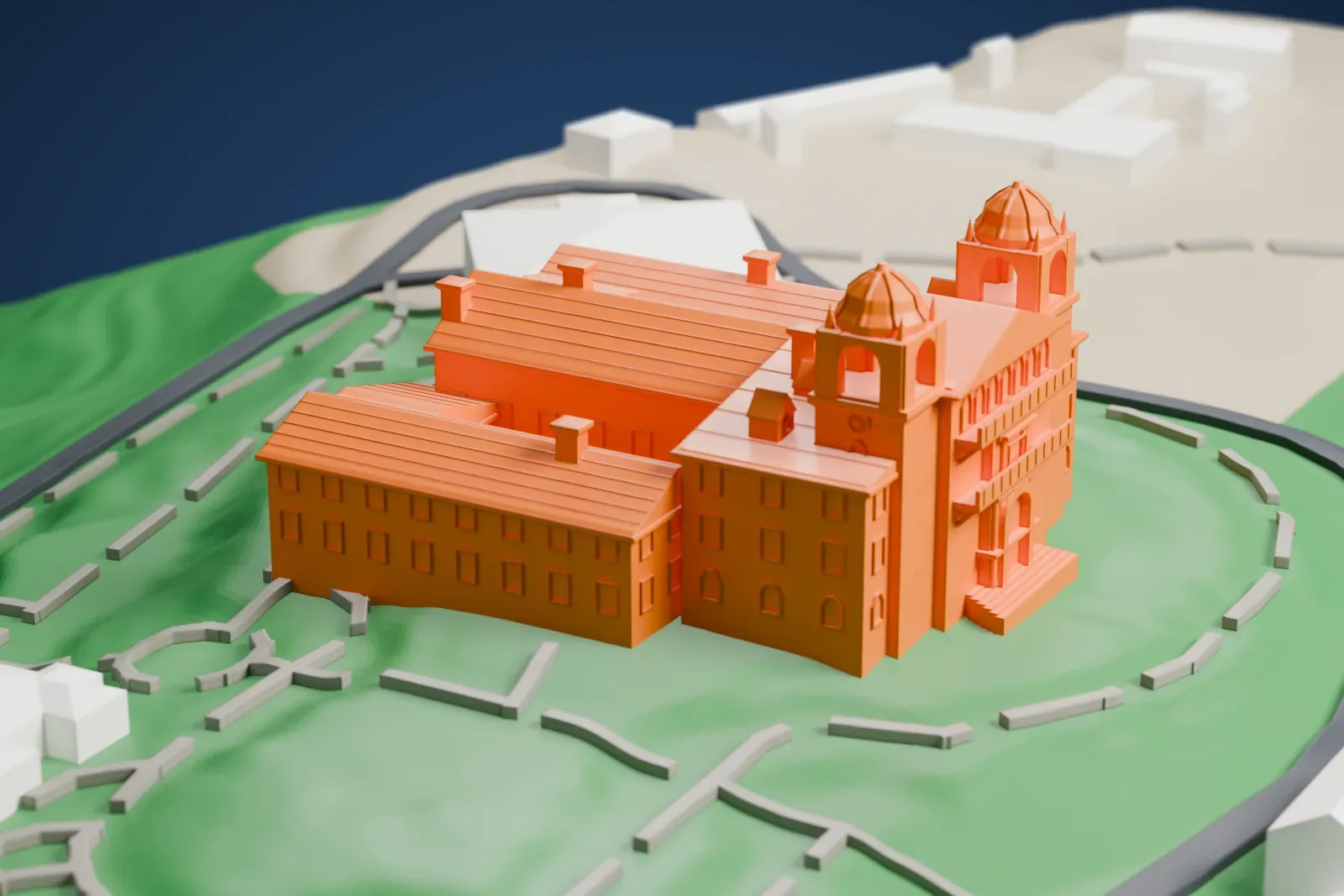
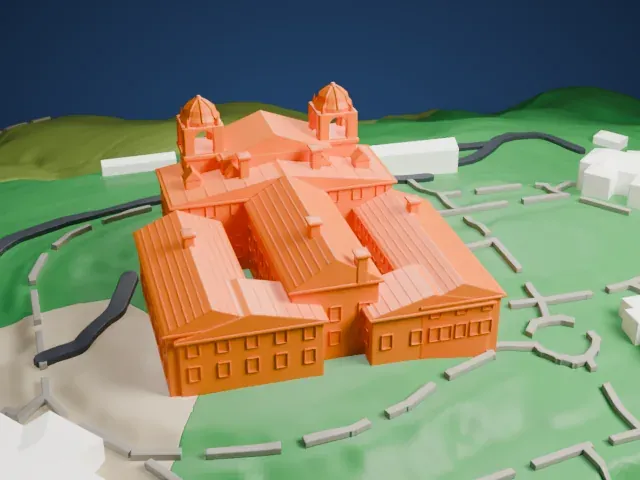
A free, printable model of Hearst Castle and the green hillside, winding paths and smaller buildings around it, generated from real map data in your browser.
-
 North
-
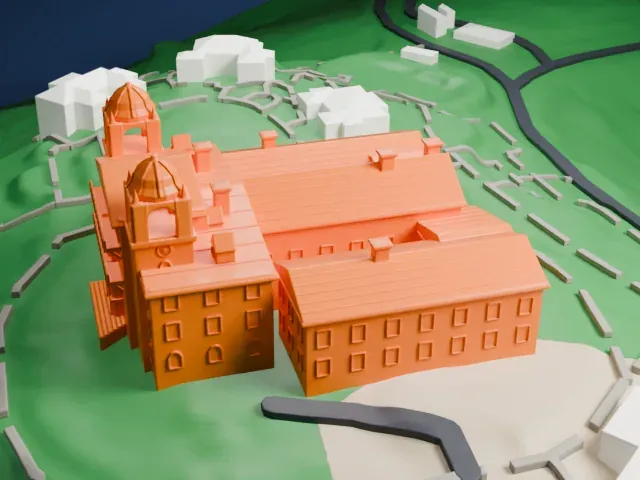 East
-
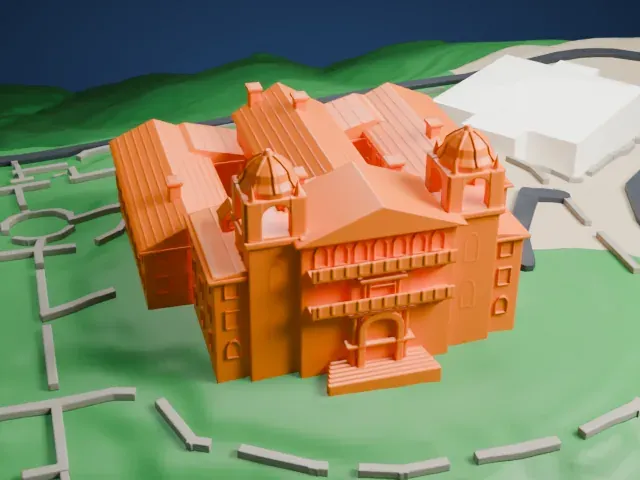 South
-
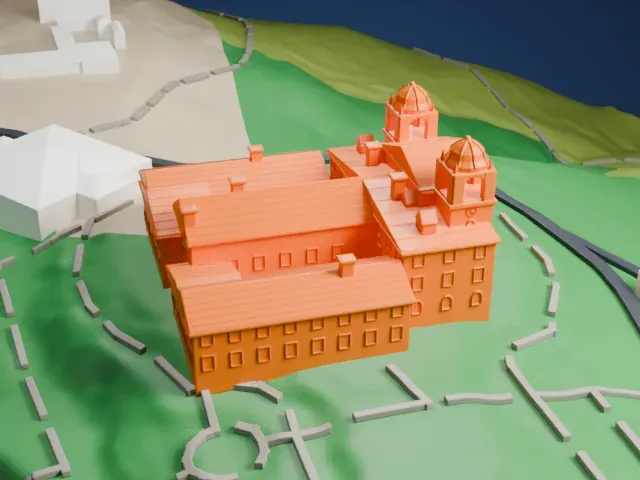 West
- On a 160 mm print
- 10 mm
- Scale
- 1:3,750
10 mm tall on a 160 mm print
Make this print opens the generator on a 600 m square around the landmark. Buildings print at close to true scale, so the landmark grows with the print size.
- Domed bell towers
Two bell towers with domed tops and open arches rise over the entrance front. Print friendly adapts thin parts to the print scale, Full detail keeps them on larger prints, and 0.12 to 0.16 mm layers keep the domes smooth.
- Roof ridges and chimneys
Chimneys, ridged roofs and the ornate doorway add fine detail across the building. A larger print size keeps them readable; at small sizes they can soften.
- One piece with the ground
Hearst Castle is joined to the ground in the exported file, and the four-side check found no floating parts, so nothing needs gluing.
- Pick the detail for your nozzle
In the Buildings settings, set Landmark detail to Print friendly to adapt thin parts and small details to the print scale. Full detail keeps every modeled feature, for larger prints or a finer nozzle.
- Colors
Buildings, roads, water and ground arrive as separate filament slots in the 3MF. Hearst Castle takes the building color.
- File format
You get a 3MF for Bambu Studio, OrcaSlicer or PrusaSlicer. Any of them can save it as STL if you need one.
About Hearst Castle
Hearst Castle, formally named La Cuesta Encantada, or "The Enchanted Hill" in Spanish, is an estate in San Simeon on California's Central Coast. The publishing tycoon William Randolph Hearst and his architect Julia Morgan conceived it, and construction ran from 1919 to 1947. It serves as a museum and California State Park, and it carries designations as a California Historical Landmark and a National Historic Landmark.
George Hearst, William Randolph's father, bought the original estate, 40,000 acres (63 sq mi), in 1865, and the family used Camp Hill, the future castle site, for camping vacations during his youth. Soon after his mother Phoebe died in 1919, he commissioned Julia Morgan to build a more comfortable place on the hill. Morgan and Hearst collaborated closely for more than twenty years. Building went on almost continually from 1920 to 1939 and resumed after World War II, until Hearst left for the last time in 1947.
Hearst came to think of the castle as a museum for the finest things he could acquire. He bought architectural pieces from Western Europe, above all Spain: more than thirty ceilings, doorcases, fireplaces and mantels, plus a medieval tithe barn, paneling and entire monasteries. Much of it was built into the castle. In 1958 the family gave the State of California both the castle and much of what it contained, and it opened to the public in June of that year.
About this model
Hearst Castle is one of more than 4,300 landmark models in Mini Skyline. They are made with AI, and each one is checked from four sides in its real surroundings before release. Everything around it is built from OpenStreetMap and Overture map data. If you would rather print the shape from map data, turn off Landmark models in the Buildings settings.
Keep exploring