3D print Hospicio Cabañas
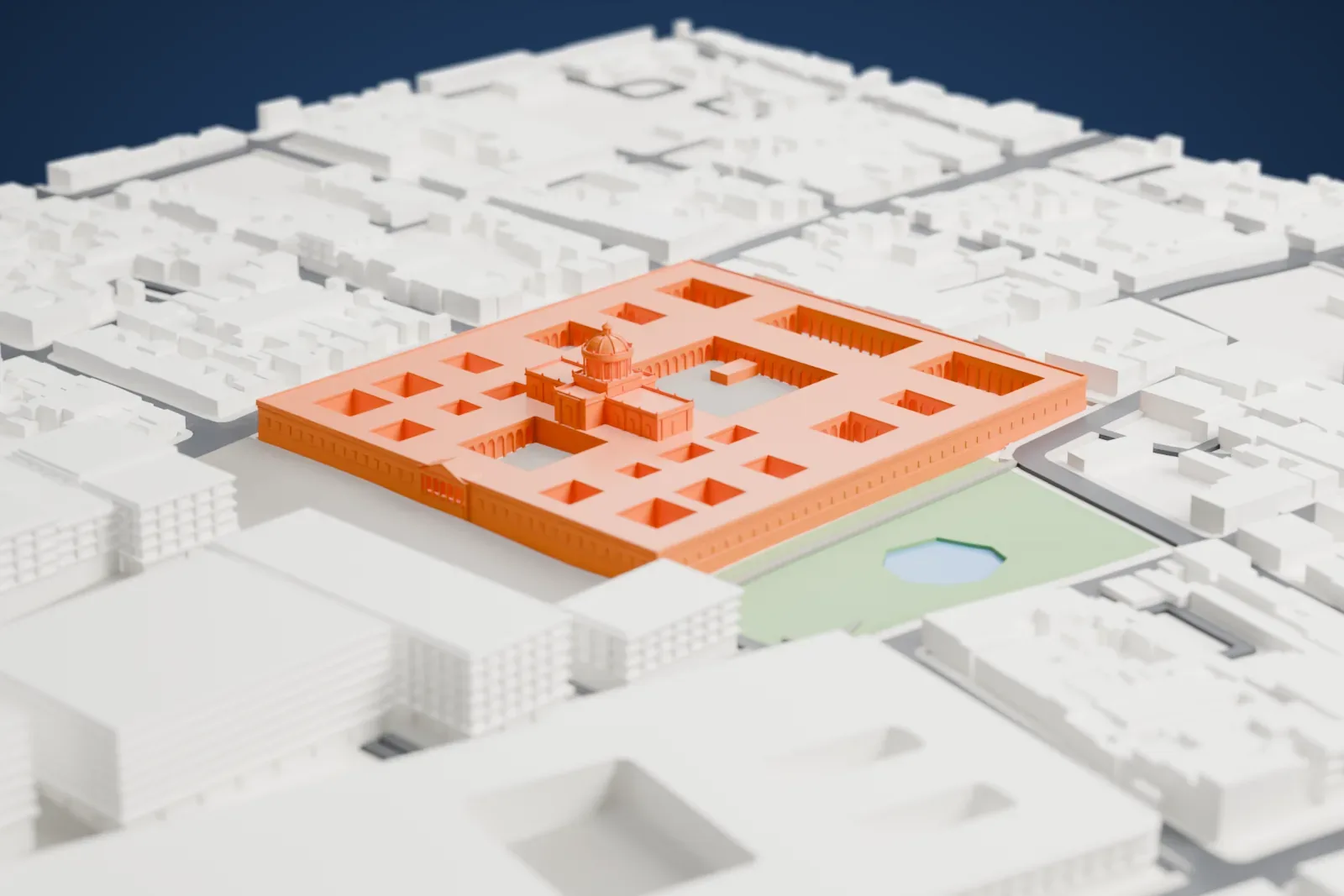
A free, printable model of Hospicio Cabañas, a large single-level complex with courtyards and a domed chapel at its center, set among dense city blocks, generated from real map data in your browser.
-
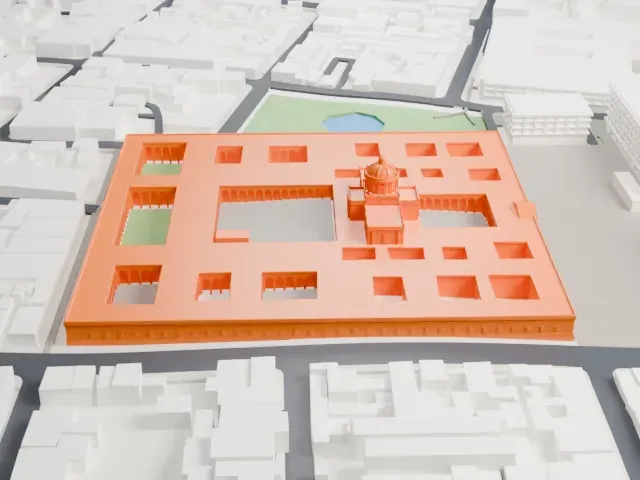 North
-
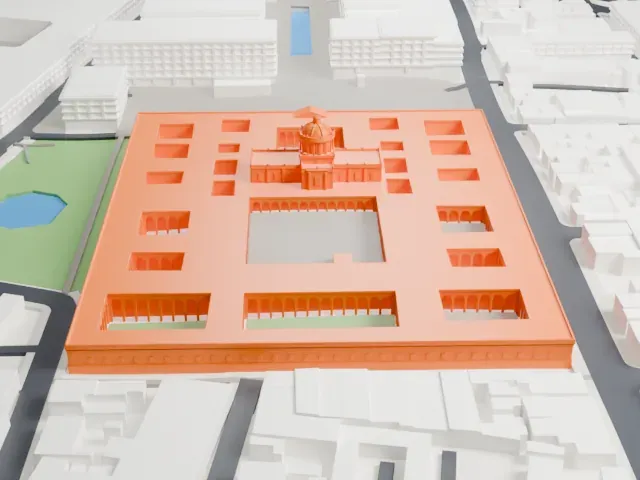 East
-
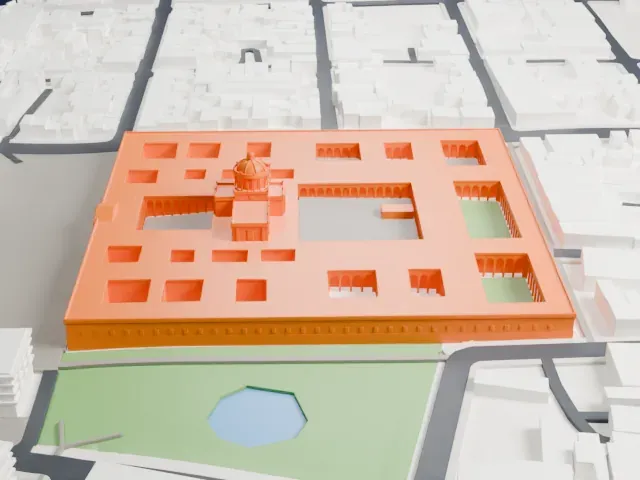 South
-
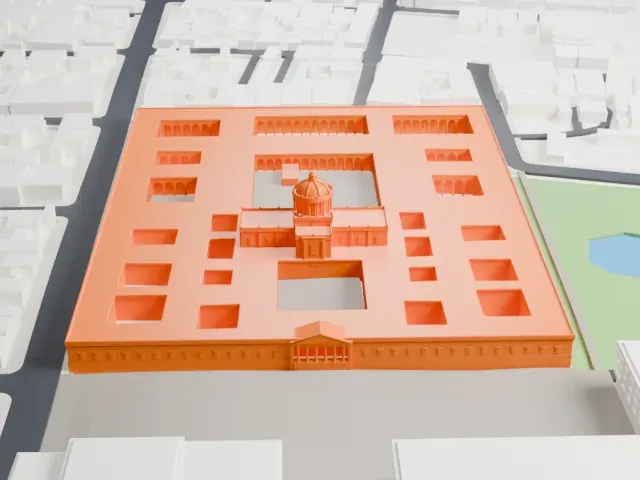 West
The model you print
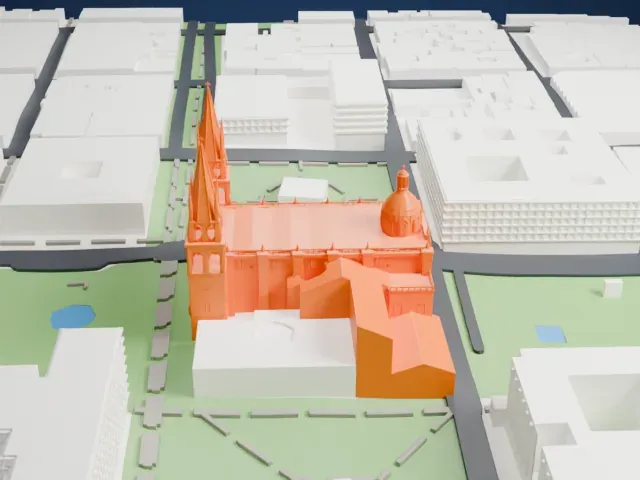
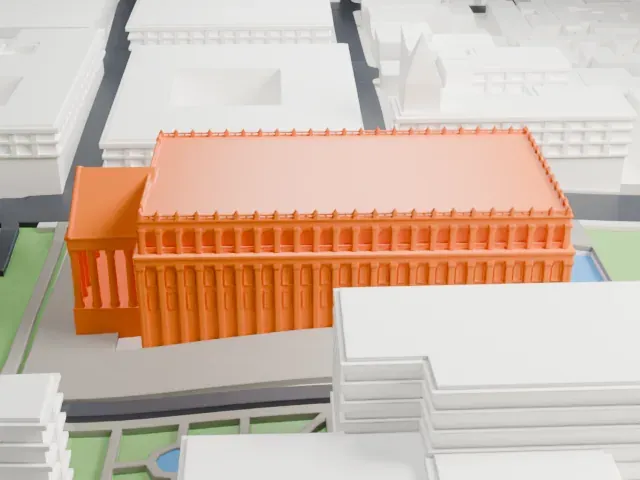
Hospicio Cabañas in 3D
The landmark on its own, at its size on a 160 mm print. Print friendly thickens thin parts for a 0.4 mm nozzle; Full detail keeps every part.
- Real height
- 33 m
- On a 160 mm print
- 10 mm
- Scale
- 1:3,750
33 m of Hospicio Cabañas, 10 mm on your shelf
Make this print opens the generator on a 600 m square around the landmark. Buildings print at close to true scale, so the landmark grows with the print size.
- Rows of tiny arches in courtyards
Many small arcades line the courtyards. Print friendly adapts them to the print scale; Full detail and a larger print size keep more of the arches.
- Small dome on a low building
The domed chapel is the one tall feature on a wide, flat complex. A layer height of 0.12–0.16 mm keeps the dome smooth.
- One piece with the ground
Hospicio Cabañas is joined to the ground in the exported file, and the four-side check found no floating parts, so nothing needs gluing.
- Pick the detail for your nozzle
In the Buildings settings, set Landmark detail to Print friendly to adapt thin parts and small details to the print scale. Full detail keeps every modeled feature, for larger prints or a finer nozzle.
- Colors
Buildings, roads, water and ground arrive as separate filament slots in the 3MF. Hospicio Cabañas takes the building color.
- File format
You get a 3MF for Bambu Studio, OrcaSlicer or PrusaSlicer. Any of them can save it as STL if you need one.
About Hospicio Cabañas
Hospicio Cabañas, also called the Cabañas Museum, stands in Guadalajara, Jalisco. It was among the Americas' oldest and largest complexes combining an orphanage and a hospital. Since being turned into a museum, its main hall has hosted the magnum opus frescoes of the muralist painter José Clemente Orozco. UNESCO designated the place a World Heritage Site in 1997.
The Bishop of Guadalajara founded the complex in 1810, aiming to merge a workhouse, hospital, orphanage and almshouse in a single institution. Its name honors Juan Ruiz de Cabañas, who in 1796 received the see of Guadalajara and hired Manuel Tolsá, a noted architect from Mexico City, as designer. Tolsá modeled his plan on classic examples: El Escorial near Madrid and Les Invalides in Paris. Together the buildings make up a rectangle of 164 by 145 meters (538 by 476 ft). Each is a single-story building 7.5 meters (25 ft) high, while the chapel is twice as tall and its dome reaches 32.5 meters (107 ft).
Cabañas died in 1823, and construction went on until 1829. For a time in the mid-19th century the buildings were used as barracks, yet the hospital function endured well into the 20th century, running to 1980, the year the Cabañas Cultural Institute moved in. The interior's highlight is a set of monumental frescoes by Orozco, among them The Man of Fire (1936–39), counted among his most famed creations. In 2014, the French conceptual artist Daniel Buren made site-specific works across 18 of the 23 courtyards.
About this model
Hospicio Cabañas is one of more than 6,500 landmark models in Mini Skyline. They are made with AI, and each one is checked in its real surroundings before release. Each model is written as code from public descriptions, plans, photographs and aerial views used only as references; no image or third-party model is copied into it. Everything around it is built from OpenStreetMap and Overture map data. Rights in the building itself, its name and any brands on it are not granted by Mini Skyline; clear them separately before you sell prints. If you would rather print the shape from map data, turn off Landmark models in the Buildings settings.
Mini Skyline is not affiliated with, or endorsed by, the owners of this building or its names and marks.
Same skyline