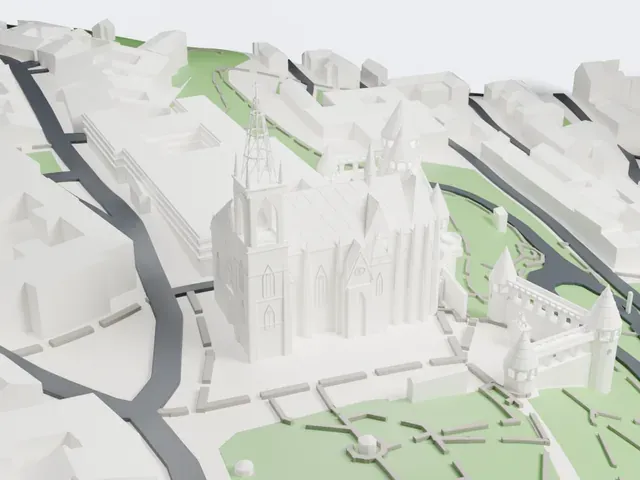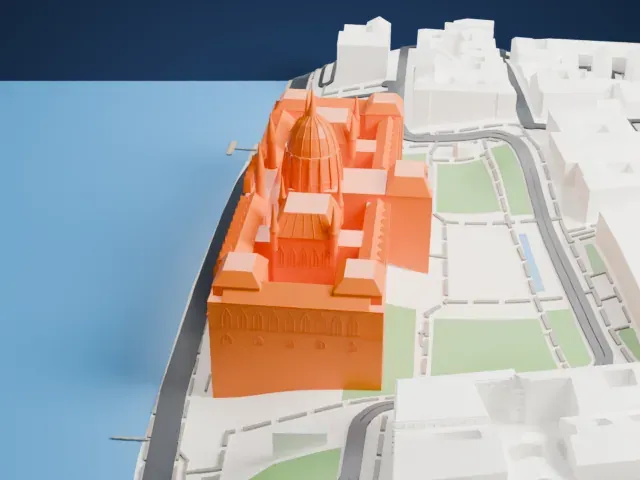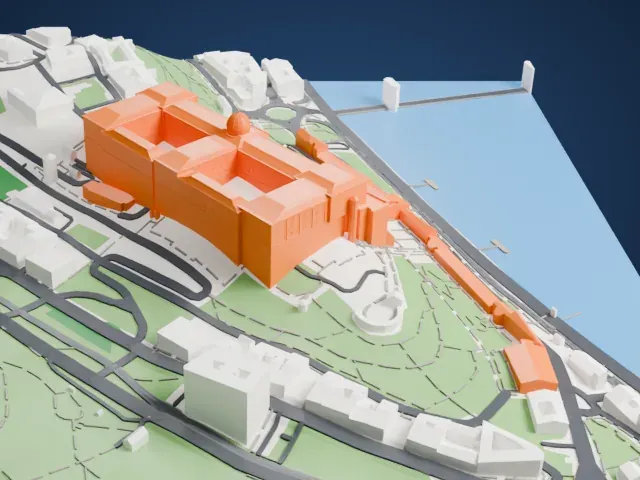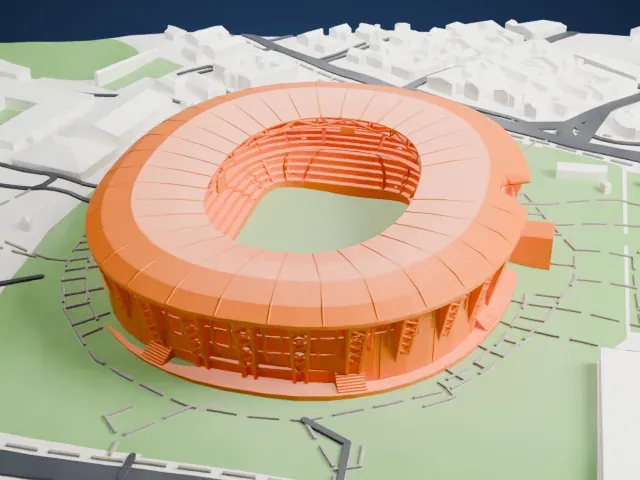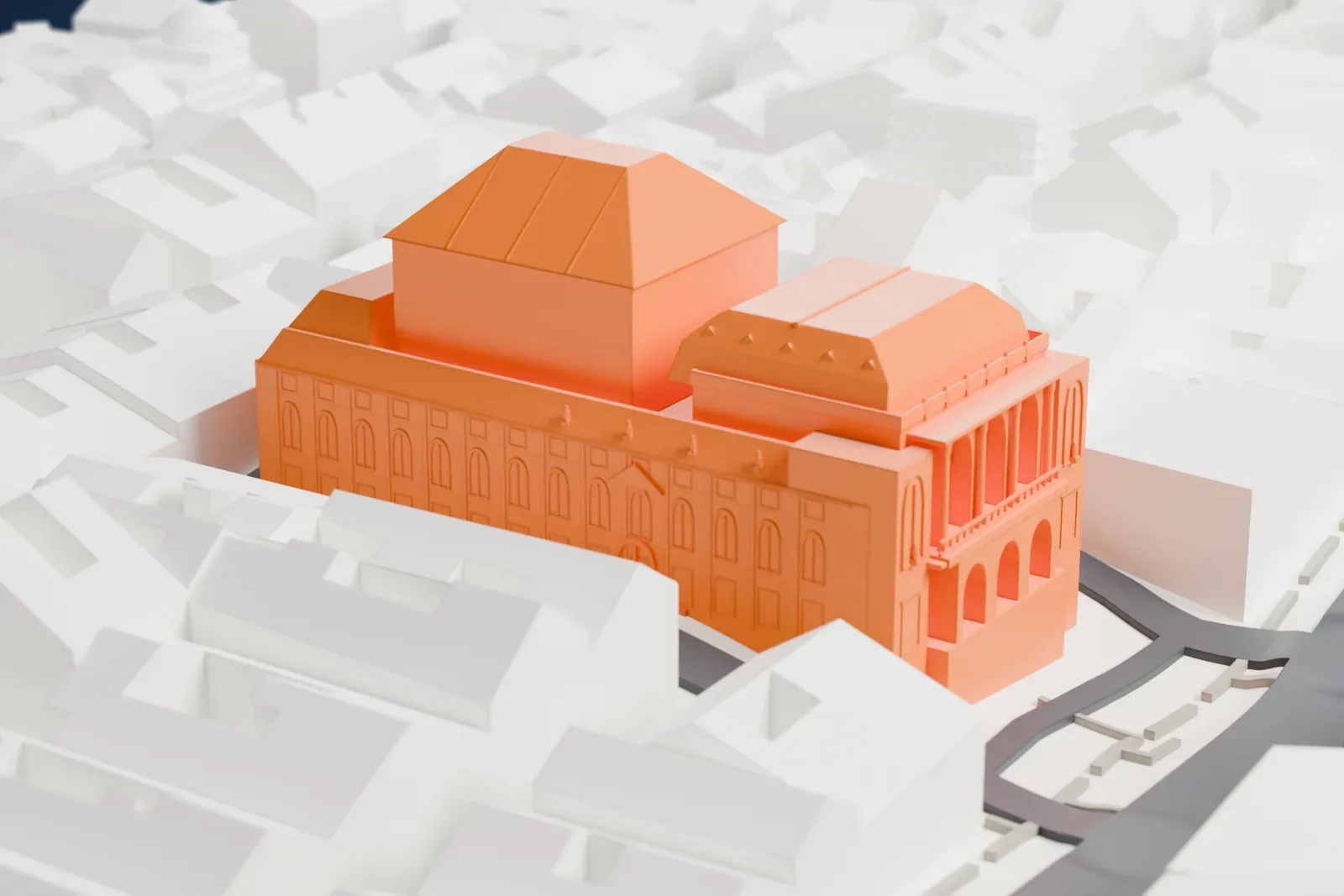
3D print the Hungarian State Opera House
A free, printable model of the Hungarian State Opera House and the densely packed city buildings and streets around it, generated from real map data in your browser.
-
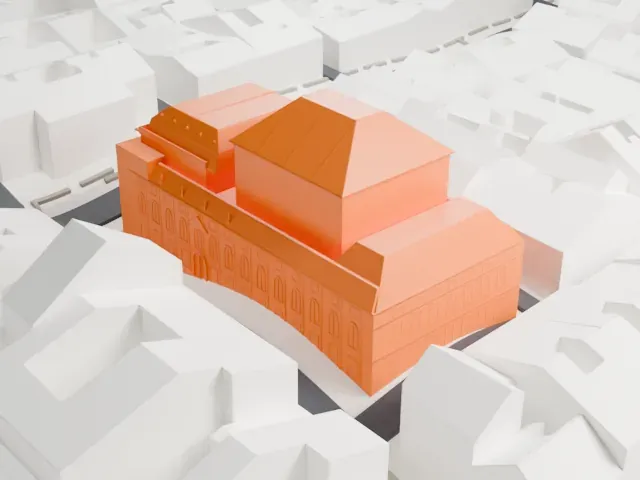 North
-
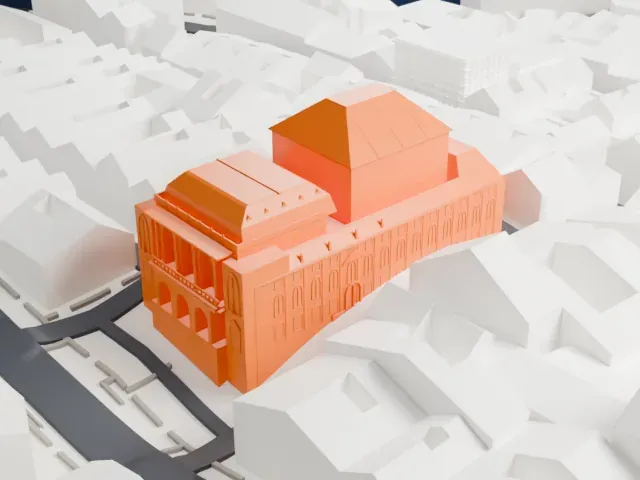 East
-
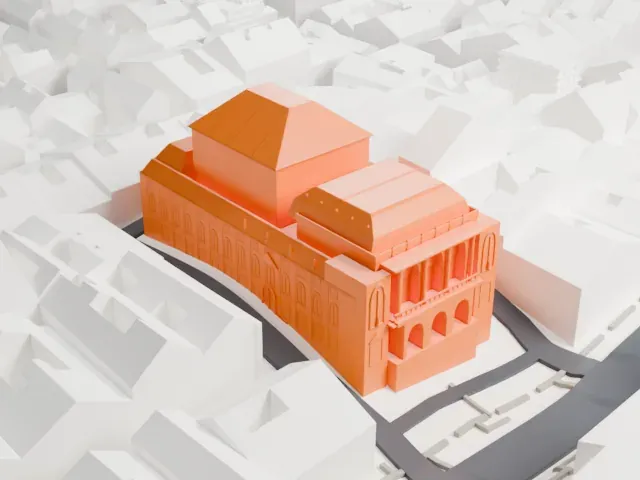 South
-
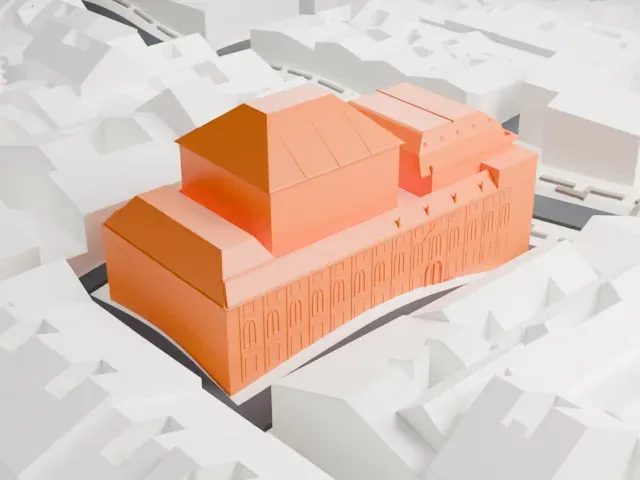 West
- On a 160 mm print
- 17 mm
- Scale
- 1:3,750
17 mm tall on a 160 mm print
Make this print opens the generator on a 600 m square around the landmark. Buildings print at close to true scale, so the landmark grows with the print size.
- Shallow relief on the facade
Rows of arched windows and small rooftop ornaments cover the long walls. Print friendly adapts them to the print scale; Full detail keeps them, which suits a larger print or a fine nozzle.
- Open arches at one end
An arcaded loggia at one end of the building has slender columns and open arches. Print slowly with good cooling, and use layers of 0.12–0.16 mm to keep the arches crisp.
- One piece with the ground
The Hungarian State Opera House is joined to the ground in the exported file, and the four-side check found no floating parts, so nothing needs gluing.
- Pick the detail for your nozzle
In the Buildings settings, set Landmark detail to Print friendly to adapt thin parts and small details to the print scale. Full detail keeps every modeled feature, for larger prints or a finer nozzle.
- Colors
Buildings, roads, water and ground arrive as separate filament slots in the 3MF. The Hungarian State Opera House takes the building color.
- File format
You get a 3MF for Bambu Studio, OrcaSlicer or PrusaSlicer. Any of them can save it as STL if you need one.
About the Hungarian State Opera House
On Andrássy avenue in central Budapest stands the Hungarian State Opera House, a historic opera house first called the Hungarian Royal Opera House. Miklós Ybl, who ranks as a major figure in Hungarian architecture of the 19th century, designed it. Construction began in 1875, paid for by the city of Budapest together with Emperor Franz Joseph I, and the house opened to the public on September 27, 1884. It is considered one of its architect's masterpieces.
Neo-Renaissance in style, the building also carries some Baroque elements. The foyer has marble columns, and murals of the nine Muses by Bertalan Székely and Mór Than cover its vaulted ceiling. The main hall has a bronze chandelier weighing 3050 kg, which lights a fresco of the Greek gods on Olympus by Károly Lotz. A musical theme runs through the decoration of the symmetrical façade, and figures of Ferenc Erkel and Franz Liszt, sculpted by Alajos Stróbl, stand in niches flanking the main entrance.
The horseshoe-shaped auditorium holds 1,261 people. Measurements by a group of international engineers in the 1970s put its acoustics third best in Europe, behind both the Palais Garnier in Paris and La Scala in Milan. Gustav Mahler, a composer who held the post of director in Budapest between 1888 and 1891, was among its notable guests. A major renovation lasted from 1980 to 1984, and the house reopened on September 27, 1984, a century to the day after its first opening.
About this model
The Hungarian State Opera House is one of more than 4,300 landmark models in Mini Skyline. They are made with AI, and each one is checked from four sides in its real surroundings before release. Everything around it is built from OpenStreetMap and Overture map data. If you would rather print the shape from map data, turn off Landmark models in the Buildings settings.
Same skyline