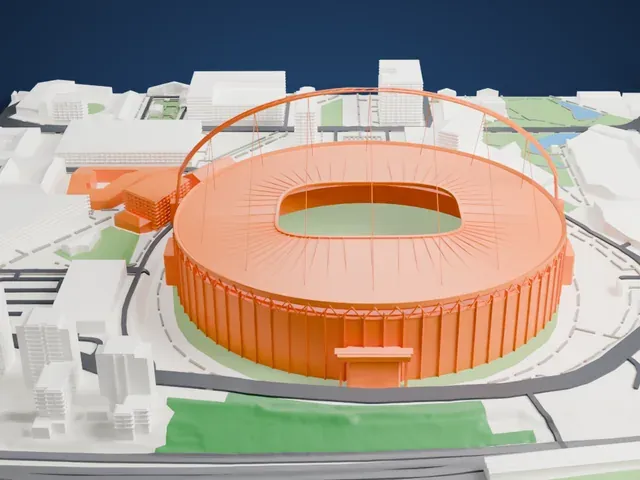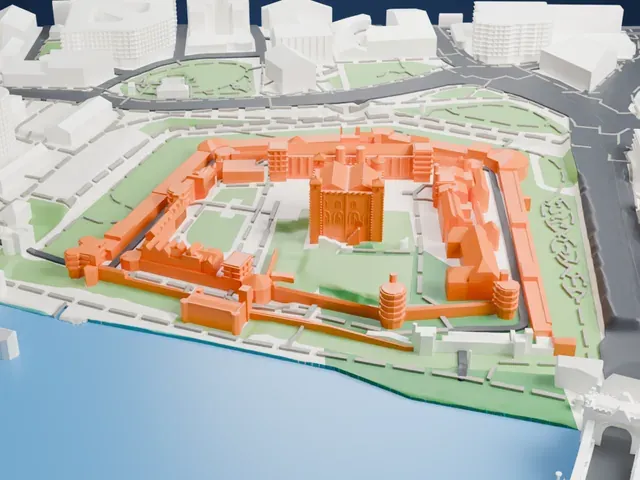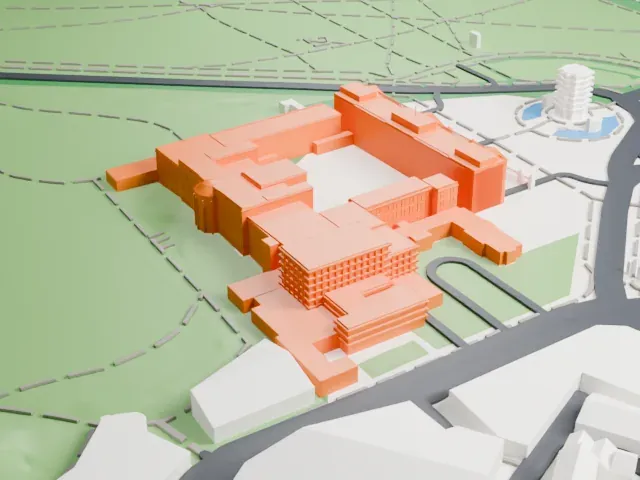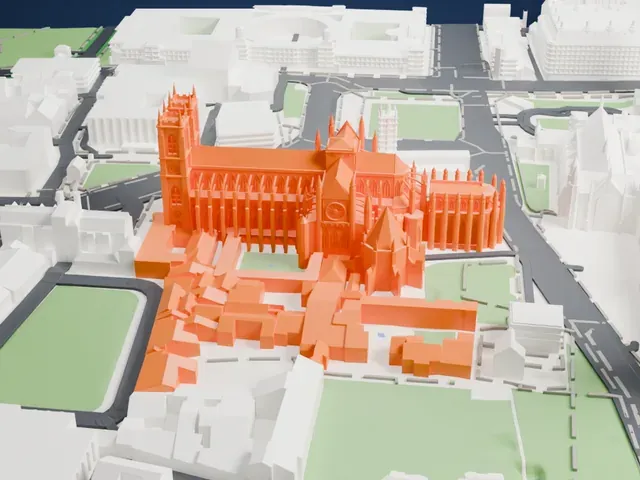
3D print Kensington Palace
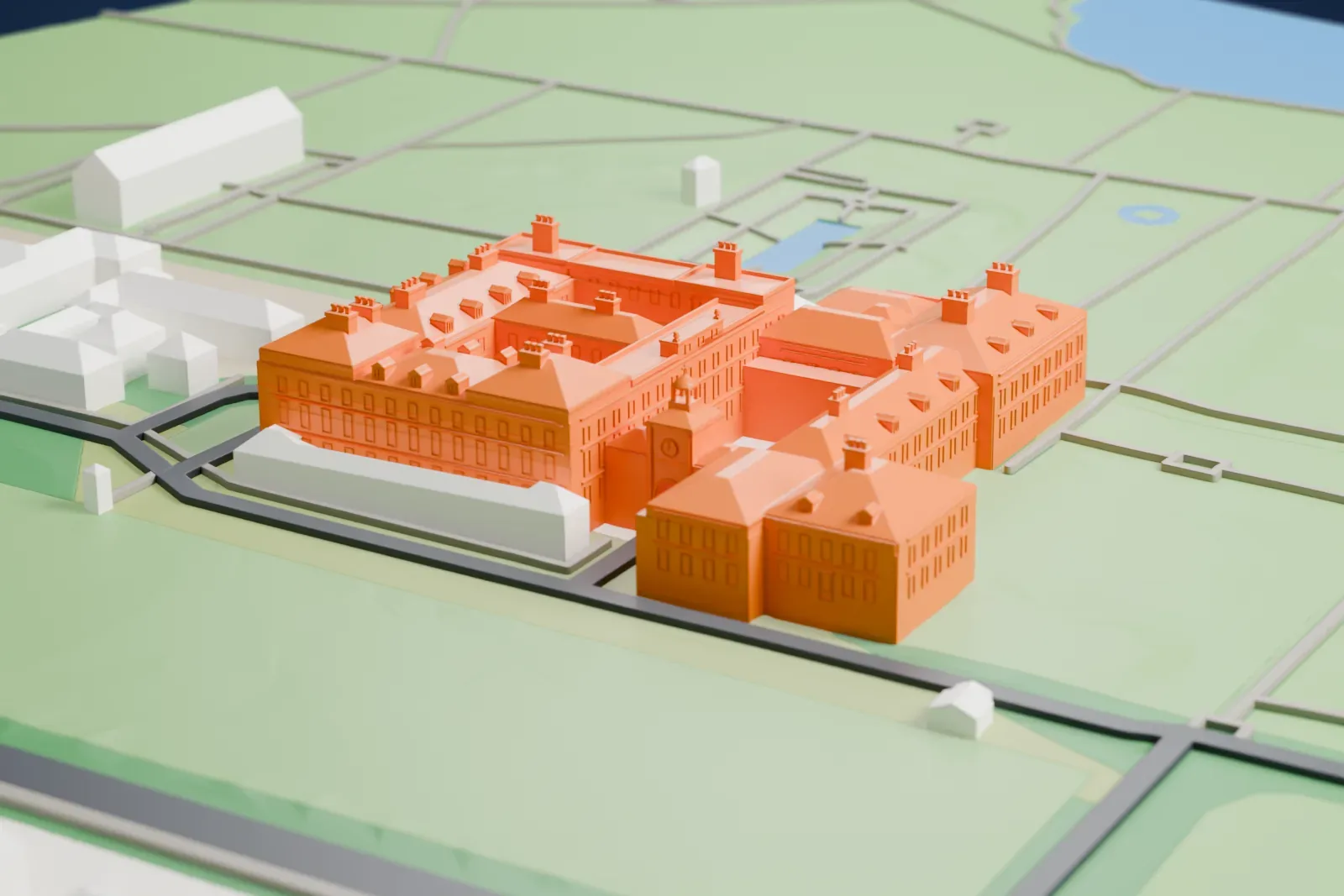
A free, printable 3D model of Kensington Palace, the royal residence in Kensington Gardens, with the surrounding gardens, streets and buildings built from real map data in your browser.
-
 North
-
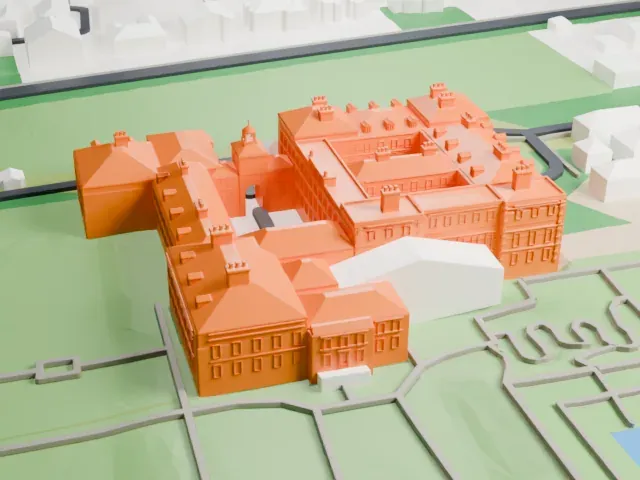 East
-
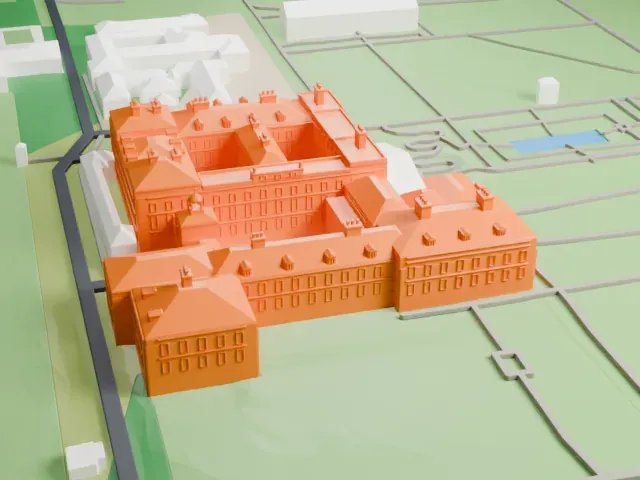 South
-
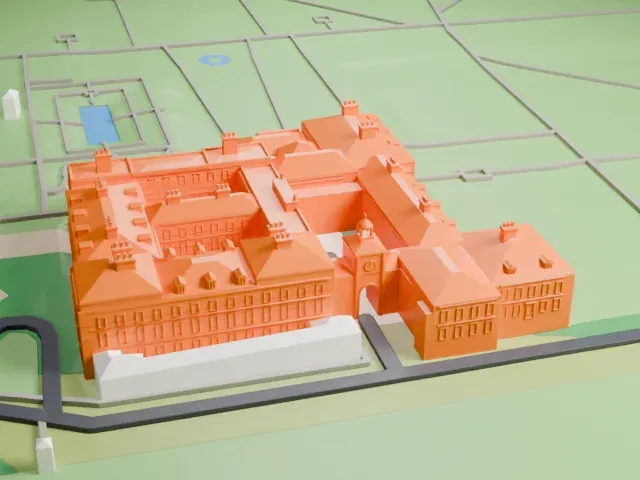 West
- On a 160 mm print
- 8 mm
- Scale
- 1:3,750
8 mm tall on a 160 mm print
Make this print opens the generator on a 600 m square around the landmark. Buildings print at close to true scale, so the landmark grows with the print size.
- Pitched roofs and chimneys
The palace prints as a long, low mass of pitched roofs, chimney rows and a courtyard rather than a tower. Use 0.12–0.16 mm layers to keep the roof ridges clean, and print larger if the chimneys matter.
- One piece with the ground
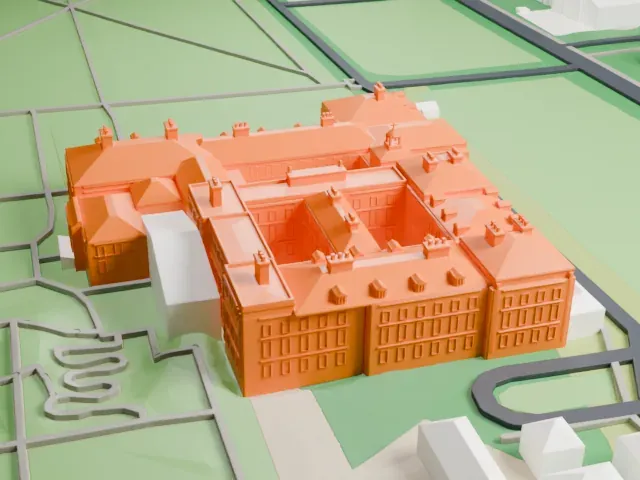
Kensington Palace is joined to the ground in the exported file, and the four-side check found no floating parts, so nothing needs gluing.
- Pick the detail for your nozzle
In the Buildings settings, set Landmark detail to Print friendly to adapt thin parts and small details to the print scale. Full detail keeps every modeled feature, for larger prints or a finer nozzle.
- Colors
Buildings, roads, water and ground arrive as separate filament slots in the 3MF. Kensington Palace takes the building color.
- File format
You get a 3MF for Bambu Studio, OrcaSlicer or PrusaSlicer. Any of them can save it as STL if you need one.
About Kensington Palace
Kensington Palace is a royal residence inside Kensington Gardens, in London's Royal Borough of Kensington and Chelsea. British monarchs and their families have lived there since the 17th century, and the name often stands for the offices of the royals based there. Historic Royal Palaces, an independent charity with no public funding, opens the State Rooms to visitors, while the Royal Household keeps responsibility for the offices and the private apartments. The State Rooms display paintings and artifacts from the Royal Collection.
The palace began as a Jacobean house of two storeys that Sir George Coppin built in the village of Kensington in 1605. In the summer of 1689 the new joint monarchs, William and Mary, wanting a house that suited William's asthma, bought the house, then known as Nottingham House, from Daniel Finch, Earl of Nottingham, for £20,000, and asked Sir Christopher Wren to enlarge it. Wren kept the existing structure and added three-storey pavilions to its four corners, then turned the house to face west, with north and south wings framing a court entered through an archway under a clock tower. The court moved in shortly before Christmas 1689.
For seventy years afterwards it was the preferred home of British monarchs, though the official seat of the court stayed at St. James's Palace. Queen Anne commissioned the Orangery, designed by Nicholas Hawksmoor and modified by John Vanbrugh, built for her in 1704, and a 12-hectare (30-acre) baroque parterre was laid out by the royal gardener Henry Wise. George I brought in William Kent, then unknown, in 1722 to decorate new state rooms, among them the Cupola Room with its domed ceiling coffered in gold and blue. Queen Victoria was born in the palace on May 24, 1819 and christened in the Cupola Room the next month.
About this model
Kensington Palace is one of more than 4,400 landmark models in Mini Skyline. They are made with AI, and each one is checked from four sides in its real surroundings before release. Everything around it is built from OpenStreetMap and Overture map data. If you would rather print the shape from map data, turn off Landmark models in the Buildings settings.
Same skyline