3D print the Kunsthistorisches Museum
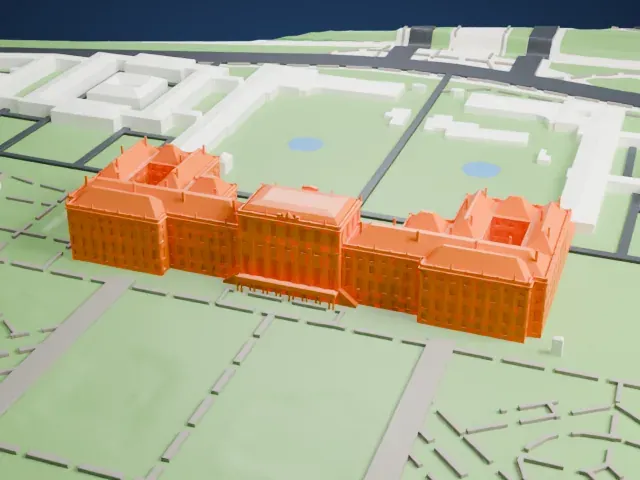
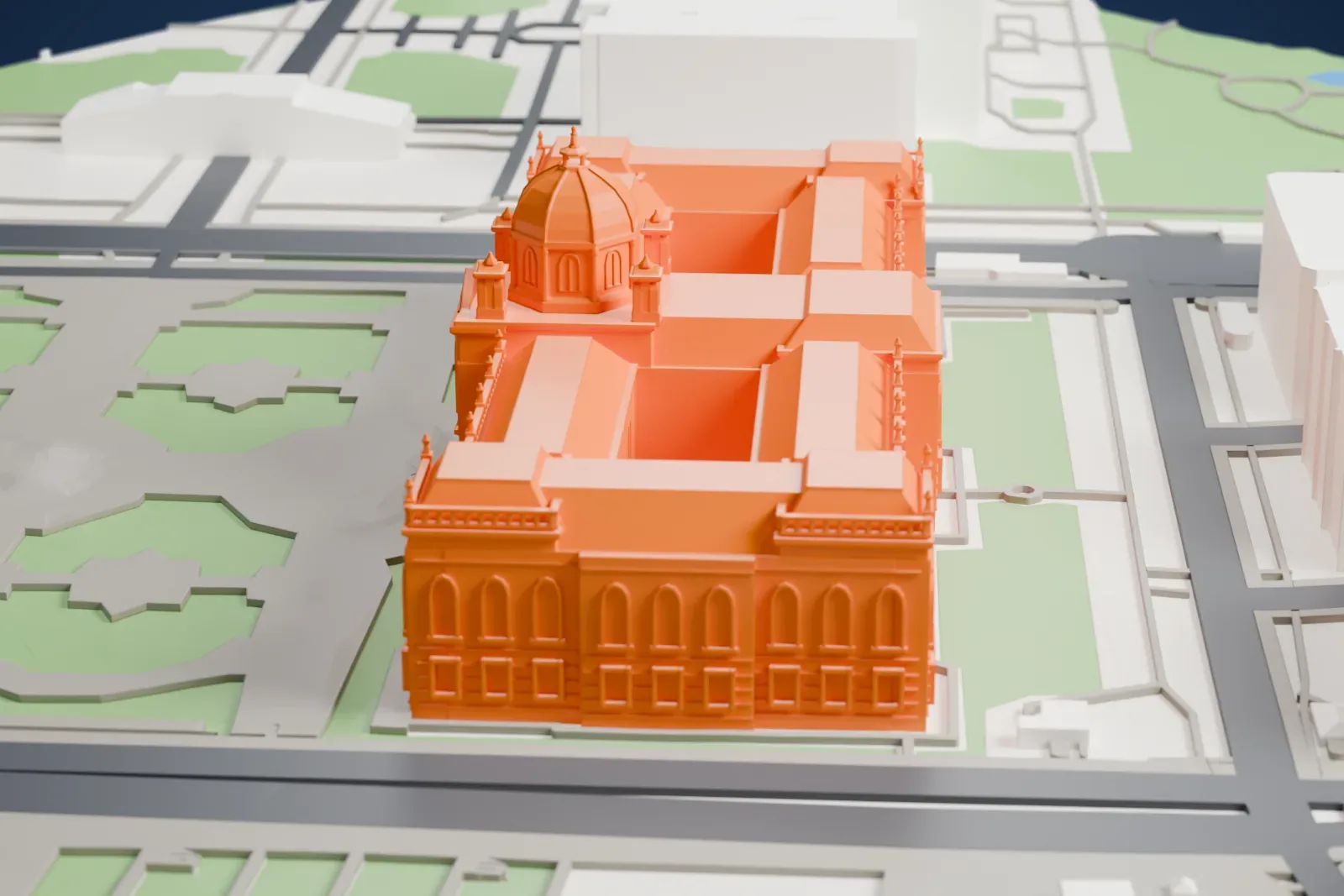
A free, printable 3D model of the Kunsthistorisches Museum, a wide museum block on Vienna's Ring Road, with the surrounding streets and buildings, built from real map data in your browser.
-
 North
-
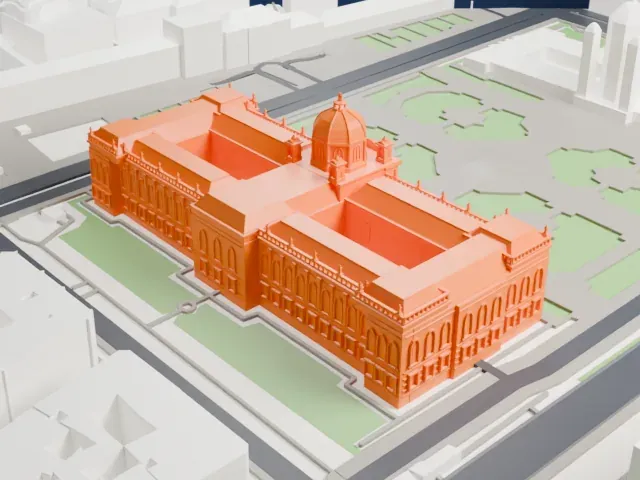 East
-
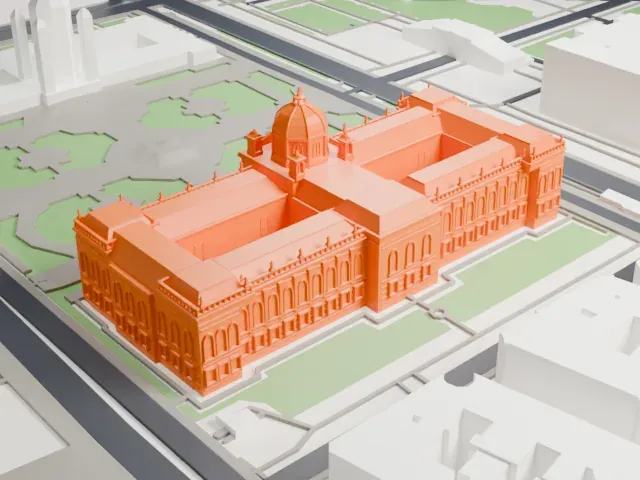 South
-
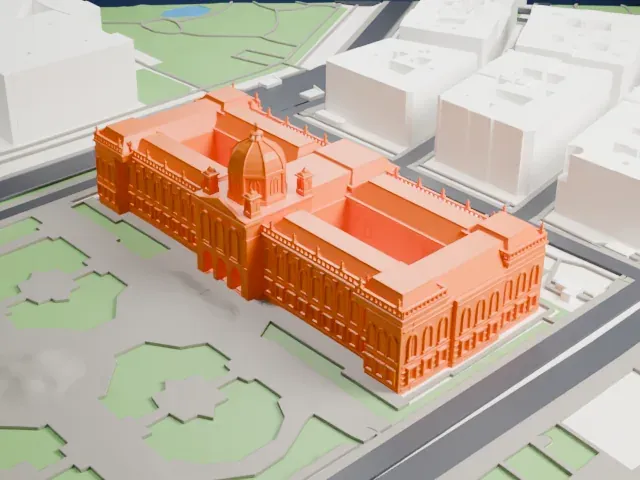 West
- Real height
- 60 m
- On a 160 mm print
- 17 mm
- Scale
- 1:3,750
60 m of the Kunsthistorisches Museum, 17 mm on your shelf
Make this print opens the generator on a 600 m square around the landmark. Buildings print at close to true scale, so the landmark grows with the print size.
- A wide rectangular block
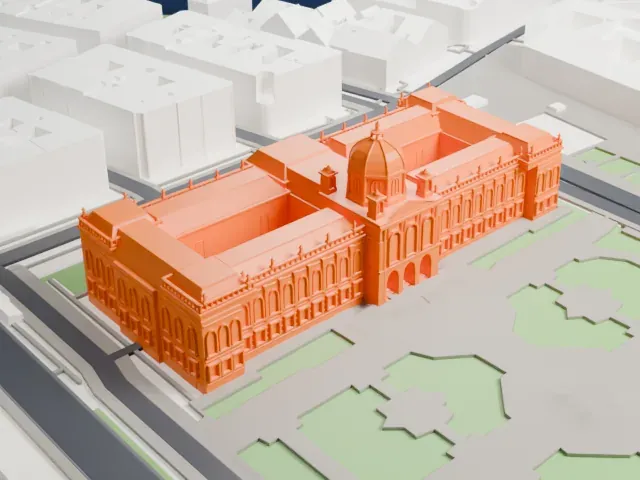
The museum is wide and low in this model, so its outline carries the shape rather than any single detail. Print it larger if your plate allows, and use 0.12–0.16 mm layers for crisp edges.
- One piece with the ground
The Kunsthistorisches Museum is joined to the ground in the exported file, and the four-side check found no floating parts, so nothing needs gluing.
- Pick the detail for your nozzle
In the Buildings settings, set Landmark detail to Print friendly to adapt thin parts and small details to the print scale. Full detail keeps every modeled feature, for larger prints or a finer nozzle.
- Colors
Buildings, roads, water and ground arrive as separate filament slots in the 3MF. The Kunsthistorisches Museum takes the building color.
- File format
You get a 3MF for Bambu Studio, OrcaSlicer or PrusaSlicer. Any of them can save it as STL if you need one.
About the Kunsthistorisches Museum
The Kunsthistorisches Museum Wien, the Vienna Museum of Art History, is an art museum. It stands in Vienna, Austria. The name applies to the institution and to the building it occupies, a palatial structure beside the Ring Road with an octagonal dome at its crown. No other art museum in Austria is larger.
Franz Joseph I, emperor of Austria-Hungary, opened it around 1891, alongside the Natural History Museum, which faces it across Maria-Theresien-Platz with a similar design. Both went up between 1871 and 1891 to designs by Baron Karl von Hasenauer and Gottfried Semper; the emperor commissioned them to house the Habsburgs' art collection and open it to the public. Each is a rectangle with a symmetrical Renaissance Revival sandstone facade, rows of big arched windows, and an octagonal dome 60 m (200 ft) high. Marble, stucco, gold leaf and murals fill the interiors, and the grand stairway carries paintings by Gustav Klimt, Hans Makart, Mihály Munkácsy and others.
The collections are largely Habsburg, built from Ferdinand of Tirol's portraits and armor, Emperor Rudolph II's collections and the paintings of Archduke Leopold Wilhelm. Pieter Bruegel the Elder is represented by The Tower of Babel (1563) and The Hunters in the Snow (1565), alongside Vermeer's The Art of Painting (1665–66) and Raphael's Madonna of the Meadow (1506). The Cellini Salt Cellar, among the museum's most prized objects, was stolen on May 11, 2003 and recovered on January 21, 2006.
About this model
The Kunsthistorisches Museum is one of more than 4,400 landmark models in Mini Skyline. They are made with AI, and each one is checked from four sides in its real surroundings before release. Everything around it is built from OpenStreetMap and Overture map data. If you would rather print the shape from map data, turn off Landmark models in the Buildings settings.
Same skyline