3D print the Hofburg
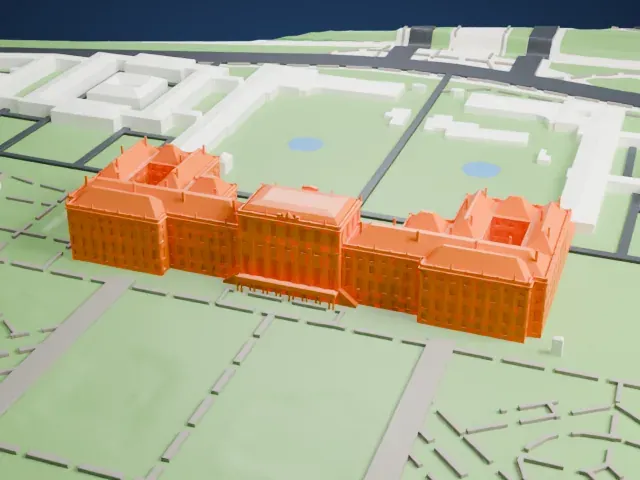
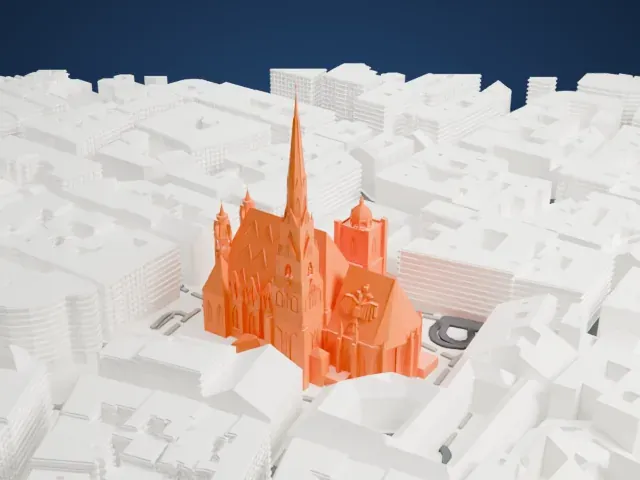
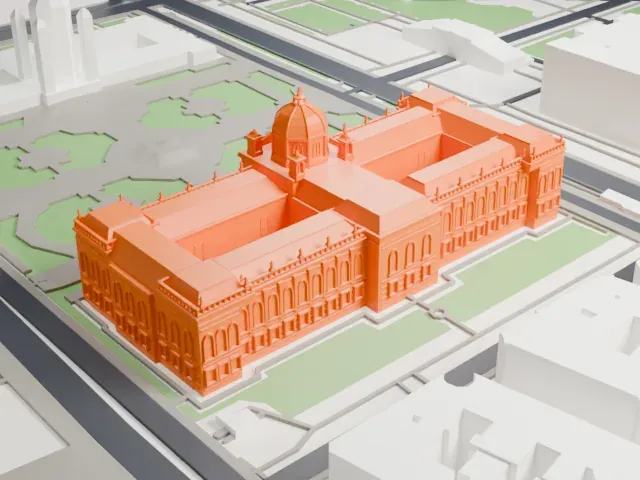
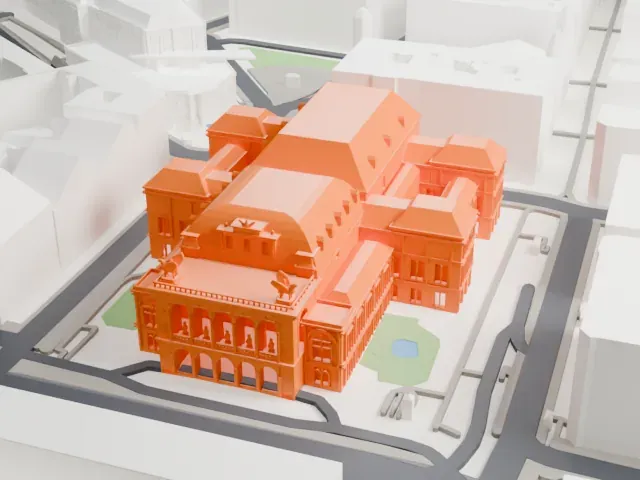
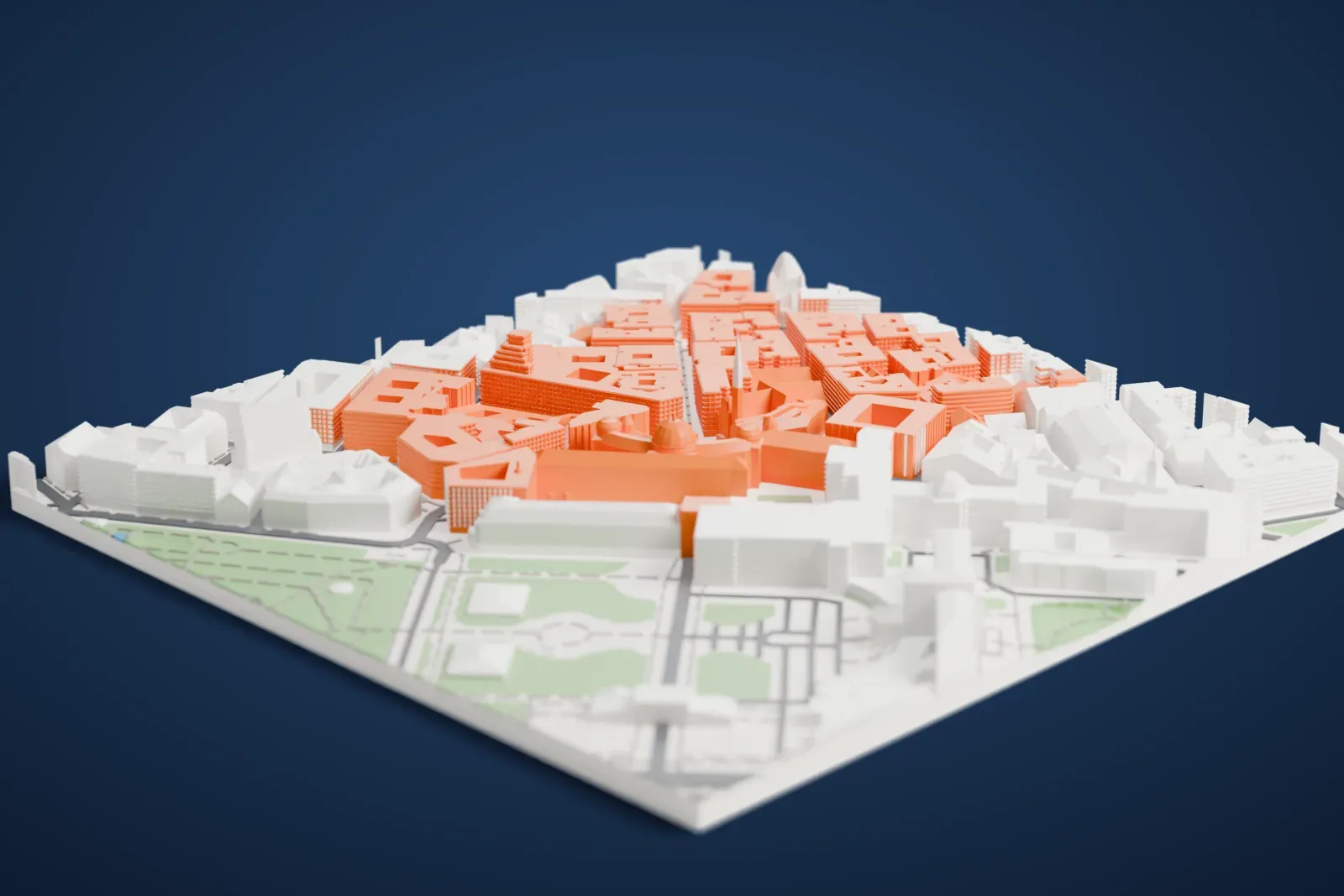
A free, printable model of the Hofburg's curved wing with its large ribbed dome, and the tightly packed city blocks around it, generated from real map data in your browser.
-
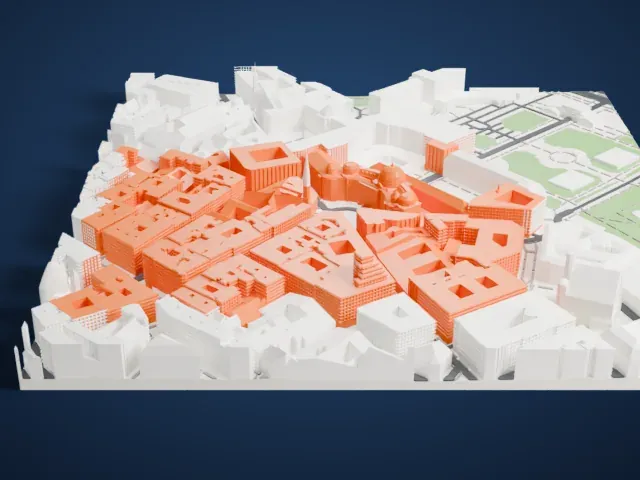 North
-
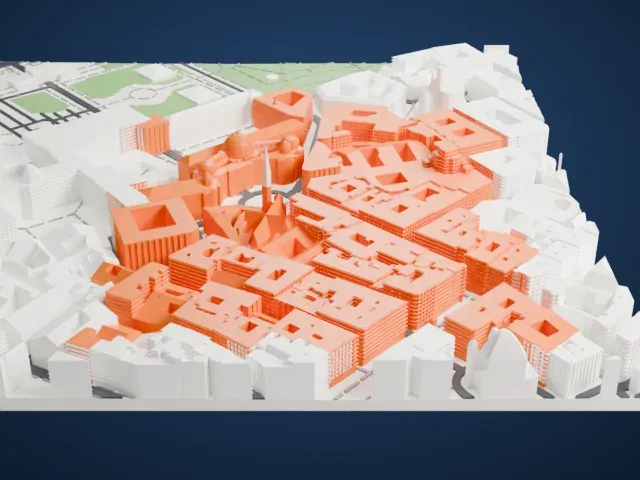 East
-
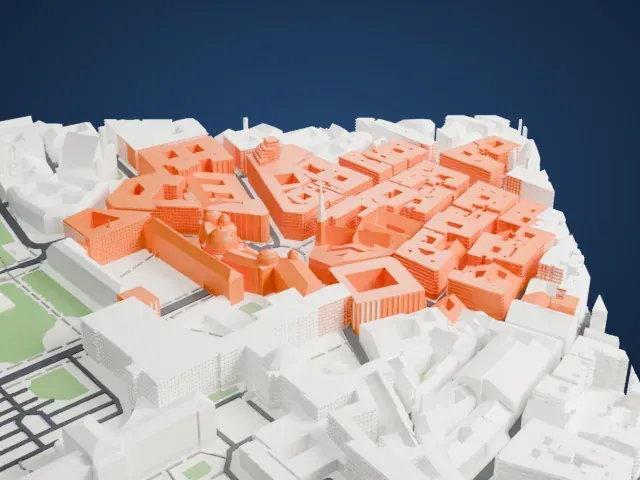 South
-
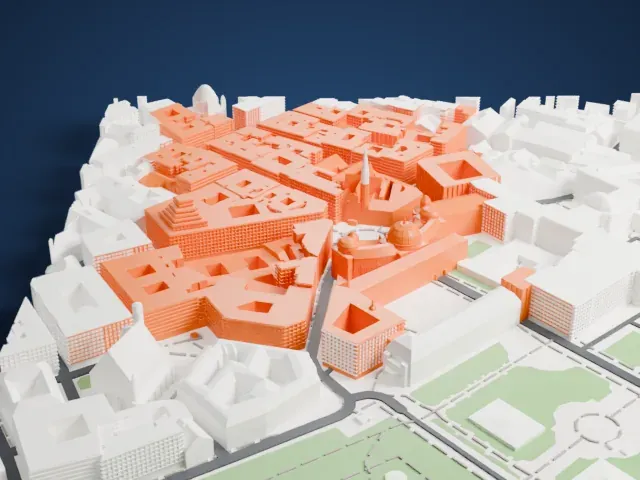 West
The model you print
Hofburg in 3D
The landmark on its own, at its size on a 160 mm print. Print friendly thickens thin parts for a 0.4 mm nozzle; Full detail keeps every part.
- On a 160 mm print
- 14 mm
- Scale
- 1:3,750
14 mm tall on a 160 mm print
Make this print opens the generator on a 600 m square around the landmark. Buildings print at close to true scale, so the landmark grows with the print size.
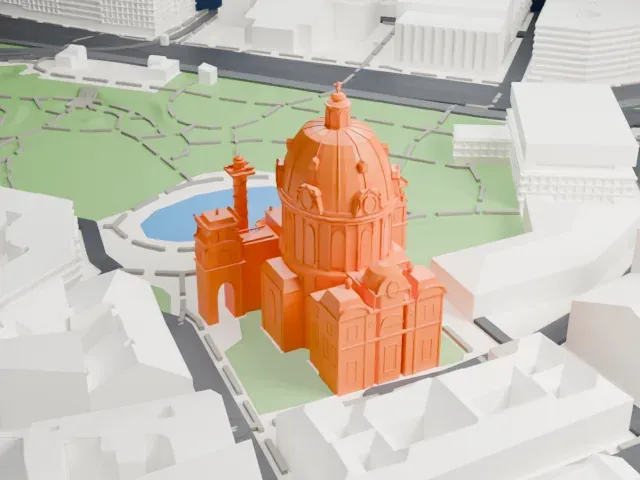
- Domes on the curved wing
The curved wing carries a large ribbed dome and several smaller domes. Print friendly adapts their thin ribs and tips to the print scale; Full detail keeps them on larger prints.
- A long, smooth curved wall
The curved wing is a long wall broken only by a few large panels. Layers of 0.12 to 0.16 mm keep the curve smooth, and a larger print keeps the panel edges crisp.
- One piece with the ground
The Hofburg is joined to the ground in the exported file, and the four-side check found no floating parts, so nothing needs gluing.
- Pick the detail for your nozzle
In the Buildings settings, set Landmark detail to Print friendly to adapt thin parts and small details to the print scale. Full detail keeps every modeled feature, for larger prints or a finer nozzle.
- Colors
Buildings, roads, water and ground arrive as separate filament slots in the 3MF. The Hofburg takes the building color.
- File format
You get a 3MF for Bambu Studio, OrcaSlicer or PrusaSlicer. Any of them can save it as STL if you need one.
About the Hofburg
The Hofburg, in the center of Vienna, was the Habsburg dynasty's principal imperial palace in Austria. Its name means "Castle of the Court". The oldest parts go back to the 13th century and were mainly the work of either Ottokar II of Bohemia or the last of the Babenbergers. Originally the castle was square in outline, with four turrets, and a moat surrounded it, with a drawbridge at the entrance. Schönbrunn Palace was the summer residence, so the Hofburg served as the imperial winter residence.
Records of the Hofburg area as the seat of government go back to 1279. Habsburg kings and the emperors of the Holy Roman Empire had their seat there between 1438 and 1583 and again between 1612 and 1806, followed by the Emperors of Austria until 1918. Since 1946, Austria's president has had his official residence and workplace there. In September 1958, part of the complex was opened to visitors as a convention center.
Over the centuries, the Hofburg grew to include residences such as the Albertina and the Amalienburg, the imperial chapel, library and treasury, the Burgtheater, the Spanish Riding School and the imperial mews. The Neue Burg was built between 1881 and 1913. The Heldenplatz (Heroes' Square), which the palace faces, was ordered during Emperor Franz Joseph I's reign as part of the Kaiserforum, a plan that was never completed. Many architects worked on the complex, among them Joseph Emanuel Fischer von Erlach and Lukas von Hildebrandt.
About this model
The Hofburg is one of more than 5,500 landmark models in Mini Skyline. They are made with AI, and each one is checked in its real surroundings before release. Each model is written as code from public descriptions, plans, photographs and aerial views used only as references; no image or third-party model is copied into it. Everything around it is built from OpenStreetMap and Overture map data. Rights in the building itself, its name and any brands on it are not granted by Mini Skyline; clear them separately before you sell prints. If you would rather print the shape from map data, turn off Landmark models in the Buildings settings.
Mini Skyline is not affiliated with, or endorsed by, the owners of this building or its names and marks.
Same skyline